


Search News
Global Industrial Intelligence Hub (GIIH)Industry Portal
Global Industrial Intelligence Hub (GIIH)Status
Standard Access
Upgrade to PremiumNewsWhy car spare parts stockouts keep happening in peak season
Time
Click Count
Peak-season shortages of car spare parts and auto parts rarely happen by accident. They usually stem from weak inventory control, fragmented inventory management, and overstretched logistics management across suppliers, distribution centers, and ecommerce delivery networks. For researchers and operators, understanding why reliable delivery and fast shipping fail—and which logistics solutions can reduce disruption—is the first step to building a more resilient supply chain.
Why do car spare parts stockouts intensify during peak season?

Peak season exposes every weak point in the aftermarket supply chain. Demand does not rise evenly. It spikes by model, part category, region, and sales channel. Brake components, filters, sensors, lighting units, and body repair parts may move 2–4 times faster than normal for 6–10 weeks, while slower items continue to occupy warehouse space and working capital.
For operators, the practical problem is not just “low stock.” It is a timing mismatch between replenishment lead time and real demand velocity. A part that usually turns every 30–45 days can suddenly require replenishment every 7–15 days. If forecasting models still rely on old averages, stockouts appear even when the total annual purchasing budget looks sufficient on paper.
Researchers often find that peak-season shortages are caused by several linked failures rather than one dramatic event. A supplier delay of 3–5 days may combine with inaccurate SKU mapping, delayed warehouse put-away, and late-mile delivery congestion. The result is poor service level across the entire network, especially for high-mix, low-visibility auto parts catalogs.
The most common structural causes
In automotive parts distribution, a stockout often begins upstream but becomes visible downstream. Procurement teams may place orders on time, yet disconnected inventory management systems prevent accurate reallocation between central stock, regional hubs, and ecommerce fulfillment nodes. That means usable stock exists somewhere, but not where the order is being fulfilled.
- Forecasting based on last year’s monthly average instead of current weekly demand signals and order frequency.
- Long replenishment cycles for imported or specialized car spare parts, often stretching from 2–4 weeks to 6–8 weeks during congestion.
- Poor SKU standardization across brands, vehicle generations, and alternative part numbers, which creates hidden stock fragmentation.
- Warehouse slotting and pick-pack bottlenecks that slow order release even when the part is technically available.
At GIIH, this pattern matters because spare-parts stockouts are no longer only a warehouse issue. They are a cross-border intelligence issue involving supplier stability, regional trade flows, ecommerce logistics, and mobility-market seasonality. This is where integrated industrial analysis becomes more useful than isolated data points.
Where do inventory control and logistics management usually break down?
For information researchers and frontline users, it helps to separate the problem into three operating layers: planning, execution, and delivery. Planning failures create the shortage. Execution failures hide it until too late. Delivery failures turn a manageable delay into a customer-facing service problem. Each layer requires different metrics and corrective action.
Peak season also compresses decision windows. A buyer who once had 10–14 days to rebalance inventory may now have only 48–72 hours before backorders accumulate. If the logistics team cannot see inbound status, pick status, and carrier cutoff times in one workflow, order promises become unreliable and fast shipping commitments lose credibility.
The table below maps the most frequent failure points in car spare parts operations. It is useful when evaluating whether the main risk sits in procurement, warehouse operations, systems integration, or ecommerce delivery performance.
This comparison shows why stockouts can persist even after emergency procurement begins. If visibility gaps and warehouse delays remain unresolved, extra inventory may arrive but still fail to support reliable delivery. In practice, the shortage problem shifts from “not enough stock” to “stock not flowing at the right speed.”
A useful diagnostic sequence for operators
Check these four metrics first
- SKU fill rate by week, not only by month, to catch sudden demand swings.
- Supplier lead-time variation, especially when the average remains stable but the range widens from 12 days to 28 days.
- Warehouse order cycle time from receipt to dispatch, broken into receiving, put-away, picking, packing, and carrier handoff.
- Backorder aging by part family and channel, so ecommerce delivery issues do not hide inside wholesale reports.
This sequence supports a better root-cause analysis than simply ordering more. It is also the type of cross-functional insight that GIIH emphasizes through its logistics strategist and automotive engineering perspectives, where technical part complexity and supply chain timing must be reviewed together.
How should buyers and operators compare spare-parts supply models?
Not every business should solve peak-season stockouts in the same way. A regional distributor with 5,000–20,000 active SKUs needs a different model from a repair network focused on 500 fast-moving maintenance items. The right choice depends on demand volatility, service promise, capital limits, and the acceptable risk of delayed delivery.
The most common decision is whether to hold deeper local stock, use centralized pooling, or combine both with dynamic replenishment. Each model has trade-offs in inventory cost, order speed, and resilience. The comparison below helps information researchers and operators evaluate which setup is more suitable before peak season begins.
In many cases, hybrid stocking is the most resilient option, but only when the business can manage 3 core controls: accurate part master data, weekly replenishment rules, and real-time allocation visibility. Without those, the hybrid model becomes more complex than helpful and may increase both emergency freight use and customer dissatisfaction.
What should procurement teams evaluate before peak season?
Procurement should not focus only on unit price. For auto parts, the practical question is total service cost across the season. A lower-cost supplier becomes expensive if it adds 2 extra weeks of lead time, poor packaging quality, or inconsistent part labeling. Those issues create receiving delays, picking errors, and return handling costs.
- Lead-time range, not only average lead time, because variability causes safety stock erosion.
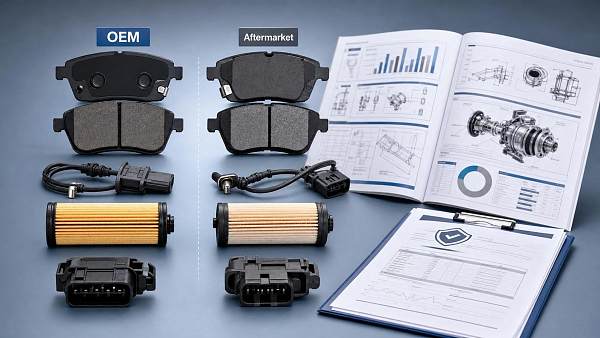
- Part number governance, including cross-reference accuracy for OEM and aftermarket mapping.
- Order fill performance during prior peaks, especially for A-class SKUs that drive 60%–80% of volume.
- Packaging and labeling consistency to reduce receiving exceptions and warehouse handling time.
This is where GIIH’s multi-sector intelligence approach is especially valuable. By combining automotive parts understanding with global logistics visibility, procurement teams can make decisions based on supply continuity, not only invoice cost.
Which practical logistics solutions reduce stockouts fastest?
The fastest improvements usually come from process redesign, not from a one-time inventory increase. When peak season is 4–12 weeks away, businesses need actions that improve service reliability within one planning cycle. The most effective logistics solutions often involve better prioritization of fast-moving SKUs, tighter warehouse controls, and more realistic delivery promises.
A common mistake is treating every part as equally urgent. In reality, operators should segment parts into at least 3 groups: high-frequency critical items, medium-demand replenishment items, and low-frequency long-tail items. Each group should have a different reorder trigger, service target, and fulfillment path. This reduces unnecessary stock while protecting core availability.
A 4-step implementation path
- Clean SKU data and remove duplicate or obsolete mappings within 2–3 weeks, starting with the top 200 or top 500 fast movers.
- Set weekly reorder logic using minimum stock, reorder point, and lead-time buffer by part family rather than one universal rule.
- Shorten warehouse cycle time by reviewing receiving cutoffs, put-away discipline, and pick-face replenishment every shift.
- Align ecommerce delivery promises with true dispatch capacity so “fast shipping” reflects operational reality.
For operations teams, this 4-step path is often more achievable than a full system replacement. It creates measurable gains in 30–60 days if management reviews fill rate, backorder aging, and dispatch compliance every week. Even small reductions in receiving and picking delay can release trapped inventory and improve order completion rates.
What role do standards and process discipline play?
No universal certification prevents stockouts, but standard process discipline matters. Businesses handling cross-border or regulated supply flows should document item identification, batch traceability where relevant, packaging specifications, and carrier handoff procedures. Using recognized practices for warehouse accuracy, transport labeling, and returns management improves consistency during volume surges.
For automotive parts, technical accuracy is as important as logistics speed. A wrong but fast shipment still creates downtime. GIIH’s automotive engineer perspective is useful here because it links component specification accuracy with distribution reliability, helping teams avoid the false trade-off between speed and correctness.
FAQ: what do researchers and operators ask most about peak-season auto parts shortages?
How much safety stock is usually reasonable for fast-moving car spare parts?
There is no universal number because safety stock depends on lead-time variability, demand volatility, and service targets. In practice, many operators review coverage in days rather than pieces. If a critical SKU turns rapidly and supplier lead time can swing from 10 days to 25 days, a coverage buffer closer to the upper range may be necessary during peak season.
The key is to calculate safety stock by segment, not as one blanket rule. A-class SKUs with repeat daily movement need tighter review, often every week, while long-tail items can be reviewed every month or every replenishment cycle.
Why do stockouts happen even when the warehouse still shows inventory?
This usually means inventory visibility and inventory usability are not the same. Stock may be in the wrong warehouse, blocked by returns inspection, tied to another channel, or linked to an outdated part number. In other cases, receiving has been completed physically but not updated in the system, so available stock is delayed by 24–48 hours.
That is why cycle time and data accuracy must be reviewed together. A stock report alone does not show whether the part can actually be promised, picked, packed, and shipped within the delivery window.
What is the biggest mistake in peak-season spare-parts procurement?
The biggest mistake is overreacting with broad purchasing instead of targeted replenishment. Buying large quantities across too many SKUs may reduce a few shortages but increase dead stock, storage pressure, and cash exposure. It also distracts warehouse capacity from the parts that matter most to service continuity.
A better approach is to identify the small set of parts that drive the majority of orders or emergency repairs, then align sourcing, stocking, and delivery rules around those items first. This creates faster improvement with less operational noise.
Why work with GIIH when evaluating spare-parts supply chain risk?
Peak-season car spare parts shortages are rarely solved by one department working alone. Buyers need supplier intelligence. Operators need flow visibility. Decision-makers need a clear view of where cost, service level, and delivery risk intersect. GIIH supports that process by connecting industrial intelligence, automotive component understanding, and global logistics insight in one decision framework.
Our value is practical for both researchers and frontline users. We help teams interpret supply chain bottlenecks, compare stocking strategies, examine delivery-cycle risk, and assess where fragmented inventory management is creating hidden service failures. This is especially relevant for businesses managing cross-border sourcing, regional fulfillment, or complex aftermarket catalogs.
What you can discuss with us
- How to review lead-time exposure for imported or specialized auto parts before a 4–8 week peak period.
- How to compare centralized, local, and hybrid inventory models for reliable delivery and fast shipping targets.
- How to assess part-data quality, SKU mapping, and warehouse execution risks that contribute to stockouts.
- How to plan around delivery cycles, channel allocation, sample evaluation, and quotation discussions for supply solutions.
If your team is reviewing inventory control, product selection, delivery timing, or a more resilient logistics solution for peak-season auto parts, GIIH can help structure the decision. Contact us to discuss part-parameter confirmation, supply model selection, delivery-cycle planning, compliance considerations, sample support, or quotation communication based on your actual operating scenario.
Recommended News
 Jun 19, 2026Car Replacement Parts: OEM vs Aftermarket, Fitment Risks, and Warranty QuestionsCar replacement parts guide: compare OEM vs aftermarket, avoid fitment risks, and understand warranty questions to choose safer, smarter parts with confidence.
 Jun 10, 2026How to Evaluate a Car Batteries Supplier: MOQ, Certifications, Lead Time, and WarrantyCar batteries supplier evaluation made simple: compare MOQ, certifications, lead time, and warranty to reduce sourcing risk, control costs, and choose a more reliable partner.
 Jun 02, 2026Auto Solutions for Fleet Maintenance: Diagnostics, Parts, and ROI ChecksAuto solutions for fleet maintenance help reduce downtime with smarter diagnostics, parts planning, and ROI checks for resilient, cost-efficient operations.
 Jun 01, 2026How should you choose a reliable spark plugs distributor?spark plugs distributor selection guide: learn how to verify authenticity, technical support, inventory stability, logistics, and after-sales reliability.
 May 28, 2026How parts exporters help reduce machine repair delaysIndustrial & Manufacturing machinery parts exporter support helps cut machine repair delays through faster sourcing, accurate documentation, and better logistics coordination. Learn how to restore uptime faster.
 May 27, 2026How parts exporters help reduce machinery downtimeIndustrial & Manufacturing machinery parts exporter strategies can cut downtime, improve parts availability, and speed repairs. Learn how reliable sourcing protects uptime and lowers maintenance risk.
![]() May 23, 2026What to check before choosing a machinery parts exporterIndustrial & Manufacturing machinery parts exporter selection starts with quality, traceability, lead time, and support. Discover the key checks to reduce risk and choose a reliable partner.
May 23, 2026What to check before choosing a machinery parts exporterIndustrial & Manufacturing machinery parts exporter selection starts with quality, traceability, lead time, and support. Discover the key checks to reduce risk and choose a reliable partner. May 16, 2026How low-maintenance OEM electronics reduce service costsOEM consumer electronics low maintenance solutions help cut service costs through durable components, faster diagnostics, and easier repairs—discover how to reduce downtime and improve support efficiency.
 May 11, 2026When aftermarket supply looks cheap but adds downtimeAftermarket industrial parts may look cheap, but poor precision engineering, weak logistics management, and unstable supply chain performance can drive costly downtime. Learn how high-quality parts protect uptime.
 May 08, 2026Car replacement parts that trigger the most returnsCar replacement parts with the highest return rates: discover how aftermarket auto parts, EV components, precision engineering, and supply chain risks affect procurement, inventory control, and logistics management.
 May 08, 2026The fitment errors driving losses in car replacement partsCar replacement parts fitment errors are draining aftermarket profits across procurement, inventory control, logistics management, and EV components. Learn how precision engineering reduces returns and supply chain risk.
 May 08, 2026Vehicle accessories with the highest return-rate riskVehicle accessories with the highest return-rate risk: explore aftermarket auto parts, EV components, procurement, inventory control, and supply chain factors to reduce costly returns.
 May 08, 2026Why vehicle accessories sell well but disappoint laterWhy vehicle accessories sell in the aftermarket yet disappoint later: explore auto parts, EV accessories, supply chain, logistics management, and procurement risks to source high-quality parts smarter.
 May 07, 2026Car spare parts demand is shifting toward older modelsCar spare parts demand is shifting to older models, creating new aftermarket opportunities in auto parts, car replacement parts, inventory control, procurement, and supply chain strategy.
 May 07, 2026Auto parts catalogs often create costly ordering errorsAuto parts catalog errors disrupt aftermarket procurement, inventory control, logistics management, and supply chain performance. Learn how accurate automotive components and EV parts data reduce costly ordering mistakes.
 May 07, 2026Auto parts quality gaps are harder to detect upfrontAuto parts quality gaps in the aftermarket are harder to spot upfront. Learn how procurement teams can assess EV components, precision parts, supply chain risk, and supplier reliability before costly failures.
 May 06, 2026Aftermarket demand is rising in segments few expectedAftermarket demand is rising for industrial parts, precision engineering, EV components and car replacement parts—explore smarter procurement, inventory control and supply chain strategies.
 May 06, 2026Counterfeit risk in aftermarket channels is growing againAftermarket counterfeit risk is rising across auto parts, industrial parts, precision engineering, and EV components. Learn how smarter procurement, inventory control, logistics management, and supply chain checks protect high-quality parts and reduce costly failures.
 May 05, 2026Why high-quality parts can still create warranty disputesAftermarket high-quality parts can still trigger warranty disputes. Learn how precision engineering, EV components, procurement, inventory control, logistics management, and supply chain discipline protect outcomes.
 May 04, 2026Car replacement parts quality checks often start too lateCar replacement parts quality checks often start too late, raising risk across aftermarket, auto parts, procurement, inventory control, logistics management, and supply chain performance.
 May 04, 2026Car spare parts suppliers are changing pack sizes for a reasonCar spare parts suppliers are changing pack sizes as aftermarket demand, procurement, inventory control, and supply chain pressure reshape sourcing for auto parts, EV components, and high-quality parts.
 May 04, 2026Auto parts returns often reveal a data quality problemAuto parts returns often expose hidden data quality risks in aftermarket, procurement, inventory control, logistics management, and EV components—learn how to cut costs and improve supply chain decisions.
 May 03, 2026Aftermarket brands are winning on speed, not just priceAftermarket and industrial parts buyers now value speed as much as price. See how precision engineering, EV components, auto parts, procurement, and supply chain agility drive smarter sourcing.
 May 02, 2026Car replacement parts that seem interchangeable but are notCar replacement parts in the aftermarket may look alike but are not truly interchangeable. Learn how precision engineering, automotive components, EV parts, procurement, and supply chain checks prevent costly mistakes.