


Search News
Global Industrial Intelligence Hub (GIIH)Industry Portal
Global Industrial Intelligence Hub (GIIH)Status
Standard Access
Upgrade to PremiumNewsEV components with the biggest packaging challenges
Time
Click Count
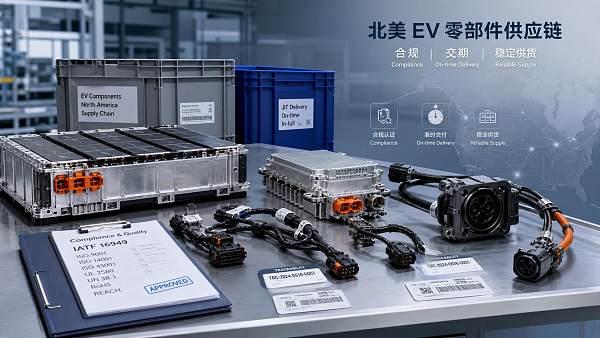
From EV battery packs and EV motor assemblies to custom components and precision parts, EV components present some of the toughest packaging demands in today’s automotive components and supply chain landscape. For buyers, distributors, and market researchers, understanding how protection, procurement, inventory control, and logistics management affect high-quality parts, aftermarket performance, and electric vehicle parts sourcing is essential to reducing risk and improving global operational efficiency.
In practice, the EV components with the biggest packaging challenges are usually the ones that combine high value, high sensitivity, regulatory complexity, and difficult handling requirements. That means battery modules and packs sit at the top of the list, followed by power electronics, electric drive units, charging components, thermal management parts, and fragile precision sensors. For procurement teams and commercial evaluators, the real question is not only which parts are hardest to pack, but how packaging decisions affect damage rates, compliance, freight cost, warehouse efficiency, and supplier reliability.
What buyers and supply chain teams really need to know first
If your role involves sourcing, distribution, or market evaluation, the most useful starting point is this: packaging is not a secondary detail in the EV supply chain. It directly influences total landed cost, parts quality, cross-border compliance, and customer satisfaction. A component may be technically excellent, but if it is packaged poorly, it can arrive with concealed damage, electrostatic exposure, moisture contamination, deformation, or documentation issues that delay customs clearance and downstream delivery.
For this reason, the packaging challenge of EV parts should be assessed through five practical filters:
- Product sensitivity: Is the part vulnerable to impact, vibration, moisture, dust, corrosion, or electrostatic discharge?
- Hazard classification: Does it involve lithium batteries, high-voltage systems, or materials requiring special transport labeling?
- Weight and geometry: Is it oversized, heavy, irregularly shaped, or difficult to stack safely?
- Value density: Would even minor cosmetic or functional damage create major financial loss?
- Supply chain complexity: Will it move through multiple warehouses, freight modes, customs checks, or aftermarket channels?
When a part scores high across several of these dimensions, packaging becomes a strategic issue rather than a logistics afterthought.
Battery modules and battery packs are the most packaging-sensitive EV components
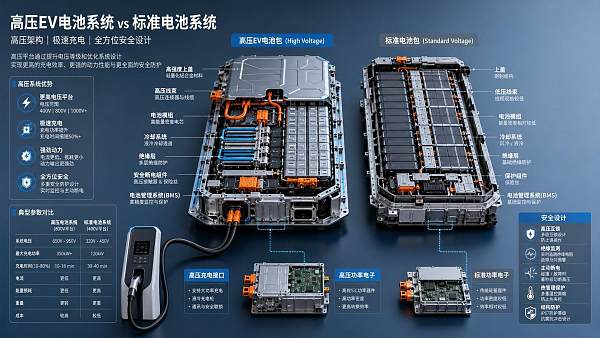
Among all electric vehicle parts, battery modules and full battery packs create the biggest packaging challenges. The reasons are straightforward: they are heavy, high value, hazardous in transport, structurally sensitive, and heavily regulated. A packaging failure here can trigger safety incidents, insurance claims, compliance penalties, or complete shipment rejection.
Battery packaging must usually address:
- Shock and vibration control during road, sea, or air transport
- Short-circuit prevention through insulation and protected terminal design
- Thermal risk management for temperature-sensitive storage and transit conditions
- Dangerous goods compliance including labeling, documentation, and route restrictions
- Forklift and pallet handling stability for warehouse and port operations
- Returnable packaging options for OEM loops and high-volume international programs
For battery packs in particular, packaging design often needs to support unusual weight distribution and large dimensions. Standard cartons or light pallet solutions are usually insufficient. Crates, reinforced frames, foam engineering, anti-slip bases, and custom blocking systems are common. Buyers should also verify whether suppliers have tested packaging under real-world vibration and drop conditions rather than relying only on visual packing standards.
From a sourcing perspective, battery-pack packaging should be evaluated together with compliance readiness. If a supplier offers attractive unit pricing but cannot provide proper dangerous goods packaging and documentation, the commercial risk can outweigh any nominal savings.
Power electronics require protection against shock, static, and moisture
Inverters, converters, onboard chargers, battery management system assemblies, and control modules are among the most delicate EV components from a packaging standpoint. They combine high unit value with sensitivity to electrostatic discharge, vibration, and environmental exposure. Even if damage is not externally visible, functional reliability may be compromised.
The main packaging risks for power electronics include:
- Electrostatic discharge (ESD) during handling and repacking
- Connector and pin damage caused by loose internal movement
- Moisture ingress affecting boards, housings, and seals
- Micro-vibration damage during long-distance transport
- Mixed-SKU handling errors in distribution and aftermarket channels
For distributors and agents, this category deserves special attention because repacking, relabeling, and multi-stop handling are common. Packaging must support not only protection but also traceability. Clear outer labeling, inner anti-static materials, desiccant use where needed, and batch-level identification can reduce claims and improve inventory control.
If you are comparing suppliers, ask whether the packaging specification is integrated with the product validation standard. A robust supplier should be able to explain ESD controls, humidity protection measures, and carton or tray performance under distribution stress.
Electric motors and drive units are difficult because they are heavy, precise, and easily mishandled
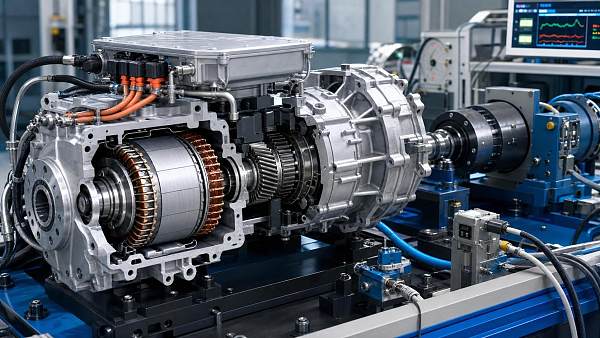
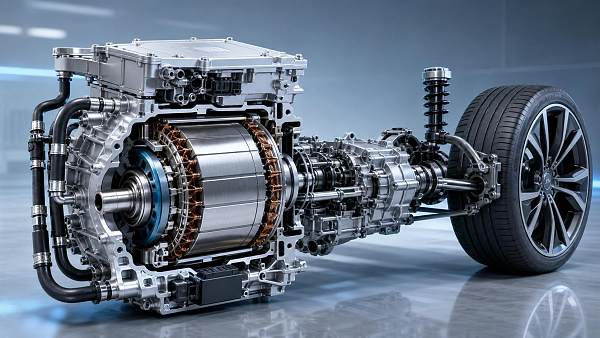
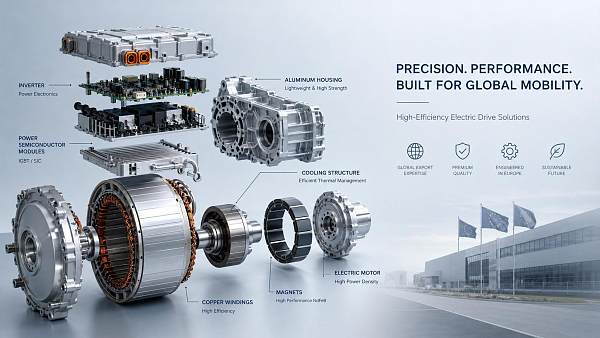
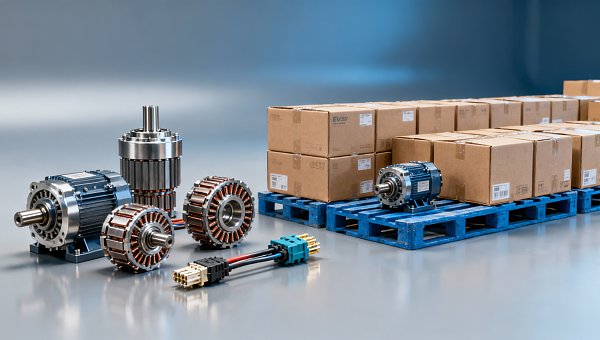
Electric motors, e-axles, gear-reduction assemblies, and integrated drive units are not always classified as hazardous, but they are among the hardest parts to package well at scale. Their challenge comes from the combination of mass, precision machining, exposed interfaces, and handling risk.
These parts often face:
- Shaft and flange protection needs to prevent deformation or alignment issues
- Corrosion risk for machined metal surfaces during ocean freight or long storage periods
- High center-of-gravity handling hazards during lifting and pallet movement
- Irregular shapes that reduce palletization efficiency
- Return damage when reusable packaging is not properly standardized
For procurement teams, one frequent mistake is focusing only on cushioning strength while overlooking warehouse ergonomics. A package that technically protects the motor but is difficult to lift, rotate, identify, or store may create hidden labor cost and accident exposure. In B2B distribution, packaging should be reviewed for both transport resilience and operational practicality at receiving sites.
A useful commercial indicator is cube efficiency versus damage rate. If a supplier’s packaging is extremely bulky, transport cost rises. If it is too compact without proper support, damage risk rises. The best packaging solution is rarely the cheapest material option; it is the one that balances protection, density, and handling consistency.
Charging components and high-voltage connectors have hidden packaging risks
Charging sockets, cable assemblies, charging modules, high-voltage junction boxes, and related connectors may look simpler than batteries or motors, but they often generate avoidable packaging failures. The main issue is that these products include sealing surfaces, precision contact points, cable strain concerns, and cosmetic requirements that matter in both OEM and aftermarket channels.
Key packaging concerns include:
- Dust and moisture protection for electrical interfaces
- Bending radius control for cable assemblies
- Terminal and connector shielding to avoid impact distortion
- Surface finish preservation for customer-facing parts
- Part-matching accuracy for application-specific variants
For dealers and distributors, SKU confusion is a serious issue in this segment. Similar-looking charging components can differ by model, voltage rating, or regional standard. Packaging that includes poor labeling or weak product differentiation increases return rates and installation errors. In aftermarket operations, the best packaging is not only protective; it also helps the end user verify fitment and handling instructions quickly.
Thermal management parts are vulnerable to leakage, deformation, and cleanliness problems
As EV thermal systems become more sophisticated, components such as cooling plates, manifolds, pumps, valves, condensers, chillers, and battery thermal assemblies are becoming more packaging-sensitive. These parts often contain ports, thin-wall structures, sealing areas, and cleanliness requirements that standard automotive packaging does not always address well.
The main problems include:
- Port damage during stacking or side impact
- Seal contamination from dust, fibers, or moisture
- Distortion of lightweight structures during compression
- Internal cleanliness failures that compromise system performance
- Leak-related disputes caused by inadequate protective caps or support fixtures
For commercial assessment teams, thermal components deserve closer inspection because packaging-related defects may not appear immediately at receiving. Leakage, contamination, or seal issues may be discovered only during installation or testing, shifting costs downstream. That makes supplier packaging discipline especially important in quality-sensitive programs.
Sensors and precision electronic parts are small, expensive, and easy to underestimate
Current sensors, position sensors, radar-related electronics, camera modules, control sensors, and other compact precision parts may not appear to be the most challenging EV components, yet they often carry a high packaging risk relative to their size. Small parts are easier to lose, mislabel, mix, or expose to ESD and contamination.
This category becomes particularly important in multi-tier distribution and aftermarket fulfillment, where package opening, partial picking, and restocking occur frequently. The packaging system should support:
- Unit-level traceability
- Tamper visibility
- ESD-safe materials
- Low-damage small-part organization
- Clear fitment and revision labeling
For buyers and sourcing analysts, these parts highlight an important point: packaging difficulty is not only about size or weight. It is also about consequence. A small sensor with poor packaging can stop a production line, create warranty claims, or damage supplier credibility just as seriously as a larger component.
How to evaluate packaging capability when selecting EV parts suppliers
If your goal is to reduce sourcing risk, do not ask only whether the supplier can package the part. Ask how they validate packaging performance across storage, transport, handling, and destination conditions. A strong packaging review during supplier qualification should include the following:
- Packaging specification documentation: materials, dimensions, stacking rules, inner protection, labeling standards
- Transport simulation or test evidence: vibration, compression, drop, climate exposure, or route-specific validation
- Regulatory readiness: especially for lithium battery shipments and hazardous goods documentation
- Traceability design: barcode, serial, batch, and receiving visibility
- Warehouse compatibility: pallet size, forklift access, racking suitability, container loading efficiency
- Reusability and reverse logistics options: important for recurring B2B shipments
- Damage and claim history: actual field performance matters more than theoretical packaging claims
It is also wise to separate packaging cost from packaging value. A lower-cost pack-out method may increase freight inefficiency, handling time, defect rates, and insurance exposure. For many EV components, the better business decision is the packaging solution with the lowest total supply chain cost, not the lowest immediate packaging spend.
What packaging decisions most affect total cost and operational efficiency
For business evaluators, the packaging issue becomes most useful when translated into operational metrics. The packaging choices that matter most are usually the ones that influence these outcomes:
- Damage rate in transit and storage
- Customs and compliance delays
- Freight cost per protected unit
- Warehouse labor time per inbound shipment
- Stacking density and storage utilization
- Return, warranty, and claim frequency
- Order accuracy in aftermarket channels
This is why the EV packaging discussion matters well beyond engineering. It affects procurement strategy, supplier scorecards, cross-border expansion, channel profitability, and customer experience. In a volatile supply chain environment, packaging resilience can become a competitive advantage.
Which EV components deserve the highest packaging scrutiny
If you need a practical priority list for sourcing, auditing, or distribution planning, the following order is a useful reference:
- Battery modules and battery packs — highest combined risk in safety, compliance, damage cost, and handling complexity
- Power electronics — highly sensitive to ESD, moisture, vibration, and concealed functional damage
- Electric motors and integrated drive units — heavy, precise, costly, and often awkward to handle
- Thermal management assemblies — vulnerable to contamination, leakage, port damage, and deformation
- Charging components and high-voltage connectors — sensitive interfaces, SKU complexity, and frequent aftermarket handling risk
- Sensors and compact precision electronics — small but high consequence in quality and traceability terms
This ranking may shift by application, route, and business model, but for most procurement and distribution scenarios, it provides a reliable framework for where packaging due diligence should begin.
Conclusion: packaging is a commercial risk factor, not just a shipping task
The EV components with the biggest packaging challenges are the ones where product sensitivity, transport risk, and business consequence overlap. Battery packs are the clearest example, but they are far from the only one. Power electronics, drive units, thermal parts, charging assemblies, and precision sensors all require packaging strategies that protect product integrity while supporting efficient global movement.
For information researchers, buyers, distributors, and commercial assessment teams, the key takeaway is simple: evaluate EV packaging as part of product quality and supplier capability, not as a separate logistics detail. The right packaging approach reduces damage, improves compliance, strengthens inventory control, and lowers total operating risk. In the fast-evolving electric vehicle parts market, that makes packaging a strategic decision with direct commercial value.
Recommended News
 Jul 29, 2026400V EV Battery Components Explained: Key Parts, Functions, and System Design BasicsEV battery components 400V explained clearly: discover key parts, core functions, safety logic, thermal design, and system basics to evaluate EV battery packs with confidence.
 Jul 18, 2026Automotive Component Rating Standards Explained: How to Compare Load, Temperature, and Safety LimitsAutomotive component rating standards explained clearly: learn how to compare load, temperature, and safety limits to reduce sourcing risk, improve compliance, and choose parts with confidence.
 Jul 15, 2026EV Components North America: Sourcing Priorities, Compliance, and Lead Time FactorsEV components North America buyers now face tougher sourcing decisions. Explore compliance risks, lead time pressures, and smarter strategies to reduce disruption and improve EV supply chain performance.
 Jul 13, 2026How to Evaluate a Battery Components Exporter for Quality, Traceability, and Lead TimeBattery components exporter selection goes beyond price. Learn how to assess quality control, traceability, and lead time to reduce supply risk and choose a reliable partner.
 Jul 12, 2026High Voltage EV Batteries vs Standard Packs: Key Design and Safety DifferencesHigh voltage EV batteries vs standard packs: explore the key design, charging, efficiency, and safety differences to choose the right EV battery architecture with confidence.
![]() Jul 07, 2026EV Accessories Buying Guide: Which Add-Ons Matter for Safety, Charging, and Daily Use?EV accessories buying guide: discover which add-ons truly improve charging, safety, and daily convenience, so you can choose smarter, safer gear with confidence.
Jul 07, 2026EV Accessories Buying Guide: Which Add-Ons Matter for Safety, Charging, and Daily Use?EV accessories buying guide: discover which add-ons truly improve charging, safety, and daily convenience, so you can choose smarter, safer gear with confidence. Jun 30, 2026EV Motor Selection Guide: Torque, Efficiency, Cooling, and Cost Trade-OffsEV motor selection guide covering torque, efficiency, cooling, and cost trade-offs. Learn how to choose the right EV motor for better range, reliability, and total value.
 Jun 29, 2026Permanent Magnet EV Motor Selection: Torque, Efficiency, Cooling, and Cost Trade-OffsPermanent magnet EV motor selection explained: compare torque, efficiency, cooling, and total cost trade-offs to choose the right EV drive solution with confidence.
 Jun 27, 2026Sourcing Guide for EV Components: How to Compare Suppliers, Lead Times, and MOQSourcing guide EV components for procurement teams: compare suppliers, lead times, MOQ, quality, and total cost to reduce risk and make smarter EV sourcing decisions.
 Jun 27, 2026Electric Drive Components Price in Europe: What Drives Cost by Motor, Inverter, and VolumeElectric drive components price Europe explained: see how motor design, inverter technology, and order volume shape real costs in Europe, and compare suppliers with greater confidence.
 Jun 25, 2026How Long Life Mobility Components Reduce Maintenance in High-Use EquipmentLong life mobility components cut maintenance by matching real load, floor, and cleaning conditions. See how smarter selection improves uptime, lowers service costs, and extends equipment life.
 Jun 23, 2026Spark Plugs OEM Sourcing Guide: Key Specs, Compatibility Checks, and Supplier RisksSpark plugs OEM sourcing guide covering key specs, compatibility checks, total cost, and supplier risks—learn how to avoid fitment errors, returns, and costly quality issues.
 Jun 13, 2026Vehicle Electronics Selection Guide: Key Standards, Interfaces, and Reliability FactorsVehicle electronics selection starts with standards, interfaces, and reliability. Learn how to compare components, reduce integration risk, and choose smarter for long-term performance.
 Jun 06, 2026What Is a BMS in Battery Systems? Functions, Key Components, and Selection BasicsBMS explained: learn what a Battery Management System does, its key components, and how to choose the right BMS for safer, longer-lasting, better-integrated battery systems.
 Jun 02, 2026Solid-State Battery Breakthroughs: What to Verify Before EV AdoptionSolid-state battery breakthroughs are reshaping EV strategy—learn what to verify in energy density, cycle life, safety, cost, and supplier readiness before adoption.
 May 31, 2026Why is EV battery tech reshaping range expectations?EV battery tech is redefining real-world range through smarter chemistry, thermal control, fast charging, and software—discover what matters beyond mileage.
![]() May 19, 2026Why long-lifespan solid-state batteries matter nowSolid-state battery breakthroughs long lifespan are reshaping EVs, grid storage, and industry. Discover why longer life, safer performance, and lower total cost matter now.
May 19, 2026Why long-lifespan solid-state batteries matter nowSolid-state battery breakthroughs long lifespan are reshaping EVs, grid storage, and industry. Discover why longer life, safer performance, and lower total cost matter now.![]() May 19, 2026Is off-grid lithium storage worth the upfront cost?Lithium battery storage for off-grid applications can justify higher upfront costs through lower maintenance, better efficiency, and stronger long-term ROI. See when it pays off.
May 19, 2026Is off-grid lithium storage worth the upfront cost?Lithium battery storage for off-grid applications can justify higher upfront costs through lower maintenance, better efficiency, and stronger long-term ROI. See when it pays off.![]() May 19, 2026Are solid-state battery breakthroughs finally lifting energy density?Solid-state battery breakthroughs in high energy density are moving beyond hype. Learn what technical evaluators should verify on cycle life, safety, cost, and scalable commercialization.
May 19, 2026Are solid-state battery breakthroughs finally lifting energy density?Solid-state battery breakthroughs in high energy density are moving beyond hype. Learn what technical evaluators should verify on cycle life, safety, cost, and scalable commercialization. May 18, 2026Why portable lithium battery storage needs better designLithium battery storage portable design matters more than ever. Discover how better safety, mobility, and charging design improve backup, travel, and field power performance.
 May 17, 2026What next-gen EV charging must solve beyond faster speedNext-gen wireless charging for electric vehicles must solve efficiency, safety, interoperability, and real-world deployment fit—not just speed. Explore what makes EV charging scalable and investment-ready.
 May 17, 2026How close are solid-state batteries to real EV production?Solid-state battery breakthroughs for electric vehicles are moving beyond the lab. Discover how close they are to real EV production, what still blocks scale-up, and which milestones matter most.
 May 10, 2026EV motor demand is shifting toward smaller suppliersEV motor demand is shifting to smaller suppliers, reshaping aftermarket procurement, supply chain strategy, and access to high-quality parts, custom components, and EV battery solutions.
 May 10, 2026What causes EV motor overheating in real-world fleetsEV motor overheating in fleets often starts with EV battery stress, weak thermal management, and low-quality electric vehicle parts—learn how aftermarket, procurement, inventory control, and supply chain choices impact reliability.