


Search News
Global Industrial Intelligence Hub (GIIH)Industry Portal
Global Industrial Intelligence Hub (GIIH)Status
Standard Access
Upgrade to PremiumNewsWhy some recycling solutions underperform in real operations
Time
Click Count
Why do some recycling solutions fail to deliver in real-world settings despite strong promises? From sustainable waste disposal and eco-friendly solutions to broader environmental innovation and sustainable technology, performance often depends on supply chain fit, maintenance, replacement parts, and operational design. For buyers, researchers, and distributors tracking Eco Tech, green energy, vehicle upgrades, and car accessories, this article explores the hidden gaps between concept and execution.
In industrial decision-making, recycling performance is rarely determined by a machine or concept alone. A system that looks efficient in a pilot setting can underperform within 30–90 days after deployment if feedstock quality, maintenance planning, labor routines, and parts availability were not considered at the procurement stage. This matters to sourcing teams, commercial evaluators, and channel partners who must assess not only technical claims, but also operating resilience.
For organizations following environmental technology and sustainability trends, the gap between concept and operation is now a strategic issue. Recycling solutions increasingly intersect with logistics, automotive aftermarket materials, smart sorting, and energy recovery. That is why practical evaluation requires a broader industrial intelligence lens—one that connects process design, service support, and supply chain execution rather than focusing on headline efficiency alone.
Why strong recycling concepts break down on the operations floor
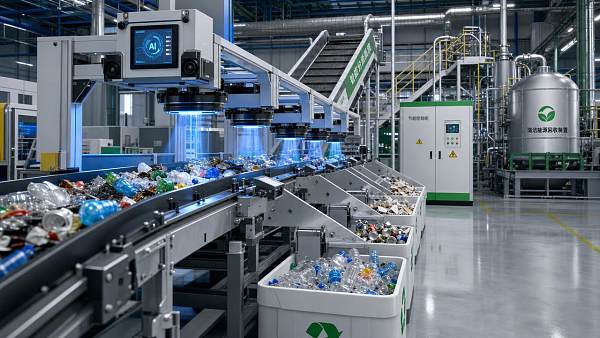
Many recycling solutions underperform because they are designed around ideal input conditions. In reality, waste streams vary by moisture level, contamination rate, particle size, and packaging mix. A sorting line tested with a 5% contamination load may behave very differently when the actual site receives 12%–18% contamination during seasonal peaks. This mismatch directly affects throughput, labor time, and reject volume.
Another common problem is that procurement teams focus on nameplate capacity rather than effective capacity. A unit promoted at 2 tons per hour may only sustain 1.2–1.5 tons per hour once cleaning stops, jam clearance, shift changes, and material inconsistency are included. For commercial buyers, this difference is critical because return-on-investment assumptions often rely on daily runtime of 16–20 hours, while actual uptime may settle closer to 10–14 hours.
Underperformance also begins before installation. If local utilities, operator skills, spare parts stock, and downstream bale or residue handling are not planned, a technically valid solution becomes operationally fragile. A recycling line is only as reliable as the ecosystem around it, including conveyors, sensors, bins, repair access, and service response time.
Hidden assumptions behind vendor claims
Buyers should check whether performance claims are based on continuous operation, single-material input, or controlled demonstration runs. Some systems perform well with clean PET or uniform cardboard but lose efficiency when mixed plastics, labels, adhesives, and food residue are present. In practice, even a 3% increase in film contamination can reduce optical sorting precision and increase manual rework.
This issue is especially relevant in markets where inbound waste comes from multiple collection channels. Municipal, industrial, and commercial sources create very different input profiles. A solution that is profitable in one region may struggle in another due to collection density, transport distance, and preprocessing cost.
Operational warning signs to monitor in the first 60 days
- Unplanned stoppages exceeding 2 hours per shift more than twice per week.
- Reject rates rising above the quoted design threshold by 15% or more.
- Maintenance technicians consuming over 20% of total labor hours.
- Inability to source wear parts within 7–10 working days.
The pattern is clear: underperformance is seldom caused by one dramatic failure. It usually emerges from a chain of small mismatches between technology assumptions and field conditions. That is why buyers need a decision model that treats recycling not as a single purchase, but as an operating system.
The supply chain and service factors that decide real output
A recycling solution can meet technical expectations and still fail commercially if service support is weak. Replacement blades, screens, belts, sensors, bearings, and control modules are not secondary details; they are operational determinants. In many markets, a missing part with a lead time of 3–6 weeks can erase the efficiency gains promised during the sales phase.
This is where sourcing professionals should expand their review from machinery to service architecture. Does the supplier maintain regional inventory? Are critical consumables standardized or proprietary? Can distributors support installation, diagnostics, and preventive service within 24–72 hours? These questions often separate durable recycling performance from recurring downtime.
For distributors and agents, the issue is even broader. If a recycling solution depends on specialized parts available only from one overseas warehouse, channel expansion becomes risky. Product adoption slows when end users fear long stoppages, uncertain warranty handling, or inconsistent technical support. Real marketability depends on after-sales structure as much as on process efficiency.
Key supply chain checks before purchase approval
The following table helps decision-makers compare operational readiness, not just technical specification. It is useful for researchers, purchasing teams, and business evaluators reviewing recycling lines, waste sorting systems, or eco-friendly material recovery equipment across multiple vendors.
A practical takeaway is that replacement parts and service response are measurable procurement variables, not vague support promises. If a supplier cannot define spare inventory policy, service windows, and failure escalation steps, the risk of recycling underperformance rises sharply after commissioning.
Why distributors should assess supportability, not only sellability
For distribution channels, supportability determines repeat business. If a dealer sells 10 systems in a quarter but cannot secure parts availability for the next 12 months, the commercial model becomes unstable. This is particularly important in sustainability markets, where buyers increasingly compare lifecycle service cost alongside equipment price.
A supportable solution usually has modular subassemblies, straightforward maintenance access, and a parts list segmented into critical, routine, and optional items. That structure improves inventory planning and reduces the risk of prolonged shutdowns across geographically dispersed installations.
How poor system design reduces recycling efficiency over time
Operational design is often overlooked because early project discussions focus on environmental benefits or recycling rates. Yet layout, maintenance access, storage buffering, and control logic can affect long-term output more than a headline recovery percentage. A line that cannot be cleaned safely within 20–30 minutes per shift will gradually lose performance as contamination accumulates.
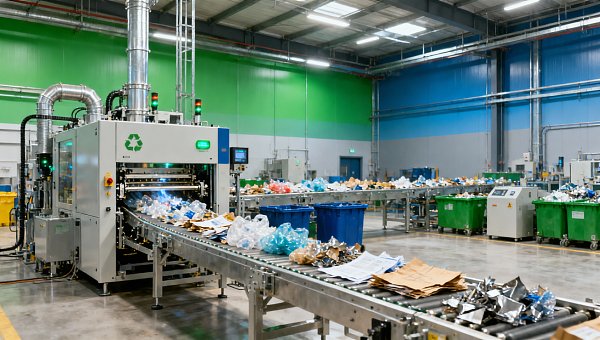
System design should also reflect upstream and downstream realities. If inbound materials arrive in mixed batches but the sorting station is sized for narrow fractions, operators compensate with manual intervention. If the baler or discharge area cannot absorb peak output, the front-end process slows or stops. These bottlenecks are especially common when pilot concepts are scaled without redesign.
This issue matters across adjacent sectors, including automotive dismantling, vehicle upgrade parts recycling, packaging recovery, and industrial waste streams. In each case, the physical handling logic must fit the material behavior. Heavy mixed scrap, lightweight films, and contaminated housings do not move through the same process at the same speed or with the same wear profile.
Typical design gaps between pilot and full deployment
The table below outlines common reasons a recycling system performs well in trials but underdelivers in continuous operations. It can support technical due diligence during supplier comparisons or internal project reviews.
The key lesson is that system design must be judged under realistic throughput, realistic labor, and realistic maintenance conditions. A concept may be sound, yet the deployed configuration may still be too narrow for field variability.
Four design checkpoints before final approval
- Confirm actual feedstock range, including contamination levels, moisture variation, and seasonal volume shifts over at least 4 quarters.
- Check maintenance access clearance, tool requirements, and average cleaning time for every critical station.
- Model downstream handling limits such as baling speed, residue removal frequency, and storage availability.
- Run a failure scenario review covering jams, sensor drift, power interruption, and manual override steps.
These checkpoints are especially useful for buyers comparing multiple eco tech options. They help move discussions away from promotional language and toward site-specific performance reality.
A procurement framework for buyers, researchers, and channel partners
For B2B decision-makers, the best way to reduce underperformance risk is to structure procurement around operating evidence. That means comparing solutions through a balanced matrix: material fit, serviceability, maintenance burden, parts availability, labor dependency, and total process economics. Equipment price should be only one of at least 6 core criteria.
Researchers and business evaluators can also use this framework to identify where a recycling solution belongs in the market. Some systems are appropriate for controlled industrial streams; others are better suited to mixed commercial waste or decentralized collection models. Market fit improves when a solution is positioned according to its real tolerance range, not its marketing ambition.
Distributors and agents benefit from the same discipline. By screening products more carefully before onboarding, they reduce claims risk, improve customer retention, and build stronger after-sales credibility. In sustainability-focused sectors, channel trust is often built over 6–18 months of actual field stability rather than initial sales momentum.
Practical procurement scoring model
The following scoring table can be adapted for supplier evaluation meetings, tender reviews, or commercial due diligence. It is particularly relevant when selecting recycling solutions tied to environmental innovation, green energy by-product recovery, or material reuse in mobility-related sectors.
Using a weighted matrix helps teams avoid one-dimensional buying decisions. It also makes internal approval easier because technical and commercial stakeholders can review the same decision logic using transparent criteria.
Minimum due diligence checklist
- Request operating data under variable input conditions, not only best-case trials.
- Verify service scope, training duration, and commissioning responsibilities in writing.
- Map spare parts into critical, recommended stock, and long-lead categories.
- Compare effective throughput, not advertised throughput, across a standard operating week.
- Review the line layout against actual site constraints such as power, ventilation, drainage, and forklift access.
This method aligns well with industrial intelligence-driven sourcing because it translates fragmented technical information into practical business risk signals. For organizations navigating environmental technology markets, that discipline is increasingly essential.
FAQ: common questions about recycling solutions in real operations
How can buyers tell if a recycling solution is over-optimized for demos?
Ask for results under mixed or contaminated inputs, not just clean-stream testing. Review uptime over at least 30 operating days, compare planned versus unplanned stoppages, and ask whether rated output assumes continuous running or includes cleaning and changeover periods. If a supplier cannot explain derating under variable input conditions, caution is justified.
What maintenance threshold should raise concern?
There is no single rule for all systems, but many buyers use service hours per 100 operating hours as a useful comparison point. If routine intervention regularly exceeds 8–12 hours per 100 hours, total labor cost and downtime may become commercially significant. The same applies if critical wear parts require replacement at unusually short intervals.
Are recycling solutions suitable for distributors and agents?
Yes, but only when the product is supportable in the target region. Distributors should assess technical training, parts stocking strategy, warranty workflow, and commissioning support before onboarding a line. A product may be easy to sell in the first 3 months, yet difficult to sustain over the first 12 months if after-sales capability is weak.
How long is a realistic implementation cycle?
For standard systems, a practical cycle may involve 2–4 weeks for technical confirmation, 4–10 weeks for delivery depending on customization, and 1–3 weeks for installation and commissioning. Complex projects linked to facility redesign, automotive material sorting, or integrated waste handling may take longer because civil work, training, and downstream coordination add time.
What matters most: sustainability claims or operating fit?
Both matter, but operating fit comes first in commercial reality. A solution that is environmentally attractive but unstable in daily use can create excess residue, transport inefficiency, and higher maintenance burden. Real sustainability depends on repeatable performance across procurement, operation, servicing, and material recovery outcomes.
Recycling solutions underperform not because the sustainability goal is flawed, but because execution is often treated as a secondary issue. Real-world success depends on matching the system to feedstock conditions, service infrastructure, maintenance routines, and market context. Buyers, researchers, and channel partners who evaluate these variables early are more likely to secure consistent output, lower downtime, and stronger commercial returns.
At GIIH, industrial intelligence is built around this kind of practical decision support: connecting environmental technology trends with supply chain logic, operating risk, and market readiness. If you are assessing recycling equipment, eco tech partnerships, or distribution opportunities, contact us to get a tailored evaluation framework, compare solution pathways, or learn more about implementation-focused sustainability strategies.
Recommended News
 Jun 12, 2026Eco Tech in Waste Management: Which Solutions Improve Sorting and Energy Efficiency?Eco Tech in waste management: discover which solutions improve sorting accuracy and energy efficiency across mixed, organic, and industrial waste streams for smarter, higher-value recovery.
 Jun 07, 2026Sustainable Waste Disposal Methods: How to Choose the Right Option for Business OperationsSustainable waste disposal starts with the right fit. Learn how businesses can compare methods, cut risk, stay compliant, and choose cost-effective options that support ESG goals.
 May 31, 2026Is Sustainable Board ready for high-volume packaging?Sustainable Board can scale high-volume packaging when performance, compliance, supply, and recovery are validated by real scenarios. Learn how to reduce risk and improve ROI.
 May 30, 2026Can recycled materials meet strict quality standards?Recycled materials can meet strict quality standards with traceability, testing, and supplier control. Learn how to reduce risk, prove compliance, and build sustainable value.
![]() May 23, 2026How to choose garden supplies for commercial landscapingOutdoor garden supplies for commercial landscaping: learn how to compare durability, supplier reliability, lifecycle cost, and compliance to make smarter, lower-risk purchasing decisions.
May 23, 2026How to choose garden supplies for commercial landscapingOutdoor garden supplies for commercial landscaping: learn how to compare durability, supplier reliability, lifecycle cost, and compliance to make smarter, lower-risk purchasing decisions. Apr 30, 2026Recycling solutions that struggle with inconsistent waste streamsDiscover recycling solutions for inconsistent waste streams with sustainable waste disposal, environmental innovation, Eco Tech, and green energy strategies that improve recovery and ROI.
 Apr 29, 2026Eco Tech monitoring tools that catch waste leaks earlierEco Tech monitoring tools detect waste leaks earlier, improving sustainable waste disposal, recycling solutions, and environmental innovation with eco-friendly solutions that cut risk and cost.
 Apr 25, 2026Eco Tech tools helping waste audits become more accurateEco Tech improves sustainable waste disposal and recycling solutions with environmental innovation and sustainable technology, helping businesses cut costs, boost compliance, and scale eco-friendly solutions.
 Apr 22, 2026Recycling solutions facing stricter material traceability rulesRecycling solutions for stricter traceability: discover sustainable waste disposal, Eco Tech, and sustainable technology that reduce compliance risk and unlock greener growth.
 Apr 22, 2026Are closed-loop recycling solutions worth the extra setup?Sustainable waste disposal and recycling solutions: find out when closed-loop systems pay off through environmental innovation, eco-friendly solutions, and stronger supply value.
 Apr 22, 2026What makes recycling solutions scalable across multiple sitesDiscover how recycling solutions scale across multiple sites through sustainable waste disposal, environmental innovation, Eco Tech data visibility, and eco-friendly solutions that also support replacement parts and vehicle upgrades.
 Apr 22, 2026Recycling solutions for materials that are hard to sortExplore recycling solutions for hard-to-sort materials, from sustainable waste disposal and environmental innovation to eco-friendly solutions, green energy, and sustainable technology trends.
 Apr 22, 2026How to compare recycling solutions beyond recovery ratesCompare recycling solutions beyond recovery rates with a practical guide to sustainable waste disposal, environmental innovation, eco-friendly solutions, and sustainable technology for smarter, lower-risk decisions.
 Apr 22, 2026Why some recycling solutions underperform in real operationsSustainable waste disposal and recycling solutions often underperform when service, replacement parts, and design fail in practice. Explore environmental innovation insights now.
 Apr 16, 2026Emissions control mistakes that raise compliance costsEmissions control mistakes can quietly raise compliance costs. Learn how smarter emissions control, climate technology, and sustainable solutions support CO2 reduction and long-term performance.
 Apr 16, 2026Eco-friendly waste handling works best before sorting breaks downEco-friendly waste handling, emissions control, and sustainable solutions work best before sorting fails. Explore climate technology, CO2 reduction, water filter and clean water strategies.
 Apr 16, 2026Eco-friendly waste handling can raise costs in the short termEco-friendly waste handling may raise short-term costs, but it strengthens emissions control, CO2 reduction, sustainable solutions, and clean water strategies. See how climate technology, water filter and water purifier upgrades improve drinking water, waste reduction, and long-term efficiency.
 Apr 16, 2026Waste reduction plans often miss the hardest stream firstEmissions control starts with the hardest waste stream. Discover sustainable solutions, climate technology, CO2 reduction, and smarter clean water, water filter, and eco-friendly waste handling strategies.
 Apr 16, 2026Sustainable solutions that fail once waste volumes riseExplore why sustainable solutions fail as waste volumes rise, impacting emissions control, CO2 reduction, climate technology, water filter performance, clean water, and eco-friendly waste handling.