


Search News
Global Industrial Intelligence Hub (GIIH)Industry Portal
Global Industrial Intelligence Hub (GIIH)Status
Standard Access
Upgrade to PremiumNewsHow telemedicine hardware improves hospital response time
Time
Click Count
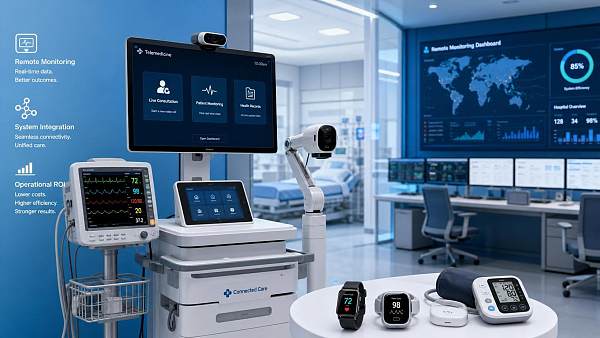
As hospitals face rising patient volumes and tighter care windows, Telemedicine hardware for hospitals is becoming a practical lever for faster response time. Bedside carts, connected diagnostic tools, secure communication endpoints, and remote monitoring devices shorten the distance between patients and clinicians. They also reduce handoff delays, support earlier escalation, and help hospitals maintain continuity when staffing or specialist availability is limited.
For healthcare systems, the value is not only clinical. Telemedicine hardware for hospitals also affects network design, device lifecycle planning, workflow engineering, compliance, and uptime management. A checklist-based approach helps decision teams avoid fragmented purchases and focus on the hardware capabilities that directly improve speed, reliability, and care coordination.
Why a checklist is necessary before selecting telemedicine hardware
Hospital response time depends on many linked actions. A physician must be reachable, a device must connect, patient data must display correctly, and documentation must flow into the record. If any hardware layer fails, response time slows immediately.
That is why Telemedicine hardware for hospitals should be evaluated as an operational system, not a set of isolated devices. A structured checklist keeps attention on the factors that affect clinical speed in real settings, including emergency admissions, ICU monitoring, stroke review, infectious isolation, and after-hours specialist consultation.
Core checklist: what improves hospital response time
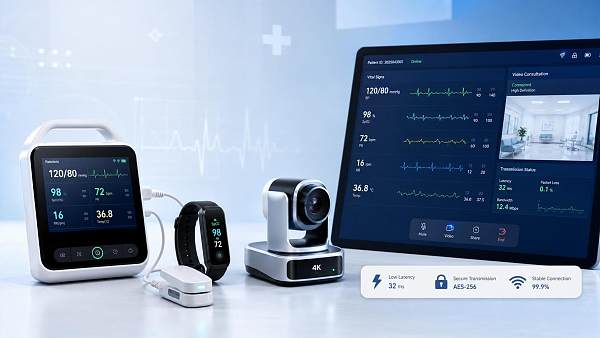
- Prioritize low-latency audio and video so clinicians can assess distress, guide bedside staff, and make decisions without repeating calls or switching platforms.
- Choose carts and wall units with rapid boot times, stable batteries, and simple docking to avoid delays during transfers and emergency room surges.
- Integrate digital stethoscopes, otoscopes, ultrasound interfaces, and exam cameras to support faster remote triage and more confident first-pass assessments.
- Verify seamless EHR connectivity so captured images, notes, and encounter data move directly into clinical records without duplicate entry or manual upload.
- Confirm Wi-Fi resilience, cellular backup, and network segmentation because telemedicine hardware for hospitals only saves time when connections stay stable.
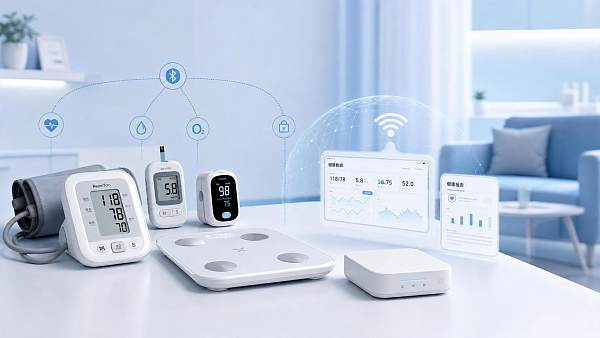
- Deploy remote patient monitoring devices that push alerts automatically, helping care teams identify deterioration earlier and intervene before conditions escalate.
- Use hardware with intuitive controls, large displays, and clear indicators so bedside teams can launch sessions quickly under pressure.
- Standardize ports, mounts, power accessories, and cleaning materials to reduce setup variation and speed training across departments.
- Require cybersecurity features such as encrypted transmission, secure authentication, and device management to protect availability as well as compliance.
- Plan maintenance windows, spare unit inventory, and remote diagnostics so hardware outages do not undermine clinical responsiveness during peak demand.
How telemedicine hardware for hospitals performs in key care scenarios
Emergency departments
In the emergency department, minutes matter. Telemedicine hardware for hospitals can connect on-site teams with neurologists, intensivists, trauma specialists, or language support almost immediately. High-definition cameras and integrated diagnostic peripherals let remote clinicians observe breathing effort, skin color, pupil response, and wound condition in real time.
This reduces waiting time for specialist review and supports quicker treatment decisions. In stroke or sepsis pathways, faster visual assessment and remote consultation can shorten escalation intervals and improve throughput.
ICU and step-down monitoring
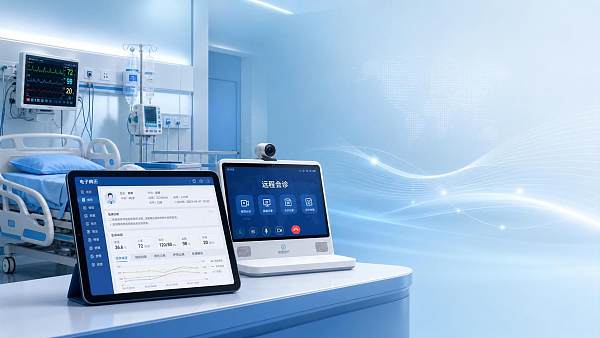
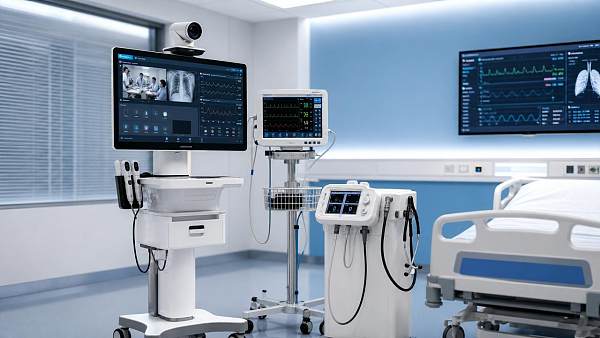
ICU telemedicine relies on always-on visibility. Connected cameras, microphones, patient monitors, and alerting devices allow remote teams to identify changes before bedside staff request support. That matters during night shifts, staffing gaps, or multi-patient surges.
The best telemedicine hardware for hospitals in critical care combines continuous monitoring with dependable communications. When alarms, waveform data, and video are unified, intervention can begin sooner and unnecessary room entry may decrease.
Isolation rooms and infectious care
Isolation settings benefit from remote interaction tools that reduce repeated room entry while preserving assessment quality. Mobile telemedicine carts and fixed bedside endpoints support medication checks, physician rounds, and family communication without avoidable movement.
This improves response time by making consultations easier to start and by reducing the operational burden of PPE changes. It also supports infection control and device cleaning workflows.
Rural hospitals and distributed networks
Smaller hospitals often need rapid access to expertise that is not physically available on site. Telemedicine hardware for hospitals bridges that gap by enabling immediate review from regional centers. The hardware becomes a force multiplier across a wider care network.
When combined with standardized protocols, remote devices can speed transfer decisions, reduce unnecessary patient movement, and improve confidence in local treatment initiation.
Commonly overlooked issues that slow response time
Ignoring battery endurance
A telemedicine cart that loses power mid-shift creates immediate downtime. Battery health, charging speed, and swap procedures are often undervalued during procurement.
Overlooking acoustics and camera angles
Poor microphones, echo, glare, or fixed camera positions can force repeated exams. That adds seconds and sometimes minutes to critical decisions.
Buying devices without workflow mapping
Even strong hardware underperforms if it does not match admission, rounding, escalation, and discharge routines. Workflow friction often causes underuse.
Separating hardware from network planning
Telemedicine hardware for hospitals depends on coverage, bandwidth, security policy, and roaming performance. Weak infrastructure can erase the value of premium devices.
Neglecting cleaning and infection-control compatibility
Complex surfaces, exposed cables, or incompatible materials increase turnover time between patients. Hygiene design affects speed more than many teams expect.
Practical execution steps for implementation
- Audit current response bottlenecks by department and identify where remote consultation or monitoring can remove waiting, travel, or duplicate communication.
- Run a pilot in one high-impact area, such as ED stroke triage or ICU overnight monitoring, before expanding systemwide.
- Measure launch time, connection success rate, consultation wait time, alert-to-action interval, and device uptime from day one.
- Define support ownership across clinical engineering, IT, infection control, and nursing operations to prevent accountability gaps.
- Create a refresh strategy covering batteries, peripherals, firmware, and spare units so the platform remains responsive over time.
For organizations assessing long-term digital care infrastructure, Telemedicine hardware for hospitals should be viewed as part of a broader intelligent operations framework. That perspective aligns with how industrial intelligence platforms such as GIIH evaluate technology adoption: by linking equipment performance, system integration, and measurable operational outcomes.
Conclusion and next action
Hospital response time improves when telemedicine tools are dependable, fast to activate, clinically useful, and easy to maintain. The strongest results come from matching hardware choices to real care pathways rather than purchasing around feature lists alone.
Start with one checklist-driven review of current workflows, network readiness, and device reliability requirements. Then prioritize the telemedicine hardware for hospitals that reduces decision delay, accelerates specialist access, and strengthens care continuity across the entire facility.
Recommended News
 Jul 04, 2026Remote Healthcare Technology for Hospitals: Use Cases, Integration, and ROI FactorsRemote healthcare technology for hospitals: explore top use cases, integration needs, and ROI drivers to help hospital leaders choose scalable, high-impact digital care solutions.
 Jul 03, 2026How to Use Health Insights to Improve Cross-Functional Project CoordinationHealth insights can reveal hidden risks, handoff gaps, and decision delays in cross-functional projects. Learn practical ways to improve coordination, speed response, and reduce costly rework.
 Jul 01, 2026How Remote Healthcare Technology Wireless Systems Support Chronic Care at HomeRemote healthcare technology wireless systems help providers deliver safer chronic care at home with real-time monitoring, early alerts, and better patient support—discover key benefits and use cases.
 Jun 30, 2026Why Low Latency Matters in Remote Healthcare Technology for Monitoring and ConsultsRemote healthcare technology low latency is crucial for safer monitoring and smoother virtual consults. Learn how faster data and alerts improve care quality, workflows, and scaling decisions.
 Jun 29, 2026Medical Technology Solutions for Telehealth: Which Devices Fit Remote Care Workflows?Medical technology solutions for telehealth work best when matched to real care workflows. Learn which devices improve remote monitoring, virtual visits, and post-discharge outcomes.
 Jun 26, 2026Remote Healthcare Technology Digital Therapeutics: Use Cases and Limits in Care DeliveryRemote healthcare technology digital therapeutics explained through real use cases, care delivery limits, and scaling risks. See where adoption creates value and what decision-makers must validate before rollout.
 Jun 24, 2026What Is Healthcare Informatics and How Is It Used in Hospitals and Telehealth?Healthcare informatics powers smarter hospitals and telehealth by connecting data, workflows, and clinical decisions. Discover how it improves care, safety, and coordination.
 Jun 20, 2026Nebulizers for Home Use: Mesh vs Jet vs Ultrasonic and Which One Fits Your NeedsNebulizers for home use compared: mesh, jet, and ultrasonic models explained by noise, portability, cost, and care needs—find the best fit for your routine and breathe easier.
 Jun 14, 2026How to Use Health Insights to Spot Care Gaps, Readmission Risk, and Patient TrendsHealth insights help healthcare teams spot care gaps, identify readmission risk, and track patient trends faster—turning complex data into smarter action, better outcomes, and stronger operational planning.
 Jun 13, 2026Online Medical Consultation vs In-Person Visits: Which Conditions Are Suitable for Each?Online medical consultation explained: discover which conditions are safe for virtual care, when in-person visits are essential, and how to choose the right option quickly and confidently.
 Jun 11, 2026Portable Oxygen Concentrators vs Oxygen Cylinders: Which Option Fits Home and Travel Use?Portable oxygen concentrators vs oxygen cylinders: compare mobility, travel convenience, backup reliability, and long-term cost to find the best oxygen solution for home and travel use.
 Jun 03, 2026Healthcare Informatics in Hospitals: Data Integration, Security, and Workflow Use CasesHealthcare informatics helps hospitals integrate data, strengthen security, and streamline workflows. Explore practical use cases for safer, faster care.
 May 22, 2026Can telemedicine hardware work well in rural areas?Telemedicine hardware for rural areas can deliver reliable care when matched to real-world power, network, and workflow needs. Explore the key checklist for smarter deployment.
 May 21, 2026What matters most in portable telemedicine hardwareTelemedicine hardware portable devices: learn what really matters for selection—clinical accuracy, secure connectivity, interoperability, durability, and lower long-term risk.
 May 20, 2026How telemedicine hardware improves hospital response timeTelemedicine hardware for hospitals helps reduce response time with faster consults, reliable monitoring, and better care coordination. Explore the checklist that helps hospitals choose smarter.
 Apr 16, 2026Healthcare resources gaps that delay care in remote areasExplore healthcare resources gaps delaying rural care, from biotech solutions and water purifier access to sustainable solutions, climate technology, and CO2 reduction strategies.