


Search News
Global Industrial Intelligence Hub (GIIH)Industry Portal
Global Industrial Intelligence Hub (GIIH)Status
Standard Access
Upgrade to PremiumNewsSmart street lighting now matters beyond energy savings
Time
Click Count
Smart street lighting for urban areas is no longer just a tool for cutting electricity costs; it has become a strategic asset for safer streets, richer data insights, and more resilient city infrastructure. For business decision-makers, understanding this shift is essential to evaluating long-term ROI, smart city readiness, and the broader value intelligent lighting brings to urban operations, sustainability goals, and public service performance.
That change matters far beyond municipal engineering teams. For investors, industrial suppliers, infrastructure developers, logistics operators, and public-private partnership planners, lighting now sits at the intersection of energy management, urban security, digital infrastructure, and environmental performance.
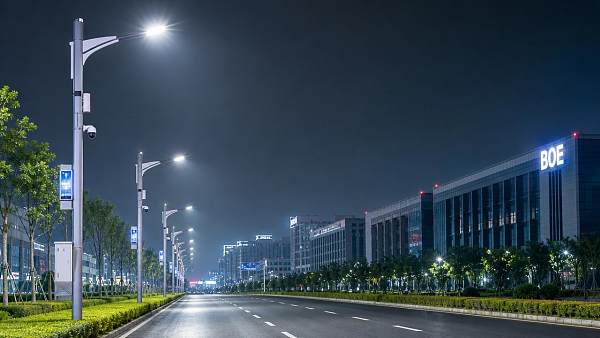
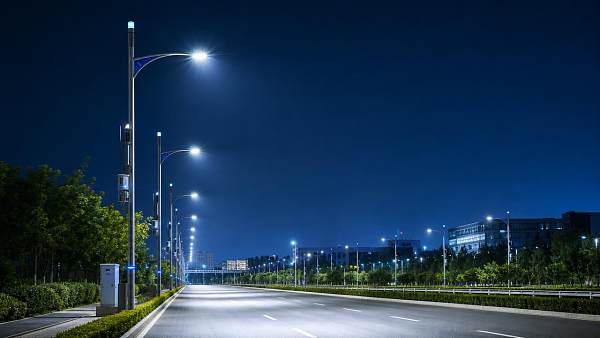
In practical terms, smart street lighting for urban areas is becoming a foundational layer of connected city operations. A lighting pole can now support sensors, cameras, environmental monitoring, EV-related planning, adaptive dimming, and maintenance alerts, turning a once-static asset into a multi-use urban node.
For enterprise decision-makers, the key question is no longer whether intelligent lighting saves power. The more valuable question is how to assess deployment models, operating benefits, data governance, lifecycle cost, and cross-department value over a 5- to 15-year horizon.
Why Smart Street Lighting Now Matters Beyond Energy Savings
Traditional public lighting projects were often justified by one metric: lower electricity consumption. While LED conversion can still deliver energy reductions in the 30% to 70% range depending on baseline conditions, that is only the first layer of value in modern urban infrastructure planning.
Today, smart street lighting for urban areas supports three broader priorities: safer public spaces, more efficient field operations, and stronger digital visibility into city assets. For decision-makers managing budget pressure and public expectations, those three outcomes often matter as much as utility savings.
A connected asset, not just a lighting fixture
A conventional streetlight performs 1 task: illumination. A smart unit may handle 5 to 8 functions, including remote switching, dimming schedules, fault detection, traffic sensing, air-quality monitoring, and integration with central management software.
This makes lighting infrastructure especially attractive because poles are already distributed across roads, business districts, industrial parks, ports, campuses, and residential corridors. Instead of building a separate physical network from zero, cities can upgrade an existing asset base in phases.
Urban safety and service responsiveness
Public safety is one of the strongest non-energy arguments. Adaptive brightness can improve visibility during high-traffic hours, severe weather, or emergency incidents. Remote failure detection also shortens maintenance response from several days to as little as 24 to 48 hours in many operating models.
For business districts and logistics zones that run late into the night, consistent lighting quality can support worker safety, vehicle navigation, pedestrian movement, and insurance risk management. That gives smart street lighting for urban areas a direct relevance to industrial and commercial continuity.
Why board-level leaders are paying attention
- Lighting assets typically operate 10 to 15 years, making procurement decisions strategically significant.
- Smart controls can reduce unnecessary runtime by several hours per day in low-demand periods.
- Maintenance can shift from reactive rounds to condition-based intervention.
- Poles can host additional services that increase infrastructure value without major civil reconstruction.
The table below shows how the value proposition has expanded from a narrow utility-saving model to a broader urban operations model.
The key takeaway is that lighting is evolving into a strategic infrastructure layer. Organizations that still evaluate projects only by fixture wattage or tariff savings risk undervaluing returns tied to uptime, public service quality, and future smart city integration.
Where the Business Case Becomes Strongest
Not every urban environment has the same priorities. The strongest investment cases for smart street lighting for urban areas usually emerge in locations where lighting quality directly affects safety, traffic flow, industrial activity, or public operating cost.
High-value deployment scenarios
Industrial parks, port access roads, airport corridors, university campuses, hospital districts, and mixed-use commercial zones often produce faster operational returns than low-activity residential streets. These sites typically have longer active hours, heavier movement, and stricter uptime requirements.
- Industrial parks: better shift safety and lower manual inspection frequency.
- Commercial streets: improved nighttime visibility and stronger public experience.
- Transport corridors: dynamic dimming aligned with vehicle flow and incident response.
- Municipal campuses: easier centralized control across 100 to 1,000+ points.
Beyond direct energy ROI
A narrow payback model may focus on electricity alone and project a 4- to 8-year return. A broader model also counts maintenance savings, lower outage duration, fewer site visits, reduced over-lighting, and the value of data generated by connected infrastructure.
For decision-makers evaluating capital allocation, this difference is critical. Two projects with similar wattage savings may deliver very different business outcomes if one includes central management software, open communication architecture, and scalable sensor support.
Four value categories often missed in early-stage planning
- Maintenance labor reduction through remote fault localization.
- Service-level improvement through faster outage response.
- Asset lifespan optimization through better operating profiles.
- Platform readiness for future urban digital services.
The next comparison helps enterprise and municipal stakeholders determine which evaluation lens is most appropriate during procurement.
In many cases, the better decision is not choosing the most advanced system available. It is choosing the system that matches site complexity, internal operating capacity, and future integration plans over at least 2 to 3 budget cycles.
How Decision-Makers Should Evaluate Smart Lighting Projects
Procurement teams often focus first on fixture efficiency, pole compatibility, and unit price. Those matter, but they are only part of the evaluation. A reliable smart street lighting for urban areas project should be assessed across technical, operational, financial, and governance dimensions.
Five core evaluation criteria
1. Control architecture and interoperability
Check whether the system uses open or semi-open communication protocols and whether it can integrate with existing asset platforms. A closed ecosystem may simplify initial deployment but create vendor lock-in over the next 7 to 12 years.
2. Maintenance model and service coverage
Ask how faults are detected, prioritized, and resolved. A strong support model should define response windows, spare-parts planning, remote diagnostics, and firmware update routines. Even a 1% to 2% annual failure gap becomes meaningful at scale.
3. Dimming strategy and lighting quality
Look beyond wattage. Assess lumen maintenance, light distribution, color temperature suitability, and adaptive scheduling. Urban roads, pedestrian areas, and industrial access routes may require different dimming profiles across evening, midnight, and pre-dawn periods.
4. Cybersecurity and data governance
Connected infrastructure introduces risk if credentials, firmware, or communication layers are poorly managed. Decision-makers should define at least 3 control areas: access management, update governance, and data retention policy for operational records.
5. Total cost of ownership
TCO should include hardware, software, communications, installation, commissioning, training, replacement cycles, and support. Comparing price per fixture alone can distort the real cost profile over a 10-year operating period.
A practical procurement checklist
- Is the pilot size large enough, such as 50 to 200 lighting points, to validate performance?
- Can the platform support phased scaling district by district?
- Are maintenance responsibilities clearly split between supplier and operator?
- Does the control system continue safe operation during communication loss?
- Are reporting dashboards useful for finance, operations, and public service teams alike?
Organizations that ask these questions early tend to avoid the most common issue in intelligent infrastructure projects: buying equipment first and defining operational logic later.
Implementation Risks, Governance Issues, and Long-Term Success Factors
The promise of smart street lighting for urban areas is real, but results depend heavily on project governance. Underperforming deployments usually fail not because the lamps are inefficient, but because planning, integration, and maintenance assumptions were weak from the beginning.
Common risks in deployment
One frequent problem is overspecification. Some projects purchase sensor-heavy systems for corridors that only require adaptive dimming and fault alerts. This raises capital cost without a proportional operational benefit.
Another issue is underspecification. Basic lighting controls may work well today, but if a city or industrial operator plans to add environmental monitoring within 24 to 36 months, insufficient communication capacity can force expensive retrofits.
Three governance disciplines that improve outcomes
- Start with corridor segmentation and use-case ranking before final hardware selection.
- Define acceptance criteria for energy, uptime, and control reliability during the pilot stage.
- Assign one cross-functional owner covering operations, IT, procurement, and vendor coordination.
Phased rollout works better than all-at-once replacement
A typical implementation can be structured in 3 phases: pilot, optimization, and scaled rollout. Pilot periods often run 8 to 12 weeks, giving teams enough time to measure control stability, illumination levels, response speed, and user feedback.
After the pilot, operators can refine dimming schedules, maintenance workflows, and dashboard design before expanding to larger zones. This staged approach reduces financial risk and generates stronger evidence for board or public-sector approval.
Why this matters in a broader industrial intelligence context
From a market intelligence perspective, intelligent lighting reflects a wider shift in infrastructure procurement. Buyers increasingly prefer systems that combine hardware performance with software visibility, service accountability, and future adaptability.
That is why platforms such as GIIH monitor smart living systems, environmental technology, logistics efficiency, and urban digital assets together rather than in isolation. For enterprise leaders, lighting decisions now connect with supply chain resilience, sustainability metrics, capital planning, and technology roadmap alignment.
What Enterprise Leaders Should Do Next
If your organization is evaluating urban infrastructure, industrial park modernization, public-private development, or smart city readiness, smart street lighting for urban areas should be treated as a strategic platform decision rather than a simple product purchase.
The most effective projects are those that align 4 elements from the start: site-specific lighting needs, measurable operating outcomes, scalable digital architecture, and realistic maintenance governance. When those elements are matched correctly, the benefits extend well beyond utility bills.
For business decision-makers, the opportunity is clear: lower wasted energy, improve service responsiveness, build more resilient public infrastructure, and create a stronger foundation for future data-enabled urban operations. The next step is to evaluate where intelligent lighting can deliver the highest strategic return within your portfolio.
To explore market trends, procurement considerations, and cross-sector infrastructure intelligence in greater depth, connect with GIIH for tailored insight, project benchmarking, and solution-oriented analysis. Contact us today to get a customized roadmap, discuss implementation priorities, and learn more solutions for smarter urban infrastructure.
Recommended News
 Jul 06, 2026LED Lights Wholesale: How to Check MOQ, Warranty Terms, and Price BreaksLED lights wholesale made simple: learn how to verify MOQ, warranty terms, and price breaks to reduce sourcing risk, protect margins, and choose suppliers with confidence.
 Jul 06, 2026Intelligent Lighting for Factories: Which Control Features Improve Safety and Efficiency?Intelligent lighting for factories improves safety, cuts energy waste, and supports smoother workflows with motion sensing, zoning, daylight control, and emergency-ready features.
 Jul 04, 2026Smart Living for Smart Lighting: Which Controls and Sensors Fit Each Room?Smart living for smart lighting made simple: discover the best controls and sensors for every room to improve comfort, safety, and energy savings with smarter home planning.
 Jul 03, 2026UL Listed Lighting System Requirements: What to Check for Commercial ProjectsUL listed lighting system checks can make or break commercial approvals. Learn what to verify in listings, controls, ratings, and documents to avoid delays and compliance risk.
 Jul 02, 2026LED Lights Lumen Output Explained: How to Compare Brightness Across FixturesLED lights lumen output explained in a clear, practical guide. Learn how to compare fixture brightness, beam spread, efficiency, and color temperature before you buy.
 Jul 01, 2026Commercial LED Lighting in the Middle East: What to Check Before SpecificationCommercial LED lighting Middle East projects need more than price checks. Learn how to verify heat, dust, power, optics, compliance, and maintenance before specification.
 Jun 29, 2026Industrial Lighting Selection Guide: Beam Angle, IP Rating, and Energy Use by Facility TypeIndustrial lighting guide for smarter facility upgrades: compare beam angle, IP rating, and energy use by warehouse, manufacturing, washdown, and outdoor site needs.
 Jun 23, 2026UV Nail Lamps Explained: Wattage, Timer, and Gel Compatibility Before You BuyUVnaillamps explained: compare wattage, timer settings, and gel compatibility to avoid curing issues, choose the right lamp faster, and get smoother, longer-lasting gel manicure results.
 Jun 22, 2026Why LED Lights with Low Heat Emission Work Better for Display Cases and Tight SpacesLED lights low heat emission solutions help display cases and tight spaces stay cooler, safer, and more visually stable. Discover why they improve protection, performance, and long-term efficiency.
 Jun 21, 2026Lighting Technology Analysis for Commercial Spaces: Efficacy, CRI, and Control CompatibilityLighting technology analysis for commercial spaces: compare efficacy, CRI, and control compatibility to cut costs, improve visual quality, and choose smarter future-ready lighting systems.
 Jun 19, 2026Lighting Sourcing Checklist: How to Compare Suppliers, Certifications, and MOQLighting sourcing made simple: compare suppliers, certifications, MOQ, lead times, and quality risks before choosing a quote. Use this checklist to source smarter and avoid costly mistakes.
 Jun 15, 2026How to Use Lighting in Small Rooms: Placement Tips, Layering, and Common MistakesHow to use lighting in small rooms: discover smart placement, layered lighting ideas, bulb tips, and common mistakes to avoid for a brighter, bigger-feeling space.
 Jun 05, 2026How to Evaluate a Lighting Exporter: Certifications, MOQ, Lead Time, and QA ChecklistLighting exporter evaluation starts with certifications, MOQ, lead time, and QA. Use this practical checklist to reduce sourcing risk, protect margins, and choose reliable partners.
![]() May 23, 2026Smart street lighting now matters beyond energy savingsSmart street lighting for urban areas now goes beyond energy savings—improving safety, maintenance efficiency, and smart city readiness. Discover the long-term ROI and strategic value.
May 23, 2026Smart street lighting now matters beyond energy savingsSmart street lighting for urban areas now goes beyond energy savings—improving safety, maintenance efficiency, and smart city readiness. Discover the long-term ROI and strategic value. May 22, 2026Do smart street lights cut energy costs enough to matter?Smart street lighting energy-saving solutions cut power and maintenance costs through LEDs, dimming, and remote monitoring. See when the savings are material enough to justify investment.
 May 21, 2026Are smart street lights really the lower cost optionSmart street lighting cost-effective solutions can cut energy and maintenance costs, but only in the right projects. See when smart street lights deliver true lifecycle savings.
![]() May 19, 2026What makes waterproof LED lighting last outdoors longer?Commercial LED lighting waterproof design determines how outdoor fixtures withstand water, heat, UV, and corrosion. Discover what truly extends service life and lowers maintenance risk.
May 19, 2026What makes waterproof LED lighting last outdoors longer?Commercial LED lighting waterproof design determines how outdoor fixtures withstand water, heat, UV, and corrosion. Discover what truly extends service life and lowers maintenance risk. May 18, 2026How much can commercial LED lighting really save yearly?Commercial LED lighting energy-saving solutions can cut yearly lighting costs by 40%–75%. Learn how to estimate real ROI, reduce maintenance, and approve upgrades with confidence.
 May 17, 2026Why US LED suppliers differ on lead times and certificationsCommercial LED lighting supplier in USA choices vary widely in lead times and certifications. Learn what affects delivery, compliance, and sourcing risk to make smarter procurement decisions.
 May 16, 2026How lighting decision support helps avoid costly mistakesLighting decision support helps business leaders avoid costly procurement mistakes, cut lifecycle risk, improve compliance, and choose smarter lighting investments with confidence.