


Search News
Global Industrial Intelligence Hub (GIIH)Industry Portal
Global Industrial Intelligence Hub (GIIH)Status
Standard Access
Upgrade to PremiumNewsWhat matters most in portable telemedicine hardware
Time
Click Count
For technical evaluators, the question is not whether portable telemedicine hardware is small enough to travel. It is whether the device can deliver dependable clinical performance, secure data exchange, and practical interoperability in real-world care environments.
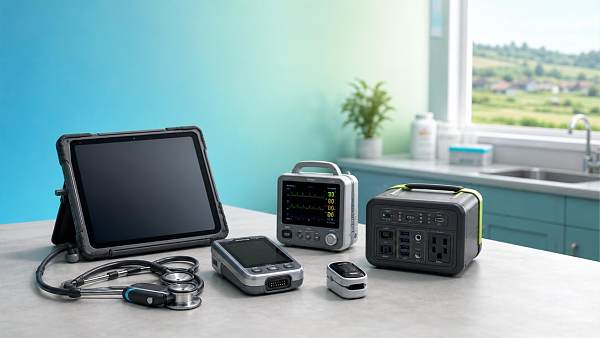
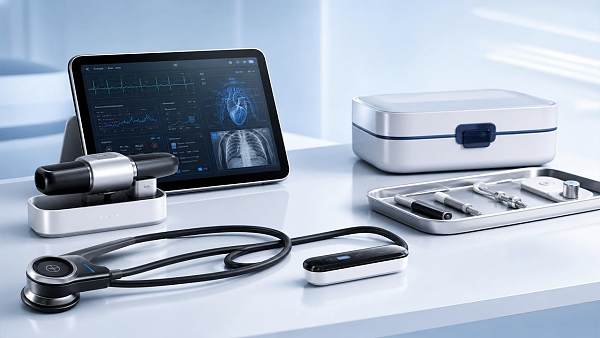
In most evaluations, the strongest options are not the lightest or cheapest units. The best Telemedicine hardware portable devices are the ones that consistently capture accurate data, maintain uptime, protect patient information, and fit existing workflows without creating new technical burdens.
That search intent is highly practical. Readers looking up what matters most in portable telemedicine hardware usually want a decision framework. They need to compare products, identify risks, and understand which specifications actually affect service quality, scalability, and long-term support.
For technical assessment teams, the key concerns are clear. Can the hardware produce clinically usable measurements? Will connectivity remain stable outside ideal network conditions? Is the platform secure and compliant? Can it integrate with EHR, cloud, device management, and remote support systems?
What helps most is not broad discussion about telehealth trends. What helps is structured evaluation criteria: sensing accuracy, device durability, battery life, network resilience, software compatibility, cybersecurity posture, serviceability, regulatory readiness, and total lifecycle cost.
This article focuses on those decision points. It gives technical evaluators a practical way to judge portable systems for remote consultations, home monitoring, mobile clinics, emergency outreach, and distributed care delivery across different operational settings.
Start with the clinical job: what must the portable device actually do?
Before comparing brands or specifications, evaluators should define the device’s clinical role. Portable telemedicine hardware for a community screening program has different requirements from a field diagnostic kit, a home chronic-care monitor, or a specialist remote examination cart.
The most important first step is mapping hardware requirements to intended use. Ask what data the device must capture, how often it will be used, who will operate it, and whether clinicians need real-time interaction or asynchronous review.
For example, a portable device built for remote dermatology may prioritize image resolution, lighting consistency, and secure upload speed. A unit for cardiology triage may depend more on signal quality, sensor precision, latency, and compatibility with clinical review software.
This sounds basic, but many procurement mistakes start here. Teams often select devices based on portability claims alone, then discover that image quality, audio clarity, or measurement reliability falls short under normal patient-facing conditions.
So the first answer to what matters most in portable telemedicine hardware is fitness for purpose. Compact form factor matters, but only after the hardware can perform the clinical task it was acquired to support.
Data quality matters more than device size
Technical evaluators should place data integrity at the center of their review. In telemedicine, poor-quality input creates poor-quality decisions. If a portable unit cannot capture stable, clinically valid data, no amount of convenience compensates for that weakness.
Key performance areas include sensor accuracy, image fidelity, microphone clarity, noise handling, calibration stability, and consistency across repeated use. Hardware should maintain acceptable output even when operated by non-specialist staff or patients at home.
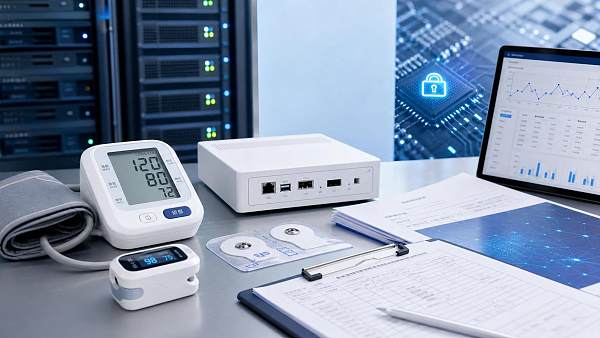
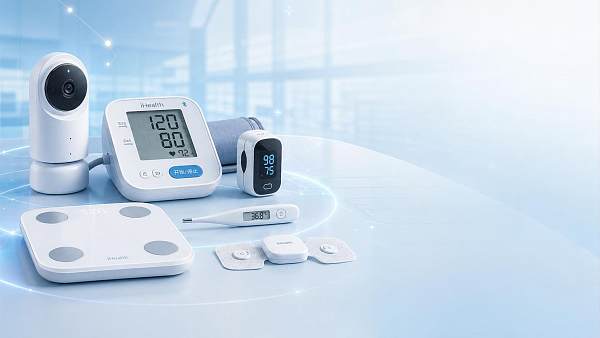
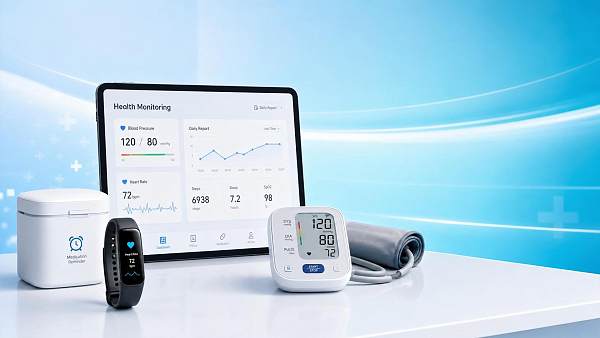
For measurement-based devices, evaluators should check validation evidence carefully. Claims around blood pressure, oxygen saturation, ECG capture, temperature, or respiratory metrics should be backed by recognized standards, test reports, or clinical validation pathways.
For imaging and examination tools, attention should go to resolution, focus behavior, color accuracy, low-light performance, field of view, and compression effects during transmission. Clinical usability depends not only on capture quality but also on what remains visible after data transfer.
Audio quality also deserves more scrutiny than it often gets. Remote consultation quality can degrade quickly if microphones struggle with ambient noise, speaker output is weak, or echo control fails in mobile or semi-public environments.
In other words, portable telemedicine hardware should be evaluated as a clinical instrument first and a consumer-style gadget second. Reliable clinical data is the foundation of remote care quality, diagnostic confidence, and provider trust.
Connectivity resilience is a make-or-break requirement
Many portable telemedicine deployments fail not because the hardware is unusable, but because it depends on ideal connectivity. Real-world conditions include unstable Wi-Fi, variable cellular coverage, bandwidth congestion, and frequent movement across locations.
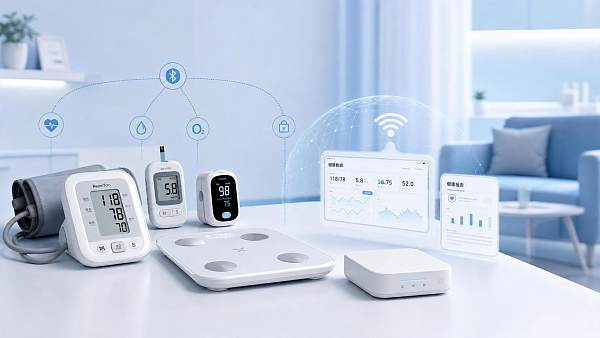
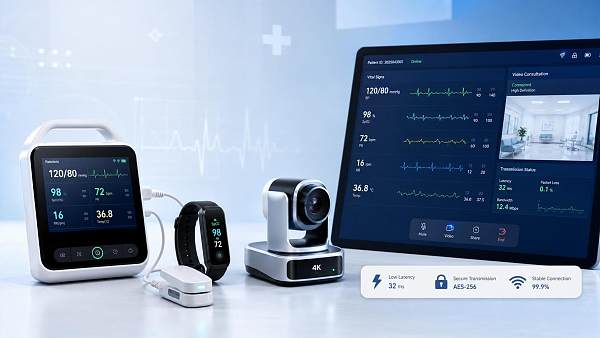
That is why resilient connectivity matters so much in Telemedicine hardware portable devices. Evaluators should examine support for Wi-Fi standards, 4G or 5G fallback, Bluetooth stability, local buffering, offline workflows, and secure reconnection after interruptions.
Devices that can store data locally and synchronize later are often more practical than systems designed only for continuous live transmission. In home health, rural outreach, or temporary mobile clinics, intermittent network availability is a normal operating condition.
Latency is another important factor, especially for interactive use cases. If clinicians need to guide an examination in real time, video delay, dropped audio, or lag during peripheral device readings can reduce consultation quality and clinician efficiency.
Evaluators should also consider antenna design, roaming performance, SIM or eSIM management, network handoff behavior, and the way the device alerts users when connection quality compromises data transmission or session reliability.
Portable telemedicine hardware should not simply connect when tested in an office. It should continue functioning across homes, transit setups, satellite clinics, and low-bandwidth environments without placing troubleshooting demands on frontline users.
Interoperability determines whether the hardware will scale
A technically impressive device can still become a poor investment if it does not integrate with the surrounding digital ecosystem. For technical evaluators, interoperability is one of the strongest predictors of whether a telemedicine program can scale efficiently.
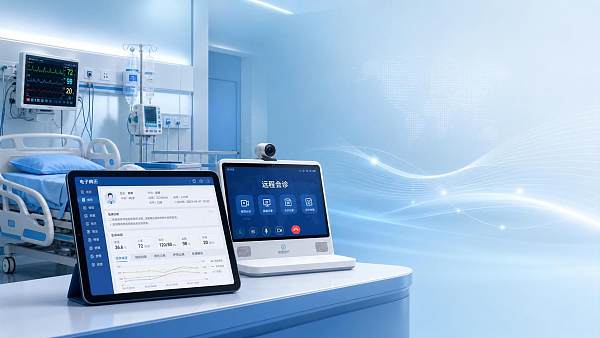
At minimum, teams should examine how the hardware exchanges data with telehealth platforms, EHR systems, PACS environments where relevant, cloud storage, analytics dashboards, and remote device management tools. Proprietary lock-in can create long-term cost and workflow friction.
Support for standards and documented APIs matters greatly. Depending on the use case, that may include HL7, FHIR, DICOM, standardized export formats, identity management compatibility, and role-based access controls across connected systems.
Interoperability should also include workflow fit. Can a clinician launch the session without multiple logins? Can patient identifiers sync accurately? Can measurements flow automatically into records without manual re-entry? These details strongly affect operational value.
Another overlooked factor is peripheral ecosystem compatibility. Some portable telemedicine systems need to pair with digital stethoscopes, otoscopes, imaging attachments, diagnostic probes, or patient monitoring accessories. Compatibility constraints can limit future deployment options.
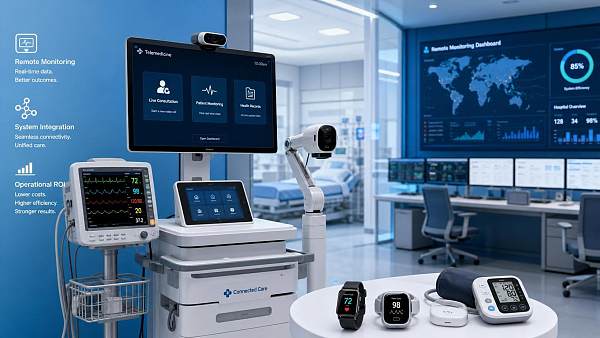
For organizations planning expansion across regions or specialties, open integration is usually safer than isolated hardware islands. Scalable remote care depends on connected systems, not on standalone devices that create extra operational silos.
Security and compliance cannot be treated as add-ons
Portable devices move across locations, users, and networks, which makes them inherently higher-risk than fixed clinical equipment. Technical evaluators should therefore assess security architecture early, not after selecting hardware based on performance alone.
Core requirements include encryption at rest and in transit, secure boot, authenticated firmware updates, role-based access, audit logging, remote lock or wipe capability, and strong device identity controls. These are not premium extras; they are baseline safeguards.
Because portable telemedicine hardware often works beyond controlled hospital networks, endpoint protection becomes especially important. Evaluators should ask how the device handles loss, theft, unauthorized pairing, insecure local networks, and user credential misuse.
Compliance requirements vary by region, but the practical question remains the same: can the hardware support lawful, documented, and secure handling of protected health information? That includes data retention controls, consent handling, and vendor security transparency.
Update governance is another critical issue. A device may launch with strong protection, then weaken over time if firmware patches are slow, operating systems age out, or third-party components stop receiving security support.
From a lifecycle perspective, the best portable devices combine secure design with manageable administration. If security controls are too complex for field operations, they are often bypassed. Real security depends on both architecture and operational usability.
Durability, battery life, and serviceability affect real deployment success
Portable telemedicine hardware lives in less predictable conditions than fixed clinical systems. It may be carried between patient homes, used outdoors, disinfected frequently, or handled by multiple operators. Durability is therefore a technical and financial concern.
Evaluators should check enclosure quality, ingress protection where relevant, drop resistance, thermal performance, screen robustness, connector reliability, and tolerance for repeated cleaning. A device that performs well in demos may fail quickly under mobile operational stress.
Battery performance should be tested against actual use patterns, not only manufacturer claims. Runtime under video sessions, peripheral attachment, continuous monitoring, and cellular use is far more informative than a general standby estimate.
Swappable batteries, fast charging, external power flexibility, and clear battery health monitoring can significantly improve uptime. In mobile deployments, battery limitations often become one of the earliest hidden constraints on service continuity.
Serviceability matters just as much. Can failed units be repaired locally? Are replacement parts available? What is the turnaround time for service? Can software diagnostics identify faults remotely before the device is recalled from the field?
Technical evaluators should treat maintainability as part of performance. Reliable remote care depends not only on how the device works on day one, but on how easily the fleet can stay operational across months or years of distributed use.
Usability for operators and patients influences adoption and error rates
Even highly capable hardware can underperform if it is difficult to use. Portable telemedicine systems often involve nurses, community health workers, home users, and patients with limited technical confidence. Usability directly affects data quality and workflow reliability.
Important considerations include startup speed, interface clarity, pairing simplicity, guided measurement steps, screen readability, audio prompts, and how easily users can recover from mistakes. A technically advanced device is not valuable if routine tasks create avoidable friction.
Ergonomics also deserve closer attention. Weight distribution, grip, cable management, docking behavior, mounting options, and one-handed operation can matter more than headline dimensions, especially in fast-paced or physically constrained care settings.
For patient-facing deployments, onboarding requirements should remain realistic. Devices that need repeated support calls, complex calibration, or multi-app setup can increase program costs and reduce adherence in home monitoring scenarios.
Evaluators should request scenario-based testing, not only specification sheets. Observe how users complete common tasks, where they hesitate, and whether errors are easy to detect. Usability failures often surface long before any hard technical fault appears.
In telemedicine, usability is not a soft issue. It is closely tied to operational efficiency, patient compliance, staff training burden, and the consistency of clinically useful data collection.
Total cost of ownership is broader than purchase price
Price matters, but technical teams should avoid evaluating portable telemedicine hardware as a one-time equipment purchase. The true cost emerges across deployment, integration, support, updates, training, accessory replacement, connectivity plans, and device retirement.
Low-cost units may become expensive if they require manual data handling, frequent replacement, additional middleware, or intensive IT intervention. Higher-priced platforms may prove more economical if they reduce downtime and integrate cleanly with existing systems.
It is useful to model total cost of ownership over several years. Include licensing, cloud dependencies, security maintenance, field support, logistics, consumables, warranty terms, and the labor impact on clinical and technical staff.
Vendor maturity should also enter the equation. A strong support organization, transparent roadmap, documented APIs, and consistent update policy can reduce operational risk more than a short-term price advantage from a less established supplier.
For many organizations, the best decision is not the most feature-rich device. It is the platform that delivers dependable clinical performance with manageable support demands and clear long-term viability.
A practical evaluation framework for technical teams
When comparing Telemedicine hardware portable devices, technical evaluators can simplify the process by using a weighted framework. Start with intended use, then score devices across clinical data quality, connectivity resilience, interoperability, security, durability, usability, and service support.
Next, validate marketing claims through realistic testing. Simulate low bandwidth, repeated transport, battery-heavy sessions, peripheral pairing, and multi-user workflows. Field-like evaluation usually reveals issues that controlled demonstrations miss.
It also helps to separate essential requirements from desirable features. Essentials may include validated measurements, encrypted transmission, API access, remote management, and reliable battery endurance. Nice-to-have features can be considered only after core needs are satisfied.
Finally, involve both technical and operational stakeholders. IT, clinical leadership, field staff, procurement, and compliance teams often identify different risks. A strong decision comes from cross-functional review rather than specification comparison in isolation.
For organizations building scalable telehealth capacity, the most successful choices are usually disciplined rather than flashy. Good portable hardware disappears into the workflow, supports clinicians quietly, and keeps delivering under imperfect real-world conditions.
Conclusion: the best portable telemedicine hardware is the most dependable, not the most compact
What matters most in portable telemedicine hardware is not portability alone. For technical evaluators, the decisive factors are clinical data reliability, secure and resilient connectivity, interoperability with existing platforms, durable field performance, manageable support, and practical usability.
When these elements are strong, Telemedicine hardware portable devices can extend care quality across homes, rural sites, mobile units, and distributed health networks. When they are weak, small size only makes a flawed system easier to carry.
The right evaluation approach is therefore evidence-based and context-specific. Define the clinical job, test under realistic conditions, examine lifecycle risk, and prioritize dependable performance over marketing language. That is what turns portable telemedicine hardware into a scalable care asset.
Recommended News
 Jul 05, 2026Remote Healthcare Technology Quality Standards: What Buyers Should Verify Before ApprovalRemote healthcare technology quality standards define whether digital care is truly safe, secure, and approval-ready. Discover what buyers must verify before selecting vendors.
 Jul 04, 2026Remote Healthcare Technology for Hospitals: Use Cases, Integration, and ROI FactorsRemote healthcare technology for hospitals: explore top use cases, integration needs, and ROI drivers to help hospital leaders choose scalable, high-impact digital care solutions.
 Jul 03, 2026How to Use Health Insights to Improve Cross-Functional Project CoordinationHealth insights can reveal hidden risks, handoff gaps, and decision delays in cross-functional projects. Learn practical ways to improve coordination, speed response, and reduce costly rework.
 Jul 01, 2026How Remote Healthcare Technology Wireless Systems Support Chronic Care at HomeRemote healthcare technology wireless systems help providers deliver safer chronic care at home with real-time monitoring, early alerts, and better patient support—discover key benefits and use cases.
 Jun 30, 2026Why Low Latency Matters in Remote Healthcare Technology for Monitoring and ConsultsRemote healthcare technology low latency is crucial for safer monitoring and smoother virtual consults. Learn how faster data and alerts improve care quality, workflows, and scaling decisions.
 Jun 29, 2026Medical Technology Solutions for Telehealth: Which Devices Fit Remote Care Workflows?Medical technology solutions for telehealth work best when matched to real care workflows. Learn which devices improve remote monitoring, virtual visits, and post-discharge outcomes.
 Jun 26, 2026Remote Healthcare Technology Digital Therapeutics: Use Cases and Limits in Care DeliveryRemote healthcare technology digital therapeutics explained through real use cases, care delivery limits, and scaling risks. See where adoption creates value and what decision-makers must validate before rollout.
 Jun 24, 2026What Is Healthcare Informatics and How Is It Used in Hospitals and Telehealth?Healthcare informatics powers smarter hospitals and telehealth by connecting data, workflows, and clinical decisions. Discover how it improves care, safety, and coordination.
 Jun 20, 2026Nebulizers for Home Use: Mesh vs Jet vs Ultrasonic and Which One Fits Your NeedsNebulizers for home use compared: mesh, jet, and ultrasonic models explained by noise, portability, cost, and care needs—find the best fit for your routine and breathe easier.
 Jun 14, 2026How to Use Health Insights to Spot Care Gaps, Readmission Risk, and Patient TrendsHealth insights help healthcare teams spot care gaps, identify readmission risk, and track patient trends faster—turning complex data into smarter action, better outcomes, and stronger operational planning.
 Jun 13, 2026Online Medical Consultation vs In-Person Visits: Which Conditions Are Suitable for Each?Online medical consultation explained: discover which conditions are safe for virtual care, when in-person visits are essential, and how to choose the right option quickly and confidently.
 Jun 11, 2026Portable Oxygen Concentrators vs Oxygen Cylinders: Which Option Fits Home and Travel Use?Portable oxygen concentrators vs oxygen cylinders: compare mobility, travel convenience, backup reliability, and long-term cost to find the best oxygen solution for home and travel use.
 Jun 03, 2026Healthcare Informatics in Hospitals: Data Integration, Security, and Workflow Use CasesHealthcare informatics helps hospitals integrate data, strengthen security, and streamline workflows. Explore practical use cases for safer, faster care.
 May 22, 2026Can telemedicine hardware work well in rural areas?Telemedicine hardware for rural areas can deliver reliable care when matched to real-world power, network, and workflow needs. Explore the key checklist for smarter deployment.
 May 21, 2026What matters most in portable telemedicine hardwareTelemedicine hardware portable devices: learn what really matters for selection—clinical accuracy, secure connectivity, interoperability, durability, and lower long-term risk.
 May 20, 2026How telemedicine hardware improves hospital response timeTelemedicine hardware for hospitals helps reduce response time with faster consults, reliable monitoring, and better care coordination. Explore the checklist that helps hospitals choose smarter.
 Apr 16, 2026Healthcare resources gaps that delay care in remote areasExplore healthcare resources gaps delaying rural care, from biotech solutions and water purifier access to sustainable solutions, climate technology, and CO2 reduction strategies.