


Search News
Global Industrial Intelligence Hub (GIIH)Industry Portal
Global Industrial Intelligence Hub (GIIH)Status
Standard Access
Upgrade to PremiumNewsWhich automation solutions scale without disrupting output
Time
Click Count
For business decision-makers, scaling operations without sacrificing throughput is no longer optional—it is a strategic imperative. The right Industrial & Manufacturing automation solutions can expand capacity, improve consistency, and reduce operational risk while keeping production stable. This article explores how enterprises can evaluate automation pathways that support growth, protect existing output, and align with long-term industrial competitiveness.
In practice, the challenge is rarely whether to automate. It is how to automate without creating downtime, bottlenecks, quality drift, or integration problems across production, logistics, maintenance, and reporting systems. For executives managing multi-site operations, contract manufacturing, or global supply chains, the best automation strategy is usually phased, measurable, and tightly linked to throughput protection.
Across sectors monitored by Global Industrial Intelligence Hub, from medical technology and smart living systems to logistics, mobility, and environmental applications, the same question appears repeatedly: which automation investments scale reliably under real operating pressure? The answer depends on process maturity, data visibility, equipment compatibility, labor constraints, and the speed at which a business must add capacity.
Why scalable automation matters more than isolated efficiency gains
A standalone productivity boost may look attractive on paper, but decision-makers need systems that hold output steady at 2 shifts, 3 shifts, and during demand spikes of 15%–40%. Industrial & Manufacturing automation solutions create value when they improve flow across the line, not only at a single station.
Throughput disruption often comes from four predictable sources: unplanned commissioning delays, poor interface design, data silos between OT and IT, and underestimating operator adoption time. In many facilities, the technical issue is not machine speed. It is synchronization between upstream feeding, downstream handling, quality verification, and maintenance response within a 24/7 environment.
The business risks of scaling too fast
- Line stoppages during retrofit windows that exceed the planned 8–16 hours.
- Cycle-time imbalance where one automated cell runs 20% faster than the next process can absorb.
- Quality escapes caused by sensor miscalibration, tolerance stacking, or unstable vision inspection.
- Higher maintenance burden when spare parts, software support, and technician skills are not aligned.
These risks explain why mature buyers increasingly ask not just for technical capability, but for implementation discipline. They want ramp-up curves, fallback procedures, integration maps, and acceptance criteria before approving capital expenditure.
Where scalable automation delivers the strongest return
The highest-impact opportunities usually sit in repetitive, high-volume, variance-sensitive processes. Examples include packaging, palletizing, conveyor routing, inspection, pick-and-place handling, intralogistics, machine tending, and process monitoring. These areas often deliver measurable improvements within 3–12 months when the line already has stable baseline demand.
For mixed-product environments, flexible automation can outperform fixed systems if changeovers occur more than 4–6 times per shift. In low-volume, high-mix operations, semi-automated cells with digital work instructions may produce better throughput stability than full automation deployed too early.
Which Industrial & Manufacturing automation solutions scale with minimal disruption
Not all automation categories carry the same implementation risk. Decision-makers should prioritize solutions that can be added in modules, integrated with existing controls, and validated in short commissioning windows. The most scalable Industrial & Manufacturing automation solutions are usually those that improve visibility, material flow, and repeatability before attempting deep process redesign.
Low-disruption solution categories
The table below compares common automation paths by disruption level, deployment complexity, and scaling suitability for enterprise operations.
A clear pattern emerges: systems that add intelligence, repeatability, or material flow control often scale more smoothly than highly customized full-line overhauls. For many enterprises, the safest sequence is monitor first, automate transfer second, then automate complex process steps after baseline performance is visible.
Solutions that usually require tighter planning
Full line robotics and bespoke process automation
These can deliver major capacity gains, but the disruption risk is higher. Integration often touches PLC logic, safety systems, fixtures, recipe management, and downstream inspection. If line utilization already exceeds 85%, even a 2-day commissioning delay can materially affect monthly output commitments.
Warehouse automation without order-flow redesign
Automated storage and retrieval, sortation, and autonomous transport can scale impressively, but only when SKU logic, replenishment rules, and ERP or WMS integration are stable. In cross-border logistics environments, weak master data can create more congestion, not less.
A decision framework for choosing the right automation pathway
Enterprise buyers should evaluate automation through a structured lens rather than vendor feature lists. The right Industrial & Manufacturing automation solutions are those that fit process economics, workforce realities, maintenance capability, and future expansion plans across 12–36 months.
Five evaluation criteria executives should use
- Throughput impact: Can the solution increase output by 10%–25% without creating a new bottleneck?
- Integration complexity: How many existing systems, controls, or data layers must be modified?
- Ramp-up speed: Can the operation reach stable performance within 2–6 weeks after installation?
- Operational resilience: Is there a fallback mode if one sensor, robot, or software node fails?
- Scalability: Can the same architecture expand to another line, shift, or facility with limited redesign?
This framework is particularly relevant for organizations balancing regional production footprints, contract partners, and supply chain volatility. Automation should not lock the business into a rigid model if product mix, compliance needs, or labor availability may change within the next 18 months.
Practical buyer checklist
Before issuing an RFQ or approving a pilot, many decision-makers benefit from a simple comparison matrix that links technical choices to operating risk.
The strongest proposals are those that make these items transparent. If a supplier cannot define ramp-up assumptions, spare-part logic, or fallback operation within the first review cycle, the solution may not be mature enough for high-output environments.
How to implement automation without disrupting current output
Implementation strategy matters as much as equipment choice. Even well-selected Industrial & Manufacturing automation solutions can underperform if installation, validation, and workforce transition are handled too aggressively.
Use a phased deployment model
Phase 1: Baseline and simulation
Capture 6–8 weeks of operating data, including cycle time, stoppage frequency, defect categories, labor touchpoints, and shift variation. This stage should define the actual bottleneck, not the assumed one.
Phase 2: Pilot cell or limited-area rollout
Deploy on one line, one SKU family, or one warehouse zone first. A pilot lasting 30–90 days often reveals operator behavior, maintenance gaps, and interface issues before capital is scaled across the network.
Phase 3: Replication with standardized controls
After performance stabilizes, replicate using the same documentation, alarm logic, HMI structure, and maintenance protocol. Standardization reduces engineering hours and shortens replication timelines by 15%–30% in many programs.
Protect output during transition
- Schedule cutovers during low-demand periods, planned shutdowns, or weekend windows.
- Maintain temporary parallel capacity for 1–2 production cycles when feasible.
- Train operators, maintenance staff, and supervisors before go-live, not after.
- Define acceptance targets for speed, quality, uptime, and safety within the first 72 hours.
A disciplined transition plan is especially important in regulated or quality-sensitive sectors such as medical technology, automotive components, and environmental systems. In these environments, output continuity and traceability often matter as much as raw speed.
Common mistakes that reduce automation ROI
The biggest automation failures are rarely caused by the concept itself. More often, they come from timing, poor scope control, or choosing a system that is too rigid for the operating model.
Mistake 1: Automating instability
If scrap, rework, or machine stoppages are already high, automation may simply accelerate bad output. Process capability, material consistency, and work instructions should reach a minimum stable state before scaling technology.
Mistake 2: Ignoring changeover realities
A system optimized for one product may struggle when SKUs change every 45 minutes. Tooling flexibility, recipe management, and operator intervention time must be considered early, especially in multi-product plants.
Mistake 3: Underestimating data architecture
Without clean signal mapping, timestamp consistency, and alarm hierarchy, the enterprise loses the visibility needed to improve performance after installation. Automation should generate usable operating intelligence, not just movement.
Mistake 4: Buying for demonstration value instead of replication value
A highly customized showcase cell may impress stakeholders but fail to scale across 5 plants or 20 lines. Replication economics, maintenance simplicity, and supplier support footprint usually matter more than novelty.
What decision-makers should prioritize next
For most enterprises, the best next move is not a plant-wide leap. It is a structured automation roadmap built around measurable constraints: throughput, labor exposure, quality risk, and expansion timing. Industrial & Manufacturing automation solutions create the most durable advantage when they are selected as part of a broader operating model, not as isolated capital projects.
Organizations that pair market intelligence with disciplined execution are better positioned to scale across uncertain demand cycles, fragmented supply chains, and rising service expectations. That is why many B2B leaders now treat automation review as both an operations decision and a strategic resilience decision.
If your business is evaluating capacity expansion, retrofit priorities, or cross-site automation planning, a comparative assessment can identify where low-disruption gains are most realistic in the next 6–18 months. Contact GIIH to discuss your operational context, get a tailored automation perspective, and explore more solutions aligned with long-term industrial growth.
Recommended News
 Jul 04, 2026How Industrial Knowledge Platform Support Planning Improves Multi-Site OperationsIndustrial knowledge platform support planning helps multi-site operations turn fragmented data into faster, smarter decisions across supply, compliance, and regional risk.
 Jul 03, 2026IEC Standards Solution Evaluation: What Engineers Should Verify Before ApprovalSolution evaluation IEC standards guide: learn what engineers must verify before approval, from safety and interoperability to documentation and market-entry risks.
 Jul 02, 2026How to Use an Industrial Knowledge Hub in North America for Supplier and Market ResearchIndustrial knowledge hub North America guide for smarter supplier and market research. Learn how to compare suppliers, read demand signals, spot risks, and make faster decisions.
 Jul 01, 2026Using Industrial Trend Forecasting for Cost Reduction in Capacity PlanningIndustrial trend forecasting cost reduction helps businesses cut capacity planning waste, avoid overcapacity, and improve margins with smarter, faster operational decisions.
 Jun 30, 2026Engineering Metrics Explained: Which Performance Indicators Matter in Product Evaluation?Engineering metrics explained: discover the performance, reliability, quality, efficiency, and lifecycle indicators that truly matter in product evaluation and smarter buying decisions.
 Jun 30, 2026How to Use Durability Product Selection Criteria for Long-Life Equipment DecisionsDurability product selection criteria guide smarter long-life equipment decisions. Learn how to compare lifecycle cost, maintenance risk, and supplier reliability for better ROI.
 Jun 29, 2026How a Global Market Intelligence Research Firm Evaluates New Market Entry RiskGlobal market intelligence research firm insights reveal how to assess new market entry risk across regulation, demand, competition, and supply chains for smarter expansion decisions.
 Jun 28, 2026Industry Forecast Pricing: How to Use Market Signals for Budgeting and Contract TimingIndustry forecast pricing helps businesses turn market signals into smarter budgets and better contract timing. Learn how to track cost drivers, reduce risk, and improve margins.
 Jun 28, 2026What an Industrial Resource Library Hub Should Include for Faster Cross-Team ResearchIndustrial resource library hub essentials for faster cross-team research: learn the features, filters, expert context, and validation tools that turn scattered data into decision-ready insight.
 Jun 28, 2026Category Education Subscription Cost: How to Evaluate ROI Before You RenewCategory education subscription cost: learn how to measure ROI before renewal by reviewing total spend, usage quality, and decision impact to make smarter, lower-risk business choices.
 Jun 27, 2026Industrial Market Analysis Metrics: Which KPIs Matter for Demand, Margin, and Capacity Planning?Industrial market analysis metrics that reveal true demand, margin risks, and capacity gaps. Learn which KPIs matter most to improve planning, pricing, and operational decisions.
 Jun 27, 2026How to Build a Solution Evaluation Dashboard That Tracks Cost, Risk, and Supplier FitSolution evaluation dashboard guide: learn how to track total cost, risk, and supplier fit with practical scoring methods that support smarter industrial decisions.
 Jun 26, 2026How to Use Global Industrial Insights Searchable Data for Supplier and Market ResearchGlobal industrial insights searchable data helps you compare suppliers, spot market shifts early, and reduce sourcing risk with faster, smarter industrial research.
 Jun 25, 2026Hex Bolts and Nuts: How to Choose Grade, Thread Type, and Coatinghexboltsandnuts guide: learn how to choose the right grade, thread type, and coating to improve strength, corrosion resistance, compliance, and sourcing reliability.
 Jun 24, 2026Tempered Building Glass Manufacturer Selection: Certifications, Thickness, and Quality ChecksTempered building glass manufacturer selection starts with certifications, thickness options, and QC checks. Learn how to compare suppliers, reduce project risk, and source with confidence.
 Jun 24, 2026Educational Furniture Buying Guide: How to Choose Safe, Durable Options for ClassroomsEducational furniture buying guide: learn how to choose safe, durable classroom solutions by comparing standards, materials, lifecycle cost, and supplier reliability.
 Jun 23, 2026What Is Industrial Decision Intelligence and Where Does It Deliver Measurable Value?Industrial decision intelligence explained: discover where industrial decision strategies create measurable value in sourcing, capacity, logistics, R&D, and global expansion.
 Jun 22, 2026Power Transformers Selection Guide: Voltage Rating, Cooling Method, and Installation LimitsPowertransformers selection guide covering voltage rating, cooling methods, and installation limits. Learn how to choose reliable units, reduce risk, and improve project performance.
 Jun 21, 2026Farm Management Software Comparison: Which Features Matter Most for Multi-Field Operations?Farm management software comparison for multi-field operations: discover which features improve field visibility, labor coordination, cost control, and integration for smarter decisions.
 Jun 21, 2026Industrial Automation Insights: 7 Metrics That Reveal Where Efficiency Gains Are HidingIndustrial automation insights uncover 7 critical metrics that expose hidden efficiency gains, reduce downtime, improve yield, and turn operational data into faster, smarter decisions.
 Jun 20, 2026What Is a Structured Resource in Enterprise Operations and How Is It Used?Structured resource explained for enterprise operations: learn how it connects data, context, and expert insight to improve decisions, reduce risk, and drive faster action.
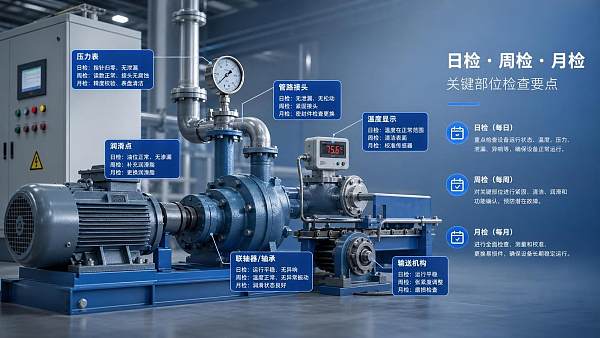
 Jun 20, 2026Industrial Maintenance Checklist: What to Inspect Daily, Weekly, and MonthlyIndustrial maintenance made simple: learn what to inspect daily, weekly, and monthly to reduce downtime, improve safety, and keep equipment running efficiently.
 Jun 19, 2026Pesticides Explained: Common Categories, Label Rules, and Safe Use Mistakes to AvoidPesticides explained clearly: explore common categories, label rules, and safe-use mistakes to avoid so your team can reduce risk, strengthen compliance, and improve operational control.
 Jun 19, 2026Office Furniture Procurement Guide: Materials, Ergonomics, and Total Cost FactorsOffice furniture buying made smarter: compare materials, ergonomics, supplier quality, and total cost to reduce risk, improve comfort, and choose value that lasts.