


Search News
Global Industrial Intelligence Hub (GIIH)Industry Portal
Global Industrial Intelligence Hub (GIIH)Status
Standard Access
Upgrade to PremiumNewsCar replacement parts quality checks often start too late
Time
Click Count
In the aftermarket, car replacement parts often fail quality checks because inspection begins only after defects have entered procurement, inventory control, and logistics management. For buyers, distributors, and industry researchers, this delay can disrupt supply chain performance, weaken trust in high-quality parts, and raise risks across automotive components, precision parts, and electric vehicle parts sourcing.
This issue is no longer limited to isolated supplier mistakes. In a globalized automotive parts market, even a small deviation in material hardness, machining tolerance, packaging traceability, or batch labeling can spread across 3 to 5 supply chain nodes before anyone detects it. By that point, the cost is not only financial. It also affects lead time reliability, claims handling, distributor reputation, and future sourcing decisions.
For procurement teams, commercial evaluators, and channel partners, the core question is practical: why do quality checks still start too late, and what operating model reduces risk before defective parts move into stock? From the perspective of GIIH, the answer lies in shifting quality control upstream, connecting technical validation with purchasing workflows, and using structured checkpoints from RFQ to final delivery.
Why Late Quality Checks Create Supply Chain Losses
In many aftermarket operations, quality inspection begins at the warehouse gate or, worse, after customer complaints. That means the first formal review happens only after supplier selection, purchase order issuance, outbound shipping, and inbound receiving are already complete. A defect that could have been identified in 24 to 72 hours at the sample stage may remain hidden for 2 to 6 weeks.
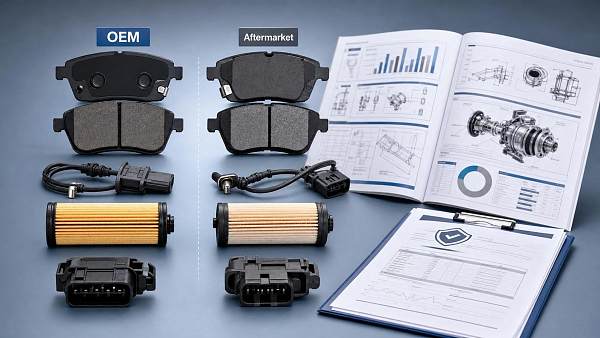
The risk is especially high for precision automotive parts such as brake components, steering parts, suspension assemblies, seals, bearings, sensors, and EV-related electrical parts. These products often depend on tolerance ranges such as ±0.05 mm to ±0.20 mm, controlled surface treatment, and stable batch consistency. If the inspection point is delayed, buyers may discover variation only when installation failure rates rise beyond acceptable levels.
Late checks also distort inventory data. Once nonconforming parts are booked into ERP or warehouse management systems, they appear available for sale. Distributors may allocate them across multiple regions, creating fragmented recall exposure. A single defective batch of 1,000 units can affect 10 to 20 downstream customers if quarantine protocols are not triggered early.
For business evaluation teams, the hidden cost includes re-inspection labor, expedited freight, reverse logistics, and claim negotiation time. In many aftermarket environments, one late-detected quality event can add 8% to 15% to the landed cost of the affected SKU. This is why quality timing matters as much as quality criteria.
Typical failure points before inspection starts
- Supplier onboarding focuses on price, MOQ, and lead time, while drawings, material records, and process capability are reviewed too late.
- Sample approval is informal, with 1 to 3 pieces checked visually but no batch-level consistency validation.
- Packaging and label controls are ignored, despite frequent aftermarket errors in part number matching, barcode format, and country-of-origin marking.
- Incoming inspection is reduced during peak season, often checking less than 5% of shipments by quantity.
The operational lesson is clear: defects should be screened before production release, before shipment, and before stock entry. Waiting until inventory receives the goods is simply too late in an industry where parts move quickly and margin recovery is slow.
Where Buyers Should Move the Inspection Window
A more effective model places quality checks across the sourcing cycle instead of concentrating them at receiving. For aftermarket buyers, the inspection window should begin during supplier qualification and continue through pilot production, pre-shipment review, inbound verification, and post-market feedback. This creates 5 control gates rather than 1 late-stage checkpoint.
At the quotation stage, buyers should request at least four technical documents: product drawings or dimensional references, material declaration, process flow summary, and packaging specification. Even when sourcing generic replacement parts, these records help confirm whether the supplier understands repeatability, not just unit pricing.
Before mass production, sample testing should cover both fit and consistency. A practical rule is to review 5 to 10 samples from more than one production moment rather than checking only a single hand-picked piece. This is particularly useful for rubber parts, metal stampings, filters, and EV connectors, where appearance may look acceptable but performance variation emerges across batches.
Pre-shipment inspection is equally important. Buyers often underestimate the impact of mixed cartons, mismatched labels, and quantity deviation. Yet in cross-border automotive parts trade, these issues create customs delays, incorrect stock entry, and sales returns. A 1% packing error can cause weeks of order correction when multiple SKUs are consolidated.
Recommended inspection checkpoints by sourcing stage
The table below shows how different quality checks align with different supply chain stages. This helps procurement and evaluation teams assign the right control method before risk becomes expensive.
The key conclusion is that earlier checks do not replace inbound inspection; they reduce the burden on it. When buyers distribute controls across 4 stages, the probability of discovering defects only after inventory entry drops significantly, and supplier accountability becomes easier to document.
A simple 5-step control flow
- Screen suppliers using technical records, not only price sheets.
- Approve samples from multiple production times.
- Lock packaging and labeling specifications in the PO.
- Run pre-shipment batch checks for critical SKUs.
- Use inbound quarantine until inspection release is completed.
Quality Indicators That Matter More Than a Visual Check
Many replacement parts pass a quick visual review but still fail in installation or service. This is why a serious quality program should evaluate more than scratches, color, or surface finish. Buyers need measurable indicators tied to actual product function, especially in high-turnover categories where field returns can quickly damage channel credibility.
For metal and machined parts, dimensional tolerance, thread accuracy, hardness range, and coating adhesion are often more important than general appearance. For rubber and sealing parts, elasticity retention, odor consistency, and temperature tolerance may determine usable life. For electrical and EV-related parts, terminal fit, insulation reliability, connector locking force, and batch coding traceability should be prioritized.
A useful operating principle is to classify SKUs into three risk levels. Level 1 may include cosmetic or low-risk accessories; Level 2 includes standard functional replacement parts; Level 3 includes safety-relevant or electrically sensitive components. Inspection depth, sampling size, and pre-shipment requirements should increase with risk level rather than staying uniform across all SKUs.
This matters because not every part deserves the same inspection budget. The goal is not to inspect everything at maximum intensity. The goal is to align control effort with commercial and technical exposure. For many distributors, focusing stricter controls on the top 20% of critical SKUs delivers better risk reduction than spreading light checks over 100% of stock.
Examples of practical acceptance criteria
The following table summarizes common quality indicators by part category. These are not brand-specific standards, but they provide a practical framework for procurement, QA coordination, and business review.
The takeaway is that a visual check should be the first screen, not the final decision. Buyers that define 3 to 6 measurable acceptance points per part family usually gain clearer supplier comparisons and fewer disputes after delivery.
Common misjudgments in aftermarket sourcing
- Assuming a stable appearance means stable function across all production lots.
- Accepting a sample without recording approved dimensions or labeling format.
- Treating all SKUs equally instead of assigning high, medium, and low inspection intensity.
- Ignoring packaging as a quality factor, even though transit damage and SKU confusion are frequent claim triggers.
How Procurement, Logistics, and QA Should Share Responsibility
One reason quality checks start too late is organizational separation. Procurement negotiates price and delivery, logistics focuses on movement and booking, and quality teams see the goods only after arrival. This siloed structure creates a delay loop. By the time QA flags a defect, procurement has already paid deposits, logistics has allocated storage, and sales may have promised delivery dates.
A stronger operating model assigns clear responsibilities at each stage. Procurement should own supplier document collection and technical requirement alignment. QA should define critical acceptance criteria and sampling rules. Logistics should verify packaging compliance, shipment identification, and quarantine handling. This 3-party approach shortens detection time and reduces internal ambiguity.
For cross-border transactions, communication timing matters almost as much as the check itself. If a supplier receives a nonconformance notice 7 days after dispatch, corrective action is already harder. But if the issue is raised during pre-shipment inspection or before container closing, the supplier can rework, relabel, or replace affected cartons before the freight leg begins.
Digital coordination also helps. A practical system does not need to be complex. Even a shared inspection checklist, lot photo archive, and batch release record can improve traceability. For medium-volume distributors handling 200 to 500 active SKUs, this basic structure often delivers more value than relying on memory or email-only approval chains.
Role alignment in a preventive quality workflow
The table below clarifies how responsibilities can be distributed so quality checks begin earlier and decisions are not delayed until receiving.
This structure is especially useful for distributors and regional agents. It prevents quality from being treated as a final checkpoint owned by only one department. Instead, it becomes a commercial control system built into the supply chain.
Minimum process documents worth standardizing
- Approved sample record with photos and basic dimensions.
- Purchase order attachment covering labels, packaging, and carton marking.
- Pre-shipment inspection checklist for critical SKUs.
- Inbound quarantine and release log by lot number.
What Smart Buyers and Distributors Should Do Next
The aftermarket does not need more inspection in general; it needs earlier, better-targeted inspection. Buyers should first identify the 10 to 20 SKUs or part families that create the highest return risk, margin exposure, or installation sensitivity. These categories should receive sample-level review, pre-shipment control, and stronger inbound quarantine as a priority.
Second, procurement teams should include technical and packaging checkpoints in commercial negotiation. A supplier that offers a favorable unit price but cannot maintain document consistency, lot traceability, or packaging discipline may generate a much higher total cost over 90 to 180 days. Landed cost must be evaluated together with defect risk and recovery difficulty.
Third, business evaluation teams should compare suppliers using a structured scorecard. Useful dimensions include technical response speed, sample consistency, corrective action time, batch traceability, and delivery accuracy. Even a 5-point scoring model can improve sourcing decisions if it is used consistently across competing suppliers.
From GIIH’s industrial intelligence perspective, the most resilient automotive parts supply chains are those that connect market insight with operational discipline. As vehicle electrification, platform diversity, and aftermarket complexity continue to grow, quality assurance can no longer start after goods are already in motion. It must begin where risk first enters the transaction: supplier selection, technical confirmation, and batch release planning.
FAQ for sourcing teams and channel partners
How many quality checkpoints are usually practical for aftermarket parts?
For most B2B buyers, 4 checkpoints are practical: supplier document review, sample approval, pre-shipment inspection, and inbound receiving. High-risk parts may need an additional pilot installation or field verification stage, especially when launching a new supplier or new EV-related category.
Which parts should receive stricter early inspection?
Priority should go to safety-relevant parts, precision fitment items, and electrically sensitive components. Brake parts, steering components, seals with tight fit requirements, and connectors or sensors are common examples. If a SKU has frequent claims, tight tolerance, or high replacement cost, it should move into the stricter control tier.
What is a reasonable sampling approach when resources are limited?
A practical approach is to inspect 5 to 10 pieces during sample approval and apply risk-based batch sampling at receiving. The exact level depends on SKU criticality, order volume, and supplier stability. The main objective is consistency checking, not only one-piece validation.
How long should corrective action take after a defect is found?
For routine packaging or labeling issues, a 24 to 72 hour response window is usually reasonable. For product-related defects requiring root cause review, 5 to 10 working days is more realistic. Buyers should define both containment timing and final corrective action timing in advance.
Late quality checks are not just a technical weakness; they are a supply chain design problem. Companies that move inspection upstream, assign cross-functional responsibility, and define measurable acceptance criteria are better positioned to protect inventory integrity, distributor trust, and sourcing efficiency. If your team is reviewing automotive replacement parts suppliers, evaluating quality risk in cross-border purchasing, or building a stronger aftermarket control model, contact GIIH to explore tailored intelligence support, supplier assessment frameworks, and practical sourcing solutions.
Recommended News
 Sep 26, 2026When do aftermarket shock absorbers need replacement?Aftermarket shock absorbers may need replacement when bouncing, leaks, tire cupping, or unstable handling appear. Learn key warning signs and choose the right time to inspect.
 Sep 17, 2026How to verify fitment before buying vehicle specific aftermarket partsVehicle specific aftermarket parts: verify VIN, OEM numbers, fitment details, and installation needs before buying to avoid costly mistakes.
 Sep 16, 2026How Brake Drum Compatibility Impacts Trailer Safety Compliance and Maintenance Intervalssemi trailer spare parts: Discover how brake drum compatibility directly impacts trailer safety compliance, maintenance intervals, and regulatory risk—get expert insights now.
 Sep 09, 2026Evaluating Replacement Brake Drums for BPW Axle Systems: Compatibility, Certification, and Aftermarket Sourcing Riskssemi trailer spare parts: Discover critical risks in sourcing BPW brake drums—compatibility, certification & aftermarket pitfalls revealed.
 Sep 08, 2026Why Semi Trailer Brake Drums Crack: Wear Patterns and PreventionSemi trailer spare parts guide: identify brake drum crack patterns, prevent overheating, and improve wheel-end safety with practical maintenance insights.
 Aug 25, 2026How to vet an aftermarket replacement auto parts supplier for quality consistencyAftermarket replacement auto parts supplier selection starts with proof of quality consistency. Learn how to assess traceability, process control, packaging, and complaint handling before you buy.
 Jul 11, 2026Fleet Aftermarket Service: What to Check in Parts Coverage, Response Time, and WarrantyFleet aftermarket service guide: learn how to evaluate parts coverage, response time, and warranty terms to reduce downtime, control repair costs, and choose a more reliable supplier.
 Jul 10, 2026Replacement Auto Parts USA: How to Verify Fitment, Quality, and Supplier ReliabilityReplacement auto parts USA sourcing made safer: learn how to verify fitment, assess real quality, and spot reliable suppliers before returns, warranty claims, and costly ordering mistakes happen.
 Jul 10, 2026How to Choose Vehicle Accessories for Trucks Based on Load, Terrain, and Daily UseVehicle accessories for trucks should match load, terrain, and daily use. Discover practical tips to choose smarter upgrades for safety, durability, comfort, and long-term value.
 Jul 09, 2026Auto Parts Industry Europe: Key Market Shifts Affecting OEM and Aftermarket BuyersAuto parts industry Europe is shifting fast. Explore key OEM and aftermarket trends, compliance risks, and sourcing strategies shaping smarter buying decisions.
 Jul 08, 2026Aftermarket Engineered Components: When to Choose Replacement Parts Over OEM OptionsAftermarket engineered components can cut downtime, improve service life, and lower total maintenance cost. Learn when replacement parts outperform OEM options.
 Jul 05, 2026Aftermarket Solutions for Vehicle Maintenance: Which Parts and Services Save More Downtime?Aftermarket solutions for vehicle maintenance that cut downtime most: discover which parts, diagnostics, and preventive services deliver faster returns, fewer repeat repairs, and smarter fleet savings.
 Jul 05, 2026Replacement Auto Parts USA Market: How Distributors Compare Demand by CategoryReplacement auto parts USA market trends by category: compare brakes, filters, sensors, collision parts, and batteries to spot demand shifts, inventory priorities, and profitable distributor strategies.
 Jul 03, 2026Aftermarket Auto Parts vs OEM Parts: What to Compare Before You BuyAftermarket auto parts vs OEM parts: compare fit, quality, warranty, safety, and long-term value before you buy. Make a smarter parts choice with confidence.
 Jul 02, 2026Replacement Auto Parts Database: What Data Fields Matter Most for Fast Part Matching?Replacement auto parts database essentials: discover the key data fields for faster, more accurate part matching, fewer returns, and smarter sourcing decisions.
 Jul 01, 2026Injection Molded Aftermarket Parts vs OEM: How to Compare Fit, Cost, and Lead TimeInjection molded aftermarket parts vs OEM: compare fit, total cost, and lead time with a practical buyer framework to reduce sourcing risk and make faster purchasing decisions.
 Jun 29, 2026Sourcing Automotive Parts in Europe: OEM, Aftermarket, and Compliance Checks ExplainedAutomotive parts Europe sourcing made simple: compare OEM vs aftermarket, verify supplier credibility, and run compliance checks to reduce risk, protect margins, and buy smarter.
 Jun 28, 2026Auto Parts Quality Standards Explained: Key Certifications, Tests, and Failure RisksAuto parts quality standards explained: learn key certifications, real-world tests, hidden failure risks, and smarter supplier checks to reduce recalls and improve compliance.
 Jun 27, 2026Stamped Aftermarket Parts vs Machined Parts: Which Option Fits Cost and Volume Targets?Stamped aftermarket parts vs machined parts: compare cost, tooling, volume, lead time, and precision to find the best sourcing strategy for margins, supply stability, and long-term value.
 Jun 25, 2026Diaper Bags Backpack Buying Guide: Features That Matter for Daily Outingsdiaperbagsbackpack buying guide: discover the features that matter most for daily outings, from smart storage and comfort to easy-clean materials and durable design.
 Jun 23, 2026Car Maintenance Tools Checklist: What to Buy First for DIY Repairs and Routine ServiceCar maintenance tools checklist for DIY beginners: discover what to buy first for safe routine service, oil changes, tire care, and smarter garage upgrades on any budget.
 Jun 22, 2026Outdoor Garden Supplies Buying Guide: How to Identify Durable Tools That Last LongerOutdoor garden supplies durable tools buying guide: learn how to spot stronger materials, smarter design, and long-lasting value before you buy.
 Jun 20, 2026Aftermarket Service vs OEM Support: What Buyers Should Compare Before SigningAftermarket service can shape uptime, repair costs, and supplier risk more than price alone. Compare OEM support, spare parts, warranty, and response speed before signing.
 Jun 19, 2026Car Replacement Parts: OEM vs Aftermarket, Fitment Risks, and Warranty QuestionsCar replacement parts guide: compare OEM vs aftermarket, avoid fitment risks, and understand warranty questions to choose safer, smarter parts with confidence.