


Search News
Global Industrial Intelligence Hub (GIIH)Industry Portal
Global Industrial Intelligence Hub (GIIH)Status
Standard Access
Upgrade to PremiumNewsWhen aftermarket supply looks cheap but adds downtime
Time
Click Count
Cheap aftermarket supply can lower the purchase price on paper, but for industrial buyers, distributors, and evaluation teams, the real cost often shows up later as downtime, rework, delayed delivery, warranty claims, and damaged customer trust. If a lower-cost part creates inconsistent fit, shorter service life, unstable lead times, or logistics disruption, the savings disappear quickly. The key decision is not whether an aftermarket option is cheap, but whether it is reliable enough to protect uptime, inventory flow, and total operating margin.
For readers sourcing automotive components, custom components, EV motor parts, EV battery-related assemblies, electric vehicle parts, or other precision industrial parts, the smartest evaluation method is to compare total cost of ownership, supply continuity, technical consistency, and replacement risk—not unit price alone. In many cases, “cheap” aftermarket supply becomes expensive the moment it interrupts operations.
Why low-cost aftermarket supply so often turns into a downtime problem
The main reason is simple: procurement savings are immediate, while operational losses are delayed and less visible during the buying decision. A part may look acceptable in a catalog or quote, yet fail in actual use because of tolerance drift, inconsistent materials, weak quality control, poor packaging, inaccurate product data, or unstable replenishment.
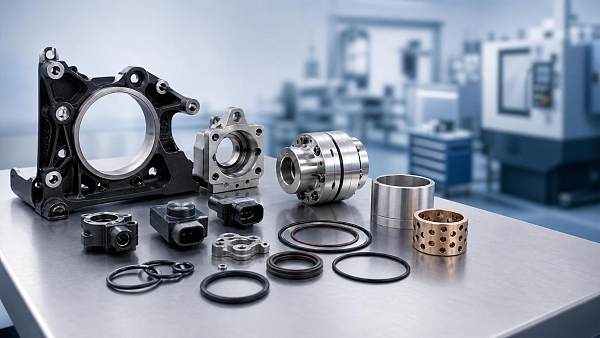
In industrial environments, even a low-value component can stop a high-value process. A seal, connector, sensor housing, mounting bracket, bearing unit, wiring interface, or battery subassembly may represent a small fraction of the bill of materials, but if it fails, the line stops, the vehicle stays in service bay longer, or the shipment misses its delivery window.
This is especially true in sectors tied to precision engineering and mobility. In automotive components and electric vehicle parts, slight dimensional inconsistency or performance variation can trigger installation delays, troubleshooting time, safety concerns, or repeat maintenance. What initially looked like a procurement win then becomes a service and operations loss.
What buyers, sourcing teams, and distributors should evaluate beyond price
For the target audience—researchers, procurement professionals, commercial evaluators, and channel partners—the core question is practical: will this source help us operate more reliably, or will it increase uncertainty?
The most important evaluation points usually include:
- Technical consistency: Are dimensions, materials, tolerances, and performance specifications stable across batches?
- Fit and compatibility: Does the part match installation requirements, surrounding systems, and expected service conditions?
- Supply continuity: Can the supplier maintain inventory control and deliver on time when demand changes?
- Quality assurance: Is there traceability, inspection documentation, testing discipline, and a clear corrective action process?
- Logistics reliability: Are packaging, shipping, customs handling, and lead-time commitments robust enough to avoid disruption?
- After-sales response: If a defect or mismatch appears, how fast can the supplier investigate, replace, and prevent recurrence?
These factors matter more than headline pricing because they determine whether the part supports uptime or creates hidden operational friction.
The hidden cost categories that make “cheap” supply expensive
When an aftermarket offer looks significantly cheaper than market norms, the missing cost usually reappears somewhere else in the chain. Buyers should review at least five hidden cost areas.
1. Downtime and labor loss
If a component fails early, installs poorly, or requires rework, technicians, operators, and service teams lose productive time. In manufacturing or fleet-related environments, downtime often costs far more than the part itself.
2. Inventory distortion
Unreliable supply creates defensive buying behavior. Teams hold extra safety stock, split orders across more vendors, and increase urgent replenishment. This ties up working capital and weakens inventory control.
3. Warranty and return exposure
Low-quality aftermarket parts can increase field failures, customer complaints, and reverse logistics costs. For distributors and agents, this also affects channel credibility and future sales conversion.
4. Scheduling disruption
Inconsistent lead times affect assembly planning, maintenance schedules, and customer delivery commitments. A delayed low-cost part can delay an entire project or shipment.
5. Brand and trust damage
For resellers and service organizations, repeated part issues reduce confidence among end users. Once customers believe quality is unstable, recovering trust is much harder than negotiating a better purchase price.
Why precision engineering standards matter more in aftermarket sourcing than many buyers expect
In precision automotive parts and industrial replacement components, aftermarket sourcing is not only about whether a part “works.” It is about whether the part works consistently under actual operating conditions. This is where many low-cost offers fail.
Precision engineering affects:
- Dimensional fit during assembly
- Vibration and wear behavior
- Electrical and thermal stability
- Service life under load
- Interchangeability across batches
For EV motor systems, EV battery-related components, and electric vehicle parts, performance consistency is especially important. Thermal management interfaces, sealing quality, connector precision, and materials durability can directly affect reliability, maintenance intervals, and customer safety expectations. Even when a low-cost supplier claims equivalent performance, buyers need evidence, not just declarations.
How to assess whether an aftermarket supplier is truly low-risk
A practical supplier assessment should focus on proof. Buyers and evaluation teams should look for signals that the supplier can support both product quality and supply chain performance.
Useful checkpoints include:
- Sample-to-batch consistency: Does the production batch match approved samples, or does quality drop after trial orders?
- Process transparency: Can the supplier explain manufacturing methods, inspection stages, and material controls clearly?
- Documentation quality: Are drawings, specifications, test reports, and traceability records complete and credible?
- Failure handling discipline: Is there a structured root-cause and corrective-action mechanism?
- Capacity stability: Can the supplier support scaling demand without compromising lead time or quality?
- Export and logistics capability: Can they manage packaging, compliance, and shipment execution for cross-border trade?
For distributors, this evaluation is even more important because supplier instability becomes channel instability. A weak upstream source can quickly create downstream claims, delayed orders, and damaged reseller relationships.
When cheap aftermarket supply may be acceptable—and when it is not
Not all low-cost aftermarket supply is a bad choice. In some cases, it can be commercially rational. The key is to match the sourcing strategy to the operational risk.
Low-cost aftermarket options may be acceptable when:
- The part is non-critical and easy to replace
- Performance variation has minimal operational impact
- There is sufficient stock buffer to absorb delays
- Technical validation has already been completed
- The supplier has proven repeatability over time
They are usually a poor choice when:
- The component affects uptime, safety, or system performance
- Replacement requires significant labor or disassembly
- The end customer expects strong warranty performance
- The part belongs to a precision engineering application
- Supply interruption could delay production or delivery commitments
For automotive components, EV motor parts, EV battery assemblies, and custom components, the second category is common. In these applications, sourcing errors can ripple across manufacturing, service, logistics, and customer satisfaction.
A practical decision framework for procurement and business evaluation teams
To avoid being misled by a low quote, teams should use a simple comparison model that includes both direct and indirect risk.
Step 1: Compare unit price against failure impact
Ask: if this part fails or arrives late, what is the operational cost per incident?
Step 2: Classify the part by criticality
Critical, semi-critical, and non-critical parts should not be sourced under the same pricing logic.
Step 3: Test supply reliability, not just product quality
Evaluate lead time stability, fill rate, packaging quality, and communication responsiveness.
Step 4: Measure total cost of ownership
Include installation efficiency, defect rates, service life, return handling, emergency freight, and inventory burden.
Step 5: Review strategic fit
Consider whether the supplier can support future demand, model expansion, regional distribution, or localization needs.
This framework helps decision-makers move from price comparison to value-based sourcing. That shift is often what separates resilient operations from recurring supply problems.
What this means for aftermarket strategy in a more volatile global supply chain
As global supply chains become more fragmented, aftermarket procurement decisions increasingly affect business resilience. Cost pressure remains real, but so do shipping delays, component shortages, compliance requirements, and customer expectations for faster service.
In that environment, buyers need suppliers that combine competitive pricing with disciplined manufacturing, reliable logistics management, and stable inventory control. The strongest aftermarket partners are not necessarily the cheapest on the quotation sheet. They are the ones that reduce uncertainty across the full chain—from sourcing and transport to installation and after-sales support.
For companies operating in automotive, industrial maintenance, EV systems, and cross-border distribution, this broader view is now essential. A sourcing decision is no longer just a buying event; it is a risk-management choice with direct impact on uptime and margin.
Conclusion: the real question is not “How cheap is it?” but “What will it cost if it fails?”
When aftermarket supply looks cheap but adds downtime, the problem is rarely the purchase price itself. The problem is incomplete evaluation. A low-cost part that causes stoppages, rework, warranty claims, or delayed shipments is not economical—it is expensive in disguise.
For procurement teams, commercial evaluators, and distributors, the better approach is clear: assess quality consistency, precision engineering standards, inventory control, logistics execution, and total operating risk before comparing quotes. In industrial and mobility markets, reliable sourcing protects more than cost. It protects uptime, customer trust, and long-term business performance.
In short, the best aftermarket decision is not the one with the lowest upfront number. It is the one that keeps operations moving.
Recommended News
 Sep 26, 2026When do aftermarket shock absorbers need replacement?Aftermarket shock absorbers may need replacement when bouncing, leaks, tire cupping, or unstable handling appear. Learn key warning signs and choose the right time to inspect.
 Sep 17, 2026How to verify fitment before buying vehicle specific aftermarket partsVehicle specific aftermarket parts: verify VIN, OEM numbers, fitment details, and installation needs before buying to avoid costly mistakes.
 Sep 16, 2026How Brake Drum Compatibility Impacts Trailer Safety Compliance and Maintenance Intervalssemi trailer spare parts: Discover how brake drum compatibility directly impacts trailer safety compliance, maintenance intervals, and regulatory risk—get expert insights now.
 Sep 09, 2026Evaluating Replacement Brake Drums for BPW Axle Systems: Compatibility, Certification, and Aftermarket Sourcing Riskssemi trailer spare parts: Discover critical risks in sourcing BPW brake drums—compatibility, certification & aftermarket pitfalls revealed.
 Sep 08, 2026Why Semi Trailer Brake Drums Crack: Wear Patterns and PreventionSemi trailer spare parts guide: identify brake drum crack patterns, prevent overheating, and improve wheel-end safety with practical maintenance insights.
 Aug 25, 2026How to vet an aftermarket replacement auto parts supplier for quality consistencyAftermarket replacement auto parts supplier selection starts with proof of quality consistency. Learn how to assess traceability, process control, packaging, and complaint handling before you buy.
 Jul 11, 2026Fleet Aftermarket Service: What to Check in Parts Coverage, Response Time, and WarrantyFleet aftermarket service guide: learn how to evaluate parts coverage, response time, and warranty terms to reduce downtime, control repair costs, and choose a more reliable supplier.
 Jul 10, 2026Replacement Auto Parts USA: How to Verify Fitment, Quality, and Supplier ReliabilityReplacement auto parts USA sourcing made safer: learn how to verify fitment, assess real quality, and spot reliable suppliers before returns, warranty claims, and costly ordering mistakes happen.
 Jul 10, 2026How to Choose Vehicle Accessories for Trucks Based on Load, Terrain, and Daily UseVehicle accessories for trucks should match load, terrain, and daily use. Discover practical tips to choose smarter upgrades for safety, durability, comfort, and long-term value.
 Jul 09, 2026Auto Parts Industry Europe: Key Market Shifts Affecting OEM and Aftermarket BuyersAuto parts industry Europe is shifting fast. Explore key OEM and aftermarket trends, compliance risks, and sourcing strategies shaping smarter buying decisions.
 Jul 08, 2026Aftermarket Engineered Components: When to Choose Replacement Parts Over OEM OptionsAftermarket engineered components can cut downtime, improve service life, and lower total maintenance cost. Learn when replacement parts outperform OEM options.
 Jul 05, 2026Aftermarket Solutions for Vehicle Maintenance: Which Parts and Services Save More Downtime?Aftermarket solutions for vehicle maintenance that cut downtime most: discover which parts, diagnostics, and preventive services deliver faster returns, fewer repeat repairs, and smarter fleet savings.
 Jul 05, 2026Replacement Auto Parts USA Market: How Distributors Compare Demand by CategoryReplacement auto parts USA market trends by category: compare brakes, filters, sensors, collision parts, and batteries to spot demand shifts, inventory priorities, and profitable distributor strategies.
 Jul 03, 2026Aftermarket Auto Parts vs OEM Parts: What to Compare Before You BuyAftermarket auto parts vs OEM parts: compare fit, quality, warranty, safety, and long-term value before you buy. Make a smarter parts choice with confidence.
 Jul 02, 2026Replacement Auto Parts Database: What Data Fields Matter Most for Fast Part Matching?Replacement auto parts database essentials: discover the key data fields for faster, more accurate part matching, fewer returns, and smarter sourcing decisions.
 Jul 01, 2026Injection Molded Aftermarket Parts vs OEM: How to Compare Fit, Cost, and Lead TimeInjection molded aftermarket parts vs OEM: compare fit, total cost, and lead time with a practical buyer framework to reduce sourcing risk and make faster purchasing decisions.
 Jun 29, 2026Sourcing Automotive Parts in Europe: OEM, Aftermarket, and Compliance Checks ExplainedAutomotive parts Europe sourcing made simple: compare OEM vs aftermarket, verify supplier credibility, and run compliance checks to reduce risk, protect margins, and buy smarter.
 Jun 28, 2026Auto Parts Quality Standards Explained: Key Certifications, Tests, and Failure RisksAuto parts quality standards explained: learn key certifications, real-world tests, hidden failure risks, and smarter supplier checks to reduce recalls and improve compliance.
 Jun 27, 2026Stamped Aftermarket Parts vs Machined Parts: Which Option Fits Cost and Volume Targets?Stamped aftermarket parts vs machined parts: compare cost, tooling, volume, lead time, and precision to find the best sourcing strategy for margins, supply stability, and long-term value.
 Jun 25, 2026Diaper Bags Backpack Buying Guide: Features That Matter for Daily Outingsdiaperbagsbackpack buying guide: discover the features that matter most for daily outings, from smart storage and comfort to easy-clean materials and durable design.
 Jun 23, 2026Car Maintenance Tools Checklist: What to Buy First for DIY Repairs and Routine ServiceCar maintenance tools checklist for DIY beginners: discover what to buy first for safe routine service, oil changes, tire care, and smarter garage upgrades on any budget.
 Jun 22, 2026Outdoor Garden Supplies Buying Guide: How to Identify Durable Tools That Last LongerOutdoor garden supplies durable tools buying guide: learn how to spot stronger materials, smarter design, and long-lasting value before you buy.
 Jun 20, 2026Aftermarket Service vs OEM Support: What Buyers Should Compare Before SigningAftermarket service can shape uptime, repair costs, and supplier risk more than price alone. Compare OEM support, spare parts, warranty, and response speed before signing.
 Jun 19, 2026Car Replacement Parts: OEM vs Aftermarket, Fitment Risks, and Warranty QuestionsCar replacement parts guide: compare OEM vs aftermarket, avoid fitment risks, and understand warranty questions to choose safer, smarter parts with confidence.