


Search News
Global Industrial Intelligence Hub (GIIH)Industry Portal
Global Industrial Intelligence Hub (GIIH)Status
Standard Access
Upgrade to PremiumNewsIs Bio-Tech Enzyme Production Equipment Standardized Across Suppliers?
Time
Click Count
Is Bio-Tech Enzyme Production Equipment Standardized Across Suppliers?

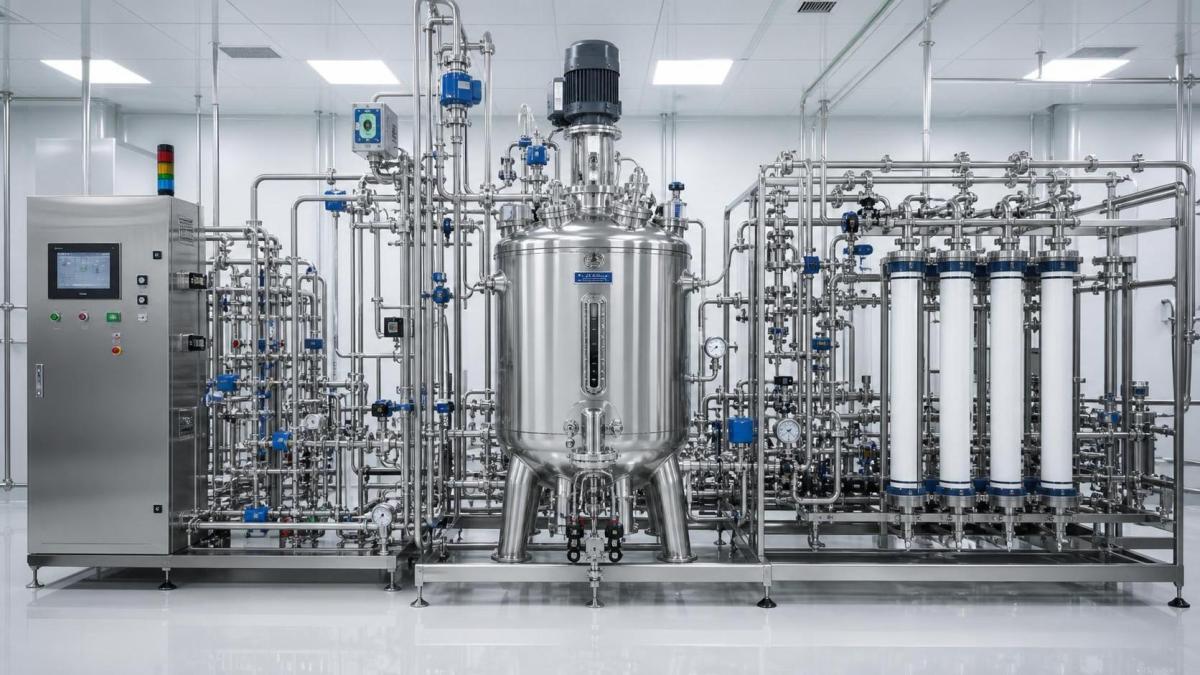
Is bio-tech enzyme production equipment standardized across suppliers? Only partially. Core engineering principles, safety expectations, and selected interface conventions are widely shared, but complete equipment interchangeability remains uncommon.
For biotech manufacturers, R&D teams, and global procurement professionals, this distinction matters because equipment differences can affect yields, validation effort, operating costs, expansion plans, and supply-chain resilience.
Buyers should therefore avoid treating a reactor, filtration skid, or downstream purification module as a simple catalog purchase. The best sourcing decision starts with process requirements, not supplier terminology.
In practical terms, bio-tech enzyme production equipment is standardized at the level of recognized design frameworks, materials, documentation, and many utility connections. It is customized at the process-performance level.
This article explains where standards genuinely help, where supplier designs still diverge, and how buyers can compare systems without overlooking hidden integration, compliance, or lifecycle risks.
What Buyers Usually Mean by “Standardized”
When procurement teams ask whether enzyme production equipment is standardized, they often mean whether systems can be compared, substituted, connected, qualified, and operated with predictable results across suppliers.
Those are separate questions. Two fermenters may share nominal volume, stainless-steel construction, and similar control panels, while producing different mixing behavior, oxygen transfer, cleaning coverage, or batch outcomes.
Standardization is strongest when requirements are externally defined. Pressure containment, electrical safety, hygienic materials, instrumentation practices, and basic documentation often follow recognized international, regional, or customer-specific expectations.
Standardization becomes weaker when equipment must support a particular microorganism, enzyme expression profile, viscosity range, foaming tendency, nutrient strategy, or recovery process. Those variables require tailored engineering choices.
A useful procurement mindset is to divide the equipment into three layers: regulated compliance elements, common utility and automation interfaces, and process-critical design features requiring technical comparison.
This framework prevents a common mistake: assuming that compliance with a familiar standard proves a system will deliver equivalent process performance in a production environment.
Where Common Standards Create Real Consistency
Suppliers serving industrial biotechnology usually work within an established ecosystem of standards and expectations. These provide an important baseline for quality, safety, traceability, and international project execution.
For pressure-bearing vessels, buyers may encounter requirements linked to ASME, the European Pressure Equipment Directive, CE marking, or applicable national pressure-vessel rules. The required route depends on installation location.
Material selection is another area with substantial convergence. Product-contact surfaces commonly use grades such as 316L stainless steel, while seals, gaskets, and hoses require documented compatibility with process fluids.
Hygienic design principles are also widely recognized. Smooth internal surfaces, drainability, accessible welds, minimized dead legs, clean-in-place capability, and sanitary fittings are expected in many enzyme manufacturing applications.
However, a sanitary fitting does not automatically guarantee a sanitary process design. Dead-leg ratios, valve geometry, spray-device coverage, drain angles, and surface finish specifications still differ between manufacturers.
Electrical systems often follow IEC, UL, CE, or local certification requirements. Yet panel architecture, component brands, enclosure ratings, service accessibility, and spare-parts availability can vary significantly across global suppliers.
Automation platforms may use familiar protocols such as OPC UA, Modbus TCP, Ethernet/IP, or Profibus. These standards improve communication, but they do not make recipe logic or data structures automatically portable.
Documentation commonly includes P&IDs, general arrangement drawings, material certificates, weld maps, factory acceptance test records, manuals, and spare-parts lists. The depth and usability of these records remain a meaningful differentiator.
Why Similar Equipment Can Perform Differently
Enzyme production depends on biological performance as much as mechanical construction. That is why equipment that appears equivalent on a quotation sheet may behave differently during scale-up or routine manufacturing.
Consider a stirred-tank bioreactor. Suppliers may offer the same working volume, but impeller type, impeller diameter, baffle arrangement, aspect ratio, motor sizing, and sparger design influence mixing and gas dispersion.
These differences affect critical parameters such as kLa, power input per volume, carbon dioxide stripping, foam behavior, heat removal, and gradients in highly viscous or high-cell-density processes.
For aerobic enzyme fermentation, oxygen transfer is often a central concern. A system with lower capital cost can become expensive if it limits productivity or forces longer batches and greater antifoam consumption.
Temperature-control performance also varies. Jacket configuration, heat-transfer area, circulation pump selection, control-valve response, and utility conditions determine how reliably a system manages exothermic fermentation stages.
Downstream equipment presents similar issues. Centrifuges, microfiltration units, ultrafiltration skids, evaporators, and dryers may use standard components while differing in recovery yield, fouling behavior, cleanability, and product handling.
For this reason, nameplate capacity should never be the sole comparison metric. Buyers should request operating envelopes and performance evidence based on relevant broth characteristics and target production conditions.
How Much Interchangeability Exists Between Suppliers?
Interchangeability is realistic for many peripheral components. Standard pumps, sanitary valves, pressure transmitters, load cells, motors, PLC hardware, and utility fittings can often be sourced from multiple approved vendors.
That flexibility can reduce maintenance risk, especially when a facility operates in regions where imported proprietary spares are costly or difficult to obtain quickly.
At the skid level, however, interchangeability declines. A fermentation vessel can be physically replaced, but utility routing, floor loading, automation integration, cleaning circuits, and validation documentation may require substantial rework.
Control-system replacement can be particularly complex. Even when two systems use the same PLC family, alarm structures, historian tags, recipe management, batch reporting, and user-access controls may differ materially.
Single-use assemblies can also create dependency. Tubing sets, bags, filter holders, connectors, and manifolds may be nominally standardized but configured around a supplier-specific flow path or qualification package.
Buyers should distinguish between open architecture and proprietary dependency. Open architecture does not eliminate engineering work, but it improves the ability to maintain, expand, and migrate equipment over time.
Ask suppliers directly which components are proprietary, which are commercial off-the-shelf, and which interfaces can be documented for future integration by an independent engineering team.
Compliance Requirements Depend on the Production Context
The required level of standardization depends heavily on where and how the enzyme will be used. Industrial enzymes, food-processing enzymes, feed enzymes, and pharmaceutical applications face different risk profiles.
For technical or industrial enzymes, buyers may prioritize productivity, corrosion resistance, operator safety, environmental controls, and reliable operation under demanding utility conditions.
Food and feed enzyme production introduces additional expectations around hygienic design, traceability, contamination control, cleaning validation, allergen segregation, and documentation supporting relevant quality systems.
Pharmaceutical or diagnostic enzyme applications generally demand more rigorous control. Equipment design may need to support GMP operations, data integrity, qualification protocols, change control, and carefully managed product-contact materials.
No supplier can define compliance in isolation. The purchaser must establish the intended-use classification, applicable markets, internal quality requirements, and regulatory strategy before issuing a final equipment specification.
Vague requests for “GMP equipment” often lead to misalignment. Buyers should state which requirements apply, such as material traceability, electronic records controls, surface finish, drainability, audit access, or documentation format.
Early quality involvement reduces redesign. Including engineering, operations, quality assurance, validation, and process development in technical reviews helps prevent expensive changes after fabrication has started.
What to Compare Beyond the Supplier Datasheet
A strong supplier comparison begins with a user requirement specification, often called a URS. This document translates production needs into measurable equipment, automation, quality, and service requirements.
Instead of asking only for vessel volume, define minimum and maximum batch sizes, target cell density, viscosity range, gas-flow demands, expected heat load, allowable hold times, and cleaning constraints.
For fermentation systems, request data on agitation range, kLa performance assumptions, maximum gas flow, backpressure limits, cooling duty, foam-control provisions, and expected turndown capability.
For downstream systems, compare product recovery expectations, membrane area, flux assumptions, shear exposure, cleaning cycle duration, hold-up volume, cleaning-agent compatibility, and discharge or waste-handling requirements.
Examine the piping design carefully. Product hold-up, drainability, valve accessibility, sample-point placement, dead-leg control, and CIP return routing can determine whether a system is easy to operate or persistently troublesome.
Control-system comparisons should cover recipe functionality, audit trails where required, remote support, historian compatibility, alarm rationalization, electronic signatures, cybersecurity practices, and the ability to export usable production data.
Also compare the assumptions that sit outside the equipment boundary. Utility quality, compressed-air supply, chilled-water temperature, steam capacity, floor drains, ventilation, and clean-in-place infrastructure often drive project risk.
Documentation and Validation Can Be the Deciding Factor
For many global projects, the equipment itself is only half of the purchase. The remaining value lies in documentation that enables installation, qualification, maintenance, audits, and later capacity expansion.
A basic package may include manuals and drawings. A higher-value package can include design qualification support, weld records, material traceability, calibration certificates, FAT protocols, and detailed turnover documentation.
Buyers should define document expectations before contracting. Retrofitting document requests after factory acceptance can delay shipment, create commercial disputes, and leave quality teams with incomplete evidence.
Factory acceptance testing should reflect the actual risks of the system. It should verify functions such as alarms, interlocks, automation sequences, cleaning cycles, utility operation, communication interfaces, and defined acceptance criteria.
Where process simulation is possible, use representative tests. Water runs are valuable, but they do not prove behavior with viscous media, foaming fermentation, sensitive enzyme solutions, or difficult filtration streams.
Site acceptance testing should confirm that field utilities and installation conditions match the supplier’s assumptions. Many commissioning failures originate from plant interfaces rather than manufacturing defects in the supplied skid.
Document ownership also deserves attention. Ensure the contract defines access to software backups, PLC source files where appropriate, configuration records, passwords, revision histories, and future technical support obligations.
How to Manage Supplier Risk in International Sourcing
Global sourcing can expand options and reduce upfront capital cost, but it also increases exposure to logistics delays, inconsistent standards interpretation, remote commissioning challenges, and uncertain local service capacity.
Supplier evaluation should include more than engineering capability. Review financial stability, reference installations, export experience, quality-system maturity, project-management discipline, response times, and the availability of regional field technicians.
References are most useful when they resemble the intended application. A supplier experienced in low-viscosity laboratory fermentation may not be equally capable of delivering a robust industrial enzyme production line.
Clarify responsibilities at every interface. The contract should identify who provides utilities, coordinates installation, verifies controls integration, manages customs documentation, performs commissioning, and resolves performance shortfalls.
Spare-parts strategy is another practical concern. Identify long-lead components, define recommended critical spares, confirm local availability, and avoid designs dependent on undocumented custom components without contingency planning.
For major investments, independent design review can be worthwhile. An experienced process engineer or EPC partner can test supplier claims, reconcile proposals, and identify gaps before fabrication commitments become difficult to change.
The objective is not to eliminate all supplier-specific design. It is to ensure that customization creates measurable process value instead of unnecessary dependency or hidden operating complexity.
A Practical Decision Framework for Equipment Buyers
First, classify each requirement as mandatory, preferred, or optional. Mandatory items should cover product quality, safety, compliance, core process capability, site constraints, and essential data or automation needs.
Second, compare suppliers using weighted technical criteria rather than headline price alone. Weight process performance, documentation, lifecycle support, delivery confidence, integration effort, energy use, and total cost of ownership.
Third, identify every assumption in the proposal. If cooling duty, broth properties, utility pressure, cleanability, or recovery rate is not explicitly stated, it should not be treated as guaranteed.
Fourth, require a clear deviation list. This makes it possible to compare bids honestly and reveals whether a lower-cost offer excludes critical features, tests, documentation, or support services.
Fifth, evaluate scalability early. Equipment selected for pilot production should have a credible path toward commercial operation, including transferable process parameters, compatible control concepts, and realistic capacity expansion options.
Finally, preserve operational flexibility. Favor documented interfaces, recognized component brands, accessible service parts, and control architectures that your internal team can support over the full asset lifecycle.
Conclusion: Standardized Foundations, Supplier-Specific Outcomes
Bio-tech enzyme production equipment is standardized enough to support disciplined global sourcing, but not standardized enough to assume equal performance between suppliers without detailed technical evaluation.
Industry standards establish essential common ground in safety, materials, hygienic construction, pressure design, electrical systems, and documentation. They reduce risk, but they do not define process suitability.
The decisive differences usually involve mixing, oxygen transfer, heat removal, cleanability, automation design, downstream recovery, qualification support, and the supplier’s ability to support the installation over time.
For decision-makers, the most reliable question is not whether equipment is standardized across suppliers. It is whether each supplier can prove conformance to defined requirements and performance under relevant operating conditions.
By combining a precise URS, cross-functional technical review, transparent bid comparison, and lifecycle-focused sourcing, enzyme producers can secure equipment that supports both immediate production goals and long-term resilience.
Recommended News
 Sep 08, 2026Is Bio-Tech Enzyme Production Equipment Standardized Across Suppliers?Is Bio-Tech enzyme production equipment standardized across suppliers? Discover key standards, performance differences, and smart sourcing tips for reliable enzyme production.
 Sep 03, 2026How Do Biotech Cold Chain Requirements Affect Shipping Costs?How do biotechnology cold chain requirements affect shipping costs? Explore packaging, monitoring, customs, and contingency factors that shape smarter biotech logistics budgets.
 Aug 13, 2026Biotechnology Laboratory Research Insights for Faster Method SelectionBiotechnology laboratory research insights for faster method selection: learn how labs compare workflows, reduce validation risk, and choose scalable methods with more confidence.
 Aug 02, 2026How to Evaluate a Biotechnology Research Tracking Tool for Data Integrity and Team CollaborationBiotechnology research tracking tool evaluation starts with data integrity, audit trails, and collaboration risks. Learn what to test before you buy for faster, safer team decisions.
 Jul 12, 2026How to Evaluate a Biotech Alliance Intelligence Provider Before Market ExpansionBiotech alliance intelligence provider selection can define expansion success. Learn how to compare data quality, regional insight, and cross-sector signals before entering new markets.
 Jul 11, 2026Biotechnology Research Category Trends: Which Segments Are Attracting More Funding?Biotechnology research category trends reveal which biotech segments are winning funding, from therapeutics to AI platforms and synthetic biology. Explore the signals shaping smarter market moves.
 Jul 10, 2026Biotech Collaboration for Market Entry: Deal Structures, Risks, and Partner SelectionBiotech collaboration for market entry explained: compare deal structures, assess regulatory and IP risks, and choose the right partner to launch faster with greater control.
 Jul 08, 2026AI-Biotech Collaboration Analysis: Where Drug Discovery Teams Gain the Most Practical ValueAI biotech collaboration analysis reveals where drug discovery teams gain real value—better target selection, faster screening, and smarter lead optimization. Explore practical insights.
 Jul 05, 2026Biotechnology Research Vendor Selection: Key Criteria for Labs Comparing CROs and SuppliersBiotechnology research vendor selection starts with the right criteria. Learn how labs compare CROs and suppliers for quality, compliance, capacity, and cost to reduce risk and choose with confidence.
 Jun 24, 2026Biotech Collaboration Deal Volume: How to Read Partnering Activity and Market SignalsBiotech collaboration deal volume reveals where capital, pipeline demand, and regional strategy are shifting. Learn how to read partnering signals for smarter market insight.
 Jun 20, 2026Veterinary Supplies Purchasing Guide: How to Evaluate Quality, Shelf Life, and CostVeterinary supplies buying guide: learn how to evaluate quality, shelf life, compliance, and total cost to choose reliable suppliers, reduce waste, and make smarter purchasing decisions.
 Apr 16, 2026Biotech solutions with strong science can still face weak adoptionBiotech solutions can fail despite strong science when healthcare resources, usability, and trust lag. Explore lessons from IoT home security, water purifier, and climate technology to speed adoption.
 Apr 16, 2026Why biotech solutions fail to scale from lab to marketBiotech solutions often fail to scale when healthcare resources, compliance, and supply chains lag. Learn how climate technology, CO2 reduction, and sustainable solutions reach market faster.