


Search News
Global Industrial Intelligence Hub (GIIH)Industry Portal
Global Industrial Intelligence Hub (GIIH)Status
Standard Access
Upgrade to PremiumNewsIs Digital Health Data Interoperable Across Hospital Platforms?
Time
Click Count
Is Digital Health Data Interoperable Across Hospital Platforms?
As hospitals accelerate digital transformation, a practical question sits behind nearly every electronic health record upgrade, referral workflow, and remote-care project: is digital health data interoperable across different hospital platforms? The honest answer is: sometimes, but not automatically.
Many hospital systems can exchange some information. A discharge summary may be sent to another provider, a laboratory order may travel through an interface, or a radiology image may be made available through a viewer. Yet usable interoperability is a higher bar. It means the receiving organisation can identify the correct patient, understand what the data means, trust its provenance, apply the right permissions, and incorporate it into clinical work without forcing staff to re-enter or reinterpret everything.
That distinction matters. A PDF attached to a patient chart is technically shared data, but it is not necessarily computable data. A medication list that arrives without reliable dosage, timing, status, or terminology mapping can create more risk than value. In clinical settings, interoperability is not simply an IT integration exercise; it is a patient-safety, governance, workflow, and accountability issue.
Data exchange exists, but the level of interoperability varies
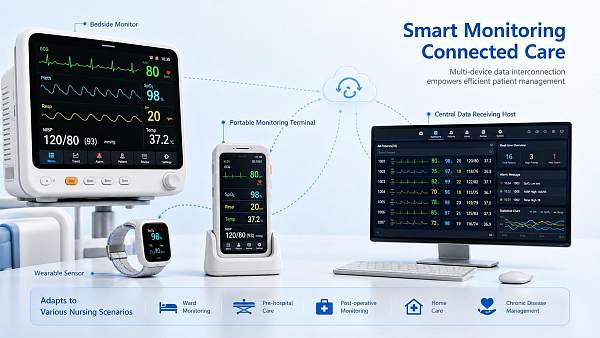
Hospital platforms rarely operate in isolation. They connect with laboratory information systems, picture archiving and communication systems, pharmacy systems, claims platforms, patient portals, medical devices, registries, and sometimes national or regional health information exchanges. The difficulty is that each connection may support a different depth of exchange.
A useful way to assess the situation is to separate four layers. The first is technical connectivity: can systems send and receive messages through secure interfaces? The second is structural interoperability: do both sides recognise the fields, document sections, and data formats? The third is semantic interoperability: do “allergy,” “active medication,” “abnormal result,” or “history of hypertension” mean the same thing in both systems? The fourth is operational interoperability: can clinicians, administrators, and patients actually use the exchanged information in the right workflow, at the right time?
Hospitals often make progress in the first two layers while encountering serious friction in the latter two. This is why an organisation may advertise integration capabilities while clinicians still rely on phone calls, scanned records, and manual reconciliation during transfers of care.
Why standards help—and why standards alone do not solve the problem
Healthcare has developed widely recognised standards for particular kinds of exchange. HL7 Version 2 remains common for operational messages such as admissions, discharges, transfers, orders, and results. HL7 FHIR has become a major framework for application programming interfaces and modern resource-based data exchange. DICOM is central to the handling of medical imaging. Clinical terminology systems, including SNOMED CT, LOINC, and ICD in relevant contexts, can help systems describe diagnoses, observations, tests, and procedures more consistently.
However, adopting a standard does not guarantee that two implementations work together cleanly. FHIR, for example, provides a flexible framework, but hospitals and vendors may choose different profiles, extensions, code systems, access scopes, and data-population rules. One organisation may expose only selected historical records; another may provide near-real-time data. One may treat a medication as active until explicitly discontinued, while another may use a different lifecycle rule. Both systems can claim standards support while still producing clinically awkward results.
This is where implementation guides, conformance testing, and shared governance become more valuable than broad compatibility statements. A procurement team should ask not only whether a platform “supports FHIR,” but which FHIR version, which resources, which implementation guides, which authentication method, what read and write capabilities are available, and how exceptions are handled. The same questions apply to imaging, pathology, e-prescribing, and device connectivity.

Interoperability also depends on data quality before any interface is built. Duplicate patient identities, free-text clinical notes, incomplete demographic details, outdated code mappings, and inconsistent units of measurement can travel rapidly through connected networks. A fast exchange channel does not repair unreliable source data.
The barriers are as much organisational as technical
Patient matching is one of the most persistent issues. Hospitals may use different local medical record numbers, spell names differently, capture addresses in different formats, or receive incomplete demographic information at registration. A matching process needs a careful balance: overly strict rules can fail to link records that belong to the same person, while overly loose rules can create a dangerous false match. Cross-border care makes the problem harder because naming conventions, national identifiers, languages, and identity documents vary.
Privacy and consent add another layer. Health data is highly sensitive, and the legal basis for sharing can depend on the purpose of processing, the care relationship, patient consent preferences, emergency conditions, and local law. Frameworks such as HIPAA in the United States and the EU’s General Data Protection Regulation shape how organisations think about safeguards, access, accountability, and patient rights, but they do not produce a single global operating model. A hospital network planning cross-jurisdictional exchange should treat legal and governance review as a design input, not a task left until deployment.
Commercial realities can also slow progress. Legacy systems may have limited interface capacity. Custom integrations can be expensive to maintain after each software update. Vendors may offer different access models or charge separately for interface development. None of these factors automatically means a platform is unsuitable, but they affect total cost, implementation time, and the ability to adapt as standards evolve.
Then there is workflow. A physician receiving external results needs to know whether they are preliminary or final, who performed the test, whether there are relevant prior results, and whether an acknowledgement is required. A nurse reconciling medications needs a concise, trustworthy list rather than hundreds of poorly classified entries. If a new exchange adds alerts, duplicate information, or uncertain provenance, busy care teams may reasonably avoid using it.
Where interoperability delivers the clearest practical value
The strongest projects usually begin with a defined clinical or operational scenario rather than an abstract ambition to “connect everything.” A referral pathway between a primary care provider and a specialist hospital may need structured referral reasons, recent observations, diagnostic reports, and appointment status. An emergency department may need rapid access to allergies, current medications, and significant prior conditions. A radiology network may prioritise image availability, report status, and consistent patient identity management.
Supply-chain and medical technology teams also have a stake in this work. Connected devices, diagnostic platforms, remote monitoring services, and hospital information systems generate data that may be clinically useful only if it can be interpreted in the receiving environment. Manufacturers entering new markets need to understand not just device regulation and technical specifications, but local integration expectations, cybersecurity responsibilities, and the hospital platforms their customers already operate.
For Global Industrial Intelligence Hub (GIIH), this intersection is part of a broader industrial pattern: information bottlenecks often become value-chain bottlenecks. In health and medical technology, fragmented data affects care coordination. In logistics, fragmented visibility affects delivery decisions. Across both sectors, the task is similar—turning disconnected records, signals, and local practices into information that can be trusted for action. The difference is that healthcare interoperability must carry especially rigorous clinical, ethical, and privacy safeguards.
Questions to ask before selecting an integration approach
Hospital leaders do not need to solve every data problem at once. They do need enough clarity to avoid an integration programme that produces connectivity without adoption. Before committing to a platform, interface engine, exchange network, or custom API programme, decision-makers should establish a few non-negotiables:
- Which care decisions or operational processes will use the shared data?
- What minimum data set is required, and which fields must be structured rather than supplied as documents?
- How will patient identity matching, duplicate handling, and demographic updates be governed?
- Which standards and implementation profiles are required in the target environment?
- Who controls access, records audit activity, manages consent, and responds to a suspected security incident?
- How will the organisation test data accuracy, clinical usability, downtime behaviour, and change management after go-live?
These questions are more revealing than a simple feature checklist. They expose whether a project is designed around an actual care pathway, whether the required partners can participate, and whether the organisation has assigned clear ownership for data quality and ongoing maintenance.
A connected ecosystem is a continuing discipline
Digital health data is interoperable across hospital platforms in specific, increasingly useful ways—but it remains conditional. It depends on the systems involved, the standards and profiles they implement, the quality of underlying records, legal permissions, cybersecurity controls, and the clinical workflow around the exchange. There is no single interface or standard that removes all of those constraints.
The sensible path is to prioritise high-consequence exchange scenarios, define what “usable” data means for each one, and test with real-world edge cases rather than ideal records. Organisations operating across regions should also monitor changing technical guidance, data-sharing expectations, and market-specific requirements. GIIH’s health and medical technology intelligence work follows these connections because hospital interoperability is no longer a narrow software topic; it increasingly shapes how medical innovation, cross-border collaboration, and healthcare delivery can move at scale.
For any proposed integration, the next useful step is not a generic promise of compatibility. It is a documented review of the target workflow, data set, terminology rules, security model, local compliance obligations, and support responsibilities on both sides of the connection.
Recommended News
 Sep 10, 2026Do Health Monitoring Devices Need Local Approval Before Import?Do health monitoring devices need local regulatory approval before import? Explore classifications, market access, labels, software, and compliance steps for safer global launches.
 Sep 07, 2026How Often Should Medical Information Systems Be Updated for Compliance?How often should medical information systems be updated for compliance? Explore risk-based update schedules, security patches, access reviews, testing, and audit-ready documentation.
 Sep 01, 2026Is Digital Health Data Interoperable Across Hospital Platforms?Is digital health data interoperable across different hospital platforms? Explore standards, security, workflows, and practical steps for safer connected care.
 Aug 31, 2026How to verify a diagnostic medical equipment manufacturer's quality systemDiagnostic medical equipment manufacturer quality system verification: uncover essential checks for ISO 13485, traceability, CAPA, risk management, and supplier control.
![]() Aug 14, 2026China temporarily bans the export of helium, putting global medical and semiconductor supply chains under pressureChina’s temporary helium export ban is straining global medical imaging and chip supply chains. See how MRI, semiconductor, and logistics teams can adapt fast.
Aug 14, 2026China temporarily bans the export of helium, putting global medical and semiconductor supply chains under pressureChina’s temporary helium export ban is straining global medical imaging and chip supply chains. See how MRI, semiconductor, and logistics teams can adapt fast. Aug 10, 2026FDA Sets eSTAR Filing Rule for China IVD ExportsFDA Sets eSTAR Filing Rule for China IVD Exports: learn how the new FDA eSTAR requirement affects Chinese IVD manufacturers, compliance documents, and U.S. shipment access.
 Aug 09, 2026Patient Monitoring Equipment Research: Which Metrics Matter Most Before You Buy?Patient monitoring equipment research starts with the right metrics. Learn how to compare accuracy, alarms, connectivity, and lifecycle cost before you buy.
 Jul 28, 2026Healthcare Equipment Research in Europe: Key Market Shifts and Buyer SignalsHealthcare equipment research Europe reveals how regulation, procurement, workflow pressure, and service expectations are reshaping buyer decisions across key healthcare markets.
 Jul 11, 2026Compact Medical Technology Solutions for Small Clinics: What to Compare Before BuyingCompact medical technology solutions for small clinics: compare space fit, throughput, connectivity, maintenance, and long-term cost before you buy. Make a smarter, lower-risk equipment decision.
 Jul 10, 2026Medical Technology Solutions Price Guide: What Drives Cost and How to BudgetMedical technology solutions price guide covering key cost drivers, hidden fees, and smart budgeting methods to compare vendors, control total ownership costs, and approve with confidence.
 Jul 09, 2026Medical Supply Chain Risks: How to Prevent Delays in Regulated Device SourcingMedical supply chain risks can cause costly sourcing delays in regulated devices. Learn practical ways to prevent disruption, improve compliance, and keep global procurement moving.
 Jul 08, 2026Medical Device Specification Analysis: Which Performance Parameters Matter Most in Evaluation?Product specification analysis medical devices starts with the parameters that truly affect safety, accuracy, software readiness, and long-term reliability—learn what to prioritize before you evaluate.
 Jul 06, 2026Medical Regulatory for Devices: Which Certifications Matter Before Market Entry?Medical regulatory for devices starts before launch. Learn which certifications—ISO 13485, CE marking, FDA pathways, and risk standards—matter most for faster, safer market entry.
 Jul 03, 2026Category Comparison Under FDA Requirements: How to Evaluate Product Class DifferencesCategory comparison FDA requirements explained: learn how to assess product class differences, avoid costly pathway mistakes, and make faster, smarter regulatory decisions.
 Jul 02, 2026How to Evaluate a Medical Technology Supplier for Quality, Lead Time, and ComplianceMedical technology supplier evaluation made simple: learn how to compare quality systems, lead time reliability, and compliance readiness to reduce risk and choose with confidence.
 Jul 02, 2026How Diagnostic Medical Equipment Supports Better Care Coordination Across Clinical TeamsDiagnostic medical equipment for care coordination helps clinical teams share data faster, reduce delays, and improve outcomes. See how connected diagnostics strengthen workflow efficiency.
 Jun 28, 2026Healthcare Equipment for Patient Monitoring: How to Choose by Care Setting and Data NeedsHealthcare equipment for patient monitoring: learn how to choose the right solution by care setting, data needs, integration, and lifecycle value for safer, smarter deployment.
 Jun 26, 2026Medical Devices Category Introduction: How Products Are Grouped and Why It MattersMedical devices category introduction: learn how products are grouped, why classifications differ by market, and how smarter category insight improves compliance, sourcing, and global market entry.
 Jun 26, 2026Medical Technology Solutions for Healthcare Facilities: What to Evaluate Before BuyingMedical technology solutions for healthcare facilities: learn what to evaluate before buying, from clinical fit and integration to compliance, vendor support, and total cost.
 Jun 25, 2026Surgical Instruments Materials Compared: Stainless Steel, Titanium, and MoreSurgical instruments materials compared: explore stainless steel, titanium, tungsten carbide, and coatings to improve durability, safety, sterilization performance, and smarter sourcing decisions.
 Jun 25, 2026Diagnostic Medical Equipment for Preventive Care: What Clinics Should PrioritizeDiagnostic medical equipment for preventive care: discover what clinics should prioritize to improve early detection, streamline workflows, control costs, and support long-term growth.
 Jun 23, 2026Hospital Furniture Standards: What to Check for Safety, Hygiene, and Ward UseHospital furniture standards explained: learn what to check for safety, hygiene, load capacity, ward fit, and supplier proof before buying for reliable long-term performance.
 Jun 22, 2026How to Choose Blood Pressure Monitors for Home Use: Cuff Size, Accuracy, and MemoryBlood pressure monitors for home use vary in cuff size, accuracy, and memory. Learn how to compare features, avoid common mistakes, and choose a reliable monitor with confidence.
 Jun 20, 2026Wearable Medical Devices: Key Sensors, Data Accuracy, and Regulatory FactorsWearable medical devices explained: explore key sensors, real-world data accuracy, and regulatory factors to compare solutions, reduce risk, and make smarter healthcare decisions.