
Managing Temperature Excursions in Biotech Shipments: A Practical Quality Guide
A temperature excursion can put a biotech shipment on hold—and leave quality control and safety teams facing urgent questions about product integrity, patient risk, and regulatory compliance.
In biotech logistics, effective management requires more than restoring the correct temperature: it demands reliable monitoring data, prompt containment, and documented assessment against product-specific stability limits.
This guide explains how to respond to temperature deviations, coordinate with carriers and quality teams, evaluate shipment disposition, and implement corrective actions that reduce repeat incidents.
The immediate rule is straightforward: secure the shipment, preserve its temperature history, and prevent use until the authorized quality function makes a documented disposition decision.
A temperature alarm does not automatically mean product failure. Returning a shipment to its specified temperature range does not, by itself, demonstrate continued product suitability.
What should you do immediately after a temperature alarm?
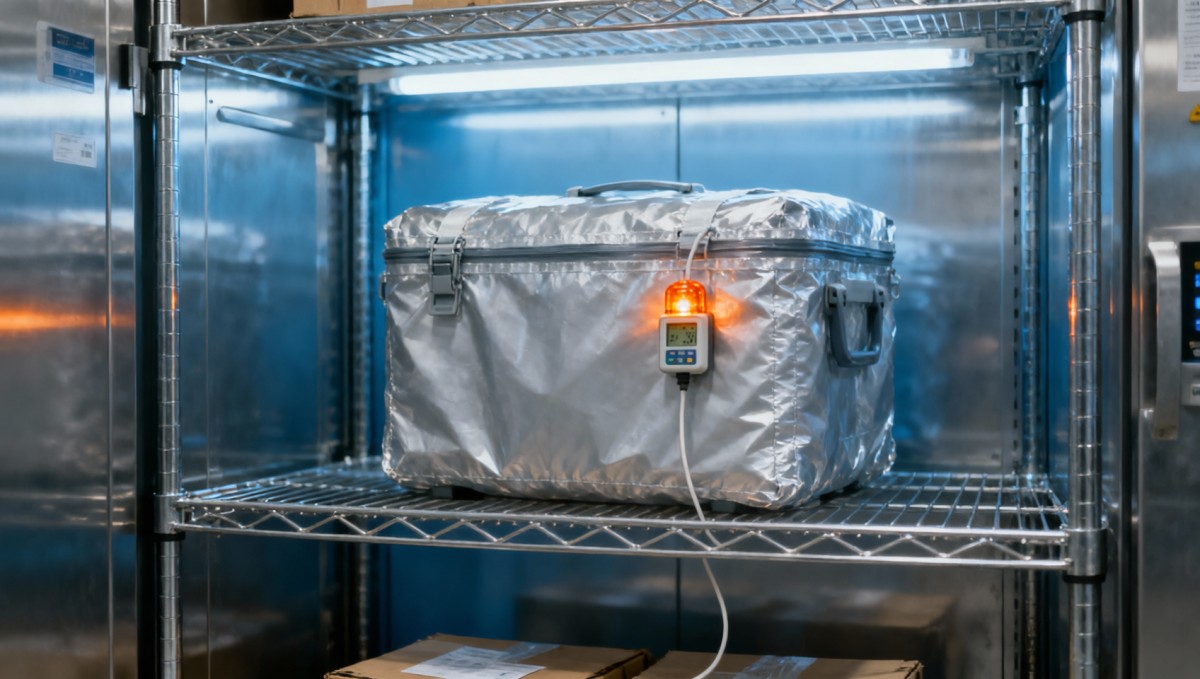
Place affected material under a controlled quality hold, physically or electronically as appropriate. Block onward distribution, processing, or administration while the excursion remains under assessment.
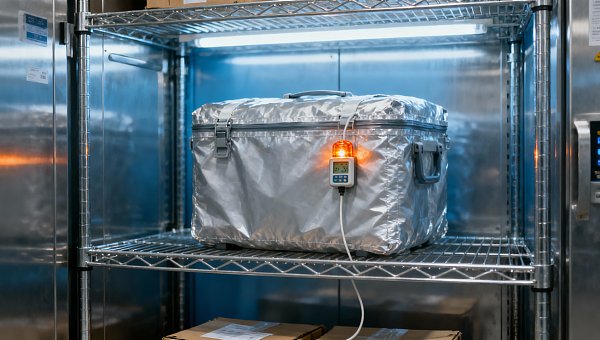
Keep the shipment under its approved storage conditions whenever safe and feasible. Avoid improvised cooling, direct contact with ice, or unapproved changes to packaging configuration.
Notify the designated quality contact and shipment owner through the established escalation route. Include the carrier, receiving site, and manufacturer when their involvement is required.
Record the detection time, shipment location, current temperature, affected identifiers, and immediate actions. Assign an incident owner so evidence collection and decisions remain coordinated throughout.
If the shipment is still moving, use the approved contingency plan. A qualified holding location may provide better protection than an uncontrolled delivery or diversion.
For dry ice or cryogenic shipments, assess ventilation, pressure, and handling hazards before intervention. Replenishment should follow approved procedures and be performed by trained personnel.
Set the next update time and identify who can authorize emergency handling changes. Operational urgency should accelerate communication while preserving the required quality approval process.
What evidence does quality need before assessing the shipment?
Retrieve the complete logger file, including the period before and after the alarm. Retain original records and metadata alongside any exported charts or investigation summaries.
Check logger identity, calibration status, sampling interval, time zone, placement, and activation history. These details determine whether the recorded profile reliably represents the monitored shipment.
Compare temperature readings with carrier milestones, warehouse records, customs events, and handover timestamps. Align time zones before attributing an excursion to a particular transport stage.
Document minimum and maximum readings, exposure duration, repeated deviations, and any missing data. Include relevant uncertainty where measurement limitations could materially affect the disposition decision.
A sensor measuring air temperature may respond differently from the product itself. Use qualified packaging studies and sensor placement information to interpret that relationship appropriately.
Photograph packaging condition, seals, logger position, and visible damage before changes occur. Capture coolant condition when observable without creating additional temperature exposure or safety risks.
Missing or inconsistent records require investigation. A normal reading at receipt cannot reconstruct an undocumented transport period or establish that earlier conditions remained acceptable throughout.
Which temperature limits should govern the assessment?
Start with the approved product requirements, applicable labeling, shipment instructions, and quality agreements. Confirm that the limits apply to the exact presentation and shipping stage.
Different biotech materials require different controls. Refrigerated biologics, frozen intermediates, cell therapies, and diagnostic reagents cannot share a single excursion acceptance rule across all shipments.
Distinguish operating targets, alarm thresholds, approved transport conditions, and supported excursion limits. An operational alarm can trigger investigation without establishing that the product is unsuitable.
Request product-specific stability evidence from the manufacturer or authorized technical owner. Relevant evidence must address the actual temperature exposure and the material under assessment directly.
Account for previous excursions and cumulative exposure where relevant. A shipment that experienced earlier deviations may have less remaining tolerance than an otherwise comparable shipment.
For frozen materials, examine potential thawing, refreezing, and phase transitions. For refrigerated products, investigate freezing risk even when the dominant concern initially appears to be warming.
How should you evaluate the effect on product quality?
Build a chronological exposure profile and compare it with applicable stability evidence. Identify whether temperature, duration, cycling, or another condition exceeds the evidence available for assessment.
Consider the product attributes that could change, such as potency, aggregation, viability, or physical integrity. The relevant risks depend on the material and its intended use.
Separate confirmed observations from assumptions in the assessment. Where product temperature is inferred from a nearby sensor, explain the supporting qualification evidence and remaining uncertainty.
Mean kinetic temperature may support some assessments when scientifically justified. It should not erase freezing events, conceal brief critical exposures, or replace product-specific stability evidence.
Additional testing can help answer a defined scientific question, but a passing result may not detect every damage mechanism or establish the remaining shelf life.
Use testing only with a justified sampling strategy, suitable methods, and predefined interpretation criteria. Obtain approval before sampling where opening containers could affect integrity or usability.
If the available evidence cannot support acceptability, maintain the hold and escalate. Commercial pressure, delivery deadlines, and replacement costs do not establish product quality themselves.
When can the shipment be released, returned, or rejected?
The authorized quality function should approve disposition under applicable procedures and responsibilities. Carriers provide essential evidence and operational support, but should not independently decide product suitability.
A release decision should identify the affected material, evidence reviewed, acceptance rationale, approver, and any resulting restrictions. Preserve links to the original incident and logger records.
Do not independently shorten expiry dates or introduce new storage conditions to justify release. Such changes require appropriate scientific support and authorization within applicable requirements.
For rejected shipments, control the next movement as carefully as the initial hold. Returns and destruction require traceability, suitable handling, and confirmation of final status.
If material has already reached downstream users, immediately initiate the applicable quality escalation process. Assess distribution extent and whether further actions are required under governing procedures.
What should the deviation record contain?
Create one traceable record connecting the shipment, temperature evidence, investigation, and disposition. This makes decisions reviewable and helps teams identify repeat failures across logistics partners.
Record product and batch identifiers, quantities, origin, destination, transport route, packaging configuration, logger identifiers, and involved organizations. Include the relevant shipping instructions and qualification references.
Describe the event with aligned timestamps, actual temperature readings, estimated exposure periods, and evidence limitations. Explain how missing data or sensor uncertainty affected the assessment.
Document containment actions, notifications, technical consultations, stability references, and any testing performed. Record who made each significant decision and when that decision became effective operationally.
Attach the approved disposition and its rationale, then connect the investigation to corrective actions where needed. Apply the retention period required by relevant procedures and regulations.
Keep the record understandable to an independent reviewer. A chart without interpretation, or a release statement without supporting evidence, leaves important gaps in the decision trail.
How do you identify the cause and prevent recurrence?
Investigate the mechanism behind the excursion rather than stopping at “carrier delay.” Determine why the delay or handling condition overcame the shipment’s protective controls during transport.
Review packout execution, coolant quantity, material conditioning, payload configuration, and packaging duration. Compare actual handling with the qualified configuration and approved instructions for that shipment.
Assess route-specific factors, including tarmac exposure, customs dwell, missed connections, weekend arrivals, and receiving availability. Determine whether planning assumptions matched actual operating conditions on the route.
Differentiate a temperature-control failure from a monitoring problem. Incorrect logger placement or clock settings can distort interpretation, while a valid alarm may reveal genuine exposure.
Assign corrective actions to the identified cause. Options include revised packout controls, alternative routing, qualified contingency storage, earlier dispatch, or strengthened carrier handover instructions and checks.
Define effectiveness criteria before closing corrective actions. Track whether the change reduces the relevant failure mechanism over an appropriate number of shipments or observation period.
Which controls make biotech logistics more resilient?
Qualify packaging for representative payloads, seasonal conditions, routes, and foreseeable delays. Nominal transit time alone does not establish protection through customs holds or disrupted connections.
Build escalation coverage around the shipment schedule, including nights and weekends where needed. Real-time alerts provide value only when someone can arrange an authorized response.
Define responsibilities in quality agreements and operating procedures. Specify who retrieves data, provides stability assessments, approves interventions, controls disposition, and communicates with the receiving site.
For critical shipments, confirm receiving readiness before dispatch. Verify storage availability, trained personnel, delivery windows, and contingency arrangements for arrivals outside the planned operating hours.
Monitor excursion frequency by route, carrier, packaging configuration, and season using consistent shipment denominators. Also track unresolved data gaps, response time, and repeated causal patterns.
Evaluate logistics partners on evidence accessibility, handover discipline, and contingency capability alongside delivery performance. Faster transport provides limited benefit when shipment conditions cannot be reliably demonstrated.
How do these decisions work in a practical example?
Consider a refrigerated biotech shipment with a specified transport range of 2–8°C. Its logger records 10.5°C for seventy minutes during a documented customs delay overseas.
The receiving team places the shipment on hold, maintains approved storage, and preserves the logger file. Quality checks calibration, placement, timestamps, packaging condition, and previous exposure.
If applicable manufacturer evidence supports the actual exposure and cumulative history, authorized quality personnel may approve release. The customs delay still requires investigation and appropriate prevention.
If the evidence excludes that presentation, lacks relevant exposure support, or leaves critical uncertainty, the shipment remains on hold. The temperature reading alone cannot determine disposition.
What should teams take away from an excursion?
Effective excursion management combines prompt containment, trustworthy evidence, product-specific scientific assessment, and authorized disposition. Each element is necessary to protect patients and make defensible quality decisions.
For quality control and safety teams, the practical priority is clear: establish shipment status quickly, resolve material uncertainty, and convert investigation findings into stronger transport controls.
Use applicable regulatory guidance alongside approved procedures. Relevant references include EU Good Distribution Practice guidance and ICH quality guidelines, including Q5C for relevant biological product stability considerations.
The strongest biotech logistics process supports a clear answer to every excursion: what happened, what evidence demonstrates suitability, who authorized the decision, and how recurrence will be reduced.