


Search News
Global Industrial Intelligence Hub (GIIH)Industry Portal
Global Industrial Intelligence Hub (GIIH)Status
Standard Access
Upgrade to PremiumNewsSourcing Semi-Trailer Spare Parts Without Compromising Brake Drum Quality
Time
Click Count
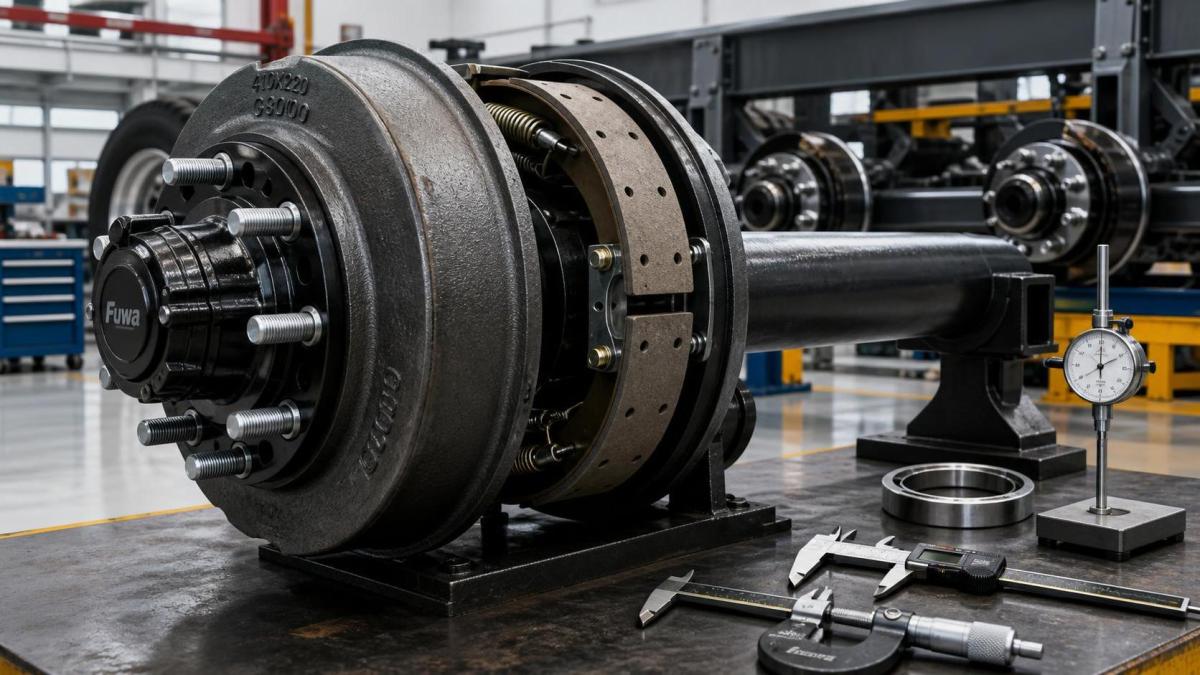
A low purchase price can become expensive quickly when a replacement brake drum causes repeat inspections, uneven braking response, heat-related damage, or unplanned wheel-end work. For procurement teams responsible for trailer fleets, workshops, or parts distribution, the challenge is not simply finding a brake drum that fits the axle. It is confirming that the replacement will perform consistently with the existing brake system, wheel-end assembly, operating load, and maintenance practices.
Brake drums sit at the intersection of braking safety, tire wear, vehicle uptime, and maintenance cost. A drum with incorrect dimensions, unsuitable material quality, poor machining, or uncertain traceability may create problems that do not appear at goods receipt. The part may install without difficulty, yet develop scoring, cracking, out-of-round conditions, or abnormal heat patterns after entering service. Procurement decisions should therefore treat brake drums as controlled safety components rather than interchangeable castings.
Why brake drum quality affects more than braking performance
In a drum brake system, braking force is created when brake shoes contact the drum’s internal friction surface. The drum must absorb and dissipate heat while maintaining a stable braking surface. If its geometry changes excessively under heat, or if the friction surface is poorly finished, the brake shoe may not contact evenly. This can lead to reduced braking consistency, vibration, localized overheating, and accelerated lining wear.
The effects can extend to the tires. Brake drag, uneven brake response, or wheel-end overheating may encourage drivers and technicians to focus on tires or alignment first, especially when irregular wear develops. Yet tire wear patterns can also reflect brake-related issues. A wheel that is intermittently dragging may run hotter than the others; a brake that applies unevenly may affect rolling resistance and axle behavior under load. The relationship is indirect, but it is important enough that tire complaints should not be assessed in isolation.
For a buyer, the practical point is clear: the cheapest brake drum is not necessarily the least expensive option over its service life. Cost should include receiving checks, fitment risk, likely inspection frequency, compatibility with friction materials, downtime during wheel-end repair, and the consequences of a replacement part that cannot be traced or validated.
Start with axle and wheel-end identification, not visual similarity
Many sourcing errors begin with an incomplete identification process. A drum may look similar to another model while differing in mounting arrangement, pilot diameter, bolt-hole pattern, offset, braking surface dimensions, or permissible wear condition. Differences between axle families, brake sizes, and hub configurations can be subtle. A photograph, approximate measurement, or vehicle description is rarely enough for a controlled purchasing decision.
Before requesting quotations, buyers should build a technical identification record using the vehicle and axle documentation available. This record normally includes the axle or brake reference, wheel stud arrangement, hub or drum mounting method, relevant drum dimensions, and the current brake shoe or lining configuration. The removed part should be examined as supporting evidence, not as the sole source of specification.
Where the application uses a BPW-compatible arrangement, the procurement file should identify the relevant configuration rather than relying on the phrase “BPW brake drum” alone. Reviewing the applicable product category for semi trailer spare parts can help purchasers frame the part request around the brake drum’s intended axle application and physical configuration. The key is still to verify the exact fitment against the equipment record before an order is released.
A useful internal rule is to separate interchangeability from fit. A part may physically fit onto the wheel end but still be unsuitable if its dimensions, machining tolerances, or mass differ from what the brake system expects. The consequences may only become visible after repeated loaded braking cycles.

Specifications that deserve attention in a sourcing comparison
Price comparisons become more meaningful when all suppliers quote against the same technical and commercial requirements. Buyers do not need to become foundry specialists, but they should ask for evidence that addresses the conditions under which brake drums fail or lose serviceability.
Documentation should be proportionate to the operating risk. A lightly used local trailer may be managed differently from a high-utilization unit exposed to heavy payloads, steep routes, frequent stop-start operation, or long descents. In severe duty, the drum’s thermal behavior and dimensional stability become more sensitive procurement concerns. The buyer may need a tighter approval process, more complete inspection evidence, and a clearer policy on whether drums are replaced individually or as part of an axle-end maintenance event.
Assess the whole brake assembly before approving a replacement
A brake drum does not operate alone. Installing a good drum into a poorly maintained system can produce the same complaints that buyers wrongly associate with the new part. Procurement specifications should account for the components and conditions that influence drum life: brake shoes and linings, return springs, camshaft operation, slack adjuster function, wheel bearings, seals, hub condition, and the brake actuation system.
For example, a shoe with damaged lining, incorrect arc, contamination, or uneven wear may create localized contact on a new drum. Excessive bearing play can affect wheel-end stability. A malfunctioning slack adjuster may leave excessive clearance or allow drag. Air-system faults can create uneven brake application across axles. None of these faults is resolved by purchasing a replacement drum alone.
This is particularly relevant when purchasing teams receive a maintenance request stated simply as “brake drum worn” or “tire wear increasing.” A better request form asks why the part is being replaced and records the observed condition. Useful descriptions include heat checking, deep scoring, cracking, excessive wear, out-of-round symptoms, damaged mounting features, or a condition found during a scheduled inspection. The stated reason helps the workshop determine whether associated components also need inspection.
Use removed parts as diagnostic evidence
Returned drums can reveal recurring maintenance issues. Blue discoloration may indicate overheating, though the cause must be investigated rather than assumed. Uneven scoring can point to lining or shoe problems. Cracks may be related to thermal cycling, service severity, prior damage, or operation beyond the part’s usable condition. Corrosion around mounting faces may indicate storage or environmental exposure problems.
Keeping a small number of failed parts for review can improve future sourcing decisions. The objective is not to blame a supplier based on appearance alone. It is to compare the failure pattern with inspection records, vehicle duty, brake maintenance history, and installation practices. This feedback loop is often more useful than a simple pass-or-fail supplier score.
Maintenance checks that protect uptime and tire life
Scheduled trailer checks reduce the chance that a brake issue becomes a roadside event or damages related components. The inspection interval should follow the fleet’s maintenance plan, legal obligations, axle and brake manufacturer guidance, and actual duty cycle. High-load trailers, construction-site units, tankers, and vehicles operating on steep or congested routes may need closer attention than lightly loaded highway trailers.
- Inspect the friction surface and drum condition. Look for cracks, scoring, heat marks, corrosion, or wear that exceeds the applicable service limit. Do not assume that every marked drum can be returned to service or machined for reuse.
- Check brake adjustment and release. Confirm that the brake applies and releases correctly. Dragging brakes create heat, consume lining material, and may affect rolling behavior.
- Examine brake shoes and linings with the drum. Uneven lining wear, loose material, contamination, or damaged hardware can shorten the service life of the replacement drum.
- Review hub, bearing, and seal condition. Bearing looseness, lubricant leakage, or heat at the wheel end can affect brake performance and may be mistaken for a drum-only problem.
- Compare tire wear across the axle. Feathering, localized wear, or unusual differences between wheel positions should trigger checks of alignment, suspension, inflation, bearings, and brake drag.
- Record wheel-end temperatures when a safe process is available. A wheel end that runs noticeably hotter than comparable positions may warrant inspection before it causes wider damage.
These checks do not guarantee a particular service life, because loading, driver behavior, terrain, weather, and maintenance quality all influence results. They do make it easier to identify whether replacement parts are being used to treat symptoms rather than causes.
Balancing unit cost, stock availability, and quality control
Stock availability matters when a trailer is waiting for repair, but emergency purchasing can weaken technical control. A practical strategy is to classify brake drums as planned maintenance inventory for the axle populations used in the fleet. This allows purchasing teams to define approved references, maintain a reasonable stock level for common applications, and avoid substituting parts based solely on immediate availability.
For lower-volume or mixed fleets, it may be more efficient to hold controlled records rather than extensive physical inventory. The record should show approved source options, part identification data, inspection expectations, packaging requirements, lead-time assumptions, and the conditions under which a substitute requires engineering or maintenance approval.
Receiving inspection should also be risk-based. At a minimum, teams can check labeling, quantity, obvious shipping damage, corrosion protection, and visible condition of machined surfaces. For critical orders, receiving staff may verify selected dimensions against the purchase specification and retain the supplier’s batch information. If drums arrive without clear identification, are mixed within packaging, or show damage on mounting or friction surfaces, they should be quarantined until the discrepancy is resolved.
Questions to include in a brake drum purchase request
A well-structured request reduces vague quotations and makes later quality discussions easier. It should identify the trailer application, axle or brake reference, required quantity, expected delivery condition, and technical evidence needed for approval. It should also state whether the order is for routine inventory, an urgent repair, a trial batch, or replacement after a documented failure.
Buyers should ask suppliers to clarify what reference their offered part is intended to match, how the part is identified, what inspection or traceability documentation can accompany the shipment, and how changes to material source, machining process, or part identification are controlled. When a supplier cannot answer basic fitment or traceability questions, the apparent price advantage may carry unnecessary operational risk.
The strongest purchasing outcome is not a brake drum selected in isolation. It is a controlled match between the trailer’s brake system, the operating environment, the maintenance team’s inspection process, and a sourcing specification that recognizes the cost of downtime. That approach helps protect brake performance while giving tire wear investigations a more complete mechanical context.
Recommended News
 Sep 24, 2026When does supply chain management software pay for itself?Supply chain management software pays for itself by reducing avoidable inventory, freight, stockout, and planning costs. Learn how to build a credible ROI case.
 Sep 20, 2026How supplier compliance monitoring reduces disruption riskSupplier compliance monitoring helps teams spot risks early, prevent costly disruptions, strengthen supplier resilience, and protect operational continuity.
 Sep 16, 2026What makes a procurement research platform reliable for supplier sourcing?A procurement research platform for sourcing helps teams identify credible suppliers, assess risk, verify evidence, and build defensible shortlists for smarter decisions.
 Sep 07, 2026How to compare cross border logistics services for reliable deliveryCompare cross border logistics services with confidence. Learn how to assess customs, tracking, costs, final-mile coverage, and exception handling for reliable delivery.
 Sep 05, 2026How to Compare an Order Fulfillment Pricing Model by Total CostOrder fulfillment pricing model guide: compare total costs across storage, shipping, returns, fees, and service levels to select the right fulfillment partner.
 Sep 07, 2026Sourcing Semi-Trailer Spare Parts Without Compromising Brake Drum QualitySemi trailer spare parts sourcing guide: choose reliable brake drums with verified fitment, traceability, and quality control to protect safety, uptime, and costs.
 Aug 28, 2026France Lowers Foreign Investment Review Threshold to 10% for Non-EU BuyersFrance lowers its foreign investment review threshold to 10% for non-EU buyers, reshaping strategic deals, compliance planning, and cross-border investment.
 Aug 25, 2026Vietnam Cuts Anti-Dumping Duty on Chinese H-Beam Steel to 6.78%Vietnam cuts anti-dumping duty on Chinese H-beam steel to 6.78%, reshaping import costs and sourcing decisions in Southeast Asia. See what buyers and traders should do next.
 Aug 21, 2026France Lowers Foreign Investment Review Threshold to 10% for Non-EU BuyersFrance lowers its foreign investment review threshold to 10% for non-EU buyers, reshaping deals in strategic sectors. See what this means for investors, timelines, and cross-border transaction risk.
 Aug 20, 2026BRICS Reaches Consensus on Green Minerals Supply Chains and Wider Local-Currency TradeBRICS green minerals supply chains and wider local-currency trade could reshape industrial exports, settlement, and compliance. See what Chinese exporters should watch next.
 Aug 19, 2026RCEP Steel Conference in Nanning Highlights Green Low-Carbon Technology CooperationRCEP Steel Conference in Nanning highlights green low-carbon technology cooperation, tariff rules, and compliance trends shaping steel exports, supply chains, and new regional business opportunities.
 Aug 18, 2026Second Strait of Hormuz Closure Raises Supply Chain Risks as Oil and Freight Costs ClimbSecond Strait of Hormuz closure raises supply chain risks as oil and freight costs climb. Explore impacts on shipping, pricing, and key export sectors now.
 Aug 16, 2026EU Battery Passport Becomes Mandatory for Exported Storage Products on August 18EU Battery Passport becomes mandatory on August 18, 2026 for exported storage products above 2kWh. Learn what Chinese exporters, integrators, and OEMs must do to stay compliant.
 Aug 15, 2026China Widens Cross-Border Cash Pool Access for Multinationals on Sept. 14China widens cross-border cash pooling for multinationals on Sept. 14, boosting treasury efficiency, liquidity, and payment coordination for China-linked businesses.
 Aug 13, 2026EU Ends Low-Value Parcel Duty ExemptionEU ends the low-value parcel duty exemption, reshaping China-to-EU e-commerce costs, customs compliance, and delivery models for exporters and logistics teams.
 Aug 12, 2026Jiangsu Tightens Overseas Patent Rules for ExportersJiangsu Tightens Overseas Patent Rules for Exporters: learn how new patent search, design-around, and local filing demands may reshape market access in the US, Europe, and Southeast Asia.
 Aug 11, 2026EU CBAM Expansion Adds Hydrogen Products, Pre-Filing Starts Oct 2026EU CBAM expansion adds hydrogen products and starts pre-filing in Oct 2026. Learn how Chinese exporters can prepare carbon data, electricity records, and compliance workflows now.
 Jul 15, 2026Global Shipping Logistics Customs Clearance: Common Delays and How to Prevent ThemGlobal shipping logistics customs clearance made simple: learn the most common delay triggers, reduce document and HS code errors, and keep cross-border shipments moving faster.
 Jul 13, 2026Cloud Project Specification Planning: How to Prevent Scope Gaps Before Procurement StartsCloud project specification planning helps teams define scope, compliance, integrations, and cost drivers before procurement begins—reducing risk, avoiding change requests, and improving vendor fit.
 Jul 12, 2026Logistics Management Analytics: Which KPIs Improve Delivery and Inventory Control?Logistics management analytics helps identify the KPIs that truly improve delivery speed, inventory accuracy, and service reliability across complex supply chains.
 Jul 11, 2026Ecommerce Logistics Sourcing Guide: How to Compare Lead Time, MOQ, and Shipping CostsEcommerce logistics sourcing guide for buyers comparing lead time, MOQ, and shipping costs. Learn how to reduce landed cost risk, improve supplier selection, and make smarter sourcing decisions.
 Jul 10, 2026Supply Chain Bottleneck Analysis for Exporters: Where Delays Happen and How to RespondSupply chain bottleneck analysis for exporters reveals where delays start—from suppliers and documentation to ports and delivery—and shows practical ways to respond faster, cut risk, and protect margins.
 Jul 09, 2026Supply Chain Intelligence Europe: Which Data Signals Matter for Sourcing Decisions?Supply chain intelligence Europe: discover the key data signals shaping smarter sourcing decisions, from supplier risk and lead times to compliance, costs, and logistics performance.
![]() Jul 07, 2026Supply Chain Intelligence and ISO Standards: How to Align Data, Traceability, and ComplianceSupply chain intelligence ISO standards explained: learn how to align data, traceability, and compliance to reduce risk, speed audits, and build resilient operations.
Jul 07, 2026Supply Chain Intelligence and ISO Standards: How to Align Data, Traceability, and ComplianceSupply chain intelligence ISO standards explained: learn how to align data, traceability, and compliance to reduce risk, speed audits, and build resilient operations.