


Search News
Global Industrial Intelligence Hub (GIIH)Industry Portal
Global Industrial Intelligence Hub (GIIH)Status
Standard Access
Upgrade to PremiumNewsWhen does animal feed quality decline in storage?
Time
Click Count
When Does Animal Feed Quality Decline in Storage?
Animal feed quality can begin to decline long before visible spoilage appears, making storage control a critical responsibility for quality and safety teams.
Moisture migration, temperature swings, oxidation, pest activity, and microbial growth can reduce nutrition and increase contamination risks during animal feed storage.
For farms, mills, distributors, and logistics operators, the key question is not only whether animal feed looks acceptable.
The more important question is when deterioration starts, why it accelerates, and which early signals require action.
Quality Decline Starts Earlier Than Most Storage Checks Reveal
Animal feed does not usually fail suddenly. Its quality often declines gradually through hidden chemical, physical, and biological changes.
Nutrients may degrade while color, flowability, and smell still appear normal. This makes routine visual checks insufficient for risk control.
In dry grain-based animal feed, degradation may begin when moisture rises above safe equilibrium levels, even without clumping.
In high-fat formulas, oxidation can start once oxygen, heat, and light interact with oils or fat-coated ingredients.
Pelleted animal feed may lose durability when humidity softens binders, weakens structure, and increases fines during handling.
Liquid supplements, premixes, and mineral blends face different decline patterns, including settling, caking, vitamin loss, and ingredient separation.
Storage Trends Are Raising the Risk of Hidden Feed Deterioration
The global animal feed supply chain is becoming longer, more temperature-variable, and more dependent on cross-border logistics.
This trend increases storage exposure across silos, warehouses, containers, ports, retail depots, and on-farm bins.
Climate volatility also changes risk patterns. Hotter summers and humid transport routes shorten the safe holding period for animal feed.
At the same time, higher-value formulas contain enzymes, probiotics, protected fats, and sensitive micronutrients that demand tighter storage control.
Animal feed quality management is therefore shifting from simple stock rotation toward condition-based monitoring and predictive risk prevention.
Main Drivers That Accelerate Animal Feed Decline
Several storage conditions decide whether animal feed remains stable or begins losing nutritional and safety value.
Moisture remains the most decisive factor because it creates favorable conditions for mold, yeasts, bacteria, and mycotoxin-related risks.
Even when total moisture appears acceptable, localized wet pockets can damage animal feed inside bins, bags, or bulk transport units.
When Different Animal Feed Types Begin to Lose Value
The timing of quality decline depends on formulation, water activity, fat level, packaging, and storage environment.
- Grain-based animal feed may decline quickly when humidity causes moisture migration and mold pressure.
- Pelleted feed can lose physical quality when pellets absorb moisture and generate excess fines.
- High-fat feed may develop rancidity faster under heat, oxygen, and long storage.
- Vitamin premixes can lose potency before visible quality defects appear.
- Probiotic or enzyme-added animal feed may lose functional activity if temperature limits are exceeded.
- Mineral mixes may cake when hygroscopic ingredients absorb moisture from warehouse air.
A practical rule is to treat animal feed as perishable industrial material, not as an inert commodity.
Its stability window becomes shorter when sensitive additives, long-distance shipping, or warm climates enter the storage chain.
Visible Spoilage Is a Late Signal, Not the Starting Point
By the time animal feed shows obvious mold, rancid smell, or severe clumping, quality loss has already advanced.
Early deterioration is often detected through trend changes rather than single inspection results.
Rising bin temperature, changing moisture readings, increasing fines, and declining intake performance can signal hidden feed quality problems.
Odor is useful, but it should not be the only decision tool. Some contaminants develop before smell becomes noticeable.
Texture changes also deserve attention. Hard lumps, uneven particle distribution, and compacted layers indicate poor storage conditions.
Warning Signs That Need Immediate Review
- Condensation on silo walls, lids, warehouse ceilings, or inner packaging surfaces.
- Hot spots or temperature variation across the same animal feed lot.
- Musty, sour, rancid, chemical, or unusually stale odor.
- Clumping, bridging, crusting, or reduced discharge flow.
- Visible mold, insect activity, webbing, rodent marks, or damaged bags.
- Unexpected animal refusal, lower intake, or performance fluctuation.
Impact Across Production, Logistics, and Animal Health
Declining animal feed quality affects more than inventory value. It can disrupt nutrition plans, production efficiency, and compliance confidence.
In feed mills, poor storage stability can create formulation variance, pellet quality issues, and additional testing costs.
In logistics, heat and humidity exposure can turn a compliant dispatch lot into a high-risk receiving lot.
On farms, degraded animal feed can reduce palatability, weaken nutrient delivery, and increase health management pressure.
For integrated supply chains, the most costly failures often occur when responsibility gaps exist between production, transport, and storage.
Key Storage Factors That Deserve Closer Monitoring
A stronger animal feed storage program should focus on measurable conditions, not only calendar-based inspection routines.
- Track moisture content and water activity for high-risk ingredients and finished feed.
- Monitor temperature patterns in silos, warehouses, and containers.
- Control humidity through ventilation, sealed storage, and dry handling areas.
- Apply first-in, first-out rotation with lot-level traceability.
- Separate returned, damaged, or suspicious animal feed from approved stock.
- Inspect packaging integrity before storage and after transport.
- Use pest control records as part of quality trend analysis.
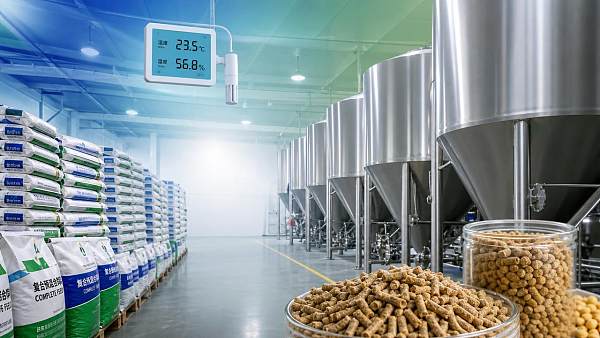
Digital sensors are becoming more common because they show trend movement before quality teams see physical damage.
However, technology works best when paired with sampling discipline, cleaning routines, and clear release criteria.
How to Judge Safe Storage Time More Accurately
There is no universal safe storage period for all animal feed. Stability depends on environment, formula, and handling history.
A dry, cool, sealed warehouse may preserve feed longer than a humid shed with repeated door opening.
The following framework helps classify risk before problems become visible.
This approach supports faster decisions and reduces reliance on subjective judgment during animal feed quality disputes.
Practical Actions to Slow Animal Feed Deterioration
Prevention is more reliable than correction because degraded animal feed cannot always be restored safely or economically.
- Define storage limits for temperature, humidity, moisture, and maximum holding time.
- Clean bins, conveyors, and warehouses to remove residues that attract pests.
- Protect animal feed from rain, floor moisture, roof leaks, and condensation points.
- Reduce oxygen and light exposure for high-fat formulas where practical.
- Verify transport conditions before accepting long-distance or delayed shipments.
- Use targeted testing for mycotoxins, rancidity, moisture, and nutrient potency.
- Train storage teams to report small changes before they become rejection events.
Where animal feed contains heat-sensitive additives, storage instructions should be treated as part of product specification.
Ignoring those limits can reduce expected performance even when the feed remains visually acceptable.
The Next Standard Is Predictive Feed Quality Control
Animal feed storage is moving toward predictive control, supported by sensors, quality data, and supply chain visibility.
Instead of asking whether a lot has spoiled, better systems ask whether current conditions are pushing it toward decline.
This shift is important as feed formulas become more functional, expensive, and sensitive to environmental stress.
The most resilient operations will connect storage data with purchasing, production planning, logistics, and animal performance feedback.
That connection turns animal feed quality control from a reaction process into a decision intelligence system.
Action Point for Better Storage Decisions
Animal feed quality starts declining when storage conditions exceed the stability limits of its ingredients and formulation.
The decline may begin before mold, odor, or clumping appears, so early monitoring is essential.
Build a storage checklist covering moisture, temperature, packaging, pests, rotation, and lot age for every animal feed category.
Then review trend data regularly and quarantine any lot showing abnormal movement, even if it still looks usable.
This disciplined approach protects nutrition value, reduces waste, and strengthens confidence across the animal feed supply chain.
Recommended News
 Aug 14, 2026How to Choose Pallet Systems for Warehouse Throughput and Space EfficiencyPallet systems can transform warehouse throughput and space efficiency. Discover how to choose the right solution for your operation and boost performance.
 Aug 04, 2026How to Compare Secure Warehousing Solutions for High-Value InventorySecure warehousing solutions for high-value inventory: learn how to compare layered security, traceability, exception control, and resilience to reduce loss and choose the right provider.
 Jul 31, 2026How to Evaluate Warehousing Solutions for Faster Throughput and Lower Operating CostsWarehousing solutions should be judged by throughput, labor reality, and integration—not storage alone. Learn how to cut delays, lower operating costs, and choose a faster, more resilient warehouse model.
 Jul 28, 2026Plastic Pallet Material Choices for Warehouses Focused on Cleaner HandlingPlastic Pallet material choices can improve cleaner handling, washability, and workflow stability in warehouses. Explore how to compare resin, design, and lifecycle fit for smarter procurement.
 Jul 14, 2026Inventory Tracking for Warehouse Operations: Systems, Accuracy Metrics, and Workflow FitInventory tracking warehouse success starts with the right system, clear accuracy metrics, and workflow fit. Learn how to reduce errors, speed operations, and improve stock visibility.
 Jul 11, 2026Smart Storage Solutions for Fast-Moving Inventory: Which Setup Fits Your Warehouse?Smart storage solutions for fast-moving inventory: discover how to match warehouse flow, SKU volatility, and space limits with the right setup to boost speed, accuracy, and resilience.
 Jul 08, 2026Inventory Management Solutions: Which Features Matter Most for Multi-Site Warehousing?Inventory management solutions for multi-site warehousing: discover the features that improve real-time visibility, stock accuracy, transfers, and faster order fulfillment.
![]() Jul 07, 2026What Does Order Fulfillment Include? Key Steps, Costs, and KPIs for Growing OperationsOrder fulfillment includes far more than shipping—learn the key steps, main cost drivers, and KPIs that help growing operations improve accuracy, speed, and customer experience.
Jul 07, 2026What Does Order Fulfillment Include? Key Steps, Costs, and KPIs for Growing OperationsOrder fulfillment includes far more than shipping—learn the key steps, main cost drivers, and KPIs that help growing operations improve accuracy, speed, and customer experience. Jul 03, 2026Warehouse Management Solutions for Fulfillment Centers: Features That Improve Picking AccuracyWarehouse management solutions for fulfillment centers improve picking accuracy with real-time inventory, scan verification, and guided workflows—discover features that cut errors and boost speed.
 Jun 26, 2026How to Choose Order Fulfillment Services for DTC, B2B, and Marketplace OrdersOrder fulfillment services for DTC, B2B, and marketplace orders: learn how to compare providers, reduce hidden costs, improve delivery performance, and choose a scalable partner with confidence.
 Jun 24, 2026How to Find the Right Solution Fit by Load Capacity for Storage and Material HandlingSolution fit by load capacity starts with real load data. Learn how to choose safer, more efficient storage and material handling systems that reduce risk and support growth.
 Jun 12, 2026How to Choose Refrigeration Equipment for Cold Storage: Key Specs and System TypesRefrigeration equipment selection for cold storage starts with the right specs and system type. Learn how to compare capacity, efficiency, refrigerants, and lifecycle cost.
 Jun 03, 2026Smart Manufacturing Trends 2026 for Warehouse Automation: Robotics, WMS, and ROISmart manufacturing trends 2026 for warehouse automation reveal how robotics, modern WMS, and ROI-focused strategies boost efficiency, resilience, and scalable growth.
 May 29, 2026When does animal feed quality decline in storage?Animal feed quality can decline before visible spoilage. Learn key storage risks, early warning signs, and practical steps to protect nutrition, safety, and value.
 May 16, 2026What warehouse automation trends matter most in 2026?Smart manufacturing trends 2026 for warehouse automation: discover the key 2026 shifts in AI orchestration, scalable robotics, and real-time visibility to boost resilience, accuracy, and ROI.
 May 07, 2026Inventory control breaks down when demand looks stableInventory control can fail even when demand looks stable. Discover how procurement, logistics management, and supply chain risks affect aftermarket, industrial parts, and EV components.
 May 06, 2026The slow-moving stock problem in inventory controlInventory control for aftermarket, auto parts, EV components, and industrial parts: learn how procurement and supply chain teams cut slow-moving stock, improve logistics management, and protect cash flow.
 May 06, 2026Why inventory control misses hidden carrying costsInventory control often hides carrying costs across procurement, logistics management, and the supply chain. Discover smarter sourcing for auto parts, EV components, and precision engineering.
 May 04, 2026Inventory control works differently for low-volume partsInventory control for aftermarket and industrial parts works differently for low-volume precision parts, custom components, and EV components. Learn smarter procurement and supply chain strategies.
 May 02, 2026Car spare parts profits often disappear in fulfillmentCar spare parts profits often vanish in fulfillment. Learn how procurement, inventory control, logistics management, and supply chain strategy protect margins in aftermarket and auto parts operations.
 May 02, 2026Inventory control mistakes usually start with bad item dataInventory control issues often begin with bad item data. Learn how procurement, logistics management, and supply chain teams handling auto parts, aftermarket, industrial parts, and EV components can reduce costly errors.
 Apr 27, 2026Which replacement parts are worth stocking in advance?Replacement parts worth stocking first: learn how smart inventory, vehicle upgrades, car accessories trends, recycling solutions, and sustainable technology reduce downtime and costs.