


Search News
Global Industrial Intelligence Hub (GIIH)Industry Portal
Global Industrial Intelligence Hub (GIIH)Status
Standard Access
Upgrade to PremiumNewsPrecision engineering mistakes that raise reject rates
Time
Click Count
In precision engineering, small process deviations can trigger costly reject rates across automotive components, industrial parts, and custom components production. For aftermarket buyers, procurement teams, and distributors managing inventory control, logistics management, and supply chain risks, understanding these mistakes is critical. This article explores how defects affect high-quality parts, precision parts, car spare parts, EV components, and electric vehicle parts, helping decision-makers reduce waste and improve sourcing confidence.
For most readers searching this topic, the real question is not simply “what causes rejects?” but “which precision engineering mistakes create avoidable cost, delivery risk, and supplier instability—and how can we identify them before they affect procurement decisions?” The short answer is that reject rates usually rise not because of one dramatic failure, but because of repeated discipline gaps in tolerancing, tooling control, measurement systems, material handling, process capability, and supplier communication. For buyers and commercial evaluators, understanding these failure patterns is a practical way to reduce returns, protect margins, and improve confidence in sourcing.
Why reject rates matter far beyond the factory floor
High reject rates are not only a manufacturing issue. They directly affect lead times, pricing consistency, warranty exposure, replenishment planning, and customer satisfaction. In sectors such as precision automotive parts, industrial assemblies, and electric vehicle parts, even a small increase in nonconforming output can create cascading business problems.
For procurement teams, the consequences typically include:
- Higher unit cost due to scrap, rework, and expedited production
- Greater risk of delayed deliveries and back orders
- Quality inconsistency across batches of precision parts
- More incoming inspection burden at warehouses or distribution hubs
- Increased claim rates for aftermarket car spare parts and custom components
- Reduced supplier reliability during demand surges
This is why reject rates should be treated as an early warning signal of process weakness, not just a quality KPI. If a supplier cannot consistently control precision engineering fundamentals, buyers may eventually face shortages, complaints, or field failures.
The most common precision engineering mistakes that raise reject rates
In real production environments, rejects often come from a predictable group of mistakes. These issues may appear technical, but each has direct commercial impact.
1. Poor tolerance interpretation
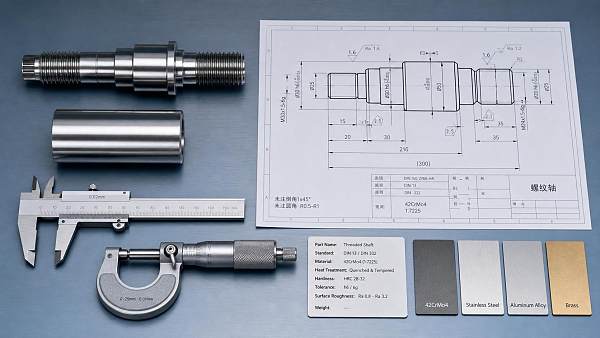
One of the most frequent causes of rejects is misreading or loosely applying engineering drawings. This includes misunderstanding geometric tolerances, surface finish requirements, fit relationships, datum structures, or critical-to-function dimensions. In precision manufacturing, parts can look acceptable visually while still failing assembly or performance requirements.
For buyers, this often appears as “batch inconsistency” or “unexpected fitment issues,” especially in high-quality parts used in automotive or electromechanical applications.
2. Inadequate process capability for tight specifications
Some suppliers accept orders with tolerances they cannot reliably hold at production scale. They may produce acceptable first samples but fail to maintain consistency over long runs. This is especially risky for EV components, shafts, housings, connectors, and custom-machined interfaces where dimensional variation affects downstream assembly.
If Cp or Cpk performance is weak, reject rates rise as production volume increases.
3. Tool wear that is not monitored aggressively enough
In machining, grinding, stamping, and forming operations, tool wear gradually shifts dimensions, edge quality, and surface integrity. When tool-life control is reactive rather than data-driven, defects accumulate before correction happens. This is a common hidden cause of rising reject rates in precision parts production.
4. Weak measurement system control
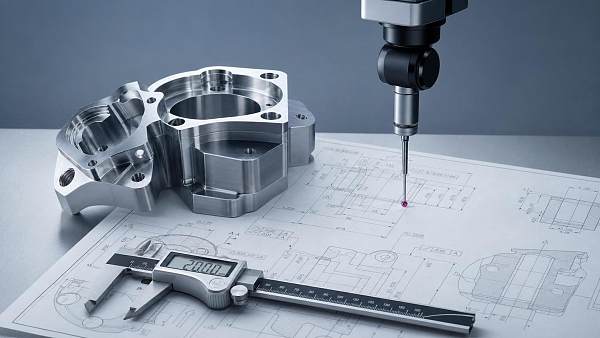
Even capable manufacturing processes can produce excessive rejects if the inspection system is unstable. Problems include uncalibrated gauges, poor fixture repeatability, inconsistent operator measurement methods, or inadequate gauge R&R discipline. In such cases, suppliers may either ship nonconforming parts or over-reject acceptable output, both of which increase cost.
5. Material variability and traceability gaps
Incorrect hardness, inconsistent alloy composition, poor heat treatment response, or mixed-lot raw materials can all create defects that appear later during machining, coating, or final use. For car spare parts and industrial parts, this can lead to cracking, distortion, premature wear, or failed inspections.
Without strong material traceability, root-cause analysis becomes slow and unreliable.
6. Improper fixturing and clamping
Parts may deform during machining or measurement if the fixture design is weak or clamping force is uneven. Thin-wall components, precision brackets, aluminum EV parts, and custom components are especially vulnerable. Suppliers sometimes correct dimensions under fixture conditions, only to find the part moves out of spec after release.
7. Surface finishing mistakes
Plating, anodizing, coating, deburring, polishing, and shot blasting can all change dimensions or damage critical surfaces. Rejects increase when suppliers treat finishing as a cosmetic step rather than an engineered process. This is particularly important when dimensions are already near tolerance limits.
8. Poor change control
Seemingly minor changes in machine settings, subcontractors, tooling source, coolant, raw material supplier, or operator sequence can alter process performance. When engineering change control is weak, reject rates often rise suddenly without obvious explanation.
Which mistakes create the biggest business risk for buyers and distributors?
Not all defects carry the same commercial impact. For procurement and channel partners, the biggest risks are usually the mistakes that combine quality loss with delivery instability.
The highest-risk patterns include:
- Capability mismatch: the supplier accepts tight-tolerance work beyond its stable manufacturing range
- Late detection defects: problems found only at final inspection, after value has already been added
- Traceability failure: difficult to isolate bad lots, leading to broader stock quarantine
- Process drift: quality slowly worsens across batch progression due to wear or uncontrolled settings
- Sub-supplier inconsistency: variation introduced by outsourced heat treatment, coating, or secondary operations
For distributors and inventory managers, these issues matter because they increase the likelihood of mixed-quality stock entering the channel. That can damage customer trust even when the original defect rate at the factory seems “manageable.”
How to spot a reject-rate problem before it becomes a supply chain problem
Experienced buyers do not wait for returned goods to assess supplier quality. They look for early indicators that a precision engineering process may be unstable.
Warning signs during supplier evaluation
- Inspection reports show only pass/fail results, without process capability data
- Dimensional reports focus on first article only, with little evidence of repeatability
- Corrective action responses are generic and lack root-cause logic
- Calibration records are incomplete or difficult to verify
- Lead times are frequently revised after order confirmation
- Scrap and rework data are not shared transparently
- Material certificates do not clearly link to production lots
Questions buyers should ask suppliers
- What dimensions or characteristics are classified as critical, and how are they controlled?
- What is the process capability for the tightest tolerance features?
- How is tool wear tracked and when are tools replaced?
- What measurement system studies have been completed?
- How are heat treatment, coating, or other secondary processes validated?
- What is the containment procedure if one lot fails inspection?
- How often do engineering or process changes trigger revalidation?
These questions are more useful than simply asking for a low defect rate claim. A supplier with a slightly higher stated reject rate but strong controls may be a better long-term partner than one that reports unrealistic perfection without evidence.
What procurement teams should prioritize when sourcing high-quality precision parts
When evaluating suppliers of precision parts, automotive components, or electric vehicle parts, buyers should focus on process control maturity rather than price alone. The lowest quotation often becomes the highest total cost when reject-related disruption is included.
Priority evaluation areas include:
Process discipline
Check whether the supplier uses documented control plans, in-process inspection, preventive maintenance, and defined reaction plans when measurements drift. A stable process is usually more valuable than a supplier that relies heavily on final inspection.
Capability evidence
Request data for repeat production, not just prototype or sample results. Precision engineering performance must be demonstrated over time and at volume.
Traceability and lot segregation
For high-value car spare parts and custom components, traceability reduces the scale of commercial exposure when something goes wrong. Good lot control limits the spread of claims and simplifies recalls or containment.
Secondary process control
Many reject issues emerge not in core machining, but in coating, heat treatment, welding, cleaning, or packaging. Procurement teams should verify how these linked processes are managed.
Communication responsiveness
Fast and technically credible communication is a practical quality indicator. Suppliers that explain issues clearly, share data promptly, and propose containment actions tend to be more reliable in critical supply situations.
How reject-rate reduction supports commercial performance
For business evaluators, the value of lower reject rates should be translated into commercial outcomes. Reject-rate reduction is not just about factory efficiency; it supports wider supply chain performance.
Benefits include:
- More predictable order fulfillment for distributors and resellers
- Lower emergency freight and expedited production costs
- Reduced incoming inspection pressure at receiving sites
- Fewer customer complaints and aftermarket returns
- Better inventory turns due to lower quarantine and scrap risk
- Stronger confidence when expanding into EV components or tighter-tolerance product lines
In competitive procurement environments, a supplier with disciplined precision engineering control can create strategic value even if its nominal price is not the lowest. Stable quality protects continuity, and continuity often matters more than a small purchase price difference.
A practical checklist for assessing precision engineering risk
If you are screening suppliers or reviewing an existing source, this checklist can help identify whether reject-rate risk is likely to rise:
- Are drawing requirements clearly reviewed before production launch?
- Is there evidence of stable process capability on critical features?
- Are tool wear limits defined and monitored?
- Are gauges calibrated and measurement methods standardized?
- Is raw material traceable by lot and linked to finished goods?
- Are fixturing and clamping methods validated for part stability?
- Are finishing and secondary operations dimensionally controlled?
- Is there formal change management for process adjustments?
- Can the supplier isolate and contain defective lots quickly?
- Does quality data remain consistent across multiple production batches?
If several of these answers are unclear or unsupported, reject-rate risk is likely higher than the quotation alone suggests.
Conclusion
Precision engineering mistakes that raise reject rates are rarely random. They usually come from controllable weaknesses in tolerancing, tooling, measurement, materials, fixturing, finishing, and change management. For information researchers, procurement teams, commercial evaluators, and distributors, the key takeaway is simple: reject rates are a business intelligence signal as much as a production metric.
When sourcing high-quality parts, precision parts, car spare parts, EV components, or custom industrial components, the smartest decision is to evaluate how a supplier controls variation—not just whether they promise compliance. Buyers who understand these failure patterns can reduce waste, improve sourcing confidence, and build a more resilient supply chain.
- precision manufacturing
- precision automotive
- order fulfillment
- supply chain
- logistics management
- inventory control
- procurement
- car spare parts
- automotive components
- EV components
- electric vehicle parts
- precision parts
- custom components
- high-quality parts
- precision engineering
- industrial parts
- aftermarket
Recommended News
 Jul 14, 2026RoHS Precision Parts Explained: Compliance Requirements, Test Reports, and Buying RisksRoHS precision parts explained: learn compliance requirements, how to read test reports, spot supplier gaps, and avoid costly buying risks before shipment approval.
 Jul 14, 2026Precision Machining Factory Selection Guide: Tolerances, Materials, and Inspection CapabilityPrecision machining factory selection starts with tolerance control, material expertise, and inspection capability. Learn how to compare suppliers, reduce risk, and choose with confidence.
 Jul 13, 2026Forged Engineered Components Explained: When Forging Outperforms Casting or MachiningForged engineered components deliver superior strength, fatigue resistance, and reliability. Discover when forging outperforms casting or machining for critical industrial parts.
 Jul 12, 2026Laminated Core Components: How to Choose Grades, Thickness, and ApplicationsLaminated core components explained: learn how to choose steel grades, thickness, and application fit to cut losses, improve efficiency, and make smarter design decisions.
 Jul 11, 2026Diamond Saw Blades for Stone, Tile, and Concrete: How to Choose the Right Typediamondsawblades buying guide for stone, tile, and concrete. Learn how to match blade type, cutting method, and machine for cleaner cuts, longer life, and fewer costly mistakes.
 Jul 09, 2026Product Selection Criteria for Stamped Parts: 7 Factors That Affect Fit and CostProduct selection criteria for stamped parts: discover 7 key factors that shape fit, tolerance, tooling, and total cost—make smarter sourcing decisions with less risk.
 Jul 09, 2026Sheet Metal Custom Parts: How to Choose Tolerances, Finishes, and Lead TimesSheet metal custom parts guide: learn how to choose the right tolerances, finishes, and lead times to reduce cost, improve fit, and avoid sourcing delays.
 Jul 08, 2026How to Do Product Category Analysis for Precision Parts Sourcing and Supplier ShortlistingProduct category analysis precision parts helps buyers classify components, compare true supplier fit, and shortlist faster with better cost, lead time, and compliance accuracy.
![]() Jul 07, 2026How to Evaluate a Battery Protection Parts Supplier for Quality, Testing, and Supply StabilityBattery protection parts supplier evaluation starts with quality, testing, and supply stability. Learn the key checks, red flags, and sourcing criteria for safer, more reliable decisions.
Jul 07, 2026How to Evaluate a Battery Protection Parts Supplier for Quality, Testing, and Supply StabilityBattery protection parts supplier evaluation starts with quality, testing, and supply stability. Learn the key checks, red flags, and sourcing criteria for safer, more reliable decisions. Jul 04, 2026Custom Precision Parts Prototype: Tolerance, Material, and Lead Time BasicsCustom precision parts prototype basics made practical: learn how tolerance, material, and lead time choices reduce risk, improve testing, and speed smarter production decisions.
 Jul 04, 2026Custom Engineered Components vs Standard Parts: When Is Customization Worth It?Custom engineered components vs standard parts: discover when customization lowers lifecycle cost, reduces downtime, and creates stronger competitive advantage.
 Jul 03, 2026How to Source Precision Machined Parts in the Middle East: Tolerances, Materials, and Supplier ChecksPrecision machined parts Middle East sourcing starts with tighter supplier checks. Learn how to compare tolerances, materials, certifications, and total cost for safer, smarter procurement.
 Jul 02, 2026Performance Factor Analysis for Surface Treatment: Key Variables That Affect Coating ResultsPerformance factor analysis for surface treatment reveals how substrate condition, cleanliness, profile, environment, and process settings shape coating results. Learn the key variables to improve adhesion, consistency, and production decisions.
 Jun 29, 2026Material Selection Analysis by Weight: When Lighter Parts Improve Total System PerformanceMaterial selection analysis by weight reveals when lighter parts truly improve total system performance, cutting energy, load, and lifecycle cost while avoiding hidden tradeoffs.
 Jun 27, 2026Engineered Components Drawing Review: 8 Checks to Catch Tolerance and DFM Issues EarlyEngineered components drawing review made practical: discover 8 smart checks to catch tolerance, GD&T, and DFM issues early, reduce rework, and improve launch readiness.
 Jun 26, 2026DIN Precision Parts: Tolerances, Materials, and How to Read Spec RequirementsDIN precision parts explained clearly: learn tolerances, material selection, surface requirements, and how to read DIN specs to reduce sourcing risk and choose suppliers with confidence.
 Jun 25, 2026Custom Precision Parts for Electronics: Tolerance, Material, and Process BasicsCustom precision parts electronics guide covering tolerance, material, and process basics. Learn how to reduce sourcing risk, improve fit and reliability, and choose suppliers with confidence.
 Jun 24, 2026Rapid Prototyping Near Me: How to Compare Lead Time, Materials, and Tolerance OptionsRapid prototyping near me: compare lead time, materials, and tolerance options with a practical framework to choose faster, smarter suppliers and reduce costly prototype delays.
 Jun 23, 2026Sheet Metal Components Manufacturing: Tolerance, Finish, and Process Options ExplainedSheet metal components manufacturing explained: compare tolerance, finish, and process options to reduce sourcing risk, control cost, and choose suppliers with confidence.
 Jun 23, 2026Ballscrews Selection Guide: How Lead, Accuracy, and Load Affect Motion PerformanceBallscrews selection guide covering lead, accuracy, and load. Learn how to improve speed, repeatability, and service life with practical tips for better motion performance.
 Jun 22, 2026PCB Assembly Process Explained: SMT, THT, Testing, and Common Defects to Watch ForPCB assembly explained clearly: learn SMT, THT, testing methods, and common defects that affect reliability, compliance, and product performance across industries.
 Jun 21, 2026What Drives CNC Machining Price? Material, Tolerance, Volume, and Surface Finish ExplainedCNC machining price explained: learn how material, tolerance, order volume, and surface finish shape real costs, supplier quotes, and smarter sourcing decisions.
 Jun 21, 2026How to Choose Stainless Steel Rings: Grades, Corrosion Resistance, and Load Requirementsstainlesssteelrings buying guide: compare 304, 316, and duplex grades, corrosion resistance, and load requirements to choose safer, longer-lasting rings with confidence.
 Jun 19, 2026Material Selection Analysis: How to Balance Strength, Cost, Corrosion, and ManufacturabilityMaterial selection analysis made practical: learn how to balance strength, cost, corrosion resistance, and manufacturability to reduce risk, improve sourcing, and build more reliable products.