


Search News
Global Industrial Intelligence Hub (GIIH)Industry Portal
Global Industrial Intelligence Hub (GIIH)Status
Standard Access
Upgrade to PremiumNewsWhere precision engineering saves money over time
Time
Click Count
Precision engineering saves money over time when buyers look beyond unit price and evaluate total cost of ownership. For procurement teams, distributors, and commercial evaluators, the real value is not only tighter tolerances or better surface finish. It is fewer failures, less rework, more stable inventory planning, lower warranty exposure, smoother logistics, and stronger supply chain reliability. In industrial parts, custom components, EV motor parts, EV battery assemblies, and automotive aftermarket components, precision sourcing often protects margins long after the initial purchase order is closed.
For most business buyers, the core question is simple: does paying more upfront for precision-engineered components produce measurable long-term savings? In many cases, the answer is yes—especially where downtime, replacement frequency, quality drift, fitting inconsistency, or aftersales claims can erode profitability. The most useful way to judge value is not by purchase price alone, but by lifecycle cost, operational risk, and downstream commercial impact.
Why buyers should measure precision engineering by total cost, not unit price
A low-priced part can look competitive during quotation review, but the true financial outcome appears later. If dimensional inconsistency leads to assembly delays, if poor material control shortens service life, or if variable quality causes batch-level rejection, the initial savings disappear quickly.
Precision engineering reduces total cost across several layers:
- Lower failure rates: Better tolerance control reduces misfit, vibration, wear, leakage, or electrical inconsistency.
- Longer service life: High-quality machining, forming, or finishing can delay replacement cycles.
- Reduced inspection burden: Stable production quality means fewer incoming quality checks and less sorting.
- Less rework and scrap: Accurate parts fit correctly the first time, reducing labor waste.
- Improved planning: Reliable specifications support predictable maintenance and inventory strategies.
- Lower warranty and returns risk: Especially important in automotive aftermarket and industrial distribution channels.
For purchasing and evaluation teams, this means precision engineering is often a margin protection strategy rather than simply a manufacturing feature.
Where precision engineering creates the biggest long-term savings
Not every component requires the same level of precision. The strongest return usually appears in parts tied directly to system performance, safety, replacement cost, or maintenance frequency.
Industrial parts and custom components
In industrial applications, precision matters when parts interact with moving systems, seals, thermal cycles, pressure conditions, or automated assembly lines. Bearings, shafts, housings, connectors, fasteners, valves, and customized metal or plastic components can all create hidden cost if tolerances drift beyond acceptable ranges.
When precision is well controlled, buyers gain:
- More consistent equipment uptime
- Less need for manual adjustment during installation
- Lower risk of field failure in demanding environments
- More stable quality across repeat orders
EV motor components
Electric vehicle motor systems rely heavily on tight dimensional and material consistency. Precision affects balance, heat management, electromagnetic performance, and long-term durability. Small deviations in motor-related components can produce noise, efficiency losses, excess wear, or premature failure.
For sourcing teams, paying attention to manufacturing precision in EV motor parts can reduce:
- Performance variation between batches
- Assembly complexity
- Costly post-production correction
- Reputational risk in high-growth EV markets
EV battery-related components
Battery systems are especially sensitive to precision because fit, sealing, thermal pathways, and electrical contact quality all matter. Inaccurate enclosures, connectors, cooling plates, busbars, or brackets can create both reliability and safety concerns.
Long-term savings here often come from better system stability, fewer service interventions, and lower defect-related costs across transport, storage, and end use.
Automotive aftermarket components
In the aftermarket, precision engineering helps control one of the most expensive risks in distribution: returns caused by poor fit or inconsistent performance. A part that fits only “most of the time” is not cheap once reverse logistics, customer support, workshop labor disputes, and brand damage are included.
Distributors and agents benefit when precision-engineered aftermarket components improve:
- First-time installation success
- Customer satisfaction and repeat purchase rates
- Inventory confidence across SKUs
- Warranty control and channel trust
How precision engineering improves procurement efficiency
One overlooked advantage of precision-engineered parts is that they simplify procurement itself. When suppliers maintain process discipline, documentation accuracy, and repeatable quality, procurement teams spend less time managing exceptions.
This can reduce hidden internal costs such as:
- Repeated technical clarification during RFQ stages
- Disputes over specifications and acceptance standards
- Emergency sourcing when a shipment fails quality inspection
- Additional supplier audits triggered by unstable performance
- Time spent coordinating engineering, quality, and logistics teams
For organizations handling multiple suppliers or international procurement, these efficiency gains matter. A precision-focused supplier is often easier to scale with because repeat orders require less intervention.
Why better precision supports smarter inventory and logistics management
Precision engineering also affects inventory and supply chain performance. Reliable parts reduce uncertainty, and lower uncertainty improves planning.
When product quality is stable, companies can operate with more confidence in:
- Safety stock levels: Fewer unexpected defects mean less need for excess buffer inventory.
- Forecast accuracy: Stable replacement cycles support better replenishment models.
- Warehouse efficiency: Fewer quarantined batches and less mixed-quality stock.
- Cross-border logistics: Lower chance of costly return shipments or customs complications linked to quality claims.
- Distributor operations: More reliable SKU turnover and lower dead stock risk.
For global supply chains, poor precision can create ripple effects far beyond manufacturing. One inconsistent batch may trigger urgent air freight, order splitting, customer complaints, and repair commitments across several countries. In contrast, precision-engineered components strengthen supply chain resilience by reducing avoidable disruption.
What commercial evaluators should check before paying more for precision parts
Not every premium claim is justified. Buyers should verify whether the supplier’s precision capability is real, repeatable, and commercially relevant.
Useful evaluation points include:
- Tolerance capability: Are the required tolerances clearly defined and consistently achieved?
- Material traceability: Can the supplier document material origin, grade, and batch control?
- Process control: Are machining, forming, coating, heat treatment, or assembly steps standardized?
- Inspection systems: Does the supplier use reliable metrology and maintain inspection records?
- Consistency across lots: Can the supplier maintain performance over long-term production, not just samples?
- Application understanding: Do they understand the operational demands of your industry or use case?
- Corrective action responsiveness: If a problem appears, can they analyze root cause and recover quickly?
For sourcing managers and evaluators, the key is to connect technical precision with business impact. A supplier that can explain how its process reduces lifecycle cost is usually more valuable than one competing only on initial price.
How to calculate whether precision engineering will really save money
A practical buying decision should compare two numbers: purchase cost and expected cost across the part’s usable life. This does not require perfect forecasting. Even a basic framework can reveal whether a higher-spec component is economically smarter.
Consider these cost categories:
- Unit purchase price
- Incoming inspection and qualification cost
- Assembly labor and fitting time
- Rework or scrap rate
- Expected maintenance or replacement frequency
- Downtime cost if failure occurs
- Warranty, returns, or compensation risk
- Logistics cost from urgent replenishment or reverse flow
- Brand and customer retention impact
If a precision-engineered component costs 8% more but lowers failure-related expenses by 20%, improves installation speed, and reduces returns, the long-term economics often become clear very quickly.
This is especially true in sectors where failure is expensive, field service is difficult, or customer trust influences repeat business.
When higher precision is worth it—and when it may not be
Precision engineering delivers the strongest value when components are:
- Critical to safety or system reliability
- Expensive to replace after installation
- Used in high-volume assembly environments
- Part of export or multi-market distribution chains
- Subject to strict compatibility requirements
- Linked to warranties, certifications, or reputation risk
It may be less necessary to pay for extreme precision when a part is non-critical, easy to replace, loosely fitted, or operationally tolerant of variation. The right sourcing decision depends on use case, not on choosing the highest specification by default.
For professional buyers, the goal is not maximum precision at any price. It is fit-for-purpose precision that lowers total cost and supports reliable commercial outcomes.
What precision engineering means for long-term margin protection
Over time, the companies that buy well are often the ones that understand hidden cost best. Precision engineering helps protect margin by reducing the operational leaks that slowly erode profitability: repeated claims, avoidable defects, emergency freight, inconsistent stock turnover, and damaged channel trust.
For information researchers, procurement teams, business evaluators, and distributors, the commercial lesson is straightforward. The cheapest component is not always the lowest-cost decision. In many industrial and automotive-related categories, smarter sourcing of precision parts creates measurable value across procurement, operations, logistics, and aftersales performance.
Precision engineering saves money over time because it improves more than the part itself. It improves decision quality across the whole supply chain. When buyers evaluate components through a total-cost lens, they are better positioned to reduce risk, extend product life, and build stronger long-term margins.
Recommended News
 Jul 14, 2026RoHS Precision Parts Explained: Compliance Requirements, Test Reports, and Buying RisksRoHS precision parts explained: learn compliance requirements, how to read test reports, spot supplier gaps, and avoid costly buying risks before shipment approval.
 Jul 14, 2026Precision Machining Factory Selection Guide: Tolerances, Materials, and Inspection CapabilityPrecision machining factory selection starts with tolerance control, material expertise, and inspection capability. Learn how to compare suppliers, reduce risk, and choose with confidence.
 Jul 13, 2026Forged Engineered Components Explained: When Forging Outperforms Casting or MachiningForged engineered components deliver superior strength, fatigue resistance, and reliability. Discover when forging outperforms casting or machining for critical industrial parts.
 Jul 12, 2026Laminated Core Components: How to Choose Grades, Thickness, and ApplicationsLaminated core components explained: learn how to choose steel grades, thickness, and application fit to cut losses, improve efficiency, and make smarter design decisions.
 Jul 11, 2026Diamond Saw Blades for Stone, Tile, and Concrete: How to Choose the Right Typediamondsawblades buying guide for stone, tile, and concrete. Learn how to match blade type, cutting method, and machine for cleaner cuts, longer life, and fewer costly mistakes.
 Jul 09, 2026Product Selection Criteria for Stamped Parts: 7 Factors That Affect Fit and CostProduct selection criteria for stamped parts: discover 7 key factors that shape fit, tolerance, tooling, and total cost—make smarter sourcing decisions with less risk.
 Jul 09, 2026Sheet Metal Custom Parts: How to Choose Tolerances, Finishes, and Lead TimesSheet metal custom parts guide: learn how to choose the right tolerances, finishes, and lead times to reduce cost, improve fit, and avoid sourcing delays.
 Jul 08, 2026How to Do Product Category Analysis for Precision Parts Sourcing and Supplier ShortlistingProduct category analysis precision parts helps buyers classify components, compare true supplier fit, and shortlist faster with better cost, lead time, and compliance accuracy.
![]() Jul 07, 2026How to Evaluate a Battery Protection Parts Supplier for Quality, Testing, and Supply StabilityBattery protection parts supplier evaluation starts with quality, testing, and supply stability. Learn the key checks, red flags, and sourcing criteria for safer, more reliable decisions.
Jul 07, 2026How to Evaluate a Battery Protection Parts Supplier for Quality, Testing, and Supply StabilityBattery protection parts supplier evaluation starts with quality, testing, and supply stability. Learn the key checks, red flags, and sourcing criteria for safer, more reliable decisions. Jul 04, 2026Custom Precision Parts Prototype: Tolerance, Material, and Lead Time BasicsCustom precision parts prototype basics made practical: learn how tolerance, material, and lead time choices reduce risk, improve testing, and speed smarter production decisions.
 Jul 04, 2026Custom Engineered Components vs Standard Parts: When Is Customization Worth It?Custom engineered components vs standard parts: discover when customization lowers lifecycle cost, reduces downtime, and creates stronger competitive advantage.
 Jul 03, 2026How to Source Precision Machined Parts in the Middle East: Tolerances, Materials, and Supplier ChecksPrecision machined parts Middle East sourcing starts with tighter supplier checks. Learn how to compare tolerances, materials, certifications, and total cost for safer, smarter procurement.
 Jul 02, 2026Performance Factor Analysis for Surface Treatment: Key Variables That Affect Coating ResultsPerformance factor analysis for surface treatment reveals how substrate condition, cleanliness, profile, environment, and process settings shape coating results. Learn the key variables to improve adhesion, consistency, and production decisions.
 Jun 29, 2026Material Selection Analysis by Weight: When Lighter Parts Improve Total System PerformanceMaterial selection analysis by weight reveals when lighter parts truly improve total system performance, cutting energy, load, and lifecycle cost while avoiding hidden tradeoffs.
 Jun 27, 2026Engineered Components Drawing Review: 8 Checks to Catch Tolerance and DFM Issues EarlyEngineered components drawing review made practical: discover 8 smart checks to catch tolerance, GD&T, and DFM issues early, reduce rework, and improve launch readiness.
 Jun 26, 2026DIN Precision Parts: Tolerances, Materials, and How to Read Spec RequirementsDIN precision parts explained clearly: learn tolerances, material selection, surface requirements, and how to read DIN specs to reduce sourcing risk and choose suppliers with confidence.
 Jun 25, 2026Custom Precision Parts for Electronics: Tolerance, Material, and Process BasicsCustom precision parts electronics guide covering tolerance, material, and process basics. Learn how to reduce sourcing risk, improve fit and reliability, and choose suppliers with confidence.
 Jun 24, 2026Rapid Prototyping Near Me: How to Compare Lead Time, Materials, and Tolerance OptionsRapid prototyping near me: compare lead time, materials, and tolerance options with a practical framework to choose faster, smarter suppliers and reduce costly prototype delays.
 Jun 23, 2026Sheet Metal Components Manufacturing: Tolerance, Finish, and Process Options ExplainedSheet metal components manufacturing explained: compare tolerance, finish, and process options to reduce sourcing risk, control cost, and choose suppliers with confidence.
 Jun 23, 2026Ballscrews Selection Guide: How Lead, Accuracy, and Load Affect Motion PerformanceBallscrews selection guide covering lead, accuracy, and load. Learn how to improve speed, repeatability, and service life with practical tips for better motion performance.
 Jun 22, 2026PCB Assembly Process Explained: SMT, THT, Testing, and Common Defects to Watch ForPCB assembly explained clearly: learn SMT, THT, testing methods, and common defects that affect reliability, compliance, and product performance across industries.
 Jun 21, 2026What Drives CNC Machining Price? Material, Tolerance, Volume, and Surface Finish ExplainedCNC machining price explained: learn how material, tolerance, order volume, and surface finish shape real costs, supplier quotes, and smarter sourcing decisions.
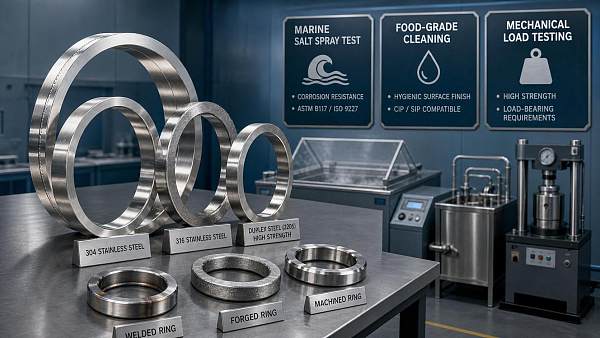
 Jun 21, 2026How to Choose Stainless Steel Rings: Grades, Corrosion Resistance, and Load Requirementsstainlesssteelrings buying guide: compare 304, 316, and duplex grades, corrosion resistance, and load requirements to choose safer, longer-lasting rings with confidence.
 Jun 19, 2026Material Selection Analysis: How to Balance Strength, Cost, Corrosion, and ManufacturabilityMaterial selection analysis made practical: learn how to balance strength, cost, corrosion resistance, and manufacturability to reduce risk, improve sourcing, and build more reliable products.