


Search News
Global Industrial Intelligence Hub (GIIH)Industry Portal
Global Industrial Intelligence Hub (GIIH)Status
Standard Access
Upgrade to PremiumNewsHow an industrial database improves manufacturing research
Time
Click Count
In today’s fast-moving industrial landscape, an industrial database for manufacturing gives researchers a clearer way to track suppliers, technologies, market shifts, and production trends. For information seekers, it turns scattered data into actionable insight, helping manufacturers, analysts, and decision-makers reduce uncertainty and identify smarter opportunities across global value chains.
That matters even more when sourcing routes shift in 2–4 weeks, component availability changes by region, and technical specifications vary across dozens of supplier records. For researchers working in complex industrial sectors, speed alone is not enough. What improves decision quality is structured comparison, verified context, and the ability to connect data points across production, trade, and innovation.
This is where platforms such as Global Industrial Intelligence Hub (GIIH) create practical value. By organizing industrial intelligence across health technology, smart living systems, logistics, precision automotive parts, and environmental technology, an industrial database for manufacturing becomes more than a lookup tool. It becomes a working system for research, qualification, risk review, and opportunity mapping.
What an industrial database for manufacturing actually does
At a basic level, an industrial database for manufacturing consolidates supplier profiles, product categories, certifications, production capabilities, trade activity, and technology signals into one searchable environment. Instead of opening 15 browser tabs and comparing inconsistent records manually, researchers can review structured fields, filter by market, and identify patterns faster.
In practice, the database supports at least 4 critical research tasks: supplier discovery, market benchmarking, technical comparison, and supply chain risk screening. For B2B teams, these tasks often sit at the start of procurement planning, product development, partner evaluation, or regional expansion.
Core functions researchers rely on
A well-built industrial data platform is not defined by volume alone. A database with 500,000 records but poor structure creates noise. A more useful system organizes data by filters that matter in manufacturing research, such as process type, export region, lead time, compliance status, and application segment.
- Searchable supplier records by product, process, and region
- Technical specification fields for faster side-by-side comparison
- Trade and logistics indicators that reveal delivery exposure
- Industry trend tracking across 5–10 priority sectors
- Market-entry references for different countries and industrial clusters
From raw information to usable research evidence
Researchers rarely need “more data” in the abstract. They need data that can answer a decision question within a realistic timeline, often 3–7 days for early screening or 2–3 weeks for a deeper sourcing review. The strength of an industrial database for manufacturing lies in turning fragmented inputs into a repeatable evaluation path.
For example, a buyer exploring precision automotive parts may need to screen materials, process tolerances, export history, and aftermarket positioning. A medical device analyst may focus on component traceability, regulatory context, and cross-border collaboration patterns. The database supports both by preserving sector-specific detail without losing comparability.
Why it improves manufacturing research quality
The real advantage is not convenience alone. It is the improvement in research quality. When teams rely on scattered directories, outdated catalogs, and unverified claims, the result is often false comparison, duplicate outreach, and missed risk signals. A structured industrial database for manufacturing reduces these weaknesses at the source.
Better research quality usually appears in 3 measurable ways: shorter screening cycles, stronger supplier shortlists, and fewer blind spots in technical or trade evaluation. Even when final due diligence still requires direct verification, the database narrows the field and improves the relevance of every next step.
Typical weaknesses in manual industrial research
Manual research often breaks down when information is incomplete across regions. One supplier may publish process capacity but not lead time. Another may show export markets but no application detail. A third may appear in trade listings with 2 different company names. These inconsistencies can distort early-stage decisions.
The table below shows how structured databases improve common manufacturing research tasks for information seekers.
The key takeaway is that research quality improves when information is normalized. Instead of treating every source as equally useful, the database ranks relevance through structure. That can reduce early-stage screening noise by a wide margin, especially in multi-country sourcing or multi-tier supply chain reviews.
How GIIH strengthens the research layer
GIIH’s sector focus adds another layer of value. Its intelligence coverage is not generic. It follows 5 strategic pillars tied to real industrial demand: health and medical technology, smart living systems, global e-commerce logistics and supply chain, precision automotive parts and mobility, and environmental technology and sustainability.
For information seekers, this means the industrial database for manufacturing is supported by expert interpretation, not just record aggregation. A logistics strategist may identify bottlenecks in overseas warehousing routes. An automotive engineer may clarify why a component standard matters in sourcing. A medical analyst may connect a regulatory shift to supplier qualification risk.
Key use cases across industrial sectors
Manufacturing research is never one-size-fits-all. The database becomes more valuable when it adapts to sector-specific buying logic, compliance requirements, and production cycles. Below are several use cases where an industrial database for manufacturing directly supports information gathering and decision preparation.
Health and medical technology
In medical manufacturing, researchers often need to map component ecosystems, identify collaboration networks, and track regulatory signals across regions. Screening cycles can take 4–8 weeks because even minor component differences may affect validation pathways, traceability, or market entry timing.
A database helps by linking supplier specialization, target markets, and technology trends. This is useful for early-stage device development, contract manufacturing review, and R&D partner discovery.
Smart living systems
For IoT-enabled home systems, researchers must compare electronics sourcing, integration capabilities, firmware ecosystems, and regional demand shifts. Product cycles can move in 6–12 months, so outdated supplier information quickly loses value.
An industrial database for manufacturing helps identify which suppliers support smart security, lighting control, sensors, or home automation modules, while also revealing cluster advantages and possible scale-up options.
Logistics and supply chain intelligence
Manufacturing research increasingly depends on logistics visibility. A supplier that looks competitive on price may become less attractive if port congestion, warehouse imbalance, or last-mile constraints add 7–15 days to the effective delivery cycle.
Here, the database should connect supplier location, export routes, cross-border infrastructure, and operational risks. For global teams, this makes sourcing research closer to real execution conditions, not just catalog-level comparison.
Precision automotive parts and mobility
Automotive parts research requires unusually high detail. Teams may need to compare machining capability, tolerance range, material grade, process consistency, and aftermarket service potential. Even a deviation of ±0.1 mm to ±0.5 mm can affect fit, safety, and downstream warranty exposure.
In this sector, an industrial database for manufacturing helps narrow suppliers by application, process depth, electrification relevance, and export maturity before technical audits begin.
Environmental technology and sustainability
In waste treatment, water purification, and carbon-related technologies, the challenge is often interdisciplinary complexity. Researchers need to compare equipment types, treatment capacities, deployment environments, and policy relevance. Common review windows range from 3 to 6 months for serious project screening.
A structured database makes it easier to map technology providers, supporting industries, and regional demand patterns without losing sight of commercial practicality.
How to evaluate an industrial database for manufacturing
Not every platform deserves a place in a professional research workflow. Decision-makers should evaluate the database using concrete criteria rather than broad claims. The most useful systems combine depth, update discipline, search flexibility, and sector context.
A practical review often starts with 5 checkpoints: coverage, structure, verification logic, trend visibility, and usability. If one of these is weak, teams may still spend too much time cleaning data after export.
Selection criteria for B2B research teams
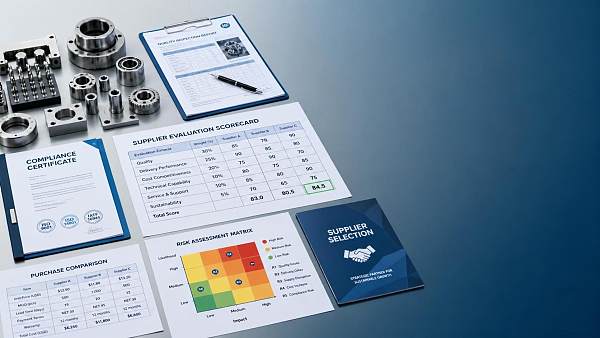
The following framework can help information seekers compare platforms before committing time or budget.
The strongest databases are not simply large; they are decision-oriented. A platform with fewer but better-structured records often delivers more value than a massive database that lacks verification logic or industrial context.
Common buying mistakes
One common mistake is choosing a platform only for supplier count. Another is ignoring workflow compatibility. If the system cannot support export review, regional filtering, or sector tagging, researchers may lose hours every week rebuilding the data externally.
A third mistake is treating all industries the same. Manufacturing research in medical technology is different from sourcing analysis in automotive or environmental systems. The database should reflect those differences in both taxonomy and interpretation.
How to implement database-driven research in daily workflow
Adoption works best when the database is embedded into a clear research process. Teams do not need a complex transformation project to start. In many cases, a 5-step workflow is enough to move from scattered research to repeatable industrial intelligence.
A practical 5-step process
- Define the research objective by sector, geography, and time horizon.
- Use the industrial database for manufacturing to build an initial long list.
- Filter by capability, logistics exposure, and technical relevance.
- Add expert interpretation for regulatory, market, or supply chain signals.
- Convert findings into a shortlist, watchlist, or market-entry brief.
This process is especially useful for teams handling 2–3 parallel projects, such as supplier scouting, category mapping, and regional opportunity analysis. It reduces duplicated work and creates a documented trail for later procurement or strategy review.
What information seekers should document
To improve long-term value, each research cycle should capture at least 6 core data points: supplier identity, process capability, target market, logistics route, lead time estimate, and key risk note. Over time, this creates an internal intelligence layer that strengthens future comparisons.
When supported by a platform like GIIH, that internal learning becomes more scalable. Instead of restarting from zero with every new project, researchers can build continuity across sectors and markets while staying close to current industrial change.
Turning manufacturing research into better decisions
An industrial database for manufacturing improves research because it replaces fragmented searching with structured intelligence. It helps information seekers compare suppliers more accurately, track sector change earlier, and evaluate production and trade signals with greater confidence. In global manufacturing, that means fewer blind spots and stronger preparation before outreach, sourcing, or investment decisions begin.
For organizations that need deeper visibility across supply chains, technologies, and regional opportunities, GIIH offers a practical intelligence framework backed by expert-led sector analysis. If you want to refine your research workflow, evaluate market-entry options, or build a more reliable supplier landscape, contact us to explore a tailored solution and learn more about the right industrial intelligence approach for your goals.
- industrial database for manufacturing
- health
- medical technology
- industrial intelligence
- medical device
- smart security
- home automation
- overseas warehousing
- aftermarket service
- water purification
- technical specifications
- smart living
- precision automotive
- environmental technology
- market positioning
- lighting
- e-commerce logistics
- warehousing
- supply chain
- procurement
- aftermarket
Recommended News
 Sep 28, 2026What does compliance requirement analysis cost by project scope?Compliance requirement analysis cost comparison by project scope: compare small, mid-scale, and enterprise assessments, key cost drivers, ROI, and smarter budget controls.
 Sep 19, 2026When project planning support prevents costly delays in complex projectsProject planning support helps complex teams expose critical dependencies, protect schedule float, and prevent costly delays before risks become irreversible problems.
 Sep 18, 2026How to size industrial compressors for fluctuating air demandIndustrial compressors for fluctuating air demand: learn how to size capacity, storage, controls, and pressure recovery for reliable, energy-efficient performance.
 Sep 14, 2026How a material selection analysis guide reduces failure riskMaterial selection analysis guide: reduce failure risk with practical steps for performance, manufacturing, compliance, and supply-chain decisions.
 Sep 13, 2026What drives procurement research platform cost for enterprise teams?Procurement research platform cost explained: assess data quality, coverage, licensing, hidden costs, and ROI to make confident enterprise sourcing decisions.
 Sep 11, 2026How an industrial market analysis framework supports investment decisionsIndustrial market analysis framework: turn demand, competition, supply-chain risk, and regulation into smarter, resilient investment decisions.
 Sep 07, 2026What to look for in a material selection analysis providerDiscover how to choose a material selection analysis provider with proven engineering expertise, traceable data, validation capabilities, compliance insight, and supply-chain intelligence.
 Sep 03, 2026When do mobility control components need redundant safety features?Mobility control components need redundant safety features when one failure could cause hazardous motion. Learn how to build independent, testable protection.
 Sep 02, 2026How to use an industrial market analysis database for market sizingLearn how an industrial market analysis database supports accurate market sizing through clear boundaries, data triangulation, classification mapping, and actionable insights.
 Sep 01, 2026How a performance factor analysis platform reveals operational bottlenecksPerformance factor analysis platform insights help teams uncover hidden operational bottlenecks, validate root causes, and improve throughput across complex operations.
 Sep 19, 2026Is modular systems furniture practical for growing offices?Modular systems furniture for offices helps growing teams scale efficiently. Explore costs, flexibility, privacy, and implementation tips for smarter workspace decisions.
 Sep 17, 2026How to size a modular systems furniture workstation for daily useModular systems furniture workstation sizing guide: optimize desk space, ergonomics, circulation, power capacity, and flexibility for productive daily use.
 Sep 16, 2026How much storage can modular systems furniture add to a workspace?Modular systems furniture storage can unlock usable workspace capacity. Explore smart layouts, flexible modules, and practical planning tips for efficient, scalable organization.
 Sep 15, 2026When does modular systems furniture customization justify its cost?Modular systems furniture customization: learn when flexibility, lifecycle savings, and scalable workplace design justify the investment.
 Sep 14, 2026What should installation plans cover for modular systems furniture?Modular systems furniture installation plans should cover scope, site verification, logistics, safety, power coordination, quality checks, and handover for a seamless workspace launch.
 Sep 13, 2026What drives modular systems furniture price in office projects?Modular systems furniture price explained: uncover layout, materials, power, installation, and lifecycle factors to budget smarter and build adaptable offices.
 Sep 12, 2026How to verify sustainable materials in modular systems furnitureModular systems furniture sustainable materials: learn how to verify sourcing, emissions, certifications, and repairability with a practical supplier checklist.
 Aug 29, 2026Which pricing trends matter most when comparing product categories?Pricing trends reveal more than unit costs. Learn how to compare categories by cost drivers, lifecycle value, regional gaps, technology shifts, and discounts.
 Aug 28, 2026When does energy-efficient design reduce lifetime operating costs?Energy-efficient design can cut lifetime operating costs when real savings outweigh capital, maintenance, and reliability risks. Learn how to assess TCO, tariffs, utilization, and payback.
 Aug 27, 2026When does wholesale structural steel make sense for a project?Structural steel beams wholesale can reduce total project risk when demand is stable. Discover how to balance cost, quality, phased delivery, and traceability.
 Sep 03, 2026How Operating Pressure in PSI Affects Poultry Nipple Drinker PerformancePoultry nipple drinker operating pressure PSI manufacturer guide: optimize flow, prevent leaks, and ensure reliable water delivery across every line.
 Aug 22, 2026When weighted performance factor analysis improves vendor selectionWeighted performance factor analysis improves vendor selection when quality, compliance, delivery, and lifecycle risk matter more than price alone. Learn when this method creates smarter, defensible sourcing decisions.
 Aug 16, 2026How to verify hotel automation PCB assembly specs before supplier approvalHotel automation PCB assembly specs should be verified before supplier approval by checking DFM, testing, traceability, and compliance—learn the key steps to avoid field failures.
 Aug 15, 2026How does market trend analysis affect price expectations?Market trend analysis price insights help you set smarter expectations, spot real price shifts, and make faster, more confident pricing decisions.