


Search News
Global Industrial Intelligence Hub (GIIH)Industry Portal
Global Industrial Intelligence Hub (GIIH)Status
Standard Access
Upgrade to PremiumNewsIs modular systems furniture practical for growing offices?
Time
Click Count
Is Modular Systems Furniture Practical for Growing Offices?
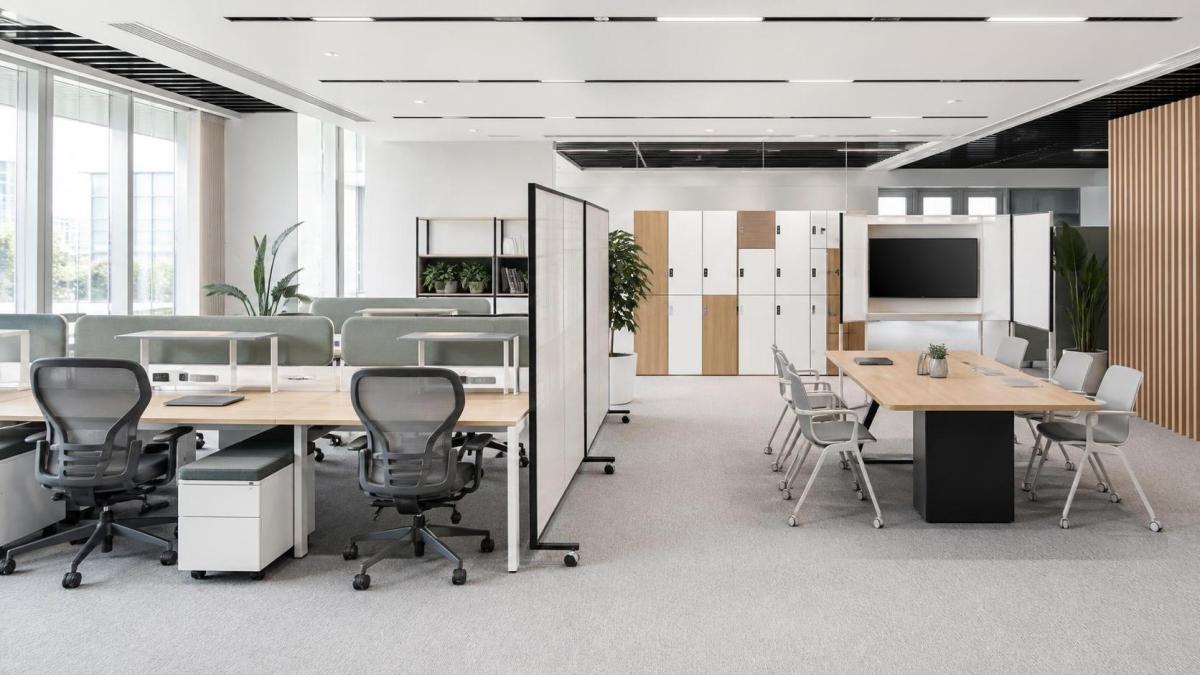
As offices expand, contract, and adapt to hybrid work, modular systems furniture for offices can be practical, but only when flexibility supports a clear operating plan.
For growing organizations, the strongest value is not simply movable desks or partitions. It is the ability to change capacity, teams, and work settings without repeatedly rebuilding.
However, modular furniture is not automatically the lowest-cost choice. Its practicality depends on growth predictability, installation quality, inventory discipline, and the office lease horizon.
This guide evaluates the business case from an information-research perspective, helping decision-makers identify when modular systems deliver measurable value and when conventional furniture remains preferable.
What Searchers Usually Need to Know Before Choosing Modular Furniture

People researching modular systems furniture for offices usually want an answer to a practical question: will it reduce the disruption and expense of future workplace changes?
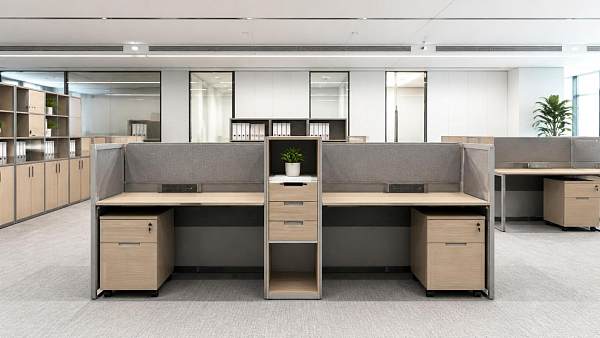
They are often comparing modular workstations, benching systems, demountable partitions, storage units, and meeting-room components against fixed desks, built-in walls, or individual furniture purchases.
The core concern is rarely visual design alone. Buyers need confidence that the system will work through hiring cycles, team reorganizations, relocation decisions, and changing employee expectations.
They also need to understand hidden variables, including lead times, reconfiguration labor, spare-part availability, cable management, acoustic performance, and the resale value of used components.
For an office that expects regular change, modularity can turn furniture from a one-time fit-out expense into an adaptable operational asset. For stable offices, it may be unnecessary complexity.
The Short Answer: Practical for Change, Not for Every Office
Modular systems furniture is generally practical for growing offices when headcount, team structure, or space use is likely to change during the furniture’s expected service life.
It is especially useful for companies adding employees in phases, operating flexible leases, building regional teams, or combining focused work with collaboration and hybrid attendance patterns.
The model is less compelling when an organization has a long-term, highly stable layout, limited internal moves, and a simple requirement for standard desks and chairs.
In those cases, conventional furniture may provide lower upfront cost, simpler procurement, and fewer compatibility concerns. Modularity should solve a real operational problem, not become a design preference.
A sensible decision begins with expected change frequency. If the office layout will likely be adjusted every one to three years, adaptable systems deserve serious evaluation.
Scalability Is the Most Important Benefit for Growing Teams
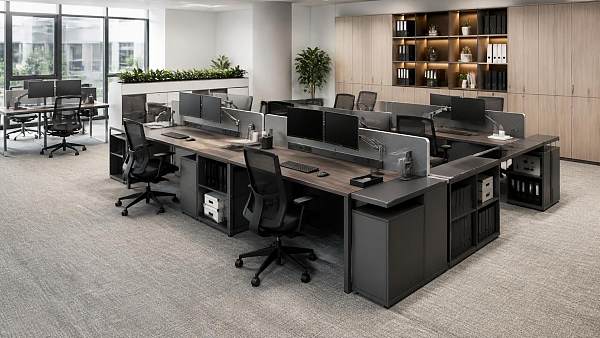
Scalability means more than adding another desk. A modular system should let facilities teams add seats, redistribute storage, create project zones, and alter collaboration settings efficiently.
For example, a twenty-person product team may initially need assigned desks. Six months later, it may need additional seats, shared project tables, and enclosed focus areas.
With compatible modular components, the organization can reuse existing panels, frames, surfaces, and power elements instead of treating the original layout as disposable infrastructure.
This reduces the need for repeated full-scale fit-outs, which often involve design fees, landlord approvals, contractor scheduling, waste removal, and extended workplace disruption.
Scalability also improves decision speed. Leaders can approve smaller, staged changes when they know furniture can be rearranged rather than replaced after every organizational shift.
Still, scalability is only real if the chosen product line remains available. Buyers should verify whether manufacturers guarantee component continuity, replacement parts, and finish matching over time.
Workspace Efficiency Depends on Planning, Not Modularity Alone
Modular furniture can improve space efficiency by supporting denser layouts, shared touchdown areas, and multi-purpose zones. Yet poorly planned systems can create cluttered, uncomfortable workplaces.
The objective should be to match the workspace to actual work patterns. Teams handling confidential analysis need more acoustic separation than teams performing short, collaborative tasks.
Before selecting a system, organizations should measure seat utilization, meeting-room demand, storage needs, circulation routes, and the percentage of work requiring visual or acoustic privacy.
Hybrid organizations should avoid assuming that fewer daily occupants automatically mean less space is needed. Peak attendance days can still create pressure on desks and meeting spaces.
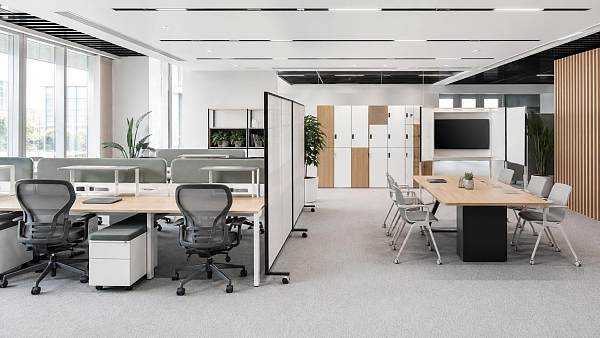
Effective modular layouts usually include a balanced mix of open workstations, reservable focus spaces, informal collaboration points, lockers, and appropriately sized enclosed rooms.
Furniture should support these settings without turning the office into a maze of temporary partitions. Clear circulation, daylight access, emergency egress, and accessibility requirements remain essential.
How to Compare Costs Beyond the Initial Purchase Price
The upfront price of modular systems furniture for offices can exceed the cost of basic standalone desks, especially when power integration, acoustic screens, and specialized storage are included.
That comparison is incomplete. A more useful assessment considers the total cost of ownership over five to ten years, including moves, modifications, maintenance, and replacement.
Organizations should calculate the cost of one likely reconfiguration scenario. Include internal facilities labor, external installers, downtime, storage, electrical changes, freight, and disposal of obsolete items.
Then compare that estimate with the expected cost of adapting a fixed furniture layout. The financial advantage often appears when changes are frequent and existing components can be reused.
Modular systems can also reduce the risk of overbuying. Instead of furnishing every possible future seat immediately, companies can purchase a core configuration and expand in defined phases.
However, phased purchasing may expose buyers to future price increases or discontinued finishes. Contracting for price protection and component availability can reduce this procurement risk.
Operational Risks That Can Undermine the Investment
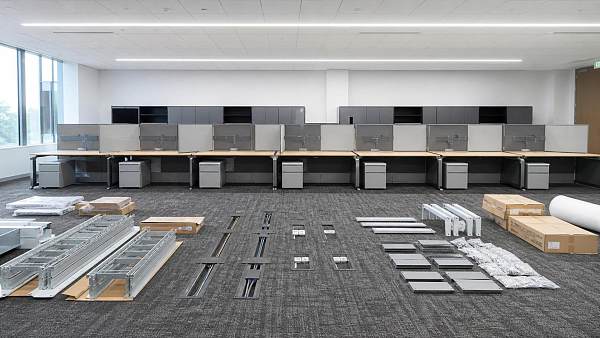
The most common mistake is assuming every modular product is equally easy to reconfigure. Some systems require trained installers, specialized tools, or electrical work for even minor adjustments.
Decision-makers should ask suppliers to demonstrate a realistic change, such as converting six workstations into eight seats or creating a small project area from existing components.
Installation complexity matters because the theoretical flexibility of a system has little value if every modification requires weeks of scheduling and expensive external labor.
Storage is another overlooked issue. Reconfiguration often creates spare panels, screens, legs, shelves, or connectors that need secure, organized storage until they are reused.
Without inventory management, components become damaged, misplaced, or incompatible with later purchases. The business then loses the reuse benefit that justified the modular investment.
Technology integration also deserves close review. Power modules, cable trays, monitor arms, and network access should accommodate equipment changes without creating unsafe or visually disruptive workstations.
Acoustics, Privacy, and Employee Experience Cannot Be Treated as Add-Ons
Growing offices often choose open modular layouts to maximize capacity. This can create employee dissatisfaction when visual openness is mistaken for an acceptable acoustic environment.
Low partitions may support daylight and collaboration, but they rarely provide enough sound control for confidential calls, concentrated writing, financial work, or technical problem-solving.
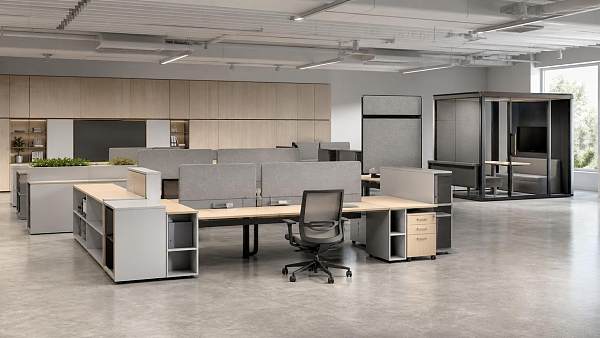
A practical system should offer layers of privacy. These may include acoustic screens, enclosed focus rooms, phone booths, adjustable privacy panels, and spaces intended for informal conversation.
Employees also evaluate furniture through ergonomics. Adjustable chairs, appropriate desk dimensions, monitor placement, cable control, and personal storage influence comfort more than modularity itself.
When assessing suppliers, request performance data for acoustic products and review real installations. Marketing images can make open spaces appear quieter and more private than they are.
Employee experience has direct business relevance. A layout that is cheap to change but difficult to work in can increase complaints, reduce concentration, and weaken office attendance.
Which Office Types Gain the Most From Modular Systems?
Fast-growing professional services firms often benefit because project teams expand, change composition, and require different mixes of individual workstations and collaboration spaces throughout the year.
Technology companies can also benefit, particularly where product, engineering, customer success, and operations teams need to regroup around changing product releases or service priorities.
Regional offices with uncertain growth forecasts are another strong use case. Modular systems help organizations avoid committing to a permanent layout before demand is validated locally.
Research, trade, and intelligence organizations may value modularity when analyst teams, meeting formats, and data-review workflows change as new sectors or geographic markets are added.
Co-working operators and managed-office providers often require the highest flexibility, although they need particularly durable products because frequent moves accelerate wear and component loss.
By contrast, small offices with predictable staffing, limited floor area, and infrequent layout changes may achieve better value through durable, straightforward furniture with selective flexible elements.
A Decision Framework for Evaluating Suppliers and Systems
Start by documenting the organization’s likely office scenarios over the next three to five years. Include growth, contraction, hybrid attendance, departmental moves, and possible relocation.
Next, identify the elements that must change quickly. These may include desk count, team neighborhoods, shared storage, meeting capacity, privacy settings, or power distribution.
Ask each supplier to price the current layout and at least two future configurations. This exposes whether a system is genuinely reusable or merely marketed as flexible.
Evaluate component compatibility across product lines, not only within the initial configuration. A manufacturer’s current catalog may contain products that cannot be connected or visually matched later.
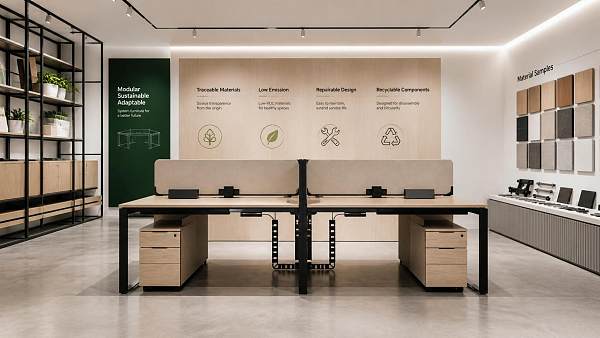
Review warranty terms, lead times, local installer capacity, replacement-part policies, sustainability credentials, and post-installation support. These operational details often determine long-term practicality.
Finally, involve facilities, IT, finance, workplace strategy, and representative employees. A furniture decision affects technology, budgets, wellbeing, and daily productivity, so it should not sit with one function alone.
How to Implement Modular Furniture Without Creating Constant Disruption
A phased implementation usually works better than furnishing every area identically. Begin with high-change teams or locations where current workspace limitations are already visible and measurable.
Create a standard kit of parts for each workspace type. Standardization makes purchasing faster, simplifies moves, and prevents the office from becoming a collection of mismatched configurations.
Maintain an accurate digital inventory of components, finishes, quantities, condition, and storage location. This record should be updated after every move, repair, or new purchase.
Define who can authorize layout changes and how requests will be assessed. A light governance process prevents informal reconfigurations from creating safety, accessibility, or technology problems.
Schedule larger changes around business cycles, occupancy patterns, and equipment refreshes. Combining work reduces disruption and can lower contractor costs by avoiding multiple separate visits.
After each reconfiguration, collect feedback on noise, comfort, room availability, and workflow. This helps the organization refine future layouts using evidence rather than assumptions.
Conclusion: Modular Furniture Is Practical When Flexibility Has a Business Case
Modular systems furniture for offices is practical for growing organizations when it reduces the cost, time, and disruption of changes that are genuinely likely to occur.
Its strongest advantages are scalability, phased investment, improved reuse, and better responsiveness to shifting team structures. Those benefits depend on compatible components and disciplined management.
Buyers should not evaluate modular systems only by appearance or initial price. They should test future layouts, calculate reconfiguration costs, and assess installation and inventory requirements.
For offices facing uncertain growth, hybrid work patterns, or regular organizational change, modular furniture can provide a durable platform for adaptation rather than a temporary design solution.
For stable workplaces with simple needs, conventional furniture may remain the more efficient choice. The right decision comes from matching the system’s flexibility to the organization’s actual rate of change.
Recommended News
 Sep 19, 2026When project planning support prevents costly delays in complex projectsProject planning support helps complex teams expose critical dependencies, protect schedule float, and prevent costly delays before risks become irreversible problems.
 Sep 18, 2026How to size industrial compressors for fluctuating air demandIndustrial compressors for fluctuating air demand: learn how to size capacity, storage, controls, and pressure recovery for reliable, energy-efficient performance.
 Sep 14, 2026How a material selection analysis guide reduces failure riskMaterial selection analysis guide: reduce failure risk with practical steps for performance, manufacturing, compliance, and supply-chain decisions.
 Sep 13, 2026What drives procurement research platform cost for enterprise teams?Procurement research platform cost explained: assess data quality, coverage, licensing, hidden costs, and ROI to make confident enterprise sourcing decisions.
 Sep 11, 2026How an industrial market analysis framework supports investment decisionsIndustrial market analysis framework: turn demand, competition, supply-chain risk, and regulation into smarter, resilient investment decisions.
 Sep 07, 2026What to look for in a material selection analysis providerDiscover how to choose a material selection analysis provider with proven engineering expertise, traceable data, validation capabilities, compliance insight, and supply-chain intelligence.
 Sep 03, 2026When do mobility control components need redundant safety features?Mobility control components need redundant safety features when one failure could cause hazardous motion. Learn how to build independent, testable protection.
 Sep 02, 2026How to use an industrial market analysis database for market sizingLearn how an industrial market analysis database supports accurate market sizing through clear boundaries, data triangulation, classification mapping, and actionable insights.
 Sep 01, 2026How a performance factor analysis platform reveals operational bottlenecksPerformance factor analysis platform insights help teams uncover hidden operational bottlenecks, validate root causes, and improve throughput across complex operations.
 Sep 19, 2026Is modular systems furniture practical for growing offices?Modular systems furniture for offices helps growing teams scale efficiently. Explore costs, flexibility, privacy, and implementation tips for smarter workspace decisions.
 Sep 17, 2026How to size a modular systems furniture workstation for daily useModular systems furniture workstation sizing guide: optimize desk space, ergonomics, circulation, power capacity, and flexibility for productive daily use.
 Sep 16, 2026How much storage can modular systems furniture add to a workspace?Modular systems furniture storage can unlock usable workspace capacity. Explore smart layouts, flexible modules, and practical planning tips for efficient, scalable organization.
 Sep 15, 2026When does modular systems furniture customization justify its cost?Modular systems furniture customization: learn when flexibility, lifecycle savings, and scalable workplace design justify the investment.
 Sep 14, 2026What should installation plans cover for modular systems furniture?Modular systems furniture installation plans should cover scope, site verification, logistics, safety, power coordination, quality checks, and handover for a seamless workspace launch.
 Sep 13, 2026What drives modular systems furniture price in office projects?Modular systems furniture price explained: uncover layout, materials, power, installation, and lifecycle factors to budget smarter and build adaptable offices.
 Sep 12, 2026How to verify sustainable materials in modular systems furnitureModular systems furniture sustainable materials: learn how to verify sourcing, emissions, certifications, and repairability with a practical supplier checklist.
 Aug 29, 2026Which pricing trends matter most when comparing product categories?Pricing trends reveal more than unit costs. Learn how to compare categories by cost drivers, lifecycle value, regional gaps, technology shifts, and discounts.
 Aug 28, 2026When does energy-efficient design reduce lifetime operating costs?Energy-efficient design can cut lifetime operating costs when real savings outweigh capital, maintenance, and reliability risks. Learn how to assess TCO, tariffs, utilization, and payback.
 Aug 27, 2026When does wholesale structural steel make sense for a project?Structural steel beams wholesale can reduce total project risk when demand is stable. Discover how to balance cost, quality, phased delivery, and traceability.
 Sep 03, 2026How Operating Pressure in PSI Affects Poultry Nipple Drinker PerformancePoultry nipple drinker operating pressure PSI manufacturer guide: optimize flow, prevent leaks, and ensure reliable water delivery across every line.
 Aug 22, 2026When weighted performance factor analysis improves vendor selectionWeighted performance factor analysis improves vendor selection when quality, compliance, delivery, and lifecycle risk matter more than price alone. Learn when this method creates smarter, defensible sourcing decisions.
 Aug 16, 2026How to verify hotel automation PCB assembly specs before supplier approvalHotel automation PCB assembly specs should be verified before supplier approval by checking DFM, testing, traceability, and compliance—learn the key steps to avoid field failures.
 Aug 15, 2026How does market trend analysis affect price expectations?Market trend analysis price insights help you set smarter expectations, spot real price shifts, and make faster, more confident pricing decisions.
 Aug 12, 2026Device Performance Factor Analysis: Which Variables Matter Most in Evaluation?Device performance factor analysis reveals which variables truly drive stability, repeatability, thermal behavior, power quality, and field results—read the key factors that matter most.