


Search News
Global Industrial Intelligence Hub (GIIH)Industry Portal
Global Industrial Intelligence Hub (GIIH)Status
Standard Access
Upgrade to PremiumNewsWhat IoT integration fixes first in industrial automation
Time
Click Count
For project managers and engineering leads, IoT integration for industrial automation often solves the most urgent problems first: disconnected machines, delayed data, and limited production visibility. By linking equipment, systems, and teams in real time, manufacturers can reduce downtime, improve decision-making, and create a stronger foundation for scalable operational efficiency.
Why a checklist matters before expanding IoT integration
Industrial automation projects rarely fail because sensors are missing. They fail because the first integration targets were chosen poorly, or because the data flow was not tied to an operational outcome.
A checklist keeps IoT integration for industrial automation focused on high-impact fixes. It helps teams rank use cases by downtime cost, visibility gaps, maintenance burden, and deployment complexity.
This matters across industries. Whether the environment involves medical devices, logistics assets, mobility components, or environmental systems, the first wins usually come from the same operational bottlenecks.
What IoT integration fixes first in industrial automation
- Connect isolated machines first, especially legacy assets that still run production but cannot share status, alarms, cycle counts, or energy data with central systems.
- Capture real-time downtime causes, not just total lost hours, so stoppages can be linked to specific lines, shifts, components, and recurring trigger events.
- Standardize machine data tags early, because inconsistent naming across PLCs, SCADA, and MES platforms quickly undermines reporting accuracy and cross-site comparison.
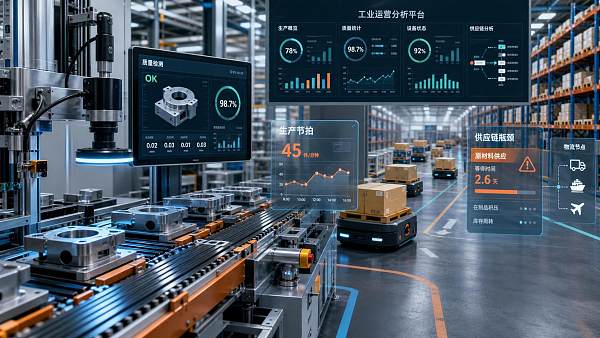
- Expose production visibility gaps by streaming machine state, throughput, reject rate, and queue levels into dashboards that operations and maintenance can trust.
- Prioritize predictive maintenance on constrained assets, where vibration, temperature, pressure, or current anomalies directly increase scrap, missed orders, or repair expense.
- Track material and work-in-progress movement where manual scanning creates delays, inventory mismatches, or blind spots between warehouse, assembly, and shipping.
- Integrate alarm management with mobile alerts, so critical events reach the right technician immediately instead of waiting for someone to notice a local panel.
- Measure energy and utility consumption by line or process cell, especially where compressed air, water, or electricity losses hide inside normal operating costs.
- Bridge OT and IT systems carefully, linking PLC, MES, ERP, CMMS, and quality data to create usable operational context rather than another isolated dashboard.
- Start with one repeatable architecture, then scale IoT integration for industrial automation across similar lines, plants, or partner facilities without redesigning every interface.
The first operational problems usually solved
1. Disconnected equipment and data silos
The earliest value often comes from machine connectivity. Many facilities still depend on islands of automation where each asset reports locally but not across the production environment.
With IoT integration for industrial automation, those machines begin sharing status, operating parameters, and event history. That alone improves response speed and reduces manual data collection.
2. Delayed decisions caused by late reporting
Many plants still review performance after the shift ends. By then, scrap has accumulated, bottlenecks have moved, and the chance to intervene has already passed.
Real-time dashboards change that. Teams can spot slow cycles, rising rejects, and blocked conveyors while production is still running, turning data into immediate action.
3. Unplanned downtime on critical assets
When a bottleneck machine fails, the entire schedule shifts. Early IoT deployments often focus on these assets because the payback is visible and measurable.
Condition monitoring helps detect abnormal heat, vibration, or current draw before a breakdown occurs. This is one of the most practical outcomes of IoT integration for industrial automation.
4. Poor traceability across production and logistics
Traceability problems are not limited to regulated industries. They also affect rework control, shipment accuracy, warranty analysis, and supplier performance tracking.
Connected sensors, barcode events, and asset tags create a shared record of where materials moved, when they paused, and which process conditions shaped the final output.
How priorities differ by application scenario
High-mix assembly environments
In high-mix settings, changeovers and sequencing issues usually come before advanced analytics. The first target is better visibility into machine readiness, tool status, and work order flow.
Here, IoT integration for industrial automation supports faster line balancing and fewer handoff errors between stations, especially when product variants share equipment.
Continuous or process operations
In process industries, stability matters more than unit counts. Teams usually start by monitoring process drift, utility consumption, and alarm frequency around critical thresholds.
The first fixes often reduce off-spec production and energy waste. Integration also improves correlation between upstream conditions and downstream quality outcomes.
Warehousing and logistics-linked production
Where production and logistics are tightly linked, data gaps between storage, staging, and shipment can become the main source of delays rather than machine failure.
In this case, connected tracking, dock visibility, and status synchronization across systems become the first layer of value, not deep machine analytics.
Regulated and quality-sensitive operations
For medical, environmental, or precision component workflows, audit trails and parameter history can be more urgent than throughput optimization.
Early integration should therefore secure time-stamped records, exception tracking, and controlled data transfer between production and quality systems.
Commonly overlooked risks
Ignoring legacy protocol constraints. Many assets cannot expose clean data without gateways, edge devices, or custom mapping. Underestimating this creates delays and budget overruns.
Collecting data without ownership. If no team owns alarm review, model tuning, dashboard design, or maintenance workflows, the integration becomes passive infrastructure.
Skipping cybersecurity segmentation. Strong IoT integration for industrial automation requires secure network design, access control, patch discipline, and clear OT governance.
Starting too broad. Multi-site ambitions are useful, but the first deployment should prove one business case with measurable operational results.
Trusting bad source data. Sensor drift, inconsistent timestamps, and missing event logic can damage confidence faster than a delayed rollout.
Practical execution advice
- Map one production loss first, such as unplanned downtime, scrap spikes, or queue buildup.
- Choose assets with high utilization, clear failure history, and direct impact on throughput.
- Define a limited data model before connecting systems, including timestamps, machine states, and event causes.
- Use edge processing where latency, bandwidth, or protocol diversity makes cloud-only design impractical.
- Tie dashboards to response actions, escalation rules, and maintenance records from the beginning.
- Measure results in operational terms: mean time to repair, OEE trend, energy per unit, and schedule adherence.
Conclusion and next action
The first job of IoT integration for industrial automation is not to create a futuristic plant. It is to remove the most expensive blind spots in current operations.
That usually means connecting isolated equipment, exposing downtime causes, improving traceability, and accelerating operational decisions with real-time data.
The most effective next step is simple: identify one constrained asset group, one recurring production loss, and one reporting gap. Then design the first integration around that measurable outcome.
When that structure is repeatable, scaling becomes easier, faster, and far more valuable across the wider industrial system.
Recommended News
 Sep 28, 2026What does compliance requirement analysis cost by project scope?Compliance requirement analysis cost comparison by project scope: compare small, mid-scale, and enterprise assessments, key cost drivers, ROI, and smarter budget controls.
 Sep 19, 2026When project planning support prevents costly delays in complex projectsProject planning support helps complex teams expose critical dependencies, protect schedule float, and prevent costly delays before risks become irreversible problems.
 Sep 18, 2026How to size industrial compressors for fluctuating air demandIndustrial compressors for fluctuating air demand: learn how to size capacity, storage, controls, and pressure recovery for reliable, energy-efficient performance.
 Sep 14, 2026How a material selection analysis guide reduces failure riskMaterial selection analysis guide: reduce failure risk with practical steps for performance, manufacturing, compliance, and supply-chain decisions.
 Sep 13, 2026What drives procurement research platform cost for enterprise teams?Procurement research platform cost explained: assess data quality, coverage, licensing, hidden costs, and ROI to make confident enterprise sourcing decisions.
 Sep 11, 2026How an industrial market analysis framework supports investment decisionsIndustrial market analysis framework: turn demand, competition, supply-chain risk, and regulation into smarter, resilient investment decisions.
 Sep 07, 2026What to look for in a material selection analysis providerDiscover how to choose a material selection analysis provider with proven engineering expertise, traceable data, validation capabilities, compliance insight, and supply-chain intelligence.
 Sep 03, 2026When do mobility control components need redundant safety features?Mobility control components need redundant safety features when one failure could cause hazardous motion. Learn how to build independent, testable protection.
 Sep 02, 2026How to use an industrial market analysis database for market sizingLearn how an industrial market analysis database supports accurate market sizing through clear boundaries, data triangulation, classification mapping, and actionable insights.
 Sep 01, 2026How a performance factor analysis platform reveals operational bottlenecksPerformance factor analysis platform insights help teams uncover hidden operational bottlenecks, validate root causes, and improve throughput across complex operations.
 Sep 19, 2026Is modular systems furniture practical for growing offices?Modular systems furniture for offices helps growing teams scale efficiently. Explore costs, flexibility, privacy, and implementation tips for smarter workspace decisions.
 Sep 17, 2026How to size a modular systems furniture workstation for daily useModular systems furniture workstation sizing guide: optimize desk space, ergonomics, circulation, power capacity, and flexibility for productive daily use.
 Sep 16, 2026How much storage can modular systems furniture add to a workspace?Modular systems furniture storage can unlock usable workspace capacity. Explore smart layouts, flexible modules, and practical planning tips for efficient, scalable organization.
 Sep 15, 2026When does modular systems furniture customization justify its cost?Modular systems furniture customization: learn when flexibility, lifecycle savings, and scalable workplace design justify the investment.
 Sep 14, 2026What should installation plans cover for modular systems furniture?Modular systems furniture installation plans should cover scope, site verification, logistics, safety, power coordination, quality checks, and handover for a seamless workspace launch.
 Sep 13, 2026What drives modular systems furniture price in office projects?Modular systems furniture price explained: uncover layout, materials, power, installation, and lifecycle factors to budget smarter and build adaptable offices.
 Sep 12, 2026How to verify sustainable materials in modular systems furnitureModular systems furniture sustainable materials: learn how to verify sourcing, emissions, certifications, and repairability with a practical supplier checklist.
 Aug 29, 2026Which pricing trends matter most when comparing product categories?Pricing trends reveal more than unit costs. Learn how to compare categories by cost drivers, lifecycle value, regional gaps, technology shifts, and discounts.
 Aug 28, 2026When does energy-efficient design reduce lifetime operating costs?Energy-efficient design can cut lifetime operating costs when real savings outweigh capital, maintenance, and reliability risks. Learn how to assess TCO, tariffs, utilization, and payback.
 Aug 27, 2026When does wholesale structural steel make sense for a project?Structural steel beams wholesale can reduce total project risk when demand is stable. Discover how to balance cost, quality, phased delivery, and traceability.
 Sep 03, 2026How Operating Pressure in PSI Affects Poultry Nipple Drinker PerformancePoultry nipple drinker operating pressure PSI manufacturer guide: optimize flow, prevent leaks, and ensure reliable water delivery across every line.
 Aug 22, 2026When weighted performance factor analysis improves vendor selectionWeighted performance factor analysis improves vendor selection when quality, compliance, delivery, and lifecycle risk matter more than price alone. Learn when this method creates smarter, defensible sourcing decisions.
 Aug 16, 2026How to verify hotel automation PCB assembly specs before supplier approvalHotel automation PCB assembly specs should be verified before supplier approval by checking DFM, testing, traceability, and compliance—learn the key steps to avoid field failures.
 Aug 15, 2026How does market trend analysis affect price expectations?Market trend analysis price insights help you set smarter expectations, spot real price shifts, and make faster, more confident pricing decisions.