


Search News
Global Industrial Intelligence Hub (GIIH)Industry Portal
Global Industrial Intelligence Hub (GIIH)Status
Standard Access
Upgrade to PremiumNewsAftermarket demand is rising in segments few expected
Time
Click Count
Unexpected aftermarket growth is reshaping demand for industrial parts, precision engineering, and high-quality parts across sectors once considered stable. From EV motor, EV battery, and EV accessories to custom components, car replacement parts, and broader automotive components, buyers are rethinking procurement, inventory control, logistics management, and supply chain strategy to secure reliable, cost-effective aftermarket opportunities.
Why is aftermarket demand rising in segments few buyers expected?
For many information researchers and procurement teams, the surprise is not that the aftermarket is growing, but where it is growing. Demand is expanding in categories once treated as predictable maintenance lines: EV motor subassemblies, EV battery service parts, thermal management units, sensors, connectors, repair kits, and vehicle-specific custom components. In many markets, the shift began with irregular replacement cycles and quickly turned into a structural sourcing issue.
Three forces are driving this change. First, product complexity is increasing, especially in electrified mobility and digitally integrated equipment. Second, replacement behavior is changing as operators keep assets in service longer, often by 12–36 months beyond earlier planning assumptions. Third, distributors and service networks are under pressure to shorten replenishment windows from 4–8 weeks to 7–21 days for fast-moving parts.
This is especially relevant to B2B buyers working across global supply chains. A part that was once low-risk can now become a bottleneck if the technical specification changes, if packaging standards vary by market, or if the supplier cannot support mixed-volume orders. In aftermarket channels, a small mismatch in connector type, tolerance band, firmware version, or compliance paperwork can delay an entire service batch.
GIIH tracks these shifts through an industrial intelligence lens rather than a narrow catalog lens. That matters because aftermarket demand rarely moves in isolation. It often reflects deeper changes in electrification, cross-border logistics, repair economics, and regional service policy. For business evaluators, this means demand signals should be read alongside lead time risk, inventory turnover, and alternative sourcing options.
What is changing beneath the surface?
Unexpected aftermarket growth often comes from segments that sit between original production and field service. These include low-to-medium volume parts, discontinued variants, hybrid legacy-to-EV transition components, and accessories that become essential only after deployment. A part may look marginal at launch, then become critical after 18–24 months of real-world use.
- Fleet operators are extending maintenance intervals but increasing preventive replacement for failure-prone subcomponents.
- Distributors are carrying broader SKU mixes, often 20%–40% wider than before, to avoid service disruption.
- Cross-border buyers are requesting smaller pilot orders first, then shifting to rolling monthly replenishment based on service data.
The practical implication is clear: aftermarket sourcing now requires market intelligence, engineering verification, and logistics planning in one workflow. It is no longer enough to compare unit price alone.
Which segments are showing the strongest aftermarket momentum?
The strongest momentum is appearing where technology adoption outpaced service planning. EV-related categories are a visible example. As more electric platforms enter mid-life service cycles, demand is rising for EV battery peripherals, charging interface components, cooling modules, insulation parts, mounting hardware, and sensor-linked accessories. The same pattern is visible in precision automotive parts where field conditions reveal replacement needs not fully reflected in first-wave forecasts.
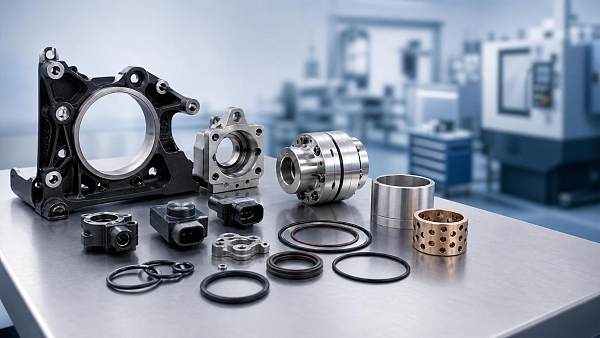
Another growth pocket is custom components. Buyers often underestimate the aftermarket value of brackets, housings, adapters, clips, seals, and application-specific wiring kits. These are not always the most expensive items, but they can stop installation or repair if unavailable. In service environments, a low-value component can carry high operational cost if downtime stretches beyond 24–72 hours.
For distributors and agents, the challenge is balancing stock breadth against capital efficiency. Fast-moving parts justify regular replenishment, but long-tail parts require more selective planning. This is where structured market mapping is useful: segment by replacement frequency, technical criticality, and supplier responsiveness rather than by product family alone.
The table below summarizes common aftermarket categories and the decision logic buyers should apply when demand rises unexpectedly.
The key reading is that aftermarket growth is not limited to classic wear parts. It is increasingly concentrated in technically sensitive, logistics-dependent, and variant-heavy categories. That is why market analysis and sourcing analysis should be combined early, especially when entering a new distribution region or expanding a service portfolio.
How should distributors interpret these signals?
A distributor should not read rising demand as a simple stock-up signal. Instead, it should classify demand into at least 3 groups: recurring service parts, event-driven replacement parts, and low-frequency but mission-critical items. Each group needs different reorder rules, supplier agreements, and safety stock settings.
In practical terms, this means reviewing monthly movement, quarterly variability, and supplier recovery time after disruption. When these three metrics are tracked together, channel partners can reduce overbuying while protecting service continuity.
How should procurement teams evaluate suppliers when demand becomes less predictable?
When aftermarket demand accelerates in overlooked segments, procurement cannot rely on historic sourcing habits. A supplier that worked well for original equipment batches may not be suitable for aftermarket orders involving mixed SKUs, urgent partial shipments, or engineering clarification. The purchasing question changes from “Who can produce?” to “Who can respond accurately under variable aftermarket conditions?”
A strong evaluation model usually includes 5 core checks: specification control, minimum order flexibility, lead time stability, packaging and labeling discipline, and document readiness. For EV battery or precision automotive parts, traceability and version control often move from a secondary concern to a first-line requirement. Even a 1–2 revision mismatch can trigger return risk or field installation failure.
Commercial evaluators should also separate quoted lead time from proven lead time. In the aftermarket, a nominal 15-day lead time may become 30 days if drawings require reconfirmation, if export packing is incomplete, or if testing samples are not pre-approved. This is why many buyers now request a pilot batch, often in small-to-medium quantities, before locking annual purchase plans.
The matrix below can be used during supplier screening, especially for distributors, service providers, and cross-border sourcing teams comparing multiple offers.
This framework helps buyers move beyond headline price comparisons. In many aftermarket categories, the cheapest option becomes more expensive once expedite freight, rework, and lost service time are included. A structured review can protect both procurement budget and customer satisfaction.
A practical 4-step purchasing workflow
- Confirm the exact aftermarket use case: emergency repair, planned maintenance, retrofit, or channel stock build.
- Validate technical fit using drawings, photos, part lists, and where needed, a sample or pre-shipment review.
- Assess delivery capability across 2 time ranges: urgent orders in 7–15 days and routine replenishment in 3–8 weeks.
- Lock commercial terms only after labeling, packaging, and replacement handling responsibilities are clarified.
This process is especially useful when the supply chain includes more than one geography, more than one warehouse, or more than one technical approver.
What are the cost, inventory, and logistics risks behind aftermarket growth?
Unexpected demand is rarely a pricing issue alone. It affects carrying cost, reorder logic, packaging strategy, and transport mode. For example, a distributor may choose to increase stock for car replacement parts, but if SKU variety rises faster than turnover, dead inventory can build within 1–2 quarters. On the other hand, understocking can force premium freight, split deliveries, and service penalties.
The cost picture is even more complex in EV-related aftermarket channels. Some components require stricter handling, safer packaging, or additional documentation. That means total landed cost may differ significantly from ex-works pricing. Buyers should compare at least 4 layers of cost: unit price, packaging cost, freight scenario cost, and service interruption cost.
Inventory control should also reflect real service behavior. A part with low sales volume but high downtime impact may deserve a minimum safety stock, while a visually similar part with easier substitution may not. This is where business intelligence matters. GIIH helps organizations connect fragmented market signals, trade flow observations, and technical realities into a sourcing plan that is commercially workable.
The checklist below shows where procurement teams most often lose margin when aftermarket demand rises faster than planning discipline.
High-impact risk points to review every month
- Mismatch between sales forecast and service reality, especially when field replacement cycles compress from annual to quarterly planning.
- Too many slow-moving SKUs without tiered stocking rules for A, B, and C priority parts.
- Overreliance on one supplier for technically specific custom components or EV accessories.
- Freight escalation caused by late engineering confirmation, incomplete documents, or avoidable split shipments.
- Inadequate packaging for cross-border warehouse transfers, causing damage, relabeling, or reinspection.
Cost control is not the same as low-price buying
A realistic cost strategy usually mixes local buffer stock, scheduled replenishment, and selective alternative sourcing. In many cases, dual-source planning for 2–3 critical part families is more effective than trying to multisource everything. The goal is resilience with manageable complexity.
For business evaluators, the correct question is not “Can we reduce this quote by 5%?” but “Can we lower total disruption cost over the next 6–12 months?” That is the more relevant benchmark in aftermarket decision-making.
What standards, documentation, and field checks should buyers prioritize?
In unexpected aftermarket growth segments, compliance discipline becomes a commercial advantage. Not every part requires the same level of documentation, but many cross-border shipments do require consistent labeling, material declarations, product identification, and handling instructions. For electrically related automotive components, technical files should be aligned with the destination market’s import, safety, and warehouse acceptance practices.
Buyers do not need to overcomplicate this. A practical review often starts with 3 layers: product identity, transport readiness, and installation suitability. Product identity covers part number logic, revision control, and batch traceability. Transport readiness covers packaging, labeling, and shipping documentation. Installation suitability covers fit, connection, and service instructions. Together, these reduce avoidable aftermarket friction.
For custom components and car replacement parts, pre-shipment confirmation can save weeks of delay. A dimensional tolerance check, photo confirmation, and packaging mark review are simple steps, but they matter. For technically sensitive lines, many buyers build a 6-item release checklist before the first commercial batch ships.
Below is a practical document and control table for procurement teams handling diversified aftermarket categories.
A disciplined control set reduces rejection, relabeling, and claims handling. For aftermarket trade, these operational details often determine whether a supplier relationship scales smoothly or becomes a constant exception-management burden.
Common misconception
A frequent mistake is assuming that aftermarket parts can be sourced with lighter controls because the order value is smaller than an original production batch. In reality, smaller batches often require tighter process discipline because variant complexity is higher and correction time is shorter.
FAQ and next-step decisions for buyers, distributors, and market researchers
When aftermarket demand rises in unexpected segments, decision-makers usually need fast answers, not broad theory. The questions below reflect common search intent from procurement teams, commercial evaluators, and channel partners trying to secure reliable supply without overcommitting capital.
How do I know whether a rising aftermarket category is temporary or structural?
Look at 3 signals together over at least 2–3 review cycles: repeat order frequency, model or platform spread, and service criticality. If demand appears across multiple customers, multiple regions, or several related SKUs for more than one quarter, it is more likely structural than temporary. Market intelligence is valuable here because isolated order data can mislead.
What should I prioritize when buying EV battery or EV accessory aftermarket parts?
Prioritize compatibility, packaging readiness, and documentation before price negotiation. Ask for technical confirmation, handling details, and shipment labeling rules. For sensitive categories, confirm whether pilot samples or a first-article check are needed. This usually shortens correction cycles and reduces field disputes.
What is a reasonable lead time expectation for aftermarket supply?
There is no single answer, but buyers often work with two practical ranges: 7–15 days for urgent replenishment if stock or semi-finished inventory exists, and 3–8 weeks for regular production and export preparation. Custom components or technically unclear replacements may take longer if drawing confirmation or sample validation is required.
How can distributors reduce inventory risk while still protecting service levels?
Use tiered stocking rules. Keep safety stock for high-impact service parts, run scheduled replenishment for medium-rotation items, and source low-frequency variants through controlled reorder channels. Review movement monthly and reassess dead-stock exposure every quarter. This is more effective than applying one stock rule to all automotive components.
Why work with GIIH when evaluating aftermarket opportunities?
Because aftermarket growth is not just a sourcing issue. It is an intelligence issue involving product evolution, logistics friction, regional trade conditions, and technical interpretation. GIIH connects these dimensions through sector-specific analysis across precision automotive parts and mobility, global logistics and supply chain, and adjacent industrial segments. That helps teams move from fragmented signals to decision-ready insight.
Why choose us for aftermarket market intelligence and sourcing decision support?
GIIH combines industrial research depth with practical B2B decision support. Our analyst network looks beyond headline demand and focuses on what buyers actually need to act on: replacement-cycle signals, supplier screening logic, cross-border logistics constraints, technical matching risks, and channel expansion opportunities. This is especially useful when your team must compare options across regions, product variants, and service requirements.
You can contact us for specific support on parameter confirmation, product selection, lead time evaluation, custom component planning, document and compliance review, sample coordination, quotation comparison, and regional aftermarket opportunity mapping. If you are assessing EV motor parts, EV battery accessories, car replacement parts, or broader automotive components, we can help convert scattered market information into a more reliable procurement and business decision framework.
- industrial intelligence
- global logistics
- aftermarket service
- global supply chain
- precision automotive
- supply chain
- logistics management
- inventory control
- procurement
- automotive components
- car replacement parts
- EV accessories
- EV battery
- EV motor
- custom components
- high-quality parts
- precision engineering
- industrial parts
- aftermarket
- replacement parts
Recommended News
 Sep 26, 2026When do aftermarket shock absorbers need replacement?Aftermarket shock absorbers may need replacement when bouncing, leaks, tire cupping, or unstable handling appear. Learn key warning signs and choose the right time to inspect.
 Sep 17, 2026How to verify fitment before buying vehicle specific aftermarket partsVehicle specific aftermarket parts: verify VIN, OEM numbers, fitment details, and installation needs before buying to avoid costly mistakes.
 Sep 16, 2026How Brake Drum Compatibility Impacts Trailer Safety Compliance and Maintenance Intervalssemi trailer spare parts: Discover how brake drum compatibility directly impacts trailer safety compliance, maintenance intervals, and regulatory risk—get expert insights now.
 Sep 09, 2026Evaluating Replacement Brake Drums for BPW Axle Systems: Compatibility, Certification, and Aftermarket Sourcing Riskssemi trailer spare parts: Discover critical risks in sourcing BPW brake drums—compatibility, certification & aftermarket pitfalls revealed.
 Sep 08, 2026Why Semi Trailer Brake Drums Crack: Wear Patterns and PreventionSemi trailer spare parts guide: identify brake drum crack patterns, prevent overheating, and improve wheel-end safety with practical maintenance insights.
 Aug 25, 2026How to vet an aftermarket replacement auto parts supplier for quality consistencyAftermarket replacement auto parts supplier selection starts with proof of quality consistency. Learn how to assess traceability, process control, packaging, and complaint handling before you buy.
 Jul 11, 2026Fleet Aftermarket Service: What to Check in Parts Coverage, Response Time, and WarrantyFleet aftermarket service guide: learn how to evaluate parts coverage, response time, and warranty terms to reduce downtime, control repair costs, and choose a more reliable supplier.
 Jul 10, 2026Replacement Auto Parts USA: How to Verify Fitment, Quality, and Supplier ReliabilityReplacement auto parts USA sourcing made safer: learn how to verify fitment, assess real quality, and spot reliable suppliers before returns, warranty claims, and costly ordering mistakes happen.
 Jul 10, 2026How to Choose Vehicle Accessories for Trucks Based on Load, Terrain, and Daily UseVehicle accessories for trucks should match load, terrain, and daily use. Discover practical tips to choose smarter upgrades for safety, durability, comfort, and long-term value.
 Jul 09, 2026Auto Parts Industry Europe: Key Market Shifts Affecting OEM and Aftermarket BuyersAuto parts industry Europe is shifting fast. Explore key OEM and aftermarket trends, compliance risks, and sourcing strategies shaping smarter buying decisions.
 Jul 08, 2026Aftermarket Engineered Components: When to Choose Replacement Parts Over OEM OptionsAftermarket engineered components can cut downtime, improve service life, and lower total maintenance cost. Learn when replacement parts outperform OEM options.
 Jul 05, 2026Aftermarket Solutions for Vehicle Maintenance: Which Parts and Services Save More Downtime?Aftermarket solutions for vehicle maintenance that cut downtime most: discover which parts, diagnostics, and preventive services deliver faster returns, fewer repeat repairs, and smarter fleet savings.
 Jul 05, 2026Replacement Auto Parts USA Market: How Distributors Compare Demand by CategoryReplacement auto parts USA market trends by category: compare brakes, filters, sensors, collision parts, and batteries to spot demand shifts, inventory priorities, and profitable distributor strategies.
 Jul 03, 2026Aftermarket Auto Parts vs OEM Parts: What to Compare Before You BuyAftermarket auto parts vs OEM parts: compare fit, quality, warranty, safety, and long-term value before you buy. Make a smarter parts choice with confidence.
 Jul 02, 2026Replacement Auto Parts Database: What Data Fields Matter Most for Fast Part Matching?Replacement auto parts database essentials: discover the key data fields for faster, more accurate part matching, fewer returns, and smarter sourcing decisions.
 Jul 01, 2026Injection Molded Aftermarket Parts vs OEM: How to Compare Fit, Cost, and Lead TimeInjection molded aftermarket parts vs OEM: compare fit, total cost, and lead time with a practical buyer framework to reduce sourcing risk and make faster purchasing decisions.
 Jun 29, 2026Sourcing Automotive Parts in Europe: OEM, Aftermarket, and Compliance Checks ExplainedAutomotive parts Europe sourcing made simple: compare OEM vs aftermarket, verify supplier credibility, and run compliance checks to reduce risk, protect margins, and buy smarter.
 Jun 28, 2026Auto Parts Quality Standards Explained: Key Certifications, Tests, and Failure RisksAuto parts quality standards explained: learn key certifications, real-world tests, hidden failure risks, and smarter supplier checks to reduce recalls and improve compliance.
 Jun 27, 2026Stamped Aftermarket Parts vs Machined Parts: Which Option Fits Cost and Volume Targets?Stamped aftermarket parts vs machined parts: compare cost, tooling, volume, lead time, and precision to find the best sourcing strategy for margins, supply stability, and long-term value.
 Jun 25, 2026Diaper Bags Backpack Buying Guide: Features That Matter for Daily Outingsdiaperbagsbackpack buying guide: discover the features that matter most for daily outings, from smart storage and comfort to easy-clean materials and durable design.
 Jun 23, 2026Car Maintenance Tools Checklist: What to Buy First for DIY Repairs and Routine ServiceCar maintenance tools checklist for DIY beginners: discover what to buy first for safe routine service, oil changes, tire care, and smarter garage upgrades on any budget.
 Jun 22, 2026Outdoor Garden Supplies Buying Guide: How to Identify Durable Tools That Last LongerOutdoor garden supplies durable tools buying guide: learn how to spot stronger materials, smarter design, and long-lasting value before you buy.
 Jun 20, 2026Aftermarket Service vs OEM Support: What Buyers Should Compare Before SigningAftermarket service can shape uptime, repair costs, and supplier risk more than price alone. Compare OEM support, spare parts, warranty, and response speed before signing.
 Jun 19, 2026Car Replacement Parts: OEM vs Aftermarket, Fitment Risks, and Warranty QuestionsCar replacement parts guide: compare OEM vs aftermarket, avoid fitment risks, and understand warranty questions to choose safer, smarter parts with confidence.