


Search News
Global Industrial Intelligence Hub (GIIH)Industry Portal
Global Industrial Intelligence Hub (GIIH)Status
Standard Access
Upgrade to PremiumNewsCar replacement parts that seem interchangeable but are not
Time
Click Count
In the aftermarket, many car replacement parts appear compatible at first glance, yet critical differences in precision engineering, fitment, and performance can turn a simple swap into a costly mistake. For buyers, distributors, and sourcing teams managing automotive components, auto parts, and electric vehicle parts, understanding what is truly interchangeable is essential for smarter procurement, inventory control, logistics management, and supply chain decisions.
At a practical level, the core answer is simple: parts that look the same are not necessarily interchangeable because vehicle systems are engineered around exact dimensions, material grades, mounting points, electrical parameters, software calibration, and regional compliance standards. For procurement teams and distributors, the risk is not just a return or warranty claim. A wrong substitution can trigger installation delays, safety issues, reputational damage, and hidden cost across the supply chain.
This is why automotive aftermarket sourcing should never rely on visual similarity alone. The better approach is to evaluate interchangeability through fitment data, OE cross-reference validation, technical specifications, manufacturing tolerances, and application context. For organizations handling precision automotive parts and mobility products, this is a commercial discipline as much as a technical one.
Why some car replacement parts seem interchangeable but actually are not
Many replacement parts are designed within the same broad product category, so they may share similar shapes, connector types, diameters, or housing designs. This creates the illusion that one part can replace another. In reality, small differences often determine whether a component will function correctly, safely, and durably.
The most common reasons include:
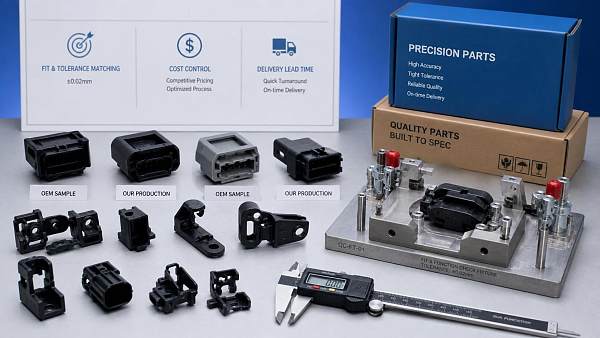
- Dimensional tolerance differences: A few millimeters in offset, bore size, thread pitch, or mounting depth can prevent proper installation or create premature wear.
- Material and heat-treatment variation: Two brake discs or suspension arms may look alike but perform very differently under load, heat, or corrosion exposure.
- Electrical and signal mismatch: Sensors, actuators, relays, and control modules may share connectors but differ in voltage range, resistance, communication protocol, or calibration logic.
- Vehicle platform changes: Mid-cycle updates, trim-level variations, engine differences, and regional specifications often create part distinctions that are not visible externally.
- Software dependency: In modern vehicles and EV parts, some components require coding, pairing, or firmware compatibility.
- Regulatory and certification differences: Components sold into different markets may need different standards for emissions, lighting, or safety compliance.
For information researchers and commercial evaluators, the key takeaway is that “same appearance” is not an acceptable procurement criterion. Interchangeability is an engineering question supported by documentation, not a visual assumption.
Which replacement parts are most often mistaken as interchangeable
Some part groups create more sourcing mistakes than others because they are frequently standardized in appearance while remaining highly application-specific in function.
Brake components
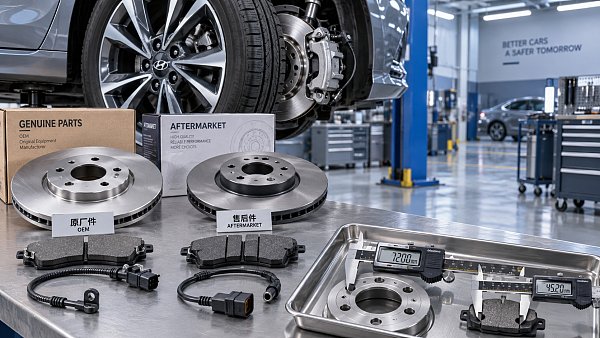
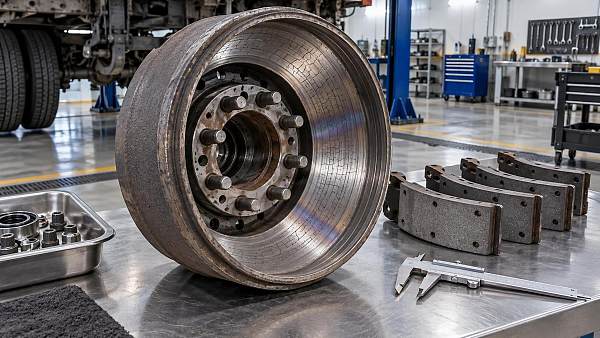
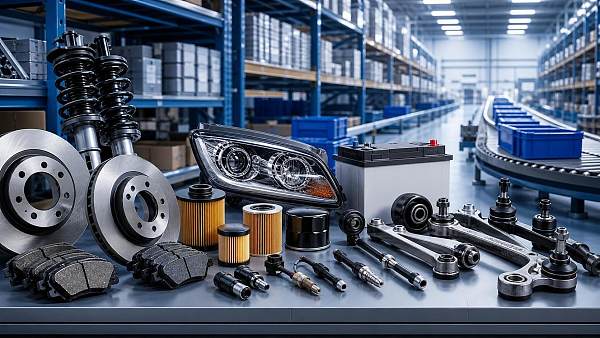
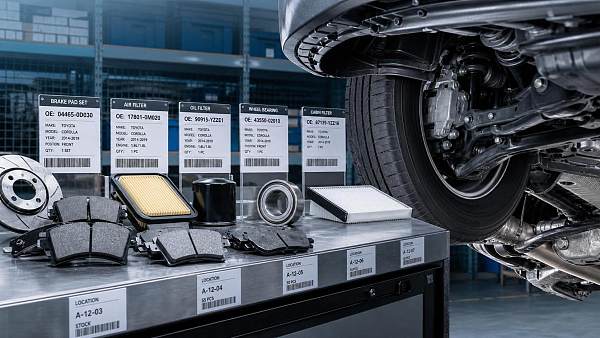
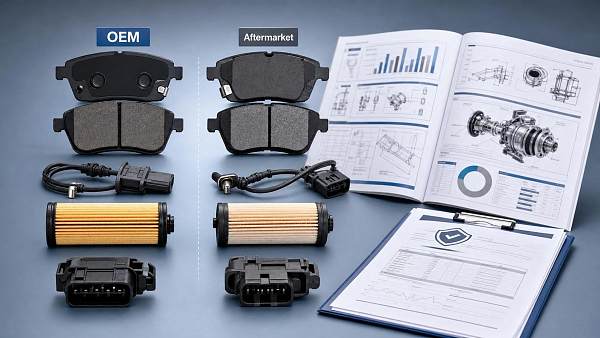
Brake pads, discs, calipers, and master cylinders are often confused across similar vehicle models. However, differences in pad compound, rotor thickness, vented versus solid design, piston size, and ABS integration can affect braking performance and installation.
Filters
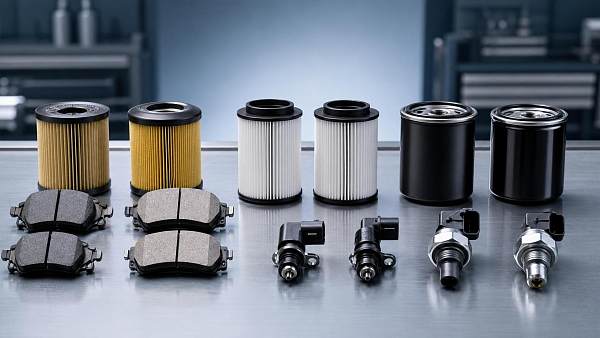
Oil, air, cabin, and fuel filters may appear to fit the housing but differ in filtration media, flow rate, pressure tolerance, sealing design, or service life. Using the wrong filter can reduce engine protection or system efficiency.
Sensors and electronic modules
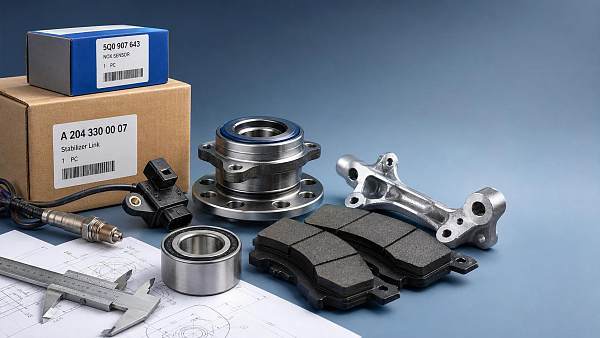
Mass airflow sensors, oxygen sensors, crankshaft sensors, TPMS sensors, and control modules are among the most commonly misidentified parts. Connector shape alone is not enough. Output signal, communication protocol, and ECU compatibility matter.
Suspension and steering parts
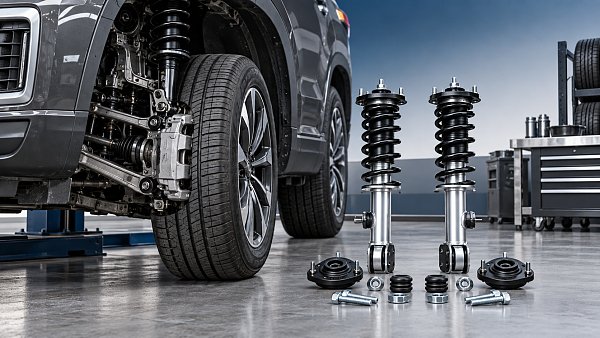
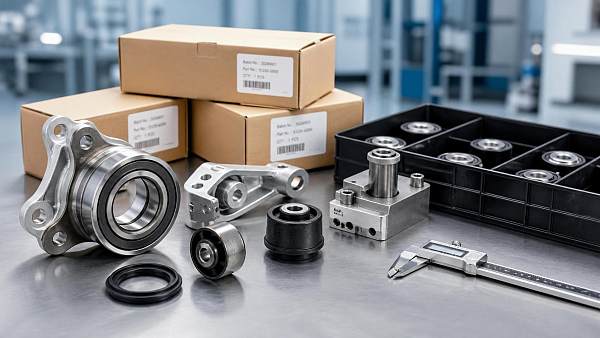
Ball joints, tie rod ends, control arms, bushings, and wheel bearings may look identical in catalog photos. In practice, load rating, geometry, left/right orientation, and mounting tolerances can vary significantly.
Lighting components
Headlamp assemblies, bulbs, LED drivers, and taillight modules can differ by market, trim level, adaptive lighting system, or onboard electronics configuration.
Engine and drivetrain parts
Belts, water pumps, pulleys, ignition coils, injectors, clutches, and CV joints are all vulnerable to false interchange assumptions. A minor difference in tooth profile, pressure rating, or balancing spec can cause system failure.
Electric vehicle parts
In EV aftermarket operations, battery cooling components, onboard chargers, DC-DC converters, thermal management valves, power electronics modules, and high-voltage connectors may look standardized but are usually highly model-specific. Interchange errors in EV parts also carry elevated safety and liability risks.
What buyers and distributors should verify before treating a part as interchangeable
For sourcing teams, the best defense against interchange errors is a structured verification process. The following checks are far more valuable than relying on appearance, supplier claims, or generic category labels.
1. OE part number and supersession history
Start with the original equipment part number. Then verify whether there is an official supersession, revision, or replacement chain. A newer number may replace an older one, but the reverse is not always true.
2. Exact vehicle application
Confirm make, model, year, engine code, transmission type, trim, drive layout, production date range, and market region. Two vehicles of the same model year may use different parts depending on plant origin or package configuration.
3. Technical specifications
Check dimensions, electrical ratings, pressure range, flow capacity, mounting details, sensor output characteristics, material grade, and load rating. This is especially important for precision automotive parts where tolerance control affects reliability.
4. Fitment database quality
Not all aftermarket catalog systems are equally reliable. Prefer validated fitment databases, OE mapping systems, and supplier documentation with traceable application logic.
5. Certification and market compliance
Verify whether the part meets required regional standards, especially for lighting, safety systems, emissions-related components, and EV electrical assemblies.
6. Installation dependencies
Some parts require coding, adaptation, relearn procedures, firmware updates, or companion hardware. A physically compatible part may still fail operationally if these steps are ignored.
7. Warranty and liability terms
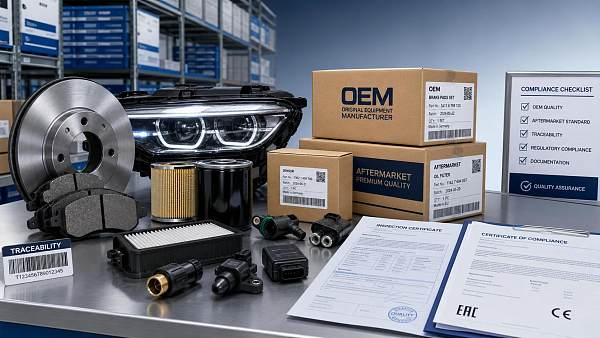
Before approving a substitute, review the supplier’s warranty scope, product testing evidence, batch traceability, and failure response process. Commercial risk often emerges after installation, not before purchase.
How non-interchangeable parts affect procurement cost, inventory, and supply chain performance
For business buyers, the impact of a wrong part selection goes beyond a single failed order. Non-interchangeability creates downstream cost across procurement, warehousing, transport, service operations, and customer relationships.
Typical business consequences include:
- Higher return rates: Incorrect parts generate reverse logistics cost and handling inefficiency.
- Inventory distortion: Misclassified SKUs increase dead stock while still failing to cover real demand.
- Longer service downtime: Workshops and fleet operators lose time waiting for corrected parts.
- Warranty exposure: Improper substitutions may lead to premature failure claims or disputes.
- Brand and channel damage: Distributors and agents lose trust when “equivalent” parts repeatedly fail in the field.
- Compliance risk: Incorrect regulated components can trigger legal or insurance consequences.
For sourcing managers, this means interchangeability assessment should be treated as part of total cost of ownership analysis, not just product selection. A slightly cheaper part that increases fitment uncertainty is often the more expensive option in real operating terms.
How to build a safer decision process for aftermarket part substitution
Organizations that handle large volumes of auto parts can reduce risk significantly by turning interchange validation into a repeatable workflow.
Create a three-layer validation method
- Commercial layer: Confirm supplier credibility, part number mapping, and warranty responsibility.
- Technical layer: Check specification sheets, drawings, material information, and application notes.
- Operational layer: Evaluate installation process, service environment, field feedback, and failure history.
Separate “visual equivalent” from “functional equivalent”
Teams should classify parts more carefully. A visually similar part is not necessarily functionally equivalent, and a functionally equivalent part may still not be acceptable for all regions or service conditions.
Use pilot validation for high-risk categories
For brake systems, steering parts, sensors, control modules, and EV parts, conduct sample installation or technical review before large-volume procurement.
Maintain supplier-side traceability
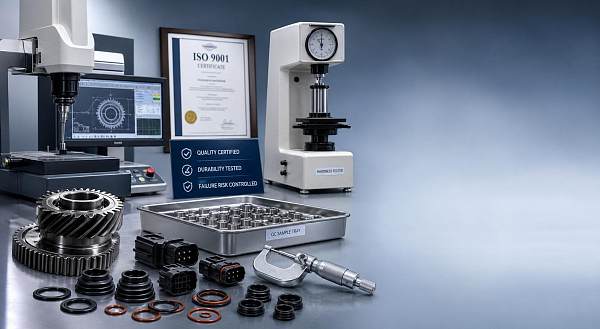
Request manufacturing batch records, revision control, test reports, and quality certifications. This is particularly important when sourcing through multi-tier channels or cross-border suppliers.
Collect field failure intelligence
Returns, installer complaints, and recurring mismatch reports should feed back into SKU management and sourcing policy. Over time, this creates a more accurate internal interchangeability knowledge base.
Questions procurement teams should ask suppliers before approving an “equivalent” part
When a supplier claims a replacement part is interchangeable, decision-makers should ask precise questions rather than accept general assurances.
- What OE part numbers does this product replace, and what is the source of that mapping?
- Is the part validated by drawing comparison, bench testing, vehicle testing, or field usage data?
- Are there exclusions by model year, engine type, trim, or market region?
- Does the part require software coding, calibration, or additional hardware?
- What are the critical dimensional and electrical tolerances?
- Has the design changed across production batches?
- What certifications, standards, or compliance documents are available?
- What is the warranty claim rate for this SKU?
- Can the supplier provide traceability for quality incidents?
These questions help buyers distinguish between a true engineered substitute and a loosely matched aftermarket option.
Where interchangeability is improving and where caution is still essential
Standardization in the automotive aftermarket has improved in some product categories, especially consumables and mature mechanical parts with stable designs. Better digital catalogs and OE-reference systems have also reduced basic fitment errors.
However, caution remains essential in areas where complexity is increasing:
- ADAS-related components
- Electronically controlled braking and steering systems
- Emission-control devices
- Connected vehicle modules
- Battery thermal management systems
- High-voltage EV parts
- Components tied to software authentication or immobilizer systems
As vehicles become more electronic, software-defined, and regionally customized, the gap between “looks similar” and “works correctly” will continue to widen. This makes technical verification even more important for distributors, agents, and B2B procurement teams.
Conclusion
Car replacement parts that seem interchangeable but are not represent a real technical and commercial risk in the modern aftermarket. The central lesson is clear: similarity in shape, size, or connector design does not prove compatibility. True interchangeability must be confirmed through OE reference, fitment data, engineering specifications, compliance review, and installation context.
For information researchers, purchasers, business evaluators, and channel partners, the most valuable approach is to treat replacement part selection as a data-driven decision. That means prioritizing traceable specifications over assumptions, building supplier validation workflows, and recognizing that the cheapest substitute may carry the highest downstream cost.
In an automotive market shaped by precision manufacturing, electrification, and tighter service expectations, smarter part verification is no longer optional. It is a core capability for procurement accuracy, inventory efficiency, and long-term channel credibility.
- procurement cost
- precision manufacturing
- technical specifications
- precision automotive
- lighting
- warehousing
- supply chain
- logistics management
- inventory control
- procurement
- auto parts
- automotive components
- car replacement parts
- electric vehicle parts
- precision engineering
- aftermarket
- replacement parts
Recommended News
 Sep 26, 2026When do aftermarket shock absorbers need replacement?Aftermarket shock absorbers may need replacement when bouncing, leaks, tire cupping, or unstable handling appear. Learn key warning signs and choose the right time to inspect.
 Sep 17, 2026How to verify fitment before buying vehicle specific aftermarket partsVehicle specific aftermarket parts: verify VIN, OEM numbers, fitment details, and installation needs before buying to avoid costly mistakes.
 Sep 16, 2026How Brake Drum Compatibility Impacts Trailer Safety Compliance and Maintenance Intervalssemi trailer spare parts: Discover how brake drum compatibility directly impacts trailer safety compliance, maintenance intervals, and regulatory risk—get expert insights now.
 Sep 09, 2026Evaluating Replacement Brake Drums for BPW Axle Systems: Compatibility, Certification, and Aftermarket Sourcing Riskssemi trailer spare parts: Discover critical risks in sourcing BPW brake drums—compatibility, certification & aftermarket pitfalls revealed.
 Sep 08, 2026Why Semi Trailer Brake Drums Crack: Wear Patterns and PreventionSemi trailer spare parts guide: identify brake drum crack patterns, prevent overheating, and improve wheel-end safety with practical maintenance insights.
 Aug 25, 2026How to vet an aftermarket replacement auto parts supplier for quality consistencyAftermarket replacement auto parts supplier selection starts with proof of quality consistency. Learn how to assess traceability, process control, packaging, and complaint handling before you buy.
 Jul 11, 2026Fleet Aftermarket Service: What to Check in Parts Coverage, Response Time, and WarrantyFleet aftermarket service guide: learn how to evaluate parts coverage, response time, and warranty terms to reduce downtime, control repair costs, and choose a more reliable supplier.
 Jul 10, 2026Replacement Auto Parts USA: How to Verify Fitment, Quality, and Supplier ReliabilityReplacement auto parts USA sourcing made safer: learn how to verify fitment, assess real quality, and spot reliable suppliers before returns, warranty claims, and costly ordering mistakes happen.
 Jul 10, 2026How to Choose Vehicle Accessories for Trucks Based on Load, Terrain, and Daily UseVehicle accessories for trucks should match load, terrain, and daily use. Discover practical tips to choose smarter upgrades for safety, durability, comfort, and long-term value.
 Jul 09, 2026Auto Parts Industry Europe: Key Market Shifts Affecting OEM and Aftermarket BuyersAuto parts industry Europe is shifting fast. Explore key OEM and aftermarket trends, compliance risks, and sourcing strategies shaping smarter buying decisions.
 Jul 08, 2026Aftermarket Engineered Components: When to Choose Replacement Parts Over OEM OptionsAftermarket engineered components can cut downtime, improve service life, and lower total maintenance cost. Learn when replacement parts outperform OEM options.
 Jul 05, 2026Aftermarket Solutions for Vehicle Maintenance: Which Parts and Services Save More Downtime?Aftermarket solutions for vehicle maintenance that cut downtime most: discover which parts, diagnostics, and preventive services deliver faster returns, fewer repeat repairs, and smarter fleet savings.
 Jul 05, 2026Replacement Auto Parts USA Market: How Distributors Compare Demand by CategoryReplacement auto parts USA market trends by category: compare brakes, filters, sensors, collision parts, and batteries to spot demand shifts, inventory priorities, and profitable distributor strategies.
 Jul 03, 2026Aftermarket Auto Parts vs OEM Parts: What to Compare Before You BuyAftermarket auto parts vs OEM parts: compare fit, quality, warranty, safety, and long-term value before you buy. Make a smarter parts choice with confidence.
 Jul 02, 2026Replacement Auto Parts Database: What Data Fields Matter Most for Fast Part Matching?Replacement auto parts database essentials: discover the key data fields for faster, more accurate part matching, fewer returns, and smarter sourcing decisions.
 Jul 01, 2026Injection Molded Aftermarket Parts vs OEM: How to Compare Fit, Cost, and Lead TimeInjection molded aftermarket parts vs OEM: compare fit, total cost, and lead time with a practical buyer framework to reduce sourcing risk and make faster purchasing decisions.
 Jun 29, 2026Sourcing Automotive Parts in Europe: OEM, Aftermarket, and Compliance Checks ExplainedAutomotive parts Europe sourcing made simple: compare OEM vs aftermarket, verify supplier credibility, and run compliance checks to reduce risk, protect margins, and buy smarter.
 Jun 28, 2026Auto Parts Quality Standards Explained: Key Certifications, Tests, and Failure RisksAuto parts quality standards explained: learn key certifications, real-world tests, hidden failure risks, and smarter supplier checks to reduce recalls and improve compliance.
 Jun 27, 2026Stamped Aftermarket Parts vs Machined Parts: Which Option Fits Cost and Volume Targets?Stamped aftermarket parts vs machined parts: compare cost, tooling, volume, lead time, and precision to find the best sourcing strategy for margins, supply stability, and long-term value.
 Jun 25, 2026Diaper Bags Backpack Buying Guide: Features That Matter for Daily Outingsdiaperbagsbackpack buying guide: discover the features that matter most for daily outings, from smart storage and comfort to easy-clean materials and durable design.
 Jun 23, 2026Car Maintenance Tools Checklist: What to Buy First for DIY Repairs and Routine ServiceCar maintenance tools checklist for DIY beginners: discover what to buy first for safe routine service, oil changes, tire care, and smarter garage upgrades on any budget.
 Jun 22, 2026Outdoor Garden Supplies Buying Guide: How to Identify Durable Tools That Last LongerOutdoor garden supplies durable tools buying guide: learn how to spot stronger materials, smarter design, and long-lasting value before you buy.
 Jun 20, 2026Aftermarket Service vs OEM Support: What Buyers Should Compare Before SigningAftermarket service can shape uptime, repair costs, and supplier risk more than price alone. Compare OEM support, spare parts, warranty, and response speed before signing.
 Jun 19, 2026Car Replacement Parts: OEM vs Aftermarket, Fitment Risks, and Warranty QuestionsCar replacement parts guide: compare OEM vs aftermarket, avoid fitment risks, and understand warranty questions to choose safer, smarter parts with confidence.