


Search News
Global Industrial Intelligence Hub (GIIH)Industry Portal
Global Industrial Intelligence Hub (GIIH)Status
Standard Access
Upgrade to PremiumNewsHow Long Life Mobility Components Reduce Maintenance in High-Use Equipment
Time
Click Count
Why heavy-use operations look at long life mobility components differently
In high-use equipment, the real cost of failure rarely sits in the part alone.
It shows up in halted movement, delayed output, repeat service visits, and rushed replacement planning.
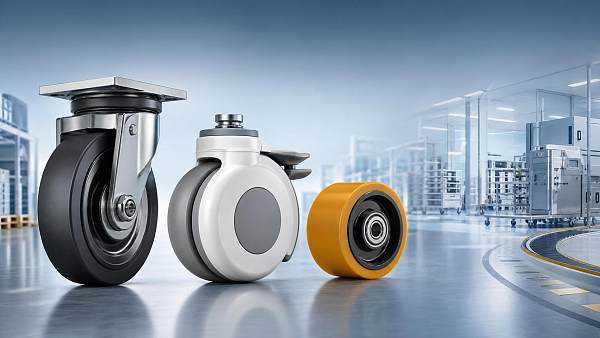
That is why long life mobility components matter across industrial settings where wheels, casters, rollers, mounts, and related moving parts face constant duty.
The question is not simply whether a component lasts longer on paper.
The better question is whether it reduces maintenance under actual load, floor, speed, cleaning, and shift conditions.
At GIIH, this type of judgment fits a broader industrial reality.
Global supply chains are tighter, service expectations are higher, and maintenance windows are less forgiving than before.
In that environment, long life mobility components become a practical decision point rather than a narrow hardware upgrade.
Actual performance changes from one operating scene to another
Different sites ask different things from the same category of component.
A distribution cart moving on polished concrete does not fail for the same reasons as hospital transport equipment or workshop trolleys.
In practice, long life mobility components reduce maintenance only when the wear mode is correctly identified first.
Sometimes abrasion dominates.
Sometimes impact loading, washdown exposure, static overload, or directional instability causes the repair cycle.
This is where cross-sector industrial analysis becomes useful.
GIIH often tracks how mobility hardware performs differently across medical systems, logistics equipment, automotive support tools, and sustainability facilities.
The component category may sound similar, but maintenance pressure comes from very different operational triggers.
In logistics lines, uptime often depends on rolling resistance and debris control
Warehouse carts, order picking units, and mobile racks usually run long distances every day.
Here, long life mobility components help most when they keep movement smooth as bearings age and floors collect dust, stretch wrap, and small debris.
A common mistake is choosing only by nominal load rating.
If swivel performance degrades or thread guards clog easily, maintenance still rises even when the wheel material looks durable.
In this setting, service life is closely linked to rolling consistency, low vibration, and easier cleaning between shifts.
In medical and clean environments, material stability matters as much as endurance
Mobile medical devices and clean transport systems move less aggressively, but failure tolerance is much lower.
Long life mobility components in these environments need quiet travel, resistance to cleaning agents, and stable movement around sensitive equipment.
A harder wheel may extend wear life, yet it can increase noise or transmit vibration.
That tradeoff often creates maintenance in another form, including fastener loosening or handling complaints.
More durable does not automatically mean more suitable.
In workshop and automotive support areas, impact and side load usually shorten service intervals
Tool carts, battery handling units, and mobile fixtures often cross expansion joints, metal debris, and uneven surfaces.
Under these conditions, long life mobility components reduce maintenance when fork strength, wheel core rigidity, and bearing protection are balanced.
If the part only excels in straight rolling tests, field life may still disappoint.
Side shock and sudden stops often damage assemblies faster than steady travel does.
The demand gap becomes clearer when operating conditions are compared
A simple comparison helps explain why selection cannot rely on a single durability claim.
The pattern is clear.
Maintenance falls when the component matches the real failure mechanism, not when it simply carries a longer-life label.
What to check before assuming long life mobility components will cut service work
In actual deployment, a few checks usually reveal whether longer life will be real or only theoretical.
- Verify dynamic load, not just static load, especially where starts, stops, and ramps are frequent.
- Review floor texture and contamination, because smooth concrete and damaged asphalt create very different wear patterns.
- Check exposure to water, disinfectants, oil, metal dust, or temperature swings.
- Confirm mounting compatibility, since misfit hardware often causes premature loosening and false failure diagnosis.
- Track maintenance history to see whether failures begin in the wheel tread, bearing, swivel head, or fastening point.
These checks sound basic, yet they are often skipped when replacement cycles become routine.
Once that happens, teams may keep changing parts without changing the reason those parts fail.
Where selection errors usually happen
One frequent misjudgment is treating similar mobility tasks as identical.
Two carts may carry the same weight, yet one runs short indoor loops while the other travels across loading thresholds all day.
They do not need the same long life mobility components.
Another weak point is focusing only on purchase price.
Lower upfront cost can be erased quickly by extra labor, unplanned downtime, or repeated stock holding for replacement parts.
A third issue is overlooking lifecycle change.
Operating routes, shift length, load density, and hygiene rules often evolve before replacement specifications do.
That gap is exactly where maintenance costs quietly rise.
A practical way to match component life with maintenance goals
A useful approach is to classify equipment by motion intensity rather than by equipment name alone.
That makes long life mobility components easier to evaluate across mixed fleets.
Low-path but high-sensitivity equipment
Focus on vibration control, quiet steering, chemical stability, and floor marking risk.
High-distance and repetitive transport
Prioritize rolling efficiency, debris resistance, and reduced bearing service frequency.
Heavy-duty or rough-path movement
Look harder at impact tolerance, core strength, fork design, and fastener retention.
This method supports more consistent decisions across sectors that GIIH regularly follows, from precision automotive mobility to logistics and environmental handling.
It also helps connect technical selection with broader cost forecasting and service planning.
Next-step decisions should connect service data with site conditions
Long life mobility components reduce maintenance when they are chosen with field evidence, not just catalog confidence.
The most reliable next step is to map where failures occur, compare those patterns across operating scenes, and set a small group of non-negotiable conditions.
That may include dynamic load limits, surface quality, chemical exposure, noise tolerance, and target service interval.
From there, long life mobility components can be assessed as part of a wider maintenance strategy rather than a simple replacement item.
In a market shaped by tighter uptime expectations and more connected industrial intelligence, that level of selection discipline is often what separates lower maintenance from repeated maintenance.
Recommended News
 Sep 12, 2026What does UN 38.3 testing cover for EV battery shipments?EV battery UN 38.3 testing covers altitude, thermal, vibration, shock, short-circuit, overcharge, and discharge risks. Learn key compliance steps for safer EV battery shipments.
 Aug 24, 2026How to compare electric drive components for torque and efficiencyElectric drive components comparison starts with real load profiles. Learn how to evaluate torque, efficiency, motor-inverter-gearbox fit, and avoid costly selection mistakes.
 Jul 29, 2026400V EV Battery Components Explained: Key Parts, Functions, and System Design BasicsEV battery components 400V explained clearly: discover key parts, core functions, safety logic, thermal design, and system basics to evaluate EV battery packs with confidence.
 Jul 18, 2026Automotive Component Rating Standards Explained: How to Compare Load, Temperature, and Safety LimitsAutomotive component rating standards explained clearly: learn how to compare load, temperature, and safety limits to reduce sourcing risk, improve compliance, and choose parts with confidence.
 Jul 15, 2026EV Components North America: Sourcing Priorities, Compliance, and Lead Time FactorsEV components North America buyers now face tougher sourcing decisions. Explore compliance risks, lead time pressures, and smarter strategies to reduce disruption and improve EV supply chain performance.
 Jul 13, 2026How to Evaluate a Battery Components Exporter for Quality, Traceability, and Lead TimeBattery components exporter selection goes beyond price. Learn how to assess quality control, traceability, and lead time to reduce supply risk and choose a reliable partner.
 Jul 12, 2026High Voltage EV Batteries vs Standard Packs: Key Design and Safety DifferencesHigh voltage EV batteries vs standard packs: explore the key design, charging, efficiency, and safety differences to choose the right EV battery architecture with confidence.
![]() Jul 07, 2026EV Accessories Buying Guide: Which Add-Ons Matter for Safety, Charging, and Daily Use?EV accessories buying guide: discover which add-ons truly improve charging, safety, and daily convenience, so you can choose smarter, safer gear with confidence.
Jul 07, 2026EV Accessories Buying Guide: Which Add-Ons Matter for Safety, Charging, and Daily Use?EV accessories buying guide: discover which add-ons truly improve charging, safety, and daily convenience, so you can choose smarter, safer gear with confidence. Jun 30, 2026EV Motor Selection Guide: Torque, Efficiency, Cooling, and Cost Trade-OffsEV motor selection guide covering torque, efficiency, cooling, and cost trade-offs. Learn how to choose the right EV motor for better range, reliability, and total value.
 Jun 29, 2026Permanent Magnet EV Motor Selection: Torque, Efficiency, Cooling, and Cost Trade-OffsPermanent magnet EV motor selection explained: compare torque, efficiency, cooling, and total cost trade-offs to choose the right EV drive solution with confidence.
 Jun 27, 2026Sourcing Guide for EV Components: How to Compare Suppliers, Lead Times, and MOQSourcing guide EV components for procurement teams: compare suppliers, lead times, MOQ, quality, and total cost to reduce risk and make smarter EV sourcing decisions.
 Jun 27, 2026Electric Drive Components Price in Europe: What Drives Cost by Motor, Inverter, and VolumeElectric drive components price Europe explained: see how motor design, inverter technology, and order volume shape real costs in Europe, and compare suppliers with greater confidence.
 Jun 25, 2026How Long Life Mobility Components Reduce Maintenance in High-Use EquipmentLong life mobility components cut maintenance by matching real load, floor, and cleaning conditions. See how smarter selection improves uptime, lowers service costs, and extends equipment life.
 Jun 23, 2026Spark Plugs OEM Sourcing Guide: Key Specs, Compatibility Checks, and Supplier RisksSpark plugs OEM sourcing guide covering key specs, compatibility checks, total cost, and supplier risks—learn how to avoid fitment errors, returns, and costly quality issues.
 Jun 13, 2026Vehicle Electronics Selection Guide: Key Standards, Interfaces, and Reliability FactorsVehicle electronics selection starts with standards, interfaces, and reliability. Learn how to compare components, reduce integration risk, and choose smarter for long-term performance.
 Jun 06, 2026What Is a BMS in Battery Systems? Functions, Key Components, and Selection BasicsBMS explained: learn what a Battery Management System does, its key components, and how to choose the right BMS for safer, longer-lasting, better-integrated battery systems.
 Jun 02, 2026Solid-State Battery Breakthroughs: What to Verify Before EV AdoptionSolid-state battery breakthroughs are reshaping EV strategy—learn what to verify in energy density, cycle life, safety, cost, and supplier readiness before adoption.
 May 31, 2026Why is EV battery tech reshaping range expectations?EV battery tech is redefining real-world range through smarter chemistry, thermal control, fast charging, and software—discover what matters beyond mileage.
![]() May 19, 2026Why long-lifespan solid-state batteries matter nowSolid-state battery breakthroughs long lifespan are reshaping EVs, grid storage, and industry. Discover why longer life, safer performance, and lower total cost matter now.
May 19, 2026Why long-lifespan solid-state batteries matter nowSolid-state battery breakthroughs long lifespan are reshaping EVs, grid storage, and industry. Discover why longer life, safer performance, and lower total cost matter now.![]() May 19, 2026Is off-grid lithium storage worth the upfront cost?Lithium battery storage for off-grid applications can justify higher upfront costs through lower maintenance, better efficiency, and stronger long-term ROI. See when it pays off.
May 19, 2026Is off-grid lithium storage worth the upfront cost?Lithium battery storage for off-grid applications can justify higher upfront costs through lower maintenance, better efficiency, and stronger long-term ROI. See when it pays off.![]() May 19, 2026Are solid-state battery breakthroughs finally lifting energy density?Solid-state battery breakthroughs in high energy density are moving beyond hype. Learn what technical evaluators should verify on cycle life, safety, cost, and scalable commercialization.
May 19, 2026Are solid-state battery breakthroughs finally lifting energy density?Solid-state battery breakthroughs in high energy density are moving beyond hype. Learn what technical evaluators should verify on cycle life, safety, cost, and scalable commercialization. May 18, 2026Why portable lithium battery storage needs better designLithium battery storage portable design matters more than ever. Discover how better safety, mobility, and charging design improve backup, travel, and field power performance.
 May 17, 2026What next-gen EV charging must solve beyond faster speedNext-gen wireless charging for electric vehicles must solve efficiency, safety, interoperability, and real-world deployment fit—not just speed. Explore what makes EV charging scalable and investment-ready.
 May 17, 2026How close are solid-state batteries to real EV production?Solid-state battery breakthroughs for electric vehicles are moving beyond the lab. Discover how close they are to real EV production, what still blocks scale-up, and which milestones matter most.