


Search News
Global Industrial Intelligence Hub (GIIH)Industry Portal
Global Industrial Intelligence Hub (GIIH)Status
Standard Access
Upgrade to PremiumNewsHow does regenerative braking work in electric vehicles?
Time
Click Count
Regenerative braking slows an electric vehicle by using its drive motor as a generator. Instead of allowing all the energy of motion to dissipate as heat in the friction brakes, the system converts some of it into electricity that can be stored in the battery and used later.
Recovery is never complete, and the amount depends on more than the strength of the driver’s braking input. Vehicle speed, battery temperature, state of charge, traction and electrical-system limits all affect how much energy can be captured. Conventional friction brakes remain essential for strong stops, low-speed stopping and situations in which regeneration is restricted.
What happens when an electric vehicle slows down?
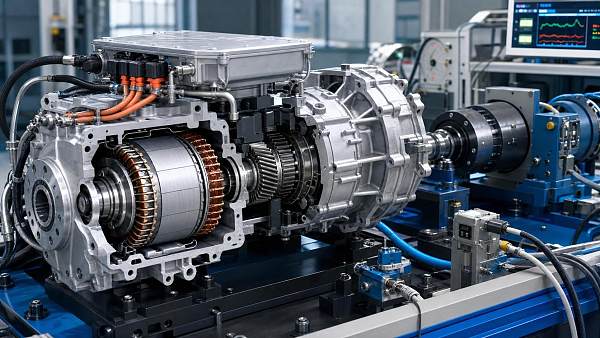
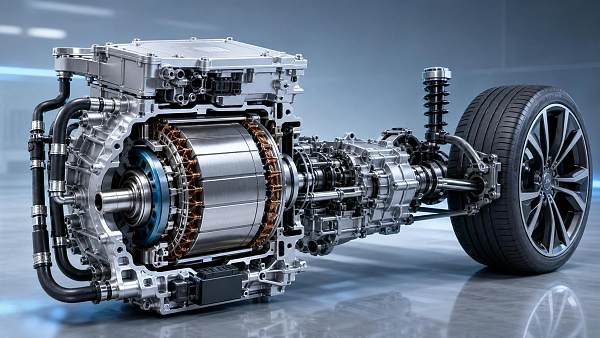
When an EV accelerates, electricity flows from the battery through power electronics to the motor. The motor produces torque that turns the driven wheels. During regenerative braking, the energy flow reverses: the moving wheels drive the motor, which generates electricity while producing torque that opposes their rotation.
That opposing torque is what slows the vehicle. Electrical energy passes through the power electronics and, if the battery can accept it, returns to the battery. The vehicle’s control system coordinates the process with the battery management system, motor controller and braking system.
The energy source is the vehicle’s motion, not free electricity. A moving vehicle has kinetic energy, which depends on its mass and the square of its speed. When the vehicle slows, that energy must go somewhere. Regeneration directs a portion back into the electrical system; the rest is lost through resistance, heat and other processes.
A downhill journey adds another source: gravitational potential energy. As the vehicle descends, gravity supplies energy that can be converted to electricity while regenerative torque helps control speed. On a long descent, however, battery and component limits can reduce the available regenerative braking, so the friction brakes may still be needed.
The components that make regeneration possible
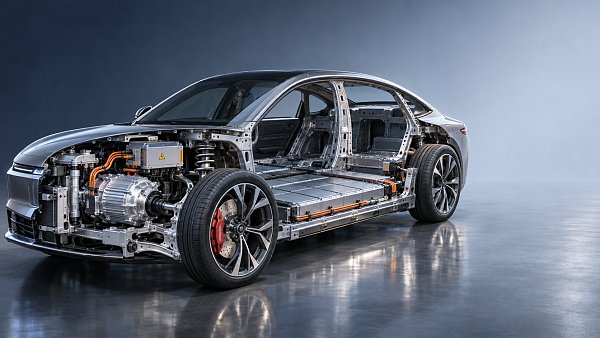
The traction motor is central to the process, but it cannot recover energy on its own. Several systems must work together:
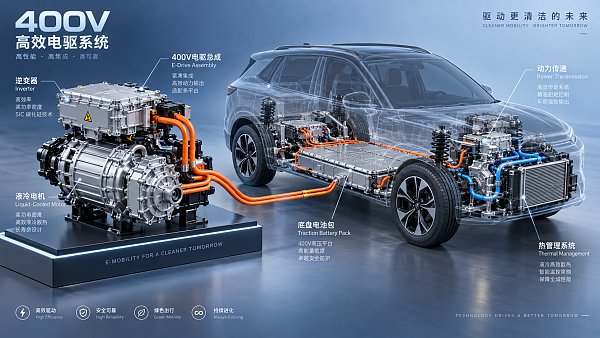
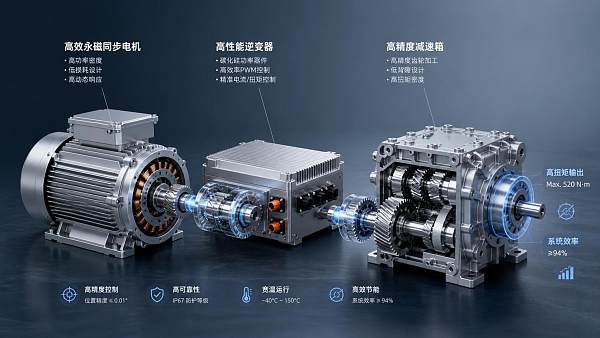
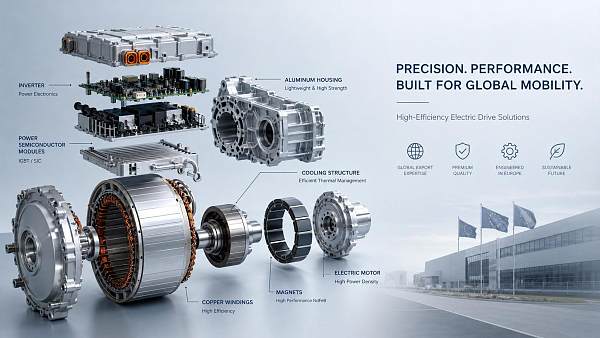
- Electric motor and drivetrain: The driven wheels turn the motor during deceleration. The motor’s resistance to rotation produces braking torque while generating electrical power.
- Inverter and power electronics: These control the motor and manage the conversion of electrical power into a form suitable for the battery. They also operate within current and temperature limits.
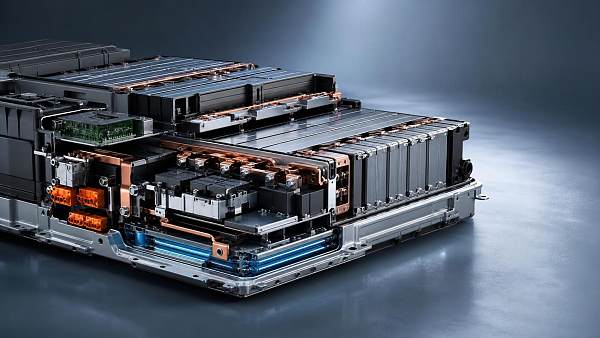
- Battery: The battery stores recovered energy, subject to its charge acceptance limits. A nearly full or cold battery may not be able to accept as much power.
- Control systems: The vehicle determines how much regenerative torque is appropriate, taking account of driver input, wheel grip, battery condition and other operating constraints.
- Friction brakes: Brake discs or drums provide additional stopping force when regeneration is insufficient, unavailable or unsuitable.
In many EVs, the driver does not need to operate these systems separately. Pressing the brake pedal can request a total amount of deceleration, and the vehicle apportions that request between regenerative and friction braking. This coordination is known as brake blending.
How regenerative and friction braking work together
Friction brakes slow a vehicle by pressing brake components together, converting motion primarily into heat. Regenerative braking uses the motor’s opposing torque and converts part of the energy into electricity. Both methods slow the wheels, but only regeneration provides a route for recovering energy.
During a gentle slowdown, an EV may meet much of the requested deceleration through regeneration. If the driver presses harder, the system can add friction braking. The exact transition depends on the vehicle’s design and operating conditions; it is not necessarily visible from pedal travel alone.
Friction brakes are particularly important when the available regenerative torque cannot meet the required stopping force. That can happen in an emergency stop, when the battery cannot accept much charge, or when a fault or control limitation reduces regeneration. They are also needed to hold a stationary vehicle, because generating power requires motion. Some vehicles can use regenerative torque to slow nearly to a stop before applying friction brakes for the final stop and hold.
Traction adds another constraint. Regenerative braking acts through the wheels connected to a motor, whereas the friction braking system can control braking at individual wheels. On a slippery surface, excessive braking torque at a driven wheel can cause a loss of grip. Stability and anti-lock braking controls can therefore reduce regeneration and adjust friction braking to help maintain control.
Why some EVs slow down when the accelerator is released
Many EVs use accelerator-pedal release as a request for regenerative deceleration. Lift off gently and the vehicle may slow moderately; lift off fully and it may slow more strongly. The relationship between pedal position and deceleration is a control choice, not an inherent requirement of the motor.
Some vehicles offer one-pedal driving, in which the accelerator controls both propulsion and much of the normal deceleration. Depending on the implementation, the vehicle may come to a complete stop and remain held without the driver immediately pressing the brake pedal. Other vehicles slow significantly but require the brake pedal to complete the stop.
One-pedal driving does not eliminate the brake pedal or guarantee a fixed stopping distance. Available deceleration can change with battery condition, road grip and vehicle settings. Drivers still need the friction braking system for stronger stops and for circumstances beyond the capability of accelerator-controlled deceleration.
Some vehicles provide a lower-regeneration setting or a coasting mode. Coasting allows the vehicle to continue rolling with less deceleration when the driver releases the accelerator. Neither a strong-regeneration setting nor coasting is automatically the most efficient choice in every situation: the useful strategy depends on whether the vehicle needs to slow down and what the road ahead requires.
How much energy can regenerative braking recover?
There is no single recovery percentage that applies to every EV or every trip. A useful distinction is between the fraction of braking energy recovered during a particular slowdown and the effect on total trip energy use. These are different measures and should not be compared as though they were the same.
For an illustration, consider a 2,000 kg vehicle slowing from 60 km/h to a standstill on level ground. Its initial kinetic energy is approximately 278 kilojoules, or 0.077 kilowatt-hours. That is the theoretical energy associated with its motion at that speed, not the amount the battery necessarily receives. Tire and drivetrain losses, electrical losses, battery charging losses and any friction braking reduce the amount stored.
Speed matters disproportionately. Because kinetic energy rises with the square of speed, a vehicle moving twice as fast has four times the kinetic energy, all else being equal. Yet a high-speed stop does not guarantee that the system can capture all that additional energy: motor power, battery charge acceptance and stopping requirements limit the recovery rate.
Driving conditions also determine how much braking energy is available in the first place. Repeated acceleration and deceleration create opportunities for recovery, while steady-speed travel on a level road provides fewer braking events. Regeneration is valuable when slowing is necessary, but accelerating unnecessarily and then recovering part of the energy is less efficient than avoiding that unnecessary speed change.
What limits energy recovery?
Battery state of charge. A battery close to full charge has less capacity to accept additional energy, and its permitted charging power may be restricted. The vehicle can respond by reducing regenerative braking. Depending on the design, friction brakes may compensate for some of the missing deceleration, or the change may be noticeable to the driver.
Battery temperature. A cold battery may have a lower allowable charging rate. Until it warms sufficiently, the vehicle can limit the power returned to it. Temperature limits on the motor, inverter and other components can also affect regeneration.
Vehicle speed. At low speeds, the power available from the slowing vehicle falls. Regenerative braking effectiveness near a standstill is constrained by motor and control-system characteristics, so friction braking is commonly used to complete the stop or hold the vehicle.
Braking intensity and duration. A hard stop demands substantial braking power in a short time. The motor and battery may not be able to absorb energy at the required rate, making friction braking necessary. During a long descent, even a system capable of strong initial regeneration may have to reduce it if the battery fills or components reach operating limits.
Available grip. Braking torque must remain within the traction available at the tires. Wet, icy, loose or uneven surfaces can prompt the vehicle to reduce regenerative torque in the interest of stability. Road conditions therefore influence both safety controls and the amount of energy recovered.
Vehicle architecture. Motor rating, gearing, the number of driven axles, battery charging capability and control calibration all affect regeneration. A vehicle with a powerful motor does not necessarily recover more energy in every stop: the battery and traction limits may become the controlling factors.
Does regenerative braking increase range?
Yes, it can improve range by returning some energy to the battery that would otherwise be lost during deceleration. Its contribution is most meaningful when a journey includes braking or elevation changes that the vehicle would have to manage anyway.
It does not remove the energy needed to move the vehicle. Energy is still consumed by aerodynamic drag, tire rolling resistance, drivetrain losses and electrical loads such as heating or cooling. Regenerative braking also incurs losses each time energy passes through the motor, inverter and battery.
This distinction matters when comparing range figures. A route with frequent stops may offer more opportunities to recover braking energy, but it also requires repeated acceleration. A downhill section may return energy to the battery, but a subsequent climb requires energy again. The energy recovered is only one part of the trip’s overall balance.
Regeneration can also reduce friction-brake use and associated wear. It does not make brake inspection unnecessary: friction components remain safety-critical, and reduced use can allow surface corrosion or other condition-related issues to go unnoticed. Maintenance should follow the vehicle manufacturer’s guidance.
Reading the vehicle’s energy display
Many EVs show regenerative braking through a power meter, an energy-flow graphic or a trip summary. These displays can help explain what is happening, but their figures are not always directly comparable. One display may show instantaneous power flowing toward the battery, while another reports energy accumulated over a trip. The indicated value may also be measured or estimated at a different point in the system.
Instantaneous power and total energy should be kept separate. Power describes the rate of energy transfer, typically in kilowatts; energy describes the amount transferred over time, typically in kilowatt-hours. A brief period of high regenerative power does not necessarily recover more energy than a longer period at a lower power level.
A change in displayed regeneration does not automatically indicate a fault. It can reflect a full battery, low battery temperature, low speed, limited traction or a selected driving mode. Persistent unexpected behavior, warning messages or a change in braking feel should be assessed using the vehicle’s documentation and, where appropriate, a qualified service provider.
The practical principle is straightforward: regenerative braking recovers part of the energy that must be removed when an EV slows down. Its effectiveness depends on whether the motor can generate the required braking torque, whether the battery can accept the resulting power and whether road conditions permit it. Friction brakes remain the necessary partner whenever those conditions are not enough to provide the deceleration the driver needs.
Recommended News
 Nov 17, 2026India’s EV Market Enters Growth Phase as Global Carmakers Face a Strategic TestIndia’s EV market is gaining momentum. Explore how affordability and trust in local brands could shape opportunities for global carmakers.
 Nov 15, 2026Bangladesh Faces Calls for EV Battery Recycling and Certification to Address Safety RisksEV battery recycling and certification in Bangladesh could reshape safety practices. Explore the proposals and what they may mean for the supply chain.
 Nov 15, 2026How does regenerative braking work in electric vehicles?This automotive technical explainer reveals how regenerative braking recovers energy in EVs, what limits it, and how it can improve driving range.
 Oct 28, 2026How to assess fatigue life of OEM mobility components for EVsOEM mobility components for EVs need proven durability. Learn how load spectra, fatigue models, and validation testing support confident supplier qualification decisions.
 Oct 26, 2026How to size electric drive components for trucks on steep gradesSize electric drive components for trucks on steep grades with expert guidance on torque, gearing, battery power, and cooling. Learn how to prevent derating and maintain climbing speed.
 Oct 25, 2026How to size electric drive components for trucks on steep gradesSize electric drive components for trucks on steep grades with expert guidance on torque, gearing, battery power, and cooling. Learn how to prevent derating and maintain climbing speed.
 Oct 25, 2026How to size electric drive components for trucks on steep gradesSize electric drive components for trucks on steep grades with expert guidance on torque, gearing, battery power, and cooling. Learn how to prevent derating and maintain climbing speed.
 Oct 19, 2026Infineon Opens Third SiC Wafer Fab in Malaysia to Ease EV Supply BottlenecksExplore Infineon's reported SiC wafer fab expansion in Malaysia, its potential to ease EV supply bottlenecks, and key procurement checks to make informed sourcing decisions.
 Oct 17, 2026US Announces Higher Tariffs on Chinese Electric Vehicles and BatteriesUS tariffs on Chinese electric vehicles and batteries: explore the announced 100% EV and 25% battery rates, potential cost impacts and key checks for pricing and sourcing decisions.
 Sep 29, 2026When does a 400V EV motor meet a vehicle’s power needs?400V EV motor: discover how to match torque, peak and continuous power, battery current, gearing, and thermal limits for confident vehicle performance.
 Sep 12, 2026What does UN 38.3 testing cover for EV battery shipments?EV battery UN 38.3 testing covers altitude, thermal, vibration, shock, short-circuit, overcharge, and discharge risks. Learn key compliance steps for safer EV battery shipments.
 Aug 24, 2026How to compare electric drive components for torque and efficiencyElectric drive components comparison starts with real load profiles. Learn how to evaluate torque, efficiency, motor-inverter-gearbox fit, and avoid costly selection mistakes.
 Jul 29, 2026400V EV Battery Components Explained: Key Parts, Functions, and System Design BasicsEV battery components 400V explained clearly: discover key parts, core functions, safety logic, thermal design, and system basics to evaluate EV battery packs with confidence.
 Jul 18, 2026Automotive Component Rating Standards Explained: How to Compare Load, Temperature, and Safety LimitsAutomotive component rating standards explained clearly: learn how to compare load, temperature, and safety limits to reduce sourcing risk, improve compliance, and choose parts with confidence.
 Jul 15, 2026EV Components North America: Sourcing Priorities, Compliance, and Lead Time FactorsEV components North America buyers now face tougher sourcing decisions. Explore compliance risks, lead time pressures, and smarter strategies to reduce disruption and improve EV supply chain performance.
 Jul 13, 2026How to Evaluate a Battery Components Exporter for Quality, Traceability, and Lead TimeBattery components exporter selection goes beyond price. Learn how to assess quality control, traceability, and lead time to reduce supply risk and choose a reliable partner.
 Jul 12, 2026High Voltage EV Batteries vs Standard Packs: Key Design and Safety DifferencesHigh voltage EV batteries vs standard packs: explore the key design, charging, efficiency, and safety differences to choose the right EV battery architecture with confidence.
![]() Jul 07, 2026EV Accessories Buying Guide: Which Add-Ons Matter for Safety, Charging, and Daily Use?EV accessories buying guide: discover which add-ons truly improve charging, safety, and daily convenience, so you can choose smarter, safer gear with confidence.
 Jun 30, 2026EV Motor Selection Guide: Torque, Efficiency, Cooling, and Cost Trade-OffsEV motor selection guide covering torque, efficiency, cooling, and cost trade-offs. Learn how to choose the right EV motor for better range, reliability, and total value.
 Jun 29, 2026Permanent Magnet EV Motor Selection: Torque, Efficiency, Cooling, and Cost Trade-OffsPermanent magnet EV motor selection explained: compare torque, efficiency, cooling, and total cost trade-offs to choose the right EV drive solution with confidence.
 Jun 27, 2026Sourcing Guide for EV Components: How to Compare Suppliers, Lead Times, and MOQSourcing guide EV components for procurement teams: compare suppliers, lead times, MOQ, quality, and total cost to reduce risk and make smarter EV sourcing decisions.
 Jun 27, 2026Electric Drive Components Price in Europe: What Drives Cost by Motor, Inverter, and VolumeElectric drive components price Europe explained: see how motor design, inverter technology, and order volume shape real costs in Europe, and compare suppliers with greater confidence.
 Jun 25, 2026How Long Life Mobility Components Reduce Maintenance in High-Use EquipmentLong life mobility components cut maintenance by matching real load, floor, and cleaning conditions. See how smarter selection improves uptime, lowers service costs, and extends equipment life.
 Jun 23, 2026Spark Plugs OEM Sourcing Guide: Key Specs, Compatibility Checks, and Supplier RisksSpark plugs OEM sourcing guide covering key specs, compatibility checks, total cost, and supplier risks—learn how to avoid fitment errors, returns, and costly quality issues.
{item.publish_time}{item.title}{item.description}