


Search News
Global Industrial Intelligence Hub (GIIH)Industry Portal
Global Industrial Intelligence Hub (GIIH)Status
Standard Access
Upgrade to PremiumNewsWhat Warranty Period Do Overseas Suppliers Offer for Surgical Tools?
Time
Click Count
Overseas suppliers do not offer a single, standardized warranty period for surgical tools. A 12-month limited warranty is a common starting point for reusable instruments, but individual suppliers may offer shorter coverage, multi-year terms, or a lifetime warranty against manufacturing defects. The applicable period must be confirmed for the specific product—not inferred from the supplier’s location or a general statement on its website.
The more important distinction is what remains protected during that period. A lifetime defect warranty may exclude sharpening, wear, accidental damage, and improper reprocessing. A shorter warranty with clear replacement terms and accessible service can therefore provide more practical protection than a longer promise that is difficult to enforce across borders.
What the warranty period actually covers
When asking “what is the warranty period for surgical instruments from overseas,” the answer needs three parts: the duration, the event that starts the clock, and the failures covered. A quotation that says only “one-year warranty” leaves significant uncertainty.
The following terms can appear in supplier offers. They are contractual arrangements, not a universal industry schedule.
A warranty period is not an expected service life. A reusable instrument can remain suitable for use beyond its warranty if inspection confirms its condition and the manufacturer’s instructions permit continued use. Conversely, an instrument that fails inspection must not remain in service merely because its warranty has not expired.
Different instruments require different warranty questions
For reusable manual instruments such as forceps, scissors, clamps, and retractors, the central issue is usually whether the supplier guarantees materials and workmanship. Coverage might apply to a defective joint, improperly formed component, faulty attachment, or another attributable production defect. It does not automatically include maintaining cutting performance indefinitely.
Fine or delicate instruments need particular attention to damage exclusions. A bent tip can arise from handling or loading, but incorrect material properties or manufacturing geometry can also affect performance. The contract should establish how the supplier evaluates disputed failures rather than treating every deformation as misuse.
Powered surgical tools require component-level review. The handpiece, motor, battery, charger, cable, and accessories may have different warranty periods. A statement that a “system” carries two years of coverage is insufficient if a battery has shorter coverage or certain accessories are excluded altogether. Repair access also matters because replacing a mechanical instrument and servicing a powered device involve different logistics.
Single-use instruments present a different question. Their expiry date is not a reusable-product warranty, and a longer shelf life does not authorize repeated use. Relevant assurances concern conformity on delivery, packaging integrity, and performance under specified storage and intended-use conditions. The agreement should state how unused defective stock is handled, including defects discovered after the initial receiving inspection.
The starting date can reduce usable coverage
A warranty beginning on the invoice or shipment date can lose part of its practical value during international transport, customs clearance, and storage. A warranty beginning at delivery or documented acceptance creates a different level of protection, even when both offers state the same number of months.
Consider a hypothetical instrument with a 12-month warranty from shipment. If transport and clearance take six weeks and the instrument then remains in stock for another six weeks, roughly three months of coverage have elapsed before its first use. This does not invalidate the warranty, but it changes how much protection is available during operation.
For stock held before onward sale, the supplier’s warranty and the warranty promised to the eventual purchaser may start on different dates. Unless the upstream agreement addresses that gap, the seller may have to fund a customer remedy after the original supplier’s coverage has ended.
Acceptance inspection introduces another deadline. A requirement to report visible shortages or transit damage promptly is distinct from the period for reporting a latent manufacturing defect. Both should be written clearly. A short receiving-inspection window should not inadvertently become the only opportunity to claim for faults that could not reasonably be detected on arrival.
Manufacturing defects and routine wear are not interchangeable
The hardest warranty disputes concern causation. A broken component, stiff hinge, corroded surface, or blunt cutting edge describes the condition of an instrument; it does not by itself establish why that condition developed.
Scissors can lose cutting performance through normal use. They can also perform poorly when new because of blade alignment or finishing defects. Similarly, corrosion can involve material or surface-processing problems, but it can also arise from unsuitable chemicals, chloride exposure, residual soil, inadequate drying, or other departures from validated reprocessing instructions.
A defensible assessment connects the failure to evidence:
- The product identifier, lot number, or serial number establishes which instrument is involved.
- Receiving inspection records help distinguish an initial defect from later deterioration.
- Photographs and a precise fault description document the condition before repair or disposal.
- Use and reprocessing records help establish whether operating conditions followed the manufacturer’s instructions.
- Maintenance records identify sharpening, adjustment, or third-party repair that may affect the assessment.

The manufacturer’s instructions for use are particularly important. They should specify applicable cleaning, disinfection, sterilization, inspection, and maintenance conditions. A broad exclusion for “improper sterilization” is difficult to evaluate if the supplier has not provided sufficiently clear instructions for the instrument supplied.
At the same time, compliance with reprocessing instructions does not make every later failure a manufacturing defect. Warranty assessment still requires a technical explanation. Where corrosion or breakage is contested, a written assessment is more useful than an unsupported assertion that the instrument was either defective or mishandled.
“Lifetime” does not mean unlimited replacement
Lifetime warranties deserve close reading because the headline can imply more than the contract provides. The term may refer to the instrument’s useful life, ownership by the original purchaser, or another defined period. It may cover only defects in materials and workmanship while excluding normal wear throughout.
Sharpening, tip restoration, hinge adjustment, and replacement of worn components may therefore remain chargeable. Coverage may also depend on authorized maintenance or exclude damage caused by modifications. These restrictions should be visible before purchase, not introduced only when a claim is submitted.
The remedy is equally important. A supplier may reserve the right to repair rather than replace, or provide credit instead of a refund. Clarify whether a replacement receives a new warranty, inherits the remaining original period, or receives a separate limited term. Otherwise, a replacement delivered near the end of the original warranty could have very little coverage.
Cross-border claim costs can outweigh the warranty benefit
A valid claim is not necessarily a cost-free claim. International freight, inspection charges, customs administration, and the cost of replacement stock during the service interval can exceed the value of an individual instrument. The allocation of these costs determines whether the warranty is economically usable.
The agreement should identify who pays for return shipping, shipment of the repaired or replacement item, and any diagnostic charges if the supplier rejects the claim. Delivery terms for the original purchase should not be assumed to settle the cost of a later warranty return.
Used surgical instruments also require appropriate handling before shipment. The service provider may require decontamination documentation, specific packaging, and confirmation that the item is safe to receive. Carrier requirements and import procedures must be checked for the relevant route. An instrument suspected of presenting an infection risk should not be sent through an ordinary parcel process without the necessary controls.
For relatively low-value tools, a supplier may agree to evaluate photographs and records before requesting a physical return. Where physical analysis is necessary, the contract can specify an authorized local assessment or consolidated returns. Any arrangement should preserve traceability and avoid unauthorized repair that changes the evidence.
Response time and remedy time should be separated. A promise to acknowledge a claim promptly says little about how long the instrument will be unavailable. Useful service terms address when an assessment will be completed, when a replacement will ship, and what happens when the original model is no longer available.
A warranty is separate from regulatory compliance
A commercial warranty does not establish that an instrument may lawfully be marketed or used in its destination country. Applicable registration, labeling, traceability, and other medical-device requirements must be assessed independently.
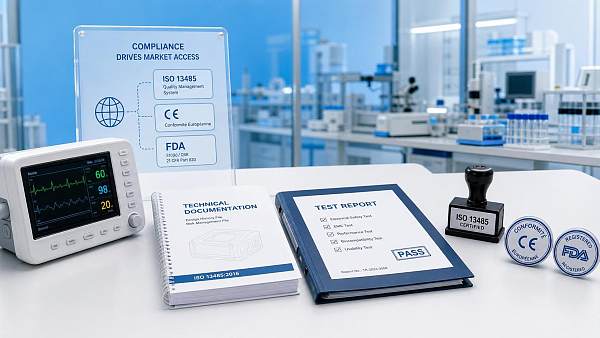
Likewise, an ISO 13485 certificate concerns a medical-device quality management system; it does not set the product’s warranty duration or guarantee that every failure qualifies for free replacement. CE marking, where applicable, is not a promise of lifetime service. Regulatory documentation and commercial warranty terms answer different questions.
The warranty also does not replace complaint handling or safety reporting. If a failure could affect patient safety, remove the instrument from use, retain relevant evidence, and follow applicable reporting and escalation procedures. A dispute over repair charges should not delay a necessary safety response.
Put the enforceable terms beside the price
Before an order is confirmed, obtain a dated warranty document that identifies the covered product models and the responsible legal entity. This is especially important when the exporter, brand owner, and manufacturer are different companies. The party accepting payment may not be the party authorized to approve repairs.
The purchase agreement should resolve the details that materially affect recovery: the start date, defect coverage, exclusions, required evidence, claim deadlines, remedies, freight allocation, and service location. It should also establish which document prevails if the quotation, website, warranty card, and purchase terms conflict.
A hypothetical comparison illustrates the difference. One offer provides 24 months from shipment but requires all returns to an overseas factory at the purchaser’s expense. Another provides 12 months from delivery, with a defined claim-assessment deadline and supplier-funded replacement freight for accepted defects. Neither is automatically better. The judgment depends on instrument value, expected stockholding time, availability of spares, and the likely cost of pursuing a claim.
The most useful warranty is therefore not simply the longest. It is a product-specific commitment that states when protection starts, what constitutes a covered failure, how responsibility is determined, and how a remedy reaches the purchaser. If those terms remain unclear, the advertised duration provides little basis for judging the strength of the offer.
Recommended News
 Nov 04, 2026How to choose medical devices that fit clinical workflowsMedical devices selection guide: learn how to assess clinical workflows, usability, interoperability, safety, and total costs to make a confident choice.
 Oct 30, 2026FDA Early Alert: Medline Recalls or Corrects All Branded Hospital Beds and AccessoriesMedline hospital bed recall: Explore the reported FDA early alert, potential supply impacts and practical steps for healthcare facilities and suppliers.
 Oct 29, 2026How to estimate the lifetime cost of medical technology equipmentEstimate the lifetime cost of medical technology equipment, from purchase and maintenance to downtime and disposal. Compare suppliers, uncover hidden costs, and make smarter procurement decisions.
 Oct 20, 2026AHA Backs Risk-Based Approach in FDA Feedback on Generative AI Medical DevicesAHA backs a risk-based FDA framework for generative AI medical devices. Explore what flexible oversight could mean for patient safety, innovation, and hospital adoption.
 Nov 17, 2026Do Health Technology Vendors Offer Overseas Installation Support?Do health technology vendors provide installation support overseas? Explore support options, hidden costs, and contract essentials to secure a safe, reliable deployment.
 Nov 15, 2026How Long Does It Take to Qualify a New Medical Technology Supplier?How long does it take to qualify a new medical technology supplier? Explore timelines, audits, and validation steps to reduce delays and plan supplier approval with confidence.
 Nov 14, 2026What Warranty Period Do Overseas Suppliers Offer for Surgical Tools?What is the warranty period for surgical instruments from overseas? Compare 12-month, multi-year and lifetime terms, uncover exclusions, and learn what to verify before you buy.
 Nov 13, 2026How Does Medical Device Testing Differ in the EU and North America?Do medical devices require different testing in EU versus North America? Explore EU, US and Canadian requirements to reuse evidence, close compliance gaps and avoid costly retesting.
 Sep 10, 2026Do Health Monitoring Devices Need Local Approval Before Import?Do health monitoring devices need local regulatory approval before import? Explore classifications, market access, labels, software, and compliance steps for safer global launches.
 Sep 07, 2026How Often Should Medical Information Systems Be Updated for Compliance?How often should medical information systems be updated for compliance? Explore risk-based update schedules, security patches, access reviews, testing, and audit-ready documentation.
 Sep 01, 2026Is Digital Health Data Interoperable Across Hospital Platforms?Is digital health data interoperable across different hospital platforms? Explore standards, security, workflows, and practical steps for safer connected care.
 Aug 31, 2026How to verify a diagnostic medical equipment manufacturer's quality systemDiagnostic medical equipment manufacturer quality system verification: uncover essential checks for ISO 13485, traceability, CAPA, risk management, and supplier control.
![]() Aug 14, 2026China temporarily bans the export of helium, putting global medical and semiconductor supply chains under pressureChina’s temporary helium export ban is straining global medical imaging and chip supply chains. See how MRI, semiconductor, and logistics teams can adapt fast.
 Aug 10, 2026FDA Sets eSTAR Filing Rule for China IVD ExportsFDA Sets eSTAR Filing Rule for China IVD Exports: learn how the new FDA eSTAR requirement affects Chinese IVD manufacturers, compliance documents, and U.S. shipment access.
 Aug 09, 2026Patient Monitoring Equipment Research: Which Metrics Matter Most Before You Buy?Patient monitoring equipment research starts with the right metrics. Learn how to compare accuracy, alarms, connectivity, and lifecycle cost before you buy.
 Jul 28, 2026Healthcare Equipment Research in Europe: Key Market Shifts and Buyer SignalsHealthcare equipment research Europe reveals how regulation, procurement, workflow pressure, and service expectations are reshaping buyer decisions across key healthcare markets.
 Jul 11, 2026Compact Medical Technology Solutions for Small Clinics: What to Compare Before BuyingCompact medical technology solutions for small clinics: compare space fit, throughput, connectivity, maintenance, and long-term cost before you buy. Make a smarter, lower-risk equipment decision.
 Jul 10, 2026Medical Technology Solutions Price Guide: What Drives Cost and How to BudgetMedical technology solutions price guide covering key cost drivers, hidden fees, and smart budgeting methods to compare vendors, control total ownership costs, and approve with confidence.
 Jul 09, 2026Medical Supply Chain Risks: How to Prevent Delays in Regulated Device SourcingMedical supply chain risks can cause costly sourcing delays in regulated devices. Learn practical ways to prevent disruption, improve compliance, and keep global procurement moving.
 Jul 08, 2026Medical Device Specification Analysis: Which Performance Parameters Matter Most in Evaluation?Product specification analysis medical devices starts with the parameters that truly affect safety, accuracy, software readiness, and long-term reliability—learn what to prioritize before you evaluate.
 Jul 06, 2026Medical Regulatory for Devices: Which Certifications Matter Before Market Entry?Medical regulatory for devices starts before launch. Learn which certifications—ISO 13485, CE marking, FDA pathways, and risk standards—matter most for faster, safer market entry.
 Jul 03, 2026Category Comparison Under FDA Requirements: How to Evaluate Product Class DifferencesCategory comparison FDA requirements explained: learn how to assess product class differences, avoid costly pathway mistakes, and make faster, smarter regulatory decisions.
 Jul 02, 2026How to Evaluate a Medical Technology Supplier for Quality, Lead Time, and ComplianceMedical technology supplier evaluation made simple: learn how to compare quality systems, lead time reliability, and compliance readiness to reduce risk and choose with confidence.
 Jul 02, 2026How Diagnostic Medical Equipment Supports Better Care Coordination Across Clinical TeamsDiagnostic medical equipment for care coordination helps clinical teams share data faster, reduce delays, and improve outcomes. See how connected diagnostics strengthen workflow efficiency.
{item.publish_time}{item.title}{item.description}