


Search News
Global Industrial Intelligence Hub (GIIH)Industry Portal
Global Industrial Intelligence Hub (GIIH)Status
Standard Access
Upgrade to PremiumNewsAsian Logistics Conference Announces Fuel and Cross-Border Freight Initiatives
Time
Click Count
The 16th Asian Logistics, Maritime and Aviation Conference concluded on 17 November 2026 with announcements covering sustainable aviation fuel, a new cross-border freight corridor and Hong Kong’s second group of partner ports.
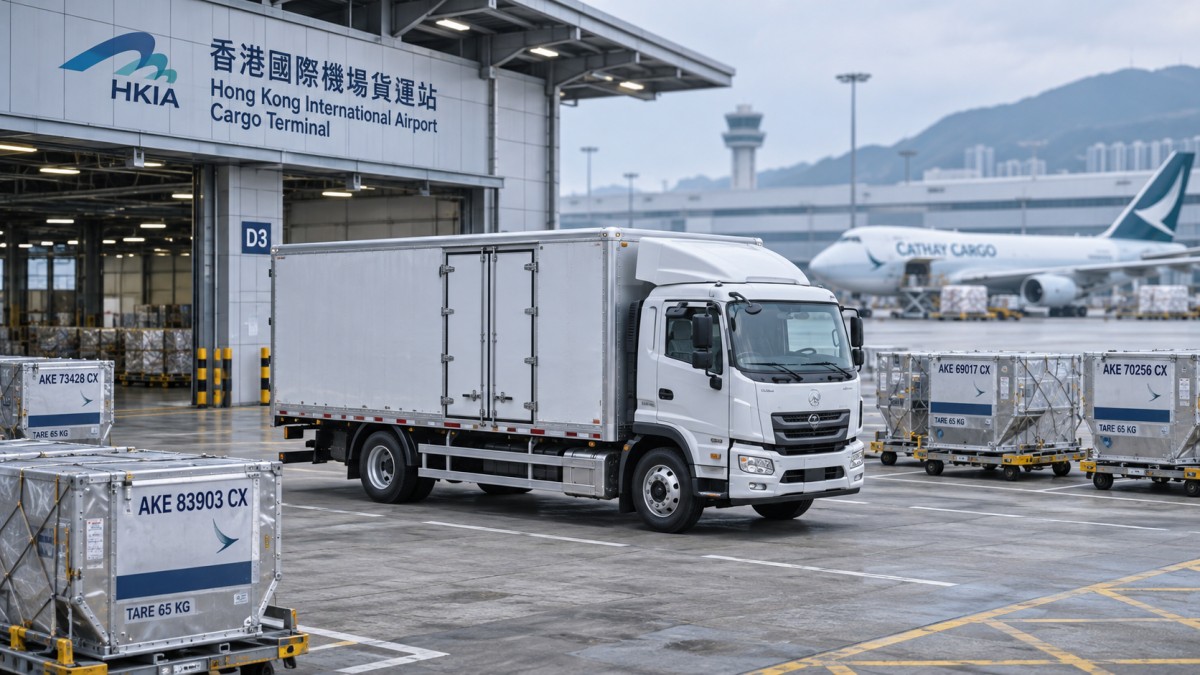
Airport Authority Hong Kong signed a memorandum of understanding with Hong Kong and China Gas and a third partner to advance the development of a sustainable aviation fuel blending facility in support of a 2030 target. The conference also announced the establishment of a corridor linking Vietnam, Guangxi and Hong Kong, under which Vietnamese cargo can travel by road to Hong Kong in approximately 30 hours before leaving by air.
For transport operators and cargo owners, the announcements address two different parts of the logistics chain: the availability of aviation fuel infrastructure and the movement of goods between road and air services. Each initiative has reached a different stage, so their immediate implications should be read separately.

A proposed step towards aviation fuel blending
The memorandum sets out cooperation on a blending facility for sustainable aviation fuel. Blending is relevant to the supply chain because it concerns the preparation of fuel for aviation use, rather than the provision of aircraft or freight services themselves.
The agreement signals an intention to advance the facility, but it does not in itself establish when construction will begin or when fuel will be available. The contribution to the 2030 target will depend on how the project develops and on the capacity and operating arrangements eventually put in place.
Airlines and fuel suppliers will therefore have different questions about the project. Airlines may look for details on when blended fuel could become available, while suppliers may focus on the facility’s capacity and how it will connect with fuel supply arrangements. Further announcements about the project’s design and timetable will help clarify its potential role.
Road-to-air corridor links Vietnamese cargo with Hong Kong
The newly established corridor combines road transport through Guangxi with air export from Hong Kong. It also uses the cross-border single-lock scheme. The stated road journey of approximately 30 hours gives cargo owners a reference point for the inland leg; it is not a total delivery time to the final destination.
The distinction matters when assessing the service. A shipment still needs to move through the road-to-air handover and onward air transport. For freight forwarders, the practical value of the corridor will depend in part on how reliably those stages connect and whether the overall timing fits a customer’s shipment requirements.
The single-lock arrangement is part of the announced route, but the information released with the outcome does not establish a specific saving in cost or transit time attributable to it. The clearest current development is the formal establishment of a route that combines the scheme with road and air transport.
For exporters, the approximately 30-hour road leg may be relevant when comparing transport arrangements. A fuller assessment would also require details such as service availability, handling arrangements and the time needed for the complete journey. Those factors will determine how the corridor works for particular shipments.
Second group of partner ports announced
The conference also announced Hong Kong’s second group of partner ports. The announcement adds a maritime element to the conference outcomes, although the individual ports and the scope of their cooperation were not specified.
Further details about the participating ports and planned activities would show how the partnerships relate to shipping services and the wider movement of cargo. For now, the announcement establishes the addition of a second group without defining its operational effects.
Recommended News
 Nov 18, 2026Asian Logistics Conference Announces Fuel and Cross-Border Freight InitiativesAsian Logistics Conference unveils sustainable aviation fuel plans, a Vietnam–Hong Kong freight corridor and new partner ports. Explore what they mean for cargo.
 Nov 11, 2026European Road Freight Contract and Spot Rate Indices Hit Record HighsEuropean road freight contract and spot rates hit record highs in Q3 2026. Discover how rising diesel costs are affecting carriers and shippers.
 Nov 08, 2026US Forces Disable Cargo Ship in Gulf of Oman, Central Command SaysUS forces disabled the cargo ship M/V Huda in the Gulf of Oman, Central Command says. Explore the potential impact on maritime security and shipping.
 Nov 01, 2026Beijing Hydrogen Roadmap Targets Industry Chain Scale Above RMB 40 Billion by 2030Beijing's hydrogen roadmap targets an industry chain worth over RMB 40 billion by 2030. Explore its vehicle, refueling and supply chain goals.
 Oct 29, 2026Prologis 2027 Supply Chain Outlook Highlights Delivery and Energy PressuresPrologis 2027 Supply Chain Outlook reveals how faster delivery and rising energy demand are reshaping warehouse and logistics planning worldwide.
 Oct 26, 2026How to use application environment analysis to set sourcing criteriaUse application environment analysis for sourcing teams to set measurable criteria, verify supplier claims, and reduce purchasing risk. Learn how to source with confidence.
 Oct 25, 2026US Trucking Contract Rate Growth Holds Above 10% as Carriers Seek to Recover LossesUS trucking contract rate growth holds above 10% as carriers seek to recover losses. Explore what this trend could mean for freight budgets, contract negotiations and capacity planning.
 Oct 23, 2026Which automotive suppliers are eligible for IATF 16949 certification?Explore IATF 16949 automotive standards to discover which suppliers qualify for certification, avoid costly scope errors, and plan your next steps with confidence.
 Oct 22, 2026NVIDIA and Supply Chain Partners Expand Capacity to Accelerate AI InfrastructureExplore NVIDIA’s reported AI infrastructure capacity deals and learn how substrate, packaging and testing commitments could reshape supply chain planning and delivery confidence.
 Nov 12, 2026How to manage temperature excursions in biotech logistics shipmentsStrengthen biotech logistics with practical steps to manage temperature excursions, assess product integrity, and prevent repeat incidents. Explore the guide to protect shipment quality.
 Nov 12, 2026When is a dedicated courier worth the cost in biotech logistics?Biotech logistics: Is a dedicated courier worth the premium? Discover how sample value, timing, temperature control, and risk reduction can justify the cost—and when standard service is enough.
 Nov 11, 2026When is a dedicated courier worth the cost in biotech logistics?Biotech logistics: Is a dedicated courier worth the premium? Discover how sample value, timing, temperature control, and risk reduction can justify the cost—and when standard service is enough.
 Nov 11, 2026How to manage temperature excursions in biotech logistics shipmentsStrengthen biotech logistics with practical steps to manage temperature excursions, assess product integrity, and prevent repeat incidents. Explore the guide to protect shipment quality.
 Oct 10, 2026How to reduce supplier risk in industrial sourcing for automotive industryIndustrial sourcing for automotive industry: reduce supplier risk with proven methods for capability checks, sub-tier visibility, continuity planning, and change control.
 Oct 07, 2026EU Customs Code Takes Effect Nov. 1, Making Platforms Responsible ImportersEU Customs Code reform takes effect November 1, 2026, making non-EU e-commerce platforms responsible importers. Learn how VAT, compliance, and customs rules may affect EU-bound sellers.
 Sep 24, 2026When does supply chain management software pay for itself?Supply chain management software pays for itself by reducing avoidable inventory, freight, stockout, and planning costs. Learn how to build a credible ROI case.
 Sep 20, 2026How supplier compliance monitoring reduces disruption riskSupplier compliance monitoring helps teams spot risks early, prevent costly disruptions, strengthen supplier resilience, and protect operational continuity.
 Sep 16, 2026What makes a procurement research platform reliable for supplier sourcing?A procurement research platform for sourcing helps teams identify credible suppliers, assess risk, verify evidence, and build defensible shortlists for smarter decisions.
 Sep 07, 2026How to compare cross border logistics services for reliable deliveryCompare cross border logistics services with confidence. Learn how to assess customs, tracking, costs, final-mile coverage, and exception handling for reliable delivery.
 Sep 05, 2026How to Compare an Order Fulfillment Pricing Model by Total CostOrder fulfillment pricing model guide: compare total costs across storage, shipping, returns, fees, and service levels to select the right fulfillment partner.
 Sep 07, 2026Sourcing Semi-Trailer Spare Parts Without Compromising Brake Drum QualitySemi trailer spare parts sourcing guide: choose reliable brake drums with verified fitment, traceability, and quality control to protect safety, uptime, and costs.
 Aug 28, 2026France Lowers Foreign Investment Review Threshold to 10% for Non-EU BuyersFrance lowers its foreign investment review threshold to 10% for non-EU buyers, reshaping strategic deals, compliance planning, and cross-border investment.
 Aug 25, 2026Vietnam Cuts Anti-Dumping Duty on Chinese H-Beam Steel to 6.78%Vietnam cuts anti-dumping duty on Chinese H-beam steel to 6.78%, reshaping import costs and sourcing decisions in Southeast Asia. See what buyers and traders should do next.
 Aug 21, 2026France Lowers Foreign Investment Review Threshold to 10% for Non-EU BuyersFrance lowers its foreign investment review threshold to 10% for non-EU buyers, reshaping deals in strategic sectors. See what this means for investors, timelines, and cross-border transaction risk.
{item.publish_time}{item.title}{item.description}