


Search News
Global Industrial Intelligence Hub (GIIH)Industry Portal
Global Industrial Intelligence Hub (GIIH)Status
Standard Access
Upgrade to PremiumNewsJiangsu Tightens Overseas Patent Rules for Exporters
Time
Click Count
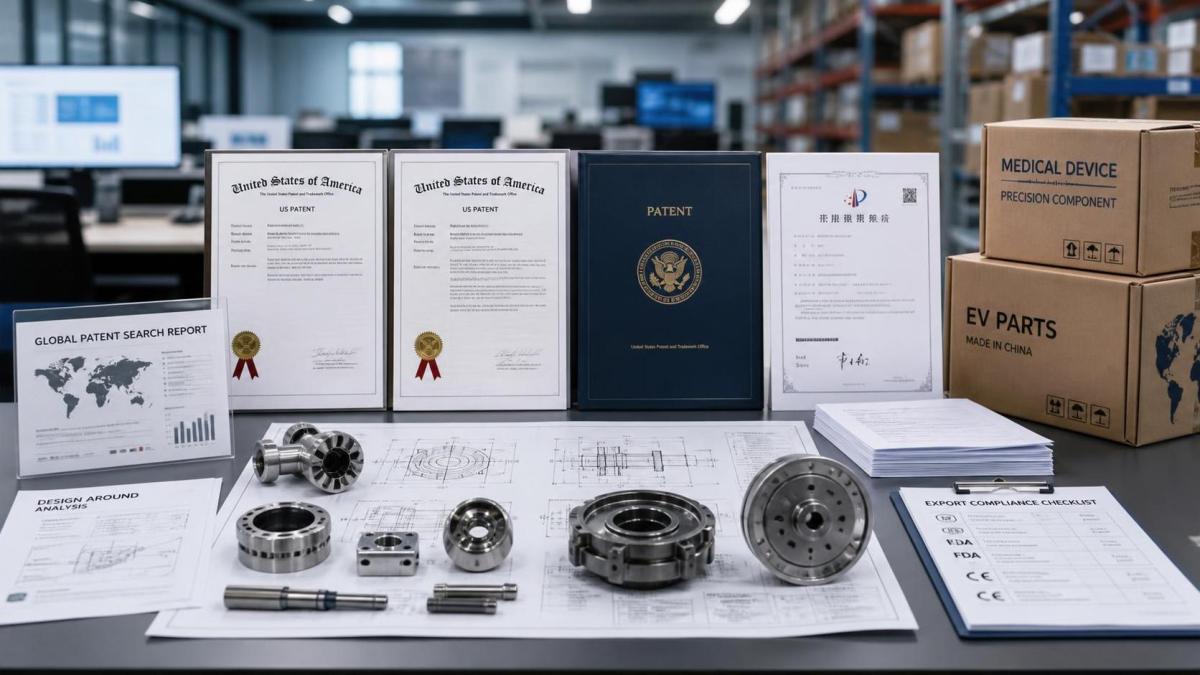
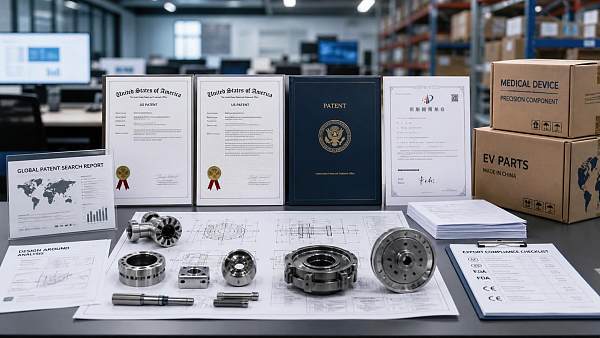
On July 16, 2026, the Jiangsu provincial government released an implementation opinion aimed at strengthening overseas patent planning, setting out 15 measures across five areas including overseas warning, planning support, and rights protection assistance. For exporters, the practical significance is immediate: patent searches in target countries, design-around work, and localized patent filings are being pushed closer to the front end of market entry, especially for medical devices, EV components, and precision parts suppliers serving Europe, the United States, and Southeast Asia.

What the Jiangsu policy formally sets out
The confirmed facts are limited but clear. The policy was issued on July 16, 2026, under the title of an implementation opinion on strengthening overseas patent planning. It introduces 15 measures spanning five aspects, including overseas warning, support for patent planning, and assistance with rights protection. The policy also explicitly requires export companies to strengthen patent searches in destination markets, carry out design-around efforts, and pursue localized patent applications.
The stated business impact is also direct in the source information provided: the measures affect the technical compliance threshold and infringement risk for foreign trade companies entering key markets such as Europe, the United States, and Southeast Asia. For exporters in intellectual-property-sensitive categories such as medical devices, EV components, and precision parts, this is described as a substantive precondition tied to procurement access.
Where the pressure points may appear in export operations
Export manufacturers may face earlier IP screening in go-to-market decisions
From an industry perspective, manufacturers selling finished products abroad are likely to feel the impact first because the policy explicitly emphasizes target-country patent searches and design-around requirements. The pressure point is not only legal review, but also product definition, engineering adjustment, and launch timing. What deserves closer attention is whether a product can clear patent-related checks before quotation, sampling, or shipment planning begins.
Component and precision part suppliers may see procurement access become more documentation-driven
For suppliers of EV components and precision parts, the policy matters because procurement access is described as being affected in high-IP-sensitivity categories. Analysis shows that the commercial effect may show up in customer qualification, technical documentation review, and communication around infringement exposure. Even when a supplier is not the final brand owner, patent-related preparedness may become part of how buyers assess delivery risk.
Medical device exporters may need tighter alignment between product entry and local filing strategy
Medical device exporters are specifically among the categories highlighted in the input information. Observably, the emphasis on localized patent applications signals that overseas market entry cannot be treated only as a sales or registration issue. The business concern may extend to how product structure, target market sequence, and patent filing steps are coordinated before procurement or channel expansion moves forward.
Service providers in trade and supply chain support may face more pre-shipment coordination work
Supply chain and export service participants may also be affected indirectly. Analysis shows that when patent searches, design-around review, and local filing become upstream requirements, coordination demands can increase across order preparation, supporting documents, customer responses, and delivery scheduling. The change is less about one isolated legal task and more about how multiple functions line up before market entry.
What companies should watch now
Track how official language turns into operational expectations
The policy text provided gives a clear direction, but companies should distinguish between the policy signal and the exact form of implementation in daily business. What deserves closer attention is whether follow-up official expressions, guidance, or related rule interpretations further define how exporters are expected to demonstrate patent search, design-around, or localized filing work.
Prioritize markets and product lines with higher infringement exposure
Analysis shows that not every export line will face the same level of urgency. The policy specifically points to Europe, the United States, and Southeast Asia as key markets, and highlights medical devices, EV components, and precision parts as sensitive categories. For companies operating across multiple destinations or SKUs, the practical focus is likely to fall first on products and markets where procurement access or infringement disputes could have the highest commercial impact.
Prepare for more front-loaded communication with buyers and internal teams
Because the policy links patent preparation to market access and procurement conditions, exporters may need stronger coordination between sales, engineering, compliance, and customer-facing teams. Observably, customer communication could shift earlier in the cycle, especially where buyers want reassurance on patent risk, design adjustments, or local filing status before committing to sourcing decisions.
Review whether lead times and delivery commitments remain realistic
Strengthened patent search and design-around expectations may affect the sequence of product launch and export execution. From an industry perspective, companies should pay attention to whether current quotation cycles, sample confirmation, and shipment planning leave enough room for the added compliance work implied by the policy direction. This is particularly relevant where procurement access depends on proving lower infringement risk.
Why this reads as a policy signal with operational weight
Analysis shows that this development is more than a general statement about intellectual property awareness. The source information directly ties overseas patent planning to market access thresholds and infringement exposure in major export destinations. That gives the policy practical weight for companies already operating in IP-sensitive sectors.
At the same time, it is more appropriate to understand this as a strong policy signal rather than a fully measurable market outcome at this stage. The input confirms the direction and the stated impact areas, but it does not yet establish how enforcement, buyer behavior, or specific compliance standards will evolve in each export scenario. That is why continued observation remains necessary.
How this update is best understood for now
The immediate takeaway is that overseas patent preparation is being pushed closer to the center of export readiness, not left as a downstream legal formality. For companies in medical devices, EV components, and precision parts, the policy points to a more demanding link between intellectual property planning and procurement access.
A neutral reading is that this is neither a short-lived procedural adjustment nor a completed market shift. It is better understood as an operational policy signal with near-term relevance and longer-term implications, especially for exporters entering Europe, the United States, and Southeast Asia under tighter technical and infringement-related scrutiny.
Basis of this article and points for continued verification
This article is based on the user-provided news title, event date, and event summary. The available information indicates that the Jiangsu provincial government issued an implementation opinion on July 16, 2026 and introduced 15 measures related to overseas patent planning, but no specific official source link was provided in the input, so the exact official document link still requires continued verification.
For this type of industry update, commonly relevant source categories may include official government notices, company disclosures, industry association releases, authoritative media reporting, and standards or compliance-related documents. The areas that remain worth tracking are any follow-up official clarifications, how market participants interpret procurement access requirements in practice, and whether patent search, design-around, and localized filing expectations become more explicitly embedded in export workflows.
Recommended News
 Sep 24, 2026When does supply chain management software pay for itself?Supply chain management software pays for itself by reducing avoidable inventory, freight, stockout, and planning costs. Learn how to build a credible ROI case.
 Sep 20, 2026How supplier compliance monitoring reduces disruption riskSupplier compliance monitoring helps teams spot risks early, prevent costly disruptions, strengthen supplier resilience, and protect operational continuity.
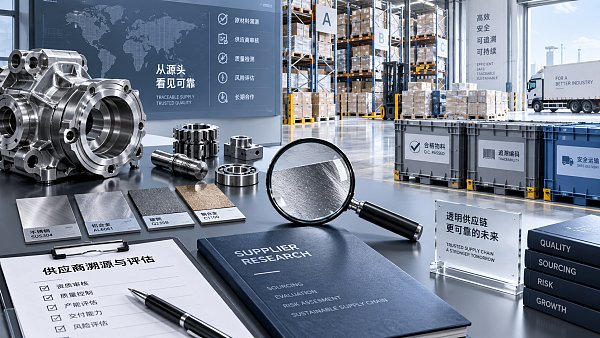
 Sep 16, 2026What makes a procurement research platform reliable for supplier sourcing?A procurement research platform for sourcing helps teams identify credible suppliers, assess risk, verify evidence, and build defensible shortlists for smarter decisions.
 Sep 07, 2026How to compare cross border logistics services for reliable deliveryCompare cross border logistics services with confidence. Learn how to assess customs, tracking, costs, final-mile coverage, and exception handling for reliable delivery.
 Sep 05, 2026How to Compare an Order Fulfillment Pricing Model by Total CostOrder fulfillment pricing model guide: compare total costs across storage, shipping, returns, fees, and service levels to select the right fulfillment partner.
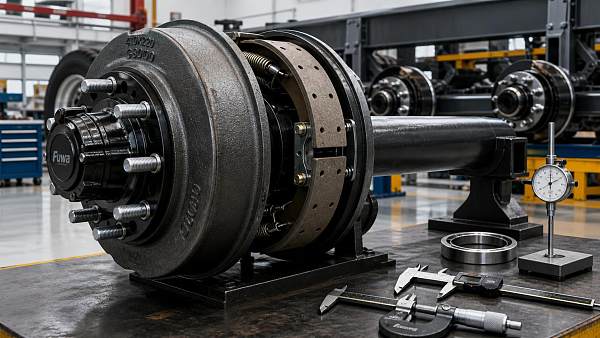
 Sep 07, 2026Sourcing Semi-Trailer Spare Parts Without Compromising Brake Drum QualitySemi trailer spare parts sourcing guide: choose reliable brake drums with verified fitment, traceability, and quality control to protect safety, uptime, and costs.
 Aug 28, 2026France Lowers Foreign Investment Review Threshold to 10% for Non-EU BuyersFrance lowers its foreign investment review threshold to 10% for non-EU buyers, reshaping strategic deals, compliance planning, and cross-border investment.
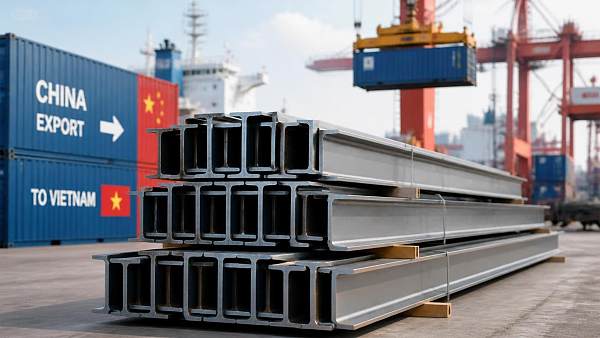
 Aug 25, 2026Vietnam Cuts Anti-Dumping Duty on Chinese H-Beam Steel to 6.78%Vietnam cuts anti-dumping duty on Chinese H-beam steel to 6.78%, reshaping import costs and sourcing decisions in Southeast Asia. See what buyers and traders should do next.
 Aug 21, 2026France Lowers Foreign Investment Review Threshold to 10% for Non-EU BuyersFrance lowers its foreign investment review threshold to 10% for non-EU buyers, reshaping deals in strategic sectors. See what this means for investors, timelines, and cross-border transaction risk.
 Aug 20, 2026BRICS Reaches Consensus on Green Minerals Supply Chains and Wider Local-Currency TradeBRICS green minerals supply chains and wider local-currency trade could reshape industrial exports, settlement, and compliance. See what Chinese exporters should watch next.
 Aug 19, 2026RCEP Steel Conference in Nanning Highlights Green Low-Carbon Technology CooperationRCEP Steel Conference in Nanning highlights green low-carbon technology cooperation, tariff rules, and compliance trends shaping steel exports, supply chains, and new regional business opportunities.
 Aug 18, 2026Second Strait of Hormuz Closure Raises Supply Chain Risks as Oil and Freight Costs ClimbSecond Strait of Hormuz closure raises supply chain risks as oil and freight costs climb. Explore impacts on shipping, pricing, and key export sectors now.
 Aug 16, 2026EU Battery Passport Becomes Mandatory for Exported Storage Products on August 18EU Battery Passport becomes mandatory on August 18, 2026 for exported storage products above 2kWh. Learn what Chinese exporters, integrators, and OEMs must do to stay compliant.
 Aug 15, 2026China Widens Cross-Border Cash Pool Access for Multinationals on Sept. 14China widens cross-border cash pooling for multinationals on Sept. 14, boosting treasury efficiency, liquidity, and payment coordination for China-linked businesses.
 Aug 13, 2026EU Ends Low-Value Parcel Duty ExemptionEU ends the low-value parcel duty exemption, reshaping China-to-EU e-commerce costs, customs compliance, and delivery models for exporters and logistics teams.
 Aug 12, 2026Jiangsu Tightens Overseas Patent Rules for ExportersJiangsu Tightens Overseas Patent Rules for Exporters: learn how new patent search, design-around, and local filing demands may reshape market access in the US, Europe, and Southeast Asia.
 Aug 11, 2026EU CBAM Expansion Adds Hydrogen Products, Pre-Filing Starts Oct 2026EU CBAM expansion adds hydrogen products and starts pre-filing in Oct 2026. Learn how Chinese exporters can prepare carbon data, electricity records, and compliance workflows now.
 Jul 15, 2026Global Shipping Logistics Customs Clearance: Common Delays and How to Prevent ThemGlobal shipping logistics customs clearance made simple: learn the most common delay triggers, reduce document and HS code errors, and keep cross-border shipments moving faster.
 Jul 13, 2026Cloud Project Specification Planning: How to Prevent Scope Gaps Before Procurement StartsCloud project specification planning helps teams define scope, compliance, integrations, and cost drivers before procurement begins—reducing risk, avoiding change requests, and improving vendor fit.
 Jul 12, 2026Logistics Management Analytics: Which KPIs Improve Delivery and Inventory Control?Logistics management analytics helps identify the KPIs that truly improve delivery speed, inventory accuracy, and service reliability across complex supply chains.
 Jul 11, 2026Ecommerce Logistics Sourcing Guide: How to Compare Lead Time, MOQ, and Shipping CostsEcommerce logistics sourcing guide for buyers comparing lead time, MOQ, and shipping costs. Learn how to reduce landed cost risk, improve supplier selection, and make smarter sourcing decisions.
 Jul 10, 2026Supply Chain Bottleneck Analysis for Exporters: Where Delays Happen and How to RespondSupply chain bottleneck analysis for exporters reveals where delays start—from suppliers and documentation to ports and delivery—and shows practical ways to respond faster, cut risk, and protect margins.
 Jul 09, 2026Supply Chain Intelligence Europe: Which Data Signals Matter for Sourcing Decisions?Supply chain intelligence Europe: discover the key data signals shaping smarter sourcing decisions, from supplier risk and lead times to compliance, costs, and logistics performance.
![]() Jul 07, 2026Supply Chain Intelligence and ISO Standards: How to Align Data, Traceability, and ComplianceSupply chain intelligence ISO standards explained: learn how to align data, traceability, and compliance to reduce risk, speed audits, and build resilient operations.
Jul 07, 2026Supply Chain Intelligence and ISO Standards: How to Align Data, Traceability, and ComplianceSupply chain intelligence ISO standards explained: learn how to align data, traceability, and compliance to reduce risk, speed audits, and build resilient operations.