


Search News
Global Industrial Intelligence Hub (GIIH)Industry Portal
Global Industrial Intelligence Hub (GIIH)Status
Standard Access
Upgrade to PremiumNewsReplacement parts sourcing is moving closer to regional hubs
Time
Click Count
Replacement parts sourcing is moving closer to regional hubs
As replacement parts sourcing shifts toward regional hubs, buyers and distributors are rethinking supply resilience, lead times, and cost control. This trend is also opening new opportunities for sustainable technology, recycling solutions, and eco-friendly solutions across industrial and automotive markets. For procurement teams evaluating replacement parts, vehicle upgrades, and car accessories, regionalization is becoming a practical strategy that links operational efficiency with environmental innovation and long-term competitiveness.
For most procurement teams, the key question is no longer whether global sourcing still matters, but where regional sourcing creates a clearer business advantage. In many categories of replacement parts, the answer is increasingly straightforward: sourcing closer to demand centers can reduce lead-time risk, improve service levels, and make inventory planning more predictable. For distributors, agents, and business evaluators, regional hubs are becoming an important operating model because they help balance supply continuity with cost discipline.
Why are replacement parts buyers moving toward regional hubs?
The shift is being driven by practical pressures rather than theory. Over the past few years, replacement parts buyers across automotive, industrial equipment, and aftermarket channels have had to deal with shipping disruptions, volatile freight costs, customs delays, and unstable replenishment cycles. In this environment, a sourcing model built entirely on distant supply bases can expose buyers to service failures that are more expensive than the part itself.
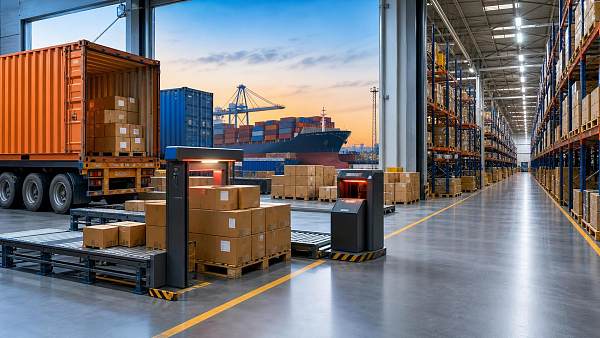
Regional hubs help solve this by placing sourcing, warehousing, light assembly, or distribution closer to end markets. That does not always mean abandoning overseas manufacturing. In many cases, companies still buy globally, but they regionalize stocking, final configuration, quality control, and replenishment decisions. This creates a more flexible supply structure.
For replacement parts specifically, this matters because demand is often fragmented and time-sensitive. A delayed shipment of high-volume components may be manageable, but a delayed critical part can stop maintenance operations, keep vehicles off the road, or damage distributor relationships. Regional hubs reduce this exposure by shortening the response distance between supplier inventory and customer demand.
What business problems does regional parts sourcing actually solve?
For target readers such as sourcing professionals, market researchers, and commercial decision-makers, regionalization is valuable only if it solves measurable problems. The most common ones include:
- Long and inconsistent lead times: Regional inventory positioning can reduce replenishment uncertainty and improve order promise accuracy.
- High safety stock requirements: If supply becomes more predictable, buyers may reduce excess inventory tied up in slow or medium-moving SKUs.
- Rising logistics costs: Although unit purchase prices may not always be lower, the total landed cost can improve when urgent freight, stockouts, and returns are reduced.
- Aftermarket service pressure: Dealers, distributors, and service networks need faster access to parts to maintain customer trust.
- Regulatory and localization complexity: Regional hubs can simplify compliance handling, labeling, packaging, and market-specific product adaptation.
In other words, the value of regional hubs is not limited to transport savings. Their bigger contribution is operational control. For businesses that depend on service speed and parts availability, that control can directly affect revenue retention and channel performance.
How should buyers compare global sourcing with regional hub models?
A useful mistake to avoid is comparing only unit price. Many replacement parts categories look cheaper under a distant sourcing model until buyers account for the hidden costs of variability. A more realistic evaluation framework should include the following factors:
- Total landed cost: Purchase price, freight, duties, inland transport, handling, and returns.
- Lead-time stability: Not just average transit time, but how often deliveries miss target windows.
- Inventory carrying cost: The cash impact of stock buffers needed to protect service levels.
- Stockout cost: Lost orders, delayed repairs, idle assets, expedited shipments, and customer dissatisfaction.
- Quality and traceability: Inspection consistency, batch visibility, and warranty management.
- Channel responsiveness: How quickly distributors and agents can respond to demand spikes.
For procurement managers and business evaluators, the best sourcing decision often comes from segmenting parts by business criticality. Fast-moving universal parts, critical downtime-sensitive components, and market-specific accessories may each require a different sourcing approach. A hybrid model is often more effective than a complete shift in one direction.
Which replacement parts categories are most suitable for regionalization?
Not every product benefits equally from regional hub sourcing. The strongest candidates usually share one or more of these characteristics:
- High service urgency
- Frequent replacement cycles
- Demand volatility by region
- Need for market-specific packaging or compliance
- Strong aftermarket dependency
In automotive and mobility sectors, this often includes maintenance parts, selected wear components, retrofit kits, and certain car accessories linked to local consumer preferences. In industrial environments, filters, seals, connectors, sensors, repair kits, and maintenance consumables are often suitable for regional stocking or delayed final assembly.
Products with lower urgency, predictable demand, or high value density may still remain efficient under longer global supply routes. That is why category-level analysis is essential. Businesses should avoid treating all SKUs as if they carry the same service risk.
What does this mean for distributors, dealers, and regional channel partners?
For distributors, agents, and dealers, regionalization is more than a supply chain adjustment. It can reshape commercial positioning. Businesses that can provide faster parts availability, more reliable replenishment, and localized support often gain an advantage over competitors relying on longer import cycles.
This creates several channel opportunities:
- Higher fill rates: Better stock positioning improves order completion and repeat business.
- Stronger customer retention: Reliable parts access supports long-term service relationships.
- Expanded value-added services: Regional partners may offer kitting, labeling, returns handling, or technical support.
- Improved forecasting collaboration: Local demand signals can be captured and translated into better replenishment decisions.
For channel players evaluating future growth, the strategic question is whether they can evolve from being only a reseller into a regional service and inventory node. In many markets, that transition is becoming commercially attractive.
How does regional sourcing support sustainability and eco-friendly solutions?
The shift toward regional hubs also aligns with a broader push for sustainable technology and eco-friendly solutions. While regional sourcing alone does not automatically make a supply chain green, it can create conditions that support more sustainable operations.
Examples include:
- Reduced transport intensity: Shorter final delivery routes and fewer emergency shipments can lower emissions.
- Better returns and remanufacturing flows: Regional networks make it easier to collect used parts, cores, and recyclable materials.
- Support for recycling solutions: Companies can build local programs for component recovery, refurbishment, and material reuse.
- Less waste from overstocking: More responsive replenishment may reduce obsolete inventory and packaging waste.
In automotive aftermarket and industrial maintenance segments, this is especially relevant. Replacement parts strategies increasingly connect with circular economy goals, including remanufactured components, reusable packaging, and localized refurbishment. For procurement teams, environmental performance is no longer separate from sourcing strategy; in some sectors, it is becoming part of supplier qualification and brand value.
What risks should companies watch when shifting to regional hubs?
Regionalization brings benefits, but it is not risk-free. Buyers should assess several potential challenges before redesigning their sourcing footprint:
- Higher local operating costs: Warehousing, labor, and compliance may cost more in certain regions.
- Supplier fragmentation: Managing multiple regional nodes can increase coordination complexity.
- Data inconsistency: Without accurate demand visibility, companies may simply move inventory closer without improving planning.
- Quality variation: If multiple fulfillment points are used, quality control and traceability must remain standardized.
- Over-regionalization: Moving too much too quickly can reduce economies of scale and create unnecessary duplication.
The best response is disciplined implementation. Businesses should start with a clear view of service-level targets, SKU segmentation, and regional demand patterns. Regional hubs work best when they are built around measurable supply chain needs, not only around market narratives.
How can procurement teams decide if regional replacement parts sourcing is the right move?
A practical decision framework should begin with five questions:
- Which parts create the highest downtime or service risk if delayed?
- Which SKUs show recurring demand within specific regions?
- How much cost is currently tied to expedited freight, stockouts, and excess safety stock?
- Can regional partners support quality control, compliance, and returns management?
- Would a hybrid model outperform both fully centralized and fully localized sourcing?
For many companies, the answer will not be a full relocation of sourcing, but a layered structure: global manufacturing where scale matters, regional hubs where responsiveness matters, and local distribution where service matters. This model is particularly relevant for replacement parts, vehicle upgrades, and car accessories, where customer expectations often depend on availability more than on marginal purchase price differences.
Conclusion: regional hubs are becoming a practical sourcing advantage
Replacement parts sourcing is moving closer to regional hubs because buyers need more than low nominal costs; they need resilience, faster response, and better control over service outcomes. For procurement teams, distributors, and business evaluators, the real value of regionalization lies in balancing availability, total cost, and operational flexibility.
The trend also carries wider strategic importance. It supports more adaptive aftermarket models, creates new opportunities for recycling solutions and eco-friendly solutions, and helps businesses respond to a supply chain environment that is less predictable than before. Companies that evaluate this shift carefully, by SKU, region, and channel role, are more likely to build sourcing systems that are competitive not only today, but also in the next phase of industrial and automotive market change.
Recommended News
 Sep 24, 2026When does supply chain management software pay for itself?Supply chain management software pays for itself by reducing avoidable inventory, freight, stockout, and planning costs. Learn how to build a credible ROI case.
 Sep 20, 2026How supplier compliance monitoring reduces disruption riskSupplier compliance monitoring helps teams spot risks early, prevent costly disruptions, strengthen supplier resilience, and protect operational continuity.
 Sep 16, 2026What makes a procurement research platform reliable for supplier sourcing?A procurement research platform for sourcing helps teams identify credible suppliers, assess risk, verify evidence, and build defensible shortlists for smarter decisions.
 Sep 07, 2026How to compare cross border logistics services for reliable deliveryCompare cross border logistics services with confidence. Learn how to assess customs, tracking, costs, final-mile coverage, and exception handling for reliable delivery.
 Sep 05, 2026How to Compare an Order Fulfillment Pricing Model by Total CostOrder fulfillment pricing model guide: compare total costs across storage, shipping, returns, fees, and service levels to select the right fulfillment partner.
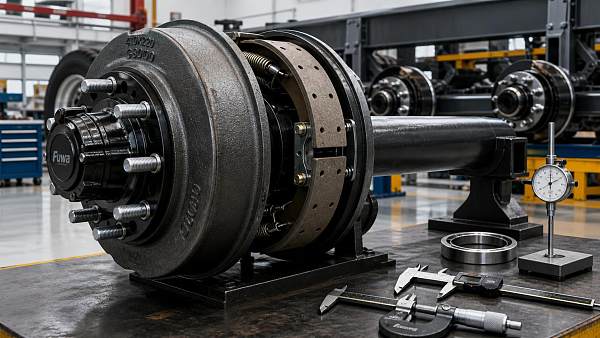
 Sep 07, 2026Sourcing Semi-Trailer Spare Parts Without Compromising Brake Drum QualitySemi trailer spare parts sourcing guide: choose reliable brake drums with verified fitment, traceability, and quality control to protect safety, uptime, and costs.
 Aug 28, 2026France Lowers Foreign Investment Review Threshold to 10% for Non-EU BuyersFrance lowers its foreign investment review threshold to 10% for non-EU buyers, reshaping strategic deals, compliance planning, and cross-border investment.
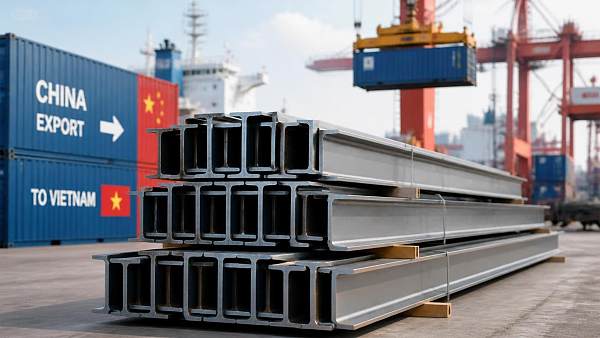
 Aug 25, 2026Vietnam Cuts Anti-Dumping Duty on Chinese H-Beam Steel to 6.78%Vietnam cuts anti-dumping duty on Chinese H-beam steel to 6.78%, reshaping import costs and sourcing decisions in Southeast Asia. See what buyers and traders should do next.
 Aug 21, 2026France Lowers Foreign Investment Review Threshold to 10% for Non-EU BuyersFrance lowers its foreign investment review threshold to 10% for non-EU buyers, reshaping deals in strategic sectors. See what this means for investors, timelines, and cross-border transaction risk.
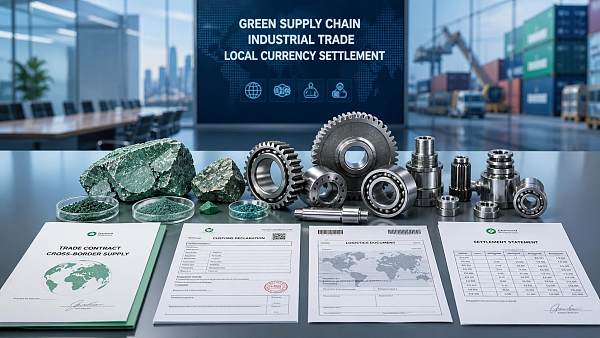
 Aug 20, 2026BRICS Reaches Consensus on Green Minerals Supply Chains and Wider Local-Currency TradeBRICS green minerals supply chains and wider local-currency trade could reshape industrial exports, settlement, and compliance. See what Chinese exporters should watch next.
 Aug 19, 2026RCEP Steel Conference in Nanning Highlights Green Low-Carbon Technology CooperationRCEP Steel Conference in Nanning highlights green low-carbon technology cooperation, tariff rules, and compliance trends shaping steel exports, supply chains, and new regional business opportunities.
 Aug 18, 2026Second Strait of Hormuz Closure Raises Supply Chain Risks as Oil and Freight Costs ClimbSecond Strait of Hormuz closure raises supply chain risks as oil and freight costs climb. Explore impacts on shipping, pricing, and key export sectors now.
 Aug 16, 2026EU Battery Passport Becomes Mandatory for Exported Storage Products on August 18EU Battery Passport becomes mandatory on August 18, 2026 for exported storage products above 2kWh. Learn what Chinese exporters, integrators, and OEMs must do to stay compliant.
 Aug 15, 2026China Widens Cross-Border Cash Pool Access for Multinationals on Sept. 14China widens cross-border cash pooling for multinationals on Sept. 14, boosting treasury efficiency, liquidity, and payment coordination for China-linked businesses.
 Aug 13, 2026EU Ends Low-Value Parcel Duty ExemptionEU ends the low-value parcel duty exemption, reshaping China-to-EU e-commerce costs, customs compliance, and delivery models for exporters and logistics teams.
 Aug 12, 2026Jiangsu Tightens Overseas Patent Rules for ExportersJiangsu Tightens Overseas Patent Rules for Exporters: learn how new patent search, design-around, and local filing demands may reshape market access in the US, Europe, and Southeast Asia.
 Aug 11, 2026EU CBAM Expansion Adds Hydrogen Products, Pre-Filing Starts Oct 2026EU CBAM expansion adds hydrogen products and starts pre-filing in Oct 2026. Learn how Chinese exporters can prepare carbon data, electricity records, and compliance workflows now.
 Jul 15, 2026Global Shipping Logistics Customs Clearance: Common Delays and How to Prevent ThemGlobal shipping logistics customs clearance made simple: learn the most common delay triggers, reduce document and HS code errors, and keep cross-border shipments moving faster.
 Jul 13, 2026Cloud Project Specification Planning: How to Prevent Scope Gaps Before Procurement StartsCloud project specification planning helps teams define scope, compliance, integrations, and cost drivers before procurement begins—reducing risk, avoiding change requests, and improving vendor fit.
 Jul 12, 2026Logistics Management Analytics: Which KPIs Improve Delivery and Inventory Control?Logistics management analytics helps identify the KPIs that truly improve delivery speed, inventory accuracy, and service reliability across complex supply chains.
 Jul 11, 2026Ecommerce Logistics Sourcing Guide: How to Compare Lead Time, MOQ, and Shipping CostsEcommerce logistics sourcing guide for buyers comparing lead time, MOQ, and shipping costs. Learn how to reduce landed cost risk, improve supplier selection, and make smarter sourcing decisions.
 Jul 10, 2026Supply Chain Bottleneck Analysis for Exporters: Where Delays Happen and How to RespondSupply chain bottleneck analysis for exporters reveals where delays start—from suppliers and documentation to ports and delivery—and shows practical ways to respond faster, cut risk, and protect margins.
 Jul 09, 2026Supply Chain Intelligence Europe: Which Data Signals Matter for Sourcing Decisions?Supply chain intelligence Europe: discover the key data signals shaping smarter sourcing decisions, from supplier risk and lead times to compliance, costs, and logistics performance.
![]() Jul 07, 2026Supply Chain Intelligence and ISO Standards: How to Align Data, Traceability, and ComplianceSupply chain intelligence ISO standards explained: learn how to align data, traceability, and compliance to reduce risk, speed audits, and build resilient operations.
Jul 07, 2026Supply Chain Intelligence and ISO Standards: How to Align Data, Traceability, and ComplianceSupply chain intelligence ISO standards explained: learn how to align data, traceability, and compliance to reduce risk, speed audits, and build resilient operations.