


Search News
Global Industrial Intelligence Hub (GIIH)Industry Portal
Global Industrial Intelligence Hub (GIIH)Status
Standard Access
Upgrade to PremiumNewsWhat Are Trucking Services and Which Shipping Needs Do They Cover?
Time
Click Count
Trucking services sit at the center of freight movement because they connect production sites, ports, distribution hubs, and final delivery points with a level of flexibility that rail, air, and ocean transport cannot fully replace.
For anyone tracking supply chain performance, trucking services matter not only as a transport function, but as a practical indicator of how goods actually move through industrial networks.
They cover a wide spectrum of shipping needs, from short urban deliveries to cross-border hauls, from palletized retail freight to temperature-sensitive medical cargo, and from scheduled replenishment to urgent recovery shipments.
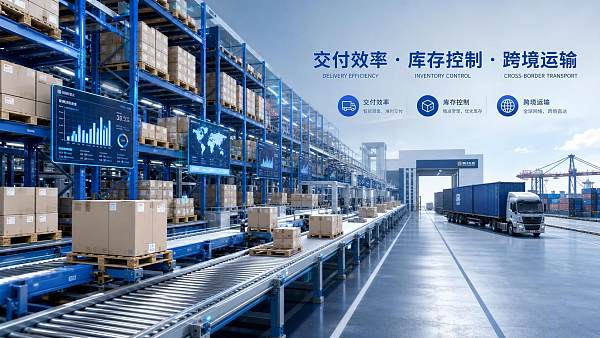
That breadth explains why logistics intelligence platforms such as GIIH pay close attention to road freight trends, capacity shifts, and delivery bottlenecks when assessing global trade efficiency.
Understanding what trucking services really include
At a basic level, trucking services refer to commercial road transport solutions used to move goods between origin and destination points.
That sounds simple, but the category is much broader than a truck picking up cargo and driving it somewhere else.
In practice, trucking services may include route planning, cargo consolidation, appointment scheduling, customs coordination, tracking, unloading support, and exception handling when conditions change.
They also operate across different load structures. A shipment may fill an entire trailer, share space with other freight, or require specialized equipment for weight, dimensions, or handling conditions.
This is why road freight often becomes the operational bridge between global transportation modes and local commercial reality.
Why the topic deserves attention now
Road transport is under pressure from several directions at once: cost volatility, labor constraints, tighter delivery windows, sustainability expectations, and increasing demand for shipment visibility.
At the same time, supply chains are becoming more distributed. Manufacturing, storage, and fulfillment are no longer concentrated in one geography.
As a result, trucking services have become more strategic. They influence inventory timing, customer service levels, landed cost, and even market-entry feasibility.
From GIIH’s logistics perspective, trucking is one of the clearest places where industrial signals become visible. Delays, equipment shortages, and route disruptions often reveal broader trade stress before formal reports do.
That makes trucking services worth studying not only for logistics planning, but also for market research, sourcing analysis, and operational risk monitoring.
Which shipping needs trucking services cover
The easiest way to understand trucking services is to view them through the shipping problems they solve.
Distance and network coverage
- Local delivery for warehouses, stores, construction sites, hospitals, and service points.
- Regional distribution between production plants and nearby markets.
- Long-haul transport linking states, provinces, or national corridors.
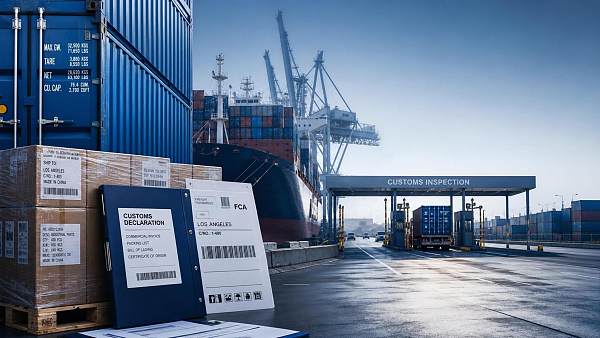
- Cross-border trucking for trade lanes where road freight supports customs-cleared movement.
- Drayage between ports, rail ramps, inland depots, and distribution centers.
Load type and cargo profile
- Full truckload shipments for larger volumes and direct routing.
- Less-than-truckload moves for smaller consignments needing shared capacity.
- Refrigerated transport for food, pharmaceuticals, and medical supplies.
- Flatbed and open-deck transport for machinery, steel, and project cargo.
- Hazardous materials transport under regulated handling and documentation rules.
- High-value or fragile cargo requiring tighter security and lower handling risk.
Service urgency and delivery model
Some trucking services support predictable replenishment. Others exist for disruption recovery, seasonal surges, plant shutdown avoidance, or critical replacement parts.
The same network can therefore support routine planning and emergency response, which is one reason trucking remains indispensable in complex supply chains.
How trucking services support different industries
Road freight is a cross-industry capability, but the shipping requirements vary sharply by sector.
In health and medical technology, trucking services often support controlled transport, regulatory traceability, and reliable delivery windows for equipment or sensitive products.
In smart living systems, they help synchronize inbound components, warehouse turnover, and retail or e-commerce fulfillment cycles.
For automotive parts and mobility, the focus is often sequencing, just-in-time supply, returns handling, and aftermarket responsiveness.
Environmental technology adds another layer, since machinery, treatment components, or recycled materials may involve irregular shapes, project timelines, or compliance-sensitive handling.
This multi-sector relevance is exactly why GIIH treats logistics as a shared intelligence layer rather than an isolated transport topic.
What to evaluate beyond price
A low freight quote can hide service gaps. In actual operations, the better question is whether trucking services match the shipment profile and business consequence of delay.
Several decision points usually deserve closer review:
- Transit reliability, not just promised transit time.
- Equipment fit for weight, dimensions, temperature, and packaging method.
- Network strength around ports, warehouses, and end markets.
- Visibility tools, including milestone tracking and exception alerts.
- Claims handling, security controls, and documentation discipline.
- Ability to scale during peak seasons or sudden disruption.
When these elements are missing, trucking services may still move cargo, but they may not protect schedule stability or downstream operations.
Current shifts shaping trucking decisions
Several market shifts are changing how trucking services are selected and monitored.
Digital visibility is moving from a useful feature to a baseline expectation. Shippers increasingly want live status data, proof of delivery, and predictive notice when a route is likely to fail.
Nearshoring and regionalization are also reshaping road freight flows. As production footprints move, trucking demand changes across corridors, border zones, and inland hubs.
Sustainability is another factor. Empty miles, route inefficiency, and equipment utilization are now part of transport analysis, not just environmental reporting.
For a research-oriented platform like GIIH, these changes matter because they turn trucking data into a forward-looking signal about industrial resilience and trade realignment.
A practical way to frame the next decision
The most useful starting point is to map shipping needs before comparing providers or transport models.
That means identifying shipment frequency, average volume, handling sensitivity, route complexity, time tolerance, and the business cost of a missed delivery.
Once those factors are clear, trucking services become easier to classify. Some needs point toward standard distribution. Others require specialized equipment, stronger tracking, or tighter lane management.
It also helps to compare trucking performance with the wider supply chain context. Port dwell time, warehouse cutoffs, cross-border procedures, and final-mile constraints can all reshape what “good service” really means.
A careful review of lanes, cargo conditions, and operational risks often reveals where trucking services create the most value, and where additional intelligence is needed before scaling or redesigning a logistics plan.
In that sense, understanding trucking services is less about learning one transport category and more about building a clearer picture of how goods move, where friction appears, and which shipping choices support stronger industrial decisions.
Recommended News
 Sep 24, 2026When does supply chain management software pay for itself?Supply chain management software pays for itself by reducing avoidable inventory, freight, stockout, and planning costs. Learn how to build a credible ROI case.
 Sep 20, 2026How supplier compliance monitoring reduces disruption riskSupplier compliance monitoring helps teams spot risks early, prevent costly disruptions, strengthen supplier resilience, and protect operational continuity.
 Sep 16, 2026What makes a procurement research platform reliable for supplier sourcing?A procurement research platform for sourcing helps teams identify credible suppliers, assess risk, verify evidence, and build defensible shortlists for smarter decisions.
 Sep 07, 2026How to compare cross border logistics services for reliable deliveryCompare cross border logistics services with confidence. Learn how to assess customs, tracking, costs, final-mile coverage, and exception handling for reliable delivery.
 Sep 05, 2026How to Compare an Order Fulfillment Pricing Model by Total CostOrder fulfillment pricing model guide: compare total costs across storage, shipping, returns, fees, and service levels to select the right fulfillment partner.
 Sep 07, 2026Sourcing Semi-Trailer Spare Parts Without Compromising Brake Drum QualitySemi trailer spare parts sourcing guide: choose reliable brake drums with verified fitment, traceability, and quality control to protect safety, uptime, and costs.
 Aug 28, 2026France Lowers Foreign Investment Review Threshold to 10% for Non-EU BuyersFrance lowers its foreign investment review threshold to 10% for non-EU buyers, reshaping strategic deals, compliance planning, and cross-border investment.
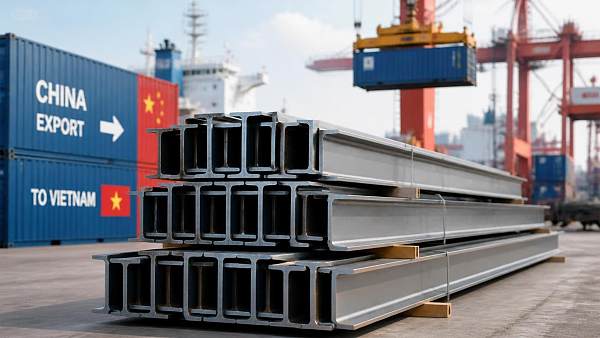
 Aug 25, 2026Vietnam Cuts Anti-Dumping Duty on Chinese H-Beam Steel to 6.78%Vietnam cuts anti-dumping duty on Chinese H-beam steel to 6.78%, reshaping import costs and sourcing decisions in Southeast Asia. See what buyers and traders should do next.
 Aug 21, 2026France Lowers Foreign Investment Review Threshold to 10% for Non-EU BuyersFrance lowers its foreign investment review threshold to 10% for non-EU buyers, reshaping deals in strategic sectors. See what this means for investors, timelines, and cross-border transaction risk.
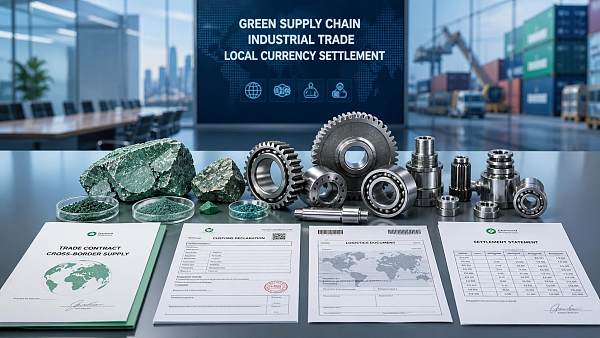
 Aug 20, 2026BRICS Reaches Consensus on Green Minerals Supply Chains and Wider Local-Currency TradeBRICS green minerals supply chains and wider local-currency trade could reshape industrial exports, settlement, and compliance. See what Chinese exporters should watch next.
 Aug 19, 2026RCEP Steel Conference in Nanning Highlights Green Low-Carbon Technology CooperationRCEP Steel Conference in Nanning highlights green low-carbon technology cooperation, tariff rules, and compliance trends shaping steel exports, supply chains, and new regional business opportunities.
 Aug 18, 2026Second Strait of Hormuz Closure Raises Supply Chain Risks as Oil and Freight Costs ClimbSecond Strait of Hormuz closure raises supply chain risks as oil and freight costs climb. Explore impacts on shipping, pricing, and key export sectors now.
 Aug 16, 2026EU Battery Passport Becomes Mandatory for Exported Storage Products on August 18EU Battery Passport becomes mandatory on August 18, 2026 for exported storage products above 2kWh. Learn what Chinese exporters, integrators, and OEMs must do to stay compliant.
 Aug 15, 2026China Widens Cross-Border Cash Pool Access for Multinationals on Sept. 14China widens cross-border cash pooling for multinationals on Sept. 14, boosting treasury efficiency, liquidity, and payment coordination for China-linked businesses.
 Aug 13, 2026EU Ends Low-Value Parcel Duty ExemptionEU ends the low-value parcel duty exemption, reshaping China-to-EU e-commerce costs, customs compliance, and delivery models for exporters and logistics teams.
 Aug 12, 2026Jiangsu Tightens Overseas Patent Rules for ExportersJiangsu Tightens Overseas Patent Rules for Exporters: learn how new patent search, design-around, and local filing demands may reshape market access in the US, Europe, and Southeast Asia.
 Aug 11, 2026EU CBAM Expansion Adds Hydrogen Products, Pre-Filing Starts Oct 2026EU CBAM expansion adds hydrogen products and starts pre-filing in Oct 2026. Learn how Chinese exporters can prepare carbon data, electricity records, and compliance workflows now.
 Jul 15, 2026Global Shipping Logistics Customs Clearance: Common Delays and How to Prevent ThemGlobal shipping logistics customs clearance made simple: learn the most common delay triggers, reduce document and HS code errors, and keep cross-border shipments moving faster.
 Jul 13, 2026Cloud Project Specification Planning: How to Prevent Scope Gaps Before Procurement StartsCloud project specification planning helps teams define scope, compliance, integrations, and cost drivers before procurement begins—reducing risk, avoiding change requests, and improving vendor fit.
 Jul 12, 2026Logistics Management Analytics: Which KPIs Improve Delivery and Inventory Control?Logistics management analytics helps identify the KPIs that truly improve delivery speed, inventory accuracy, and service reliability across complex supply chains.
 Jul 11, 2026Ecommerce Logistics Sourcing Guide: How to Compare Lead Time, MOQ, and Shipping CostsEcommerce logistics sourcing guide for buyers comparing lead time, MOQ, and shipping costs. Learn how to reduce landed cost risk, improve supplier selection, and make smarter sourcing decisions.
 Jul 10, 2026Supply Chain Bottleneck Analysis for Exporters: Where Delays Happen and How to RespondSupply chain bottleneck analysis for exporters reveals where delays start—from suppliers and documentation to ports and delivery—and shows practical ways to respond faster, cut risk, and protect margins.
 Jul 09, 2026Supply Chain Intelligence Europe: Which Data Signals Matter for Sourcing Decisions?Supply chain intelligence Europe: discover the key data signals shaping smarter sourcing decisions, from supplier risk and lead times to compliance, costs, and logistics performance.
![]() Jul 07, 2026Supply Chain Intelligence and ISO Standards: How to Align Data, Traceability, and ComplianceSupply chain intelligence ISO standards explained: learn how to align data, traceability, and compliance to reduce risk, speed audits, and build resilient operations.
Jul 07, 2026Supply Chain Intelligence and ISO Standards: How to Align Data, Traceability, and ComplianceSupply chain intelligence ISO standards explained: learn how to align data, traceability, and compliance to reduce risk, speed audits, and build resilient operations.