


Search News
Global Industrial Intelligence Hub (GIIH)Industry Portal
Global Industrial Intelligence Hub (GIIH)Status
Standard Access
Upgrade to PremiumNewsWhat makes Activewear OEM costs vary so widely?
Time
Click Count
Activewear OEM pricing can differ dramatically from one supplier to another, leaving companies unsure whether they are paying for true capability or hidden inefficiency.
From fabric performance and order volume to compliance standards, production location, and finishing complexity, each driver can reshape the final quotation.
This article explains why Activewear OEM costs vary, and how to compare offers with better structure, evidence, and commercial confidence.
What makes Activewear OEM costs vary so widely?
Activewear OEM cost is rarely a single manufacturing number. It is a combined result of material, labor, engineering, compliance, logistics, and risk.
Two quotations may describe the same leggings, sports bra, or training top, yet include different assumptions beneath the surface.
One Activewear OEM supplier may include pattern adjustment, fabric testing, shrinkage checks, and carton compliance within the unit price.
Another may quote only cut-and-sew production, then add charges for sampling, labels, packing, testing, or urgent delivery later.
The first step is not asking why one price is lower. The first step is asking what the price truly contains.
- Fabric source, composition, weight, and finishing process.
- Pattern complexity, size range, and grading workload.
- Minimum order quantity and production efficiency.
- Testing, audit, certification, and compliance scope.
- Packaging standard, logistics terms, and delivery urgency.
A reliable Activewear OEM comparison begins with identical specifications. Without that foundation, price differences can be misleading.
How does fabric performance affect Activewear OEM pricing?
Fabric is often the largest cost component in Activewear OEM production. Performance textiles are more expensive than ordinary knitted materials.
Moisture-wicking, four-way stretch, anti-odor treatment, compression recovery, UV protection, and brushed hand feel all add cost.
Even similar-looking fabrics can perform differently after washing, stretching, sweating, or repeated abrasion during training.
A lower Activewear OEM quote may use cheaper yarn, weaker spandex, unstable dyeing, or limited colorfastness control.
These choices may reduce cost initially, but they can increase returns, complaints, and brand damage after launch.
Which fabric details should be checked before comparison?
- Fiber content, such as nylon-spandex, polyester-spandex, cotton blends, or recycled yarns.
- Fabric weight, usually measured in GSM.
- Stretch direction, recovery rate, and opacity under tension.
- Dyeing method, colorfastness, and shrinkage tolerance.
- Special finishes, including antimicrobial, cooling, or water-repellent treatment.
When fabric specifications are unclear, Activewear OEM quotations become difficult to benchmark. The cheapest fabric may be the riskiest variable.
Why do order volume and MOQ change Activewear OEM costs?
Order volume strongly affects Activewear OEM unit cost because factories spread fixed expenses across each garment.
Pattern making, machine setup, material booking, cutting planning, line balancing, and quality inspection all create fixed workload.
A small batch must absorb these costs into fewer pieces, so the unit price rises.
Larger Activewear OEM orders usually gain better fabric pricing, higher cutting efficiency, and more stable sewing-line productivity.
However, bigger orders can also raise inventory exposure if size ratios, colors, or product-market fit are not validated.
Is a low MOQ always better?
Low MOQ supports product testing, limited drops, and niche collections. It also requires more flexible production management.
Some Activewear OEM suppliers charge higher unit prices for low MOQ because fabric mills, dye houses, and trim vendors also set minimums.
A balanced approach is to separate sampling, pilot runs, and scale production. Each stage should have its own cost expectation.
- Use samples to validate fit, hand feel, and construction.
- Use a pilot order to check demand and defect rates.
- Use larger production to optimize Activewear OEM unit cost.
How much do design complexity and finishing details matter?
Design complexity can shift Activewear OEM cost quickly. Activewear often looks simple, but technical construction may be demanding.
Flatlock seams, bonded edges, seamless knitting, laser cutting, mesh panels, hidden pockets, and reflective prints all require special control.
A basic T-shirt and a compression top may use similar fabric weight, yet require very different sewing skills.
Activewear OEM factories also price complexity by production speed. More panels, more seams, and more operations reduce output per worker.
The cost impact becomes stronger when designs include many colorways, prints, logo placements, or size-specific adjustments.
Which details often create hidden charges?
- Custom elastic bands, branded drawcords, and special zippers.
- Heat-transfer labels, silicone logos, embroidery, or reflective applications.
- Individually packed sets, hangtags, stickers, and retail-ready cartons.
- Complex grading for extended sizes or region-specific fit standards.
Before confirming an Activewear OEM order, technical drawings and bill of materials should be matched line by line with the quotation.
Why do compliance, testing, and audits increase Activewear OEM costs?
Compliance is not just paperwork. It affects materials, production records, chemical management, labor practices, and export readiness.
Activewear OEM products may require tests for colorfastness, pilling, shrinkage, seam strength, formaldehyde, azo dyes, or restricted substances.
Markets with stricter consumer protection rules often require more documentation. This can change both cost and production lead time.
Factories with established compliance systems may quote higher prices, but they reduce uncertainty during inspection and shipment.
Lower-cost Activewear OEM offers may exclude third-party testing, social audits, traceability files, or corrective-action support.
What should be clarified in compliance discussions?
- Which testing standards apply to fabric, trims, prints, and finished garments.
- Whether testing cost is included or charged separately.
- Which party manages lab submission and report follow-up.
- Whether the supplier holds valid audit records or certifications.
For Activewear OEM sourcing, compliance should be treated as a risk-control investment, not only as an added expense.
How do location, lead time, and logistics shape the final price?
Production location affects wage levels, utility costs, textile ecosystem maturity, port access, tariffs, and transport options.
An Activewear OEM supplier near strong fabric mills may secure faster sourcing and better textile pricing.
Another location may offer lower labor costs but longer material lead times, weaker trim availability, or higher freight uncertainty.
Urgent delivery can also increase cost. Rush sampling, overtime production, air freight, and priority material booking add premiums.
In Activewear OEM projects, lead time should be compared with price. A low quote with missed delivery can become expensive quickly.
What logistics terms change quotation visibility?
EXW, FOB, CIF, and DDP terms allocate costs differently. A quotation may look attractive because freight or duties are excluded.
Clear Incoterms, carton dimensions, gross weight, and shipment method help reveal the true landed cost.
The most useful Activewear OEM comparison is not unit price alone. It is landed cost, delivered on time, at accepted quality.
How can different Activewear OEM quotes be compared fairly?
A fair comparison requires a consistent specification package. Verbal descriptions are not enough for technical garments.
Every Activewear OEM quotation should be checked against the same tech pack, fabric standard, size chart, packaging rule, and testing requirement.
If a quotation is significantly lower, the difference should be explained through material, process, scale, or commercial terms.
This table turns Activewear OEM comparison into a structured decision, rather than a simple race toward the lowest price.
What mistakes create unnecessary Activewear OEM cost risk?
Many cost problems begin before production. Incomplete specifications allow suppliers to make assumptions that later become disputes.
A common mistake is approving a sample without confirming bulk fabric, shade tolerance, shrinkage, seam strength, and packaging standards.
Another mistake is comparing sample quality from one Activewear OEM factory with bulk pricing from another.
Sampling teams and bulk production lines may differ. The same supplier should explain how sample standards transfer into mass production.
Which red flags deserve attention?
- A price far below market level without technical explanation.
- Reluctance to provide fabric details or testing evidence.
- Unclear responsibility for defects, delays, or rework.
- Changing terms after sample approval or deposit payment.
- No written confirmation for trims, labels, packaging, or inspection.
Activewear OEM pricing should be judged with risk, not only arithmetic. A controlled process protects both cost and reputation.
FAQ: Practical answers on Activewear OEM cost variation
Why can two factories quote different prices for the same design?
They may use different fabric grades, labor standards, overhead assumptions, testing scope, or delivery terms.
In Activewear OEM production, identical drawings do not guarantee identical materials, processes, or risk controls.
Is the lowest Activewear OEM price always unsafe?
Not always. A lower price may come from efficient production, local fabric access, or higher order volume.
However, the reason must be transparent. If the cost advantage cannot be explained, further verification is necessary.
How much should sampling influence supplier selection?
Sampling is essential, but it should not be the only basis. Bulk consistency matters more than one approved prototype.
A strong Activewear OEM partner can document sample corrections, production tolerances, and quality checkpoints for scale-up.
Can sustainable materials increase costs?
Yes. Recycled yarns, certified materials, traceability documents, and lower-impact dyeing can raise cost.
They may also support market differentiation and compliance goals, depending on product positioning and target region.
What is the best way to reduce Activewear OEM cost?
Standardize fabrics, reduce unnecessary trims, consolidate colors, plan orders earlier, and clarify requirements before sampling.
Cost reduction should protect fit, durability, and compliance. Cutting the wrong feature often creates larger downstream losses.
Conclusion: Build a clearer Activewear OEM cost model
Activewear OEM costs vary widely because every quotation reflects different choices in fabric, workmanship, compliance, volume, timing, and logistics.
The most effective sourcing decision compares complete value, not only the printed unit price.
A practical next step is to build a standardized quotation sheet covering materials, trims, testing, MOQ, lead time, and delivery terms.
With that structure, Activewear OEM evaluation becomes clearer, negotiations become more precise, and long-term production decisions become more resilient.
Recommended News
 Sep 24, 2026When does supply chain management software pay for itself?Supply chain management software pays for itself by reducing avoidable inventory, freight, stockout, and planning costs. Learn how to build a credible ROI case.
 Sep 20, 2026How supplier compliance monitoring reduces disruption riskSupplier compliance monitoring helps teams spot risks early, prevent costly disruptions, strengthen supplier resilience, and protect operational continuity.
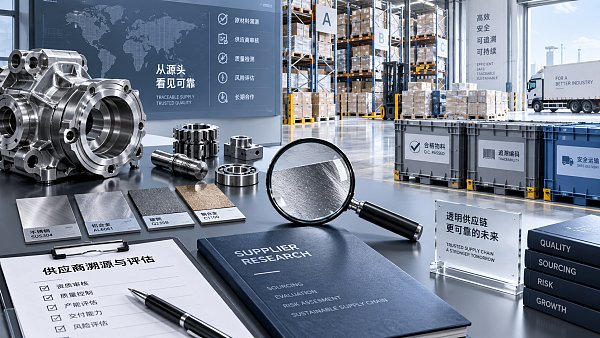
 Sep 16, 2026What makes a procurement research platform reliable for supplier sourcing?A procurement research platform for sourcing helps teams identify credible suppliers, assess risk, verify evidence, and build defensible shortlists for smarter decisions.
 Sep 07, 2026How to compare cross border logistics services for reliable deliveryCompare cross border logistics services with confidence. Learn how to assess customs, tracking, costs, final-mile coverage, and exception handling for reliable delivery.
 Sep 05, 2026How to Compare an Order Fulfillment Pricing Model by Total CostOrder fulfillment pricing model guide: compare total costs across storage, shipping, returns, fees, and service levels to select the right fulfillment partner.
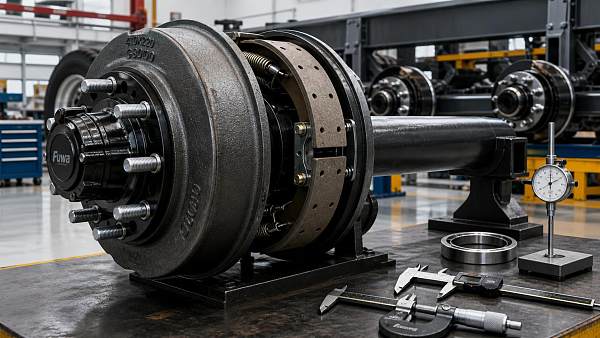
 Sep 07, 2026Sourcing Semi-Trailer Spare Parts Without Compromising Brake Drum QualitySemi trailer spare parts sourcing guide: choose reliable brake drums with verified fitment, traceability, and quality control to protect safety, uptime, and costs.
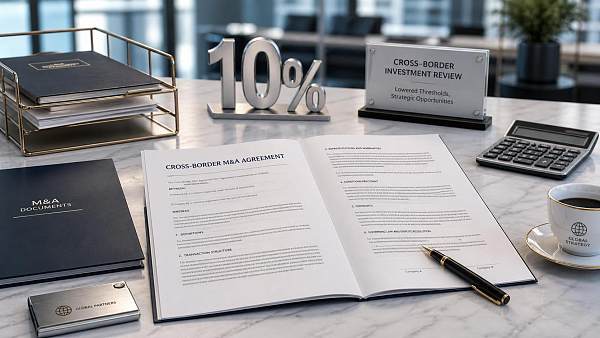
 Aug 28, 2026France Lowers Foreign Investment Review Threshold to 10% for Non-EU BuyersFrance lowers its foreign investment review threshold to 10% for non-EU buyers, reshaping strategic deals, compliance planning, and cross-border investment.
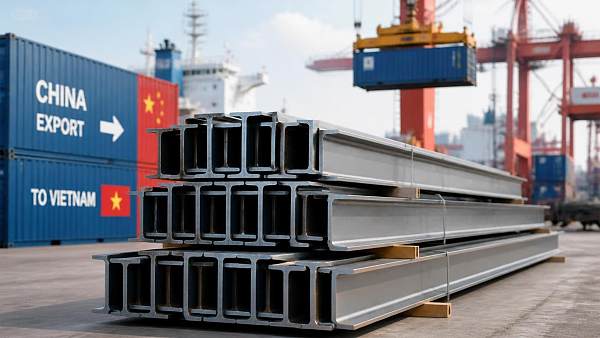
 Aug 25, 2026Vietnam Cuts Anti-Dumping Duty on Chinese H-Beam Steel to 6.78%Vietnam cuts anti-dumping duty on Chinese H-beam steel to 6.78%, reshaping import costs and sourcing decisions in Southeast Asia. See what buyers and traders should do next.
 Aug 21, 2026France Lowers Foreign Investment Review Threshold to 10% for Non-EU BuyersFrance lowers its foreign investment review threshold to 10% for non-EU buyers, reshaping deals in strategic sectors. See what this means for investors, timelines, and cross-border transaction risk.
 Aug 20, 2026BRICS Reaches Consensus on Green Minerals Supply Chains and Wider Local-Currency TradeBRICS green minerals supply chains and wider local-currency trade could reshape industrial exports, settlement, and compliance. See what Chinese exporters should watch next.
 Aug 19, 2026RCEP Steel Conference in Nanning Highlights Green Low-Carbon Technology CooperationRCEP Steel Conference in Nanning highlights green low-carbon technology cooperation, tariff rules, and compliance trends shaping steel exports, supply chains, and new regional business opportunities.
 Aug 18, 2026Second Strait of Hormuz Closure Raises Supply Chain Risks as Oil and Freight Costs ClimbSecond Strait of Hormuz closure raises supply chain risks as oil and freight costs climb. Explore impacts on shipping, pricing, and key export sectors now.
 Aug 16, 2026EU Battery Passport Becomes Mandatory for Exported Storage Products on August 18EU Battery Passport becomes mandatory on August 18, 2026 for exported storage products above 2kWh. Learn what Chinese exporters, integrators, and OEMs must do to stay compliant.
 Aug 15, 2026China Widens Cross-Border Cash Pool Access for Multinationals on Sept. 14China widens cross-border cash pooling for multinationals on Sept. 14, boosting treasury efficiency, liquidity, and payment coordination for China-linked businesses.
 Aug 13, 2026EU Ends Low-Value Parcel Duty ExemptionEU ends the low-value parcel duty exemption, reshaping China-to-EU e-commerce costs, customs compliance, and delivery models for exporters and logistics teams.
 Aug 12, 2026Jiangsu Tightens Overseas Patent Rules for ExportersJiangsu Tightens Overseas Patent Rules for Exporters: learn how new patent search, design-around, and local filing demands may reshape market access in the US, Europe, and Southeast Asia.
 Aug 11, 2026EU CBAM Expansion Adds Hydrogen Products, Pre-Filing Starts Oct 2026EU CBAM expansion adds hydrogen products and starts pre-filing in Oct 2026. Learn how Chinese exporters can prepare carbon data, electricity records, and compliance workflows now.
 Jul 15, 2026Global Shipping Logistics Customs Clearance: Common Delays and How to Prevent ThemGlobal shipping logistics customs clearance made simple: learn the most common delay triggers, reduce document and HS code errors, and keep cross-border shipments moving faster.
 Jul 13, 2026Cloud Project Specification Planning: How to Prevent Scope Gaps Before Procurement StartsCloud project specification planning helps teams define scope, compliance, integrations, and cost drivers before procurement begins—reducing risk, avoiding change requests, and improving vendor fit.
 Jul 12, 2026Logistics Management Analytics: Which KPIs Improve Delivery and Inventory Control?Logistics management analytics helps identify the KPIs that truly improve delivery speed, inventory accuracy, and service reliability across complex supply chains.
 Jul 11, 2026Ecommerce Logistics Sourcing Guide: How to Compare Lead Time, MOQ, and Shipping CostsEcommerce logistics sourcing guide for buyers comparing lead time, MOQ, and shipping costs. Learn how to reduce landed cost risk, improve supplier selection, and make smarter sourcing decisions.
 Jul 10, 2026Supply Chain Bottleneck Analysis for Exporters: Where Delays Happen and How to RespondSupply chain bottleneck analysis for exporters reveals where delays start—from suppliers and documentation to ports and delivery—and shows practical ways to respond faster, cut risk, and protect margins.
 Jul 09, 2026Supply Chain Intelligence Europe: Which Data Signals Matter for Sourcing Decisions?Supply chain intelligence Europe: discover the key data signals shaping smarter sourcing decisions, from supplier risk and lead times to compliance, costs, and logistics performance.
![]() Jul 07, 2026Supply Chain Intelligence and ISO Standards: How to Align Data, Traceability, and ComplianceSupply chain intelligence ISO standards explained: learn how to align data, traceability, and compliance to reduce risk, speed audits, and build resilient operations.
Jul 07, 2026Supply Chain Intelligence and ISO Standards: How to Align Data, Traceability, and ComplianceSupply chain intelligence ISO standards explained: learn how to align data, traceability, and compliance to reduce risk, speed audits, and build resilient operations.