


Search News
Global Industrial Intelligence Hub (GIIH)Industry Portal
Global Industrial Intelligence Hub (GIIH)Status
Standard Access
Upgrade to PremiumNewsWhen does an automation solution really improve output?
Time
Click Count
For business decision-makers, Industrial & Manufacturing automation solutions matter only when they improve output in measurable ways. Output means more than volume alone. It includes quality, consistency, uptime, speed, flexibility, safety, and cost control.
In today’s industrial environment, automation decisions face new pressure. Supply chains shift quickly. Labor availability changes by region. Customer expectations demand shorter lead times and fewer defects. Under these conditions, the timing of automation becomes as important as the technology itself.
The strongest Industrial & Manufacturing automation solutions do not start with machines. They start with process visibility, constraint analysis, and realistic business targets. When those foundations are clear, automation can raise output with lower operational risk.
What Industrial & Manufacturing automation solutions actually mean
Industrial & Manufacturing automation solutions combine hardware, software, control logic, and data systems. Their purpose is to reduce manual variation and improve how work flows through a process.
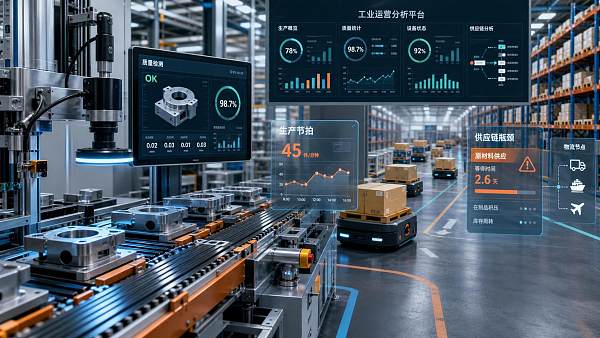
They can include robotic handling, PLC-based control, machine vision, automated inspection, conveyor systems, IoT sensors, MES integration, predictive maintenance, and warehouse automation.
However, automation does not always improve output. If a process is unstable, poorly standardized, or constrained elsewhere, technology may simply move the bottleneck. In those cases, costs rise faster than results.
A useful definition is simple. Industrial & Manufacturing automation solutions improve output when they increase throughput or usable yield without creating equal or larger losses elsewhere.
The output metrics that matter most
- Throughput per hour, shift, or line
- First-pass yield and defect reduction
- Changeover time and schedule responsiveness
- Downtime frequency and recovery speed
- Labor productivity and task redeployment
- Energy use, scrap, and rework costs
Current industry signals shaping automation decisions
Across sectors, automation interest is rising because operating conditions have become less predictable. Industrial leaders now evaluate automation as a resilience tool, not only as a labor-saving investment.
This shift is visible in manufacturing, logistics, medical technology, smart living systems, automotive parts, and environmental technology. In each area, output depends on tighter coordination and faster feedback loops.
Platforms such as GIIH track these changes across industries. The main lesson is consistent. Automation works best when it responds to structural pressure, not temporary enthusiasm.
When automation really improves output
Industrial & Manufacturing automation solutions improve output when they address a proven constraint. If the process bottleneck is known, automation can produce clear gains. If the bottleneck is misunderstood, gains often disappoint.
The strongest conditions for successful output improvement
- The process is repeatable enough to standardize.
- Variation has been measured, not guessed.
- The target step limits total throughput.
- Input quality is stable enough for automation.
- Downstream systems can absorb faster output.
- Maintenance, training, and data support are planned.
A packaging line is a common example. If stoppages come from inconsistent manual handling, robotic feeding may raise output. But if upstream filling remains unstable, line speed alone will not solve the issue.
The same applies in warehouse operations. Automated sorting improves output when order profiles are predictable and software integration is reliable. It underperforms when inventory accuracy is weak or exceptions dominate workflows.
Warning signs that automation may be premature
- Frequent engineering changes without process discipline
- Poor master data and weak production visibility
- Unstable demand patterns with unclear volume assumptions
- High exception rates requiring judgment-based work
- No clear owner for system upkeep and continuous improvement
Business value across representative scenarios
The value of Industrial & Manufacturing automation solutions changes by process type. Some settings benefit from speed. Others gain more from precision, traceability, or reduced operational dependence on scarce labor.
In all these settings, the best Industrial & Manufacturing automation solutions connect machine performance with business outcomes. Faster equipment alone is not enough. The gain must appear in delivered output, not only installed capacity.
Practical evaluation before investment
A disciplined evaluation reduces the chance of expensive over-automation. It also helps compare alternatives, including partial automation, software-first optimization, and redesigned workflows.
A useful assessment framework
- Map the current process and locate the true constraint.
- Measure baseline output, downtime, scrap, and labor time.
- Separate chronic losses from temporary disruptions.
- Check integration requirements across ERP, MES, and controls.
- Model best-case, likely, and stress-case returns.
- Plan operator training, maintenance readiness, and spare parts.
This approach is especially important in cross-border operations. Regional labor costs, technical support access, utility reliability, and compliance rules can change project economics significantly.
GIIH’s cross-industry intelligence model supports this broader view. It connects technical choices with trade realities, regional market conditions, and supply chain resilience. That perspective is critical for sustainable automation decisions.
Implementation priorities and common mistakes
Even strong Industrial & Manufacturing automation solutions can fail during rollout. Most failures come from weak process preparation, underestimated change management, or poor connection between engineering and operations.
Priorities that support better output
- Start with one high-impact process, not the whole site.
- Use acceptance criteria tied to output metrics.
- Design for maintainability and fast troubleshooting.
- Preserve flexibility for product or demand changes.
- Review data regularly after launch and refine settings.
Mistakes to avoid
- Buying advanced technology before defining the use case
- Ignoring upstream and downstream dependencies
- Underestimating data quality and integration work
- Assuming labor savings equal total value
- Treating commissioning as the end of improvement
Next-step guidance for smarter automation decisions
Industrial & Manufacturing automation solutions really improve output when they solve a visible operational problem, fit the process, and support broader business resilience. The goal is not maximum automation. The goal is effective automation.
A practical next step is to audit one critical workflow. Identify its largest recurring loss. Measure the current cost of that loss. Then compare targeted automation with process redesign and digital monitoring options.
Decision quality improves further when market intelligence is added to plant data. GIIH helps connect technology evaluation with industry signals, supply chain realities, and sector-specific benchmarks. That combination supports lower-risk, higher-value industrial planning.
When automation is timed well, scoped carefully, and measured honestly, output improvement becomes real, durable, and scalable. That is when Industrial & Manufacturing automation solutions move from equipment spending to strategic performance leverage.
Recommended News
 Sep 28, 2026What does compliance requirement analysis cost by project scope?Compliance requirement analysis cost comparison by project scope: compare small, mid-scale, and enterprise assessments, key cost drivers, ROI, and smarter budget controls.
 Sep 19, 2026When project planning support prevents costly delays in complex projectsProject planning support helps complex teams expose critical dependencies, protect schedule float, and prevent costly delays before risks become irreversible problems.
 Sep 18, 2026How to size industrial compressors for fluctuating air demandIndustrial compressors for fluctuating air demand: learn how to size capacity, storage, controls, and pressure recovery for reliable, energy-efficient performance.
 Sep 14, 2026How a material selection analysis guide reduces failure riskMaterial selection analysis guide: reduce failure risk with practical steps for performance, manufacturing, compliance, and supply-chain decisions.
 Sep 13, 2026What drives procurement research platform cost for enterprise teams?Procurement research platform cost explained: assess data quality, coverage, licensing, hidden costs, and ROI to make confident enterprise sourcing decisions.
 Sep 11, 2026How an industrial market analysis framework supports investment decisionsIndustrial market analysis framework: turn demand, competition, supply-chain risk, and regulation into smarter, resilient investment decisions.
 Sep 07, 2026What to look for in a material selection analysis providerDiscover how to choose a material selection analysis provider with proven engineering expertise, traceable data, validation capabilities, compliance insight, and supply-chain intelligence.
 Sep 03, 2026When do mobility control components need redundant safety features?Mobility control components need redundant safety features when one failure could cause hazardous motion. Learn how to build independent, testable protection.
 Sep 02, 2026How to use an industrial market analysis database for market sizingLearn how an industrial market analysis database supports accurate market sizing through clear boundaries, data triangulation, classification mapping, and actionable insights.
 Sep 01, 2026How a performance factor analysis platform reveals operational bottlenecksPerformance factor analysis platform insights help teams uncover hidden operational bottlenecks, validate root causes, and improve throughput across complex operations.
 Sep 19, 2026Is modular systems furniture practical for growing offices?Modular systems furniture for offices helps growing teams scale efficiently. Explore costs, flexibility, privacy, and implementation tips for smarter workspace decisions.
 Sep 17, 2026How to size a modular systems furniture workstation for daily useModular systems furniture workstation sizing guide: optimize desk space, ergonomics, circulation, power capacity, and flexibility for productive daily use.
 Sep 16, 2026How much storage can modular systems furniture add to a workspace?Modular systems furniture storage can unlock usable workspace capacity. Explore smart layouts, flexible modules, and practical planning tips for efficient, scalable organization.
 Sep 15, 2026When does modular systems furniture customization justify its cost?Modular systems furniture customization: learn when flexibility, lifecycle savings, and scalable workplace design justify the investment.
 Sep 14, 2026What should installation plans cover for modular systems furniture?Modular systems furniture installation plans should cover scope, site verification, logistics, safety, power coordination, quality checks, and handover for a seamless workspace launch.
 Sep 13, 2026What drives modular systems furniture price in office projects?Modular systems furniture price explained: uncover layout, materials, power, installation, and lifecycle factors to budget smarter and build adaptable offices.
 Sep 12, 2026How to verify sustainable materials in modular systems furnitureModular systems furniture sustainable materials: learn how to verify sourcing, emissions, certifications, and repairability with a practical supplier checklist.
 Aug 29, 2026Which pricing trends matter most when comparing product categories?Pricing trends reveal more than unit costs. Learn how to compare categories by cost drivers, lifecycle value, regional gaps, technology shifts, and discounts.
 Aug 28, 2026When does energy-efficient design reduce lifetime operating costs?Energy-efficient design can cut lifetime operating costs when real savings outweigh capital, maintenance, and reliability risks. Learn how to assess TCO, tariffs, utilization, and payback.
 Aug 27, 2026When does wholesale structural steel make sense for a project?Structural steel beams wholesale can reduce total project risk when demand is stable. Discover how to balance cost, quality, phased delivery, and traceability.
 Sep 03, 2026How Operating Pressure in PSI Affects Poultry Nipple Drinker PerformancePoultry nipple drinker operating pressure PSI manufacturer guide: optimize flow, prevent leaks, and ensure reliable water delivery across every line.
 Aug 22, 2026When weighted performance factor analysis improves vendor selectionWeighted performance factor analysis improves vendor selection when quality, compliance, delivery, and lifecycle risk matter more than price alone. Learn when this method creates smarter, defensible sourcing decisions.
 Aug 16, 2026How to verify hotel automation PCB assembly specs before supplier approvalHotel automation PCB assembly specs should be verified before supplier approval by checking DFM, testing, traceability, and compliance—learn the key steps to avoid field failures.
 Aug 15, 2026How does market trend analysis affect price expectations?Market trend analysis price insights help you set smarter expectations, spot real price shifts, and make faster, more confident pricing decisions.