


Search News
Global Industrial Intelligence Hub (GIIH)Industry Portal
Global Industrial Intelligence Hub (GIIH)Status
Standard Access
Upgrade to PremiumNewsWhat makes industrial parts harder to source in 2026
Time
Click Count
In 2026, sourcing industrial parts is becoming more complex as supply chain disruption, tighter procurement standards, and rising demand for high-quality parts reshape global markets. From precision engineering and custom components to automotive components, EV motor, EV battery, and electric vehicle parts, buyers face growing pressure in inventory control, logistics management, and aftermarket availability. This article explores why industrial sourcing is harder—and how smarter strategies can reduce risk.
For information researchers, procurement teams, business evaluators, and distributors, the challenge is no longer limited to finding a supplier with available stock. In many sectors, the real issue is verifying technical consistency, controlling lead-time volatility, and aligning sourcing decisions with regional compliance, lifecycle demand, and service continuity.
Industrial buyers also operate in a market where one missing component can delay an assembly line by 7–21 days, increase emergency freight costs by 15%–40%, or disrupt aftermarket commitments across multiple regions. That is why sourcing strategy in 2026 requires more intelligence, not just more quotations.
Why industrial parts sourcing is structurally harder in 2026
The first reason is structural fragmentation. Industrial supply chains that once relied on 2 or 3 stable countries of origin are now spread across 5–8 manufacturing and sub-assembly locations. This increases the number of handoff points, quality checkpoints, customs exposures, and communication risks in every procurement cycle.
The second factor is specification complexity. Many buyers are sourcing parts that are no longer simple off-the-shelf items. EV motor assemblies, battery housing parts, control modules, precision brackets, and thermal management components often require tolerance matching, material traceability, and compatibility with existing systems built under different standards.
A third pressure point is demand imbalance. High-volume standard components may still be available, but low-volume customized parts or replacement items for mature product lines often face limited production slots. Suppliers naturally prioritize predictable, repeatable orders over fragmented aftermarket requests with small MOQ deviations and urgent deadlines.
There is also a strong compliance layer. In 2026, buyers must consider export controls, battery transport rules, environmental declarations, and documentation consistency. A part that looks technically correct may still be commercially risky if paperwork, origin data, or inspection records cannot support cross-border movement within 48–72 hours of shipment release.
For procurement professionals, this means sourcing difficulty is not caused by one single bottleneck. It results from the overlap of technical, logistical, and commercial variables that now move faster than conventional purchasing processes can handle.
Three market shifts buyers can no longer ignore
- Shorter planning windows: rolling forecasts have compressed from quarterly cycles to 4–6 week updates in many sectors.
- Higher documentation expectations: supplier qualification now often includes material declarations, test records, and process audit visibility.
- Longer exception handling: when a part fails validation, replacement sourcing can take 10–30 days instead of a few business days.
What this means for decision-makers
Business evaluation teams need to measure sourcing resilience, not just piece price. A component that is 6% cheaper but carries a 3-week replenishment risk can quickly become more expensive when downtime, missed delivery, and service penalties are included in total cost.
The parts categories most affected by delay, validation, and substitution risk
Not all industrial parts are equally difficult to source. In 2026, the hardest categories are usually those with one or more of the following conditions: tight tolerances, multi-tier BOM dependence, fast technology refresh, or regional regulatory sensitivity. This is especially true in mobility, smart systems, and precision industrial equipment.
Automotive components remain a clear example. Buyers looking for electric vehicle parts often face a dual challenge: OEM-level technical accuracy and aftermarket flexibility. EV battery enclosures, cooling lines, sensors, connectors, and motor subcomponents may require dimensional compatibility within ±0.2 mm to ±0.5 mm, while still meeting shipping and storage constraints.
Custom components are also difficult because substitution is limited. A bracket, housing, shaft, or molded part may seem simple, but once load rating, corrosion resistance, operating temperature, and mounting geometry are considered, a “similar” part can trigger fitment failure, warranty claims, or assembly rework.
Aftermarket parts create another layer of complexity. Demand is often irregular, documentation may be incomplete, and original tooling may have changed. That means distributors and agents must balance inventory exposure against the risk of not being able to serve customers within a 3–10 day service window.
High-risk categories by sourcing difficulty
The following table outlines where procurement friction tends to be highest and what buyers should verify before committing to supply.
The key takeaway is that complexity rises sharply when a part combines technical specificity with volatile availability. Buyers should avoid treating all categories with the same sourcing workflow, because a low-risk fastener and a battery-adjacent enclosure require very different control methods.
Common substitution mistakes
- Matching dimensions but ignoring material grade, coating, or operating temperature range.
- Assuming an aftermarket reference is interchangeable without checking connection points and duty cycle.
- Approving a supplier sample without verifying repeatability across batch sizes of 500, 2,000, or 10,000 units.
How procurement standards and supplier qualification are changing
In 2026, sourcing is harder not only because parts are scarce, but because acceptance criteria are stricter. Procurement teams are being asked to validate suppliers on process control, documentation quality, response speed, and production continuity. This creates a wider gap between a trader who can quote and a partner who can actually deliver without disruption.
For cross-border buyers, qualification often includes at least 4 layers: commercial stability, manufacturing capability, quality assurance, and logistics execution. If one layer is weak, the entire sourcing plan becomes fragile. A supplier with good prices but poor engineering communication can slow approval by 5–10 working days on every revision.
Documentation has become a major filter. Buyers increasingly request part drawings, inspection reports, packaging specifications, material declarations, and shipment records in one synchronized file set. Missing or inconsistent documentation can hold goods at origin, delay customs review, or complicate claims after delivery.
This is why the sourcing process now depends on intelligence platforms and industry-specific market visibility. Teams need to know where bottlenecks are developing, which parts are moving into allocation, and which regional suppliers are becoming more reliable under changing trade conditions.
A practical supplier evaluation framework
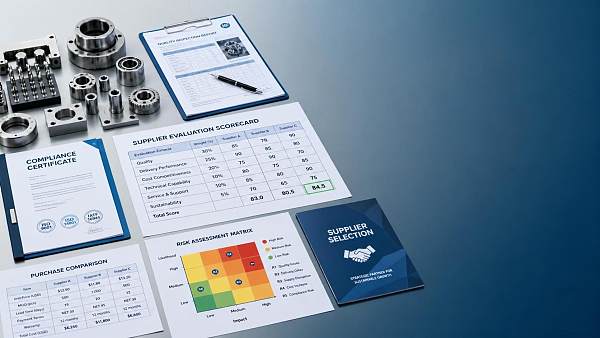
A structured review helps buyers compare suppliers beyond unit price. The table below can be used in RFQ screening and quarterly vendor reviews.
When buyers apply this framework consistently, they can identify risk earlier and reduce expensive surprises. It also creates better internal communication between sourcing, engineering, logistics, and finance teams, which is critical when lead times shift from 2 weeks to 6 weeks with little warning.
Four qualification signals that matter most
- Can the supplier answer technical questions with clear evidence instead of generic assurances?
- Can they provide stable lead-time ranges, such as 12–18 days rather than open-ended estimates?
- Can they manage mixed orders that combine standard parts and custom components?
- Can they support aftermarket continuity when annual demand is uneven?
Logistics, inventory, and aftermarket pressures behind sourcing delays
Even when production is available, logistics can still disrupt industrial parts sourcing. Transit uncertainty, port congestion, route changes, and documentation errors all create downstream effects. A shipment that misses one consolidation cutoff may add 5–9 days to delivery, which can undermine production planning and customer commitments.
Inventory strategy is another weak point. Many companies reduced buffer stock in earlier cost-control cycles, but 2026 conditions are exposing the limits of lean inventory for critical parts. If replenishment lead time fluctuates between 14 and 35 days, a reorder point built on historical averages may fail repeatedly.
Aftermarket supply is especially exposed. Distributors and service networks need smaller quantities across more SKUs, often with higher urgency than OEM orders. Without visibility into actual usage patterns, firms can overstock slow movers and still be out of stock on the 10% of items that generate the majority of emergency requests.
This is where industrial intelligence becomes operationally valuable. By monitoring shipping bottlenecks, supplier concentration, replacement demand, and regional movement constraints, companies can improve stock allocation and decide which parts require dual sourcing, local safety stock, or pre-qualified substitutes.
Typical disruption points across the order cycle
The table below maps common delay points and the practical controls that can reduce exposure.
A recurring pattern is that delays often begin before goods move. Better front-end validation and milestone control usually generate faster results than simply pushing carriers or expediting freight after a problem appears.
Inventory actions that reduce emergency buying
- Classify parts into A, B, and C criticality tiers based on downtime impact, not only annual spend.
- Set separate safety stock rules for OEM production parts and aftermarket service parts.
- Review fast-moving and failure-prone SKUs every 30 days instead of relying on quarterly reports.
Smarter sourcing strategies for buyers, evaluators, and distributors
The best response to sourcing difficulty in 2026 is not panic buying. It is a more disciplined, intelligence-led sourcing model. Buyers should build decisions around visibility, supplier layering, part criticality, and lifecycle planning. That approach reduces both shortage risk and excess inventory exposure.
One practical strategy is to segment parts into three lanes: standard replenishment, engineered critical supply, and aftermarket contingency. Each lane should have different approval speed, supplier requirements, and stocking logic. For example, standard items may be sourced with a 2-supplier framework, while engineered critical items may require sample approval and backup tooling review.
Another effective method is regional diversification. This does not mean changing suppliers every quarter. It means reducing overexposure to a single geography, port corridor, or material source. In many cases, shifting just 20%–30% of high-risk volume to a secondary qualified source can improve continuity without destabilizing cost control.
Information hubs such as GIIH provide value here by connecting fragmented signals into usable decision support. When procurement teams combine supplier reviews, logistics alerts, technical validation points, and sector-specific trend analysis, they can move from reactive purchasing to planned risk management.
A 5-step sourcing workflow for 2026
- Define part criticality by downtime effect, replacement complexity, and margin impact.
- Validate specifications, revision status, and interchangeability before requesting final quotes.
- Score suppliers on technical response, lead-time credibility, and document quality.
- Set inventory and logistics rules by part category, including buffer days and shipment review points.
- Track exceptions monthly and update alternate source plans for top-risk items.
FAQ: what buyers ask most often
How can buyers reduce risk when sourcing EV-related industrial parts?
Start with compatibility and transport readiness. Check part dimensions, material traceability, packaging method, and whether the supplier can provide consistent inspection records. For parts linked to battery or motor systems, even small deviations can delay approval by 1–2 weeks.
What lead time should be considered normal in 2026?
There is no universal benchmark, but many industrial parts now move in ranges rather than fixed dates. Standard items may ship in 7–15 days, while custom or validation-heavy parts may take 3–8 weeks. Buyers should ask for a lead-time range plus milestone visibility, not a single optimistic promise.
Is dual sourcing always necessary?
Not always. Dual sourcing makes the most sense for high-impact parts with long recovery times or poor substitution options. For low-risk standard items, a well-managed primary source may be enough. The key is matching sourcing architecture to part criticality.
Industrial parts are harder to source in 2026 because markets are more fragmented, specifications are tighter, and logistics plus aftermarket demands now influence procurement decisions as much as price. Buyers who rely on outdated sourcing habits risk longer delays, weaker quality control, and higher total landed cost.
A stronger approach combines supplier qualification, technical validation, inventory segmentation, and market intelligence. For researchers, procurement teams, business evaluators, and channel partners, that means building a sourcing process that can absorb disruption without losing speed or accuracy.
GIIH supports this shift by turning scattered industrial signals into usable insight across supply chains, mobility, logistics, and precision components. If you need clearer sourcing benchmarks, market intelligence, or a more resilient procurement framework, contact us to explore tailored solutions and learn more about smarter industrial sourcing strategies.
Recommended News
 Sep 28, 2026What does compliance requirement analysis cost by project scope?Compliance requirement analysis cost comparison by project scope: compare small, mid-scale, and enterprise assessments, key cost drivers, ROI, and smarter budget controls.
 Sep 19, 2026When project planning support prevents costly delays in complex projectsProject planning support helps complex teams expose critical dependencies, protect schedule float, and prevent costly delays before risks become irreversible problems.
 Sep 18, 2026How to size industrial compressors for fluctuating air demandIndustrial compressors for fluctuating air demand: learn how to size capacity, storage, controls, and pressure recovery for reliable, energy-efficient performance.
 Sep 14, 2026How a material selection analysis guide reduces failure riskMaterial selection analysis guide: reduce failure risk with practical steps for performance, manufacturing, compliance, and supply-chain decisions.
 Sep 13, 2026What drives procurement research platform cost for enterprise teams?Procurement research platform cost explained: assess data quality, coverage, licensing, hidden costs, and ROI to make confident enterprise sourcing decisions.
 Sep 11, 2026How an industrial market analysis framework supports investment decisionsIndustrial market analysis framework: turn demand, competition, supply-chain risk, and regulation into smarter, resilient investment decisions.
 Sep 07, 2026What to look for in a material selection analysis providerDiscover how to choose a material selection analysis provider with proven engineering expertise, traceable data, validation capabilities, compliance insight, and supply-chain intelligence.
 Sep 03, 2026When do mobility control components need redundant safety features?Mobility control components need redundant safety features when one failure could cause hazardous motion. Learn how to build independent, testable protection.
 Sep 02, 2026How to use an industrial market analysis database for market sizingLearn how an industrial market analysis database supports accurate market sizing through clear boundaries, data triangulation, classification mapping, and actionable insights.
 Sep 01, 2026How a performance factor analysis platform reveals operational bottlenecksPerformance factor analysis platform insights help teams uncover hidden operational bottlenecks, validate root causes, and improve throughput across complex operations.
 Sep 19, 2026Is modular systems furniture practical for growing offices?Modular systems furniture for offices helps growing teams scale efficiently. Explore costs, flexibility, privacy, and implementation tips for smarter workspace decisions.
 Sep 17, 2026How to size a modular systems furniture workstation for daily useModular systems furniture workstation sizing guide: optimize desk space, ergonomics, circulation, power capacity, and flexibility for productive daily use.
 Sep 16, 2026How much storage can modular systems furniture add to a workspace?Modular systems furniture storage can unlock usable workspace capacity. Explore smart layouts, flexible modules, and practical planning tips for efficient, scalable organization.
 Sep 15, 2026When does modular systems furniture customization justify its cost?Modular systems furniture customization: learn when flexibility, lifecycle savings, and scalable workplace design justify the investment.
 Sep 14, 2026What should installation plans cover for modular systems furniture?Modular systems furniture installation plans should cover scope, site verification, logistics, safety, power coordination, quality checks, and handover for a seamless workspace launch.
 Sep 13, 2026What drives modular systems furniture price in office projects?Modular systems furniture price explained: uncover layout, materials, power, installation, and lifecycle factors to budget smarter and build adaptable offices.
 Sep 12, 2026How to verify sustainable materials in modular systems furnitureModular systems furniture sustainable materials: learn how to verify sourcing, emissions, certifications, and repairability with a practical supplier checklist.
 Aug 29, 2026Which pricing trends matter most when comparing product categories?Pricing trends reveal more than unit costs. Learn how to compare categories by cost drivers, lifecycle value, regional gaps, technology shifts, and discounts.
 Aug 28, 2026When does energy-efficient design reduce lifetime operating costs?Energy-efficient design can cut lifetime operating costs when real savings outweigh capital, maintenance, and reliability risks. Learn how to assess TCO, tariffs, utilization, and payback.
 Aug 27, 2026When does wholesale structural steel make sense for a project?Structural steel beams wholesale can reduce total project risk when demand is stable. Discover how to balance cost, quality, phased delivery, and traceability.
 Sep 03, 2026How Operating Pressure in PSI Affects Poultry Nipple Drinker PerformancePoultry nipple drinker operating pressure PSI manufacturer guide: optimize flow, prevent leaks, and ensure reliable water delivery across every line.
 Aug 22, 2026When weighted performance factor analysis improves vendor selectionWeighted performance factor analysis improves vendor selection when quality, compliance, delivery, and lifecycle risk matter more than price alone. Learn when this method creates smarter, defensible sourcing decisions.
 Aug 16, 2026How to verify hotel automation PCB assembly specs before supplier approvalHotel automation PCB assembly specs should be verified before supplier approval by checking DFM, testing, traceability, and compliance—learn the key steps to avoid field failures.
 Aug 15, 2026How does market trend analysis affect price expectations?Market trend analysis price insights help you set smarter expectations, spot real price shifts, and make faster, more confident pricing decisions.