


Search News
Global Industrial Intelligence Hub (GIIH)Industry Portal
Global Industrial Intelligence Hub (GIIH)Status
Standard Access
Upgrade to PremiumNewsElectric vehicle parts with the toughest traceability demands
Time
Click Count
As electric vehicle parts become more complex, traceability is no longer optional for EV battery systems, EV motor assemblies, and other precision engineering automotive components. For buyers managing procurement, inventory control, logistics management, and supply chain risk, understanding which high-quality parts demand the strictest tracking is essential to ensuring compliant aftermarket operations, reliable car replacement parts sourcing, and stronger visibility across global industrial parts networks.
In practice, the EV parts with the toughest traceability demands are the ones tied most directly to safety, warranty exposure, regulatory compliance, high replacement cost, and performance verification. That usually means battery cells and packs, battery management system components, power electronics, electric drive units, safety-critical sensors, and selected thermal management parts. For procurement teams, distributors, and commercial evaluators, the key question is not simply which parts are important, but which parts require lot-level, serial-level, or lifecycle-level traceability to reduce operational and financial risk.
Which electric vehicle parts require the strictest traceability?
If your goal is to prioritize traceability investment, focus first on parts where a single defect can trigger recalls, fire risk, system shutdown, or costly warranty claims. In the EV sector, the highest-traceability categories typically include:
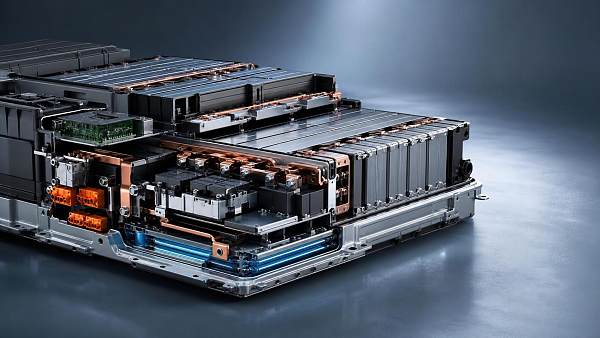
- Battery cells, modules, and full battery packs
- Battery management system (BMS) boards, chips, and wiring assemblies
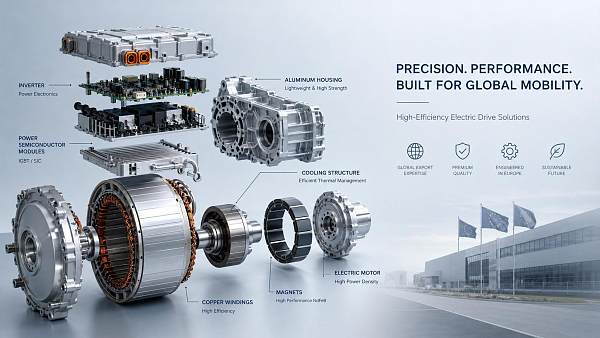
- Power electronics such as inverters, converters, and onboard chargers
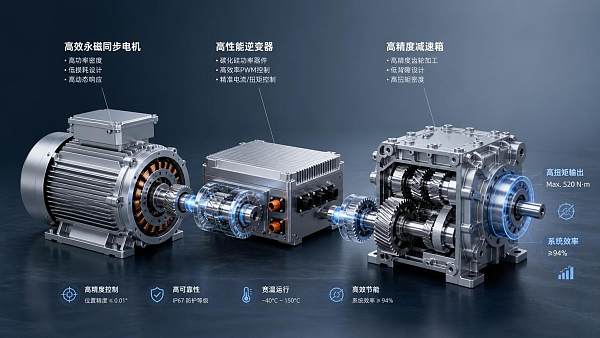
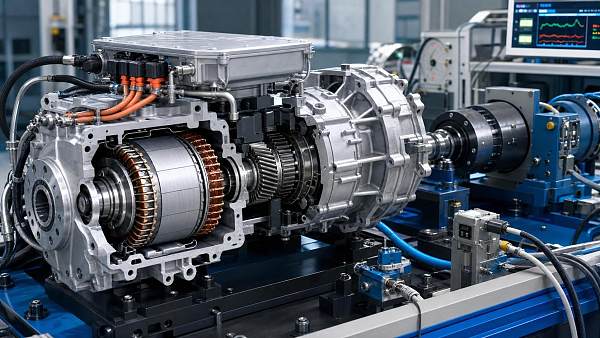
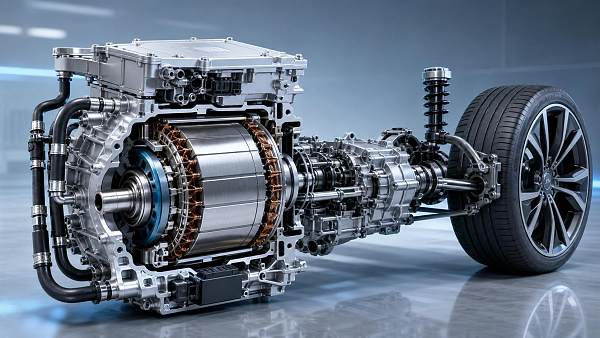
- Electric motor assemblies and drive units
- High-voltage connectors, busbars, and cable assemblies
- Thermal management components linked to battery temperature control
- Safety-critical sensors and control modules
These parts sit at the intersection of compliance, product liability, technical complexity, and global supply chain exposure. If one supplier batch fails, the impact can extend across vehicle performance, service operations, aftermarket support, and brand trust.
Why battery systems sit at the top of the traceability list
Among all EV components, battery systems face the toughest traceability demands. The reason is simple: they combine safety risk, high value, regulatory scrutiny, and long lifecycle responsibility.
For batteries, traceability should ideally extend across multiple layers:
- Raw material source visibility for critical minerals and processed materials
- Cell chemistry identification and production batch records
- Module assembly mapping
- Pack-level serial tracking
- Transport, storage, and handling history
- Vehicle installation and service replacement history
For buyers and sourcing teams, this matters because battery quality issues are rarely isolated. A thermal event, abnormal degradation curve, or balancing problem often requires looking back through supplier records, manufacturing lots, assembly dates, and logistics conditions. Without robust traceability, root-cause analysis becomes slower, more expensive, and less defensible in front of customers or regulators.
Battery traceability is also increasingly tied to cross-border trade expectations. Importers, distributors, and OEM-facing suppliers are under growing pressure to prove origin, process consistency, and chain-of-custody integrity.
Why EV motor assemblies and drive units also need deep tracking
Electric motors may appear less controversial than batteries, but they are still among the most traceability-sensitive EV parts. Motor assemblies involve tight manufacturing tolerances, specialized materials, insulation systems, magnets, rotor-stator balancing, and highly controlled assembly processes. A defect in any of these areas can affect efficiency, noise, vibration, thermal behavior, and durability.
Traceability is especially important for:
- Rotor and stator production batches
- Magnet material source and grade
- Winding materials and insulation systems
- Bearing supplier lots
- Shaft machining records
- End-of-line testing data
From a commercial standpoint, traceable motor assemblies support more accurate warranty assessment and more credible supplier evaluation. For distributors and replacement parts buyers, it also helps confirm part authenticity, compatibility, and production consistency across regional supply channels.
Power electronics are small in size but high in traceability risk
Inverters, DC-DC converters, onboard chargers, control units, and related semiconductor-heavy assemblies often create traceability challenges out of proportion to their size. These components are vulnerable to hidden quality variation, firmware version issues, thermal stress, and counterfeit substitution in fragmented supply chains.
What makes them demanding is the need to track not just the physical unit, but also the manufacturing and software context around it. Effective traceability may include:
- Serial number and production date
- Semiconductor batch or wafer source where available
- PCB assembly line records
- Component revision history
- Firmware version control
- Test and calibration results
For procurement and business assessment teams, this is where supplier maturity becomes highly visible. A supplier that can provide detailed traceability on electronic assemblies usually offers stronger process control overall. That often translates into lower field failure risk and faster incident containment.
High-voltage connectors, cables, and thermal parts are often underestimated
Some of the most overlooked EV parts in traceability planning are not the most expensive ones, but the ones that can silently compromise system reliability. High-voltage connectors, cable assemblies, seals, cooling plates, pumps, valves, and thermal interface materials may not drive headline discussions, yet failures here can disable vehicles, damage battery systems, or create serious safety concerns.
These parts deserve stricter tracking when they are:
- Installed in high-voltage environments
- Exposed to heat cycling, vibration, or moisture
- Required for battery cooling performance
- Supplied by multiple regional vendors
- Frequently replaced in service networks
For aftermarket operations, these are exactly the parts where weak documentation creates confusion. If a replacement cooling component or cable harness lacks clear batch history, matching records, or specification transparency, service teams can struggle to verify fit, quality, and liability boundaries.
What kind of traceability data buyers should actually ask for
Many suppliers claim they offer traceability, but the quality of that traceability varies widely. For practical sourcing decisions, buyers should move beyond generic promises and request specific traceability elements.
Useful checkpoints include:
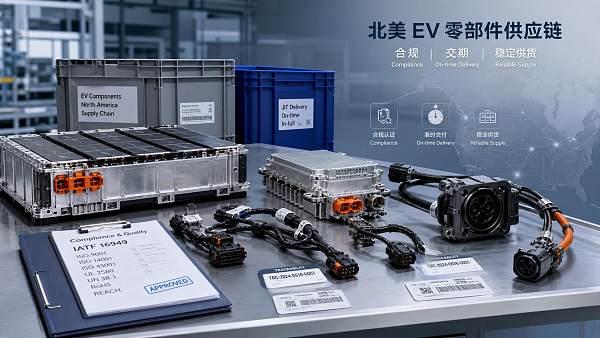
- Lot traceability: Can the supplier link every shipment to manufacturing batch records?
- Serial traceability: For critical parts, can individual units be traced through production and testing?
- Material traceability: Can they identify source materials or subcomponent origins?
- Process traceability: Are key production parameters and quality checkpoints recorded?
- Test traceability: Can they provide end-of-line, performance, or safety test records?
- Change traceability: Are engineering changes, software revisions, or supplier substitutions documented?
- Logistics traceability: Are packaging, storage, and shipment conditions controlled and recorded where necessary?
This kind of detail helps buyers compare suppliers more effectively, especially when evaluating industrial parts manufacturers across different countries or compliance regimes.
How to judge whether a supplier’s traceability system is truly reliable
For commercial teams, the real issue is not whether traceability exists on paper, but whether it will hold up during a failure investigation, audit, recall, or warranty dispute.
A more reliable supplier usually shows the following signs:
- Clear part identification rules across all production sites
- Consistent documentation format for batches, revisions, and inspections
- Fast retrieval of historical records
- Integration between ERP, MES, quality, and warehouse systems
- Documented containment and recall procedures
- Traceability extending to key sub-tier suppliers
- Evidence from past customer audits or corrective actions
If a supplier cannot quickly answer basic questions about production lot mapping, subcomponent sourcing, or test record retrieval, that is a warning sign. In EV supply chains, weak traceability often signals broader weaknesses in process discipline.
Why traceability matters for aftermarket parts sourcing and distribution
Traceability is not just an OEM issue. It matters heavily in the aftermarket, especially as EV service ecosystems expand and more distributors, agents, and regional stockists begin handling specialized replacement components.
In aftermarket and cross-border parts trade, strong traceability helps with:
- Confirming authenticity and reducing counterfeit risk
- Matching exact revisions for service compatibility
- Supporting warranty decisions
- Managing recall communication more precisely
- Reducing overstocking caused by uncertain part identification
- Improving customer confidence in high-value replacements
For distributors and procurement managers, traceability therefore becomes a commercial advantage, not just a quality requirement. Better records improve inventory confidence, lower dispute frequency, and support more scalable regional operations.
A practical prioritization framework for procurement teams
If resources are limited, not every EV part needs the same level of tracking. A practical approach is to classify parts into three traceability levels:
- Level 1: Full serial-level traceability
Use for battery packs, battery modules, BMS units, drive units, inverters, and other safety- or warranty-critical parts. - Level 2: Batch-level traceability
Use for connectors, cable assemblies, pumps, sensors, cooling components, and precision electronic subassemblies. - Level 3: Standard inventory traceability
Use for lower-risk hardware and non-critical accessories where failure impact is limited.
This framework helps companies balance compliance, operational cost, and supply chain visibility. It also gives sourcing teams a clearer basis for supplier onboarding, RFQ design, and contract requirements.
Conclusion: the toughest traceability demands belong to the parts with the highest downstream risk
When buyers ask which electric vehicle parts need the strongest traceability, the answer should be guided by risk, not by product category alone. Battery systems remain the top priority, followed closely by electric motor assemblies, power electronics, high-voltage interconnects, and thermal management components that affect safety and reliability.
For information researchers, procurement professionals, business evaluators, and distribution partners, the most useful mindset is this: traceability is not just about tracking where a part came from. It is about proving quality consistency, reducing recall exposure, protecting aftermarket operations, and making better sourcing decisions in a more demanding EV supply chain.
Companies that treat traceability as a strategic procurement criterion, rather than a paperwork exercise, will be better positioned to manage risk, evaluate suppliers, and build trust across global industrial parts networks.
Recommended News
 Sep 12, 2026What does UN 38.3 testing cover for EV battery shipments?EV battery UN 38.3 testing covers altitude, thermal, vibration, shock, short-circuit, overcharge, and discharge risks. Learn key compliance steps for safer EV battery shipments.
 Aug 24, 2026How to compare electric drive components for torque and efficiencyElectric drive components comparison starts with real load profiles. Learn how to evaluate torque, efficiency, motor-inverter-gearbox fit, and avoid costly selection mistakes.
 Jul 29, 2026400V EV Battery Components Explained: Key Parts, Functions, and System Design BasicsEV battery components 400V explained clearly: discover key parts, core functions, safety logic, thermal design, and system basics to evaluate EV battery packs with confidence.
 Jul 18, 2026Automotive Component Rating Standards Explained: How to Compare Load, Temperature, and Safety LimitsAutomotive component rating standards explained clearly: learn how to compare load, temperature, and safety limits to reduce sourcing risk, improve compliance, and choose parts with confidence.
 Jul 15, 2026EV Components North America: Sourcing Priorities, Compliance, and Lead Time FactorsEV components North America buyers now face tougher sourcing decisions. Explore compliance risks, lead time pressures, and smarter strategies to reduce disruption and improve EV supply chain performance.
 Jul 13, 2026How to Evaluate a Battery Components Exporter for Quality, Traceability, and Lead TimeBattery components exporter selection goes beyond price. Learn how to assess quality control, traceability, and lead time to reduce supply risk and choose a reliable partner.
 Jul 12, 2026High Voltage EV Batteries vs Standard Packs: Key Design and Safety DifferencesHigh voltage EV batteries vs standard packs: explore the key design, charging, efficiency, and safety differences to choose the right EV battery architecture with confidence.
![]() Jul 07, 2026EV Accessories Buying Guide: Which Add-Ons Matter for Safety, Charging, and Daily Use?EV accessories buying guide: discover which add-ons truly improve charging, safety, and daily convenience, so you can choose smarter, safer gear with confidence.
Jul 07, 2026EV Accessories Buying Guide: Which Add-Ons Matter for Safety, Charging, and Daily Use?EV accessories buying guide: discover which add-ons truly improve charging, safety, and daily convenience, so you can choose smarter, safer gear with confidence. Jun 30, 2026EV Motor Selection Guide: Torque, Efficiency, Cooling, and Cost Trade-OffsEV motor selection guide covering torque, efficiency, cooling, and cost trade-offs. Learn how to choose the right EV motor for better range, reliability, and total value.
 Jun 29, 2026Permanent Magnet EV Motor Selection: Torque, Efficiency, Cooling, and Cost Trade-OffsPermanent magnet EV motor selection explained: compare torque, efficiency, cooling, and total cost trade-offs to choose the right EV drive solution with confidence.
 Jun 27, 2026Sourcing Guide for EV Components: How to Compare Suppliers, Lead Times, and MOQSourcing guide EV components for procurement teams: compare suppliers, lead times, MOQ, quality, and total cost to reduce risk and make smarter EV sourcing decisions.
 Jun 27, 2026Electric Drive Components Price in Europe: What Drives Cost by Motor, Inverter, and VolumeElectric drive components price Europe explained: see how motor design, inverter technology, and order volume shape real costs in Europe, and compare suppliers with greater confidence.
 Jun 25, 2026How Long Life Mobility Components Reduce Maintenance in High-Use EquipmentLong life mobility components cut maintenance by matching real load, floor, and cleaning conditions. See how smarter selection improves uptime, lowers service costs, and extends equipment life.
 Jun 23, 2026Spark Plugs OEM Sourcing Guide: Key Specs, Compatibility Checks, and Supplier RisksSpark plugs OEM sourcing guide covering key specs, compatibility checks, total cost, and supplier risks—learn how to avoid fitment errors, returns, and costly quality issues.
 Jun 13, 2026Vehicle Electronics Selection Guide: Key Standards, Interfaces, and Reliability FactorsVehicle electronics selection starts with standards, interfaces, and reliability. Learn how to compare components, reduce integration risk, and choose smarter for long-term performance.
 Jun 06, 2026What Is a BMS in Battery Systems? Functions, Key Components, and Selection BasicsBMS explained: learn what a Battery Management System does, its key components, and how to choose the right BMS for safer, longer-lasting, better-integrated battery systems.
 Jun 02, 2026Solid-State Battery Breakthroughs: What to Verify Before EV AdoptionSolid-state battery breakthroughs are reshaping EV strategy—learn what to verify in energy density, cycle life, safety, cost, and supplier readiness before adoption.
 May 31, 2026Why is EV battery tech reshaping range expectations?EV battery tech is redefining real-world range through smarter chemistry, thermal control, fast charging, and software—discover what matters beyond mileage.
![]() May 19, 2026Why long-lifespan solid-state batteries matter nowSolid-state battery breakthroughs long lifespan are reshaping EVs, grid storage, and industry. Discover why longer life, safer performance, and lower total cost matter now.
May 19, 2026Why long-lifespan solid-state batteries matter nowSolid-state battery breakthroughs long lifespan are reshaping EVs, grid storage, and industry. Discover why longer life, safer performance, and lower total cost matter now.![]() May 19, 2026Is off-grid lithium storage worth the upfront cost?Lithium battery storage for off-grid applications can justify higher upfront costs through lower maintenance, better efficiency, and stronger long-term ROI. See when it pays off.
May 19, 2026Is off-grid lithium storage worth the upfront cost?Lithium battery storage for off-grid applications can justify higher upfront costs through lower maintenance, better efficiency, and stronger long-term ROI. See when it pays off.![]() May 19, 2026Are solid-state battery breakthroughs finally lifting energy density?Solid-state battery breakthroughs in high energy density are moving beyond hype. Learn what technical evaluators should verify on cycle life, safety, cost, and scalable commercialization.
May 19, 2026Are solid-state battery breakthroughs finally lifting energy density?Solid-state battery breakthroughs in high energy density are moving beyond hype. Learn what technical evaluators should verify on cycle life, safety, cost, and scalable commercialization. May 18, 2026Why portable lithium battery storage needs better designLithium battery storage portable design matters more than ever. Discover how better safety, mobility, and charging design improve backup, travel, and field power performance.
 May 17, 2026What next-gen EV charging must solve beyond faster speedNext-gen wireless charging for electric vehicles must solve efficiency, safety, interoperability, and real-world deployment fit—not just speed. Explore what makes EV charging scalable and investment-ready.
 May 17, 2026How close are solid-state batteries to real EV production?Solid-state battery breakthroughs for electric vehicles are moving beyond the lab. Discover how close they are to real EV production, what still blocks scale-up, and which milestones matter most.