


Search News
Global Industrial Intelligence Hub (GIIH)Industry Portal
Global Industrial Intelligence Hub (GIIH)Status
Standard Access
Upgrade to PremiumNewsWhy is EV battery tech reshaping range expectations?
Time
Click Count
Why EV Battery Tech Is Reshaping Range Expectations
EV battery tech is redefining how engineers, automakers, and fleet planners evaluate real-world driving range.
As cell chemistry, thermal management, charging architecture, and battery management systems advance together, range is no longer judged only by pack size.
For technical evaluation, the central question is how EV battery tech converts stored energy into usable, safe, durable mobility.
This matters across passenger vehicles, logistics fleets, industrial transport, shared mobility, and emerging energy storage ecosystems.
Range Expectations Are Moving Beyond Advertised Mileage
The electric mobility market has entered a more mature comparison cycle.
Early discussions often focused on the largest pack and the highest official range number.
Today, EV battery tech shifts attention toward range stability, charging recovery, degradation control, and energy efficiency under stress.
A vehicle with moderate rated range can outperform a larger-pack model in daily operation.
That happens when EV battery tech improves thermal balance, reduces internal resistance, and manages energy intelligently.
Cold weather, highway speeds, heavy loads, and fast charging cycles now expose the real quality of the battery system.
This is why range expectations are becoming more practical, data-based, and lifecycle-oriented.
Trend Signals Showing a New Battery Performance Era
Several industry signals show that EV battery tech is changing competitive logic.
Vehicle platforms are increasingly designed around battery architecture instead of adapting batteries to legacy layouts.
Charging networks are also influencing pack design, voltage selection, cooling capacity, and onboard software strategies.
Battery warranties are becoming more detailed, reflecting deeper confidence in degradation modeling and lifecycle monitoring.
Fleet operators now compare usable range per day, not only full-charge range under laboratory conditions.
In this context, EV battery tech becomes a strategic indicator for total vehicle value.
- More 800V platforms are entering premium and commercial vehicle segments.
- Lithium iron phosphate systems are expanding beyond entry-level applications.
- Cell-to-pack and structural pack designs are improving packaging efficiency.
- Battery management systems are using richer sensor data and predictive algorithms.
- Thermal management is becoming a core range protection technology.
What Is Driving the Shift in EV Battery Tech?
The transformation is not caused by one breakthrough.
It comes from synchronized progress across materials science, electronics, software, manufacturing, and charging infrastructure.
These drivers show why EV battery tech must be evaluated as a complete system.
A strong cell alone cannot guarantee strong range performance.
The pack, cooling loop, power electronics, software, and charging strategy must work together.
Cell Chemistry Is Changing the Meaning of Usable Range
Chemistry remains the foundation of EV battery tech.
Nickel-rich chemistries have supported long-range vehicles with high energy density.
However, lithium iron phosphate has gained momentum because of cost control, safety, and cycle life advantages.
This creates a more nuanced range discussion.
A slightly lower energy density can still produce attractive ownership value when durability and charging consistency improve.
Sodium-ion development also adds a new layer to future EV battery tech planning.
It may not dominate long-range vehicles soon, but it could serve low-cost, short-distance, and cold-region mobility.
Solid-state batteries remain a major watchpoint.
Their promise includes higher energy density, improved safety potential, and better packaging flexibility.
Yet commercialization depends on manufacturing yield, interface stability, cost, and repeatable quality.
Thermal Management Is Becoming a Range Insurance Layer
Real-world range often fails where thermal management fails.
Cold temperatures reduce electrochemical activity and increase energy demand for cabin heating.
Hot conditions accelerate degradation risks and can limit charging or power output.
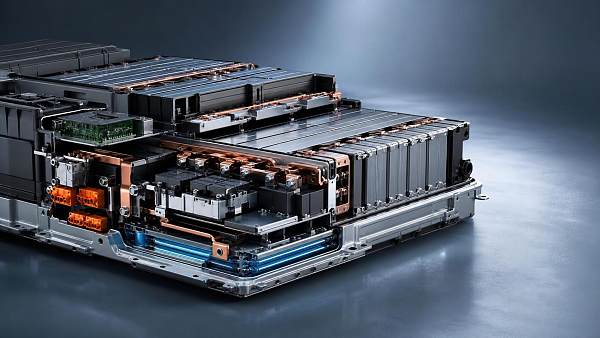
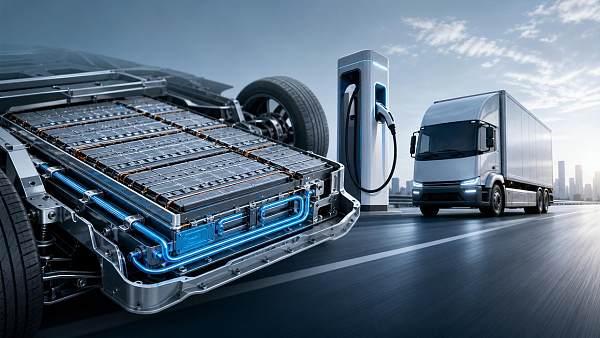
Modern EV battery tech uses liquid cooling, heat pumps, insulation, predictive preconditioning, and thermal simulation.
The goal is not only comfort or safety.
The goal is protecting range repeatability across seasons, routes, and duty cycles.
This is especially important for logistics, ride-hailing, municipal fleets, and high-mileage industrial applications.
When temperature variation is controlled, route planning becomes more reliable and charging windows become easier to schedule.
Charging Architecture Is Redefining Practical Range
Range is no longer only about how far a vehicle travels after one full charge.
It is also about how quickly usable range can be restored.
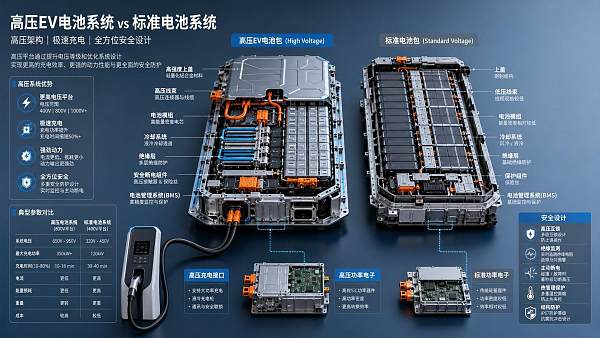
High-voltage platforms and improved charging curves make EV battery tech more operationally flexible.
A vehicle that adds significant range in 15 minutes changes daily behavior.
This reduces range anxiety without requiring a much larger pack.
However, charging speed must be assessed together with battery aging.
Aggressive fast charging can increase stress if thermal control and software safeguards are weak.
Strong EV battery tech balances fast energy intake with long-term capacity retention.
Software Is Turning Battery Packs Into Intelligent Assets
Battery management systems are central to the new range conversation.
They estimate state of charge, state of health, cell balancing needs, and available power.
More advanced EV battery tech uses predictive models based on driving style, temperature, elevation, and charging history.
This improves the accuracy of displayed range and reduces unexpected performance gaps.
Over-the-air updates can also refine energy management after delivery.
That means range may improve through software calibration, not only hardware redesign.
For industrial intelligence analysis, this creates a new evaluation challenge.
The battery is no longer a static component; it is a data-driven performance platform.
How the Shift Affects Mobility, Supply Chains, and Energy Planning
The impact of EV battery tech extends beyond vehicle specifications.
It changes procurement logic, infrastructure planning, maintenance forecasting, and residual value assessment.
In passenger mobility, better range stability improves confidence in electric vehicle adoption.
In commercial fleets, better battery durability supports higher asset utilization and lower downtime risk.
In supply chains, chemistry selection influences mineral demand, recycling pathways, and regional production strategies.
In energy systems, vehicle batteries increasingly interact with charging hubs, renewable generation, and grid flexibility programs.
- Vehicle platforms gain value from efficient packaging and scalable pack architecture.
- Charging operators must match power levels with battery acceptance capability.
- Service networks need stronger diagnostics for battery health and thermal systems.
- Recycling ecosystems benefit from clearer chemistry and lifecycle traceability.
- Policy planning becomes more connected to grid capacity and mineral security.
Key Factors to Watch When Evaluating EV Battery Tech
A modern range assessment should combine laboratory data, field performance, and lifecycle economics.
Official range remains useful, but it should not be treated as the final decision point.
The following factors reveal whether EV battery tech can support dependable real-world outcomes.
- Usable energy window, not only gross battery capacity.
- Range retention under cold weather, high speed, and load variation.
- Charging curve stability from low to high state of charge.
- Thermal recovery speed after repeated fast charging.
- Cycle life under realistic charging and driving patterns.
- Battery management transparency and diagnostic accessibility.
- Safety validation across abuse, impact, and thermal runaway scenarios.
- Repairability, modularity, and end-of-life recycling readiness.
A Practical Framework for Future Range Judgments
Range expectations should be reframed from a single number into a performance envelope.
This envelope should cover normal driving, peak demand, charging recovery, degradation, and second-life potential.
This approach helps separate marketing claims from operational capability.
It also aligns EV battery tech evaluation with financial, environmental, and infrastructure planning.
What Comes Next for Range Expectations?
The next stage will likely emphasize balanced performance instead of maximum range alone.
More vehicles will optimize for charging speed, battery life, safety, and cost.
EV battery tech will also become more regionalized.
Cold climates, dense cities, long-haul corridors, and emerging markets may require different chemistry and pack strategies.
Artificial intelligence will improve degradation prediction and route-specific energy management.
Battery passports, recycling rules, and carbon accounting will add new decision layers.
From the GIIH perspective, range is becoming an industrial intelligence issue.
It connects materials, manufacturing, logistics, sustainability, software, and global trade strategy.
Action Steps for Smarter Decisions
Start by comparing EV battery tech through real operating scenarios, not brochure figures.
Build evaluation models around climate, route length, payload, charging access, and expected asset life.
Track chemistry roadmaps, pack integration trends, charging standards, and battery health data availability.
Use lifecycle cost and range reliability as paired metrics.
The strongest decisions will come from combining technical evidence with market intelligence.
As EV battery tech advances, range expectations will keep shifting from bigger numbers to better certainty.
GIIH will continue tracking these signals across mobility, supply chains, and sustainability systems.
For deeper strategic insight, follow emerging battery intelligence, charging ecosystem updates, and industrial mobility analysis through GIIH.
Recommended News
 Sep 12, 2026What does UN 38.3 testing cover for EV battery shipments?EV battery UN 38.3 testing covers altitude, thermal, vibration, shock, short-circuit, overcharge, and discharge risks. Learn key compliance steps for safer EV battery shipments.
 Aug 24, 2026How to compare electric drive components for torque and efficiencyElectric drive components comparison starts with real load profiles. Learn how to evaluate torque, efficiency, motor-inverter-gearbox fit, and avoid costly selection mistakes.
 Jul 29, 2026400V EV Battery Components Explained: Key Parts, Functions, and System Design BasicsEV battery components 400V explained clearly: discover key parts, core functions, safety logic, thermal design, and system basics to evaluate EV battery packs with confidence.
 Jul 18, 2026Automotive Component Rating Standards Explained: How to Compare Load, Temperature, and Safety LimitsAutomotive component rating standards explained clearly: learn how to compare load, temperature, and safety limits to reduce sourcing risk, improve compliance, and choose parts with confidence.
 Jul 15, 2026EV Components North America: Sourcing Priorities, Compliance, and Lead Time FactorsEV components North America buyers now face tougher sourcing decisions. Explore compliance risks, lead time pressures, and smarter strategies to reduce disruption and improve EV supply chain performance.
 Jul 13, 2026How to Evaluate a Battery Components Exporter for Quality, Traceability, and Lead TimeBattery components exporter selection goes beyond price. Learn how to assess quality control, traceability, and lead time to reduce supply risk and choose a reliable partner.
 Jul 12, 2026High Voltage EV Batteries vs Standard Packs: Key Design and Safety DifferencesHigh voltage EV batteries vs standard packs: explore the key design, charging, efficiency, and safety differences to choose the right EV battery architecture with confidence.
![]() Jul 07, 2026EV Accessories Buying Guide: Which Add-Ons Matter for Safety, Charging, and Daily Use?EV accessories buying guide: discover which add-ons truly improve charging, safety, and daily convenience, so you can choose smarter, safer gear with confidence.
Jul 07, 2026EV Accessories Buying Guide: Which Add-Ons Matter for Safety, Charging, and Daily Use?EV accessories buying guide: discover which add-ons truly improve charging, safety, and daily convenience, so you can choose smarter, safer gear with confidence. Jun 30, 2026EV Motor Selection Guide: Torque, Efficiency, Cooling, and Cost Trade-OffsEV motor selection guide covering torque, efficiency, cooling, and cost trade-offs. Learn how to choose the right EV motor for better range, reliability, and total value.
 Jun 29, 2026Permanent Magnet EV Motor Selection: Torque, Efficiency, Cooling, and Cost Trade-OffsPermanent magnet EV motor selection explained: compare torque, efficiency, cooling, and total cost trade-offs to choose the right EV drive solution with confidence.
 Jun 27, 2026Sourcing Guide for EV Components: How to Compare Suppliers, Lead Times, and MOQSourcing guide EV components for procurement teams: compare suppliers, lead times, MOQ, quality, and total cost to reduce risk and make smarter EV sourcing decisions.
 Jun 27, 2026Electric Drive Components Price in Europe: What Drives Cost by Motor, Inverter, and VolumeElectric drive components price Europe explained: see how motor design, inverter technology, and order volume shape real costs in Europe, and compare suppliers with greater confidence.
 Jun 25, 2026How Long Life Mobility Components Reduce Maintenance in High-Use EquipmentLong life mobility components cut maintenance by matching real load, floor, and cleaning conditions. See how smarter selection improves uptime, lowers service costs, and extends equipment life.
 Jun 23, 2026Spark Plugs OEM Sourcing Guide: Key Specs, Compatibility Checks, and Supplier RisksSpark plugs OEM sourcing guide covering key specs, compatibility checks, total cost, and supplier risks—learn how to avoid fitment errors, returns, and costly quality issues.
 Jun 13, 2026Vehicle Electronics Selection Guide: Key Standards, Interfaces, and Reliability FactorsVehicle electronics selection starts with standards, interfaces, and reliability. Learn how to compare components, reduce integration risk, and choose smarter for long-term performance.
 Jun 06, 2026What Is a BMS in Battery Systems? Functions, Key Components, and Selection BasicsBMS explained: learn what a Battery Management System does, its key components, and how to choose the right BMS for safer, longer-lasting, better-integrated battery systems.
 Jun 02, 2026Solid-State Battery Breakthroughs: What to Verify Before EV AdoptionSolid-state battery breakthroughs are reshaping EV strategy—learn what to verify in energy density, cycle life, safety, cost, and supplier readiness before adoption.
 May 31, 2026Why is EV battery tech reshaping range expectations?EV battery tech is redefining real-world range through smarter chemistry, thermal control, fast charging, and software—discover what matters beyond mileage.
![]() May 19, 2026Why long-lifespan solid-state batteries matter nowSolid-state battery breakthroughs long lifespan are reshaping EVs, grid storage, and industry. Discover why longer life, safer performance, and lower total cost matter now.
May 19, 2026Why long-lifespan solid-state batteries matter nowSolid-state battery breakthroughs long lifespan are reshaping EVs, grid storage, and industry. Discover why longer life, safer performance, and lower total cost matter now.![]() May 19, 2026Is off-grid lithium storage worth the upfront cost?Lithium battery storage for off-grid applications can justify higher upfront costs through lower maintenance, better efficiency, and stronger long-term ROI. See when it pays off.
May 19, 2026Is off-grid lithium storage worth the upfront cost?Lithium battery storage for off-grid applications can justify higher upfront costs through lower maintenance, better efficiency, and stronger long-term ROI. See when it pays off.![]() May 19, 2026Are solid-state battery breakthroughs finally lifting energy density?Solid-state battery breakthroughs in high energy density are moving beyond hype. Learn what technical evaluators should verify on cycle life, safety, cost, and scalable commercialization.
May 19, 2026Are solid-state battery breakthroughs finally lifting energy density?Solid-state battery breakthroughs in high energy density are moving beyond hype. Learn what technical evaluators should verify on cycle life, safety, cost, and scalable commercialization. May 18, 2026Why portable lithium battery storage needs better designLithium battery storage portable design matters more than ever. Discover how better safety, mobility, and charging design improve backup, travel, and field power performance.
 May 17, 2026What next-gen EV charging must solve beyond faster speedNext-gen wireless charging for electric vehicles must solve efficiency, safety, interoperability, and real-world deployment fit—not just speed. Explore what makes EV charging scalable and investment-ready.
 May 17, 2026How close are solid-state batteries to real EV production?Solid-state battery breakthroughs for electric vehicles are moving beyond the lab. Discover how close they are to real EV production, what still blocks scale-up, and which milestones matter most.