


Search News
Global Industrial Intelligence Hub (GIIH)Industry Portal
Global Industrial Intelligence Hub (GIIH)Status
Standard Access
Upgrade to PremiumNewsHow accurate should medical diagnostic equipment be?
Time
Click Count
How accurate should medical diagnostic equipment be in real-world clinical and technical settings? For technical evaluators, Medical diagnostic equipment high precision is not simply a performance claim—it directly affects diagnostic confidence, regulatory compliance, patient safety, and lifecycle value. This article explores how to assess the right precision threshold by balancing clinical requirements, operating environments, calibration standards, and cost-performance considerations.
Accuracy Is Not “As High As Possible”—It Must Be Clinically Sufficient and Technically Defensible
Technical evaluators rarely benefit from asking for the highest measurable accuracy on paper. The better question is whether the device delivers enough accuracy to support safe, repeatable clinical decisions.
In practice, the right target depends on the diagnostic use case, the biological variable being measured, the expected risk of error, and the downstream consequences of false results.
A blood glucose meter, ultrasound system, immunoassay analyzer, or digital pathology platform each faces different tolerance limits. Their acceptable error ranges cannot be judged by one universal precision standard.
That is why Medical diagnostic equipment high precision should be interpreted as fitness for purpose. A device must be precise enough to protect outcomes without imposing unnecessary cost or complexity.
For technical teams, this means moving beyond marketing claims like “ultra-precise” or “best-in-class.” The real task is to verify whether analytical and operational performance align with the intended clinical context.
What Technical Evaluators Usually Need to Know First
When assessing diagnostic equipment, most evaluators are not looking for abstract theory. They want a practical framework for determining whether the equipment is reliable, compliant, and economically justified.
The first concern is decision impact. If the device result influences triage, treatment initiation, dose selection, surgery planning, or infection control, accuracy requirements rise significantly.
The second concern is error tolerance under actual use conditions. Bench performance in controlled settings matters, but field stability under variable temperature, humidity, vibration, and operator skill matters more.
The third concern is whether precision remains stable over time. Initial factory performance is only one part of the evaluation. Drift, recalibration intervals, maintenance burden, and consumable dependence all affect value.
The fourth concern is auditability. Evaluators need evidence that performance can be documented, reproduced, and defended during regulatory review, procurement comparison, or post-market quality investigation.
Start with Clinical Risk: How Wrong Can the Result Be Before It Changes Care?
The most useful way to define required accuracy is to ask what happens when the result is wrong by a certain margin. This immediately connects engineering data to clinical relevance.
For example, a small deviation in a wellness screening device may be acceptable if it does not trigger treatment. The same deviation could be unacceptable in an intensive care setting.
In infectious disease testing, insufficient sensitivity may miss true positives, while poor specificity may create unnecessary isolation, retesting, or treatment. Accuracy must be linked to risk asymmetry.
In imaging, precision is not only numerical. Spatial resolution, contrast consistency, artifact control, and interpretation reproducibility all influence whether a lesion is detected or missed.
Therefore, evaluators should define allowable error in terms of clinical decision thresholds. A device is accurate enough only if deviations do not materially increase the probability of harmful decisions.
Separate Accuracy, Precision, Sensitivity, Specificity, and Repeatability
Many equipment assessments become confusing because stakeholders use key performance terms interchangeably. For procurement and validation, these concepts should remain clearly separated.
Accuracy describes closeness to the true or accepted reference value. Precision describes how consistently repeated measurements cluster together, whether or not they are close to truth.
Sensitivity and specificity relate to diagnostic classification performance. Repeatability refers to variation under the same conditions, while reproducibility concerns variation across operators, sites, or time.
A device may be highly precise yet consistently biased. It may also be accurate in controlled calibration tests but unreliable in routine workflow. Both situations create hidden risk.
For this reason, Medical diagnostic equipment high precision should never be evaluated on a single performance metric. A balanced technical review requires multiple dimensions of evidence.
What Evidence Should Be Reviewed During Technical Evaluation?
Evaluators should begin with the manufacturer’s intended use statement, because every performance claim must be judged against the stated diagnostic application and target patient population.
Next, review analytical validation data. This may include bias studies, linearity, limits of detection, limits of quantification, carryover, interference testing, and stability across operating ranges.
Clinical performance data is equally important. Compare device results against accepted reference methods, gold-standard procedures, or clinically established comparators under representative use conditions.
Pay close attention to sample size, confidence intervals, outlier treatment, and subgroup analysis. A strong average result may conceal weaknesses in pediatric, geriatric, or high-risk populations.
Also review performance under stress conditions. Power fluctuations, reagent lot variation, transportation shock, long idle periods, and user handling differences often reveal practical weaknesses invisible in ideal testing.
Operating Environment Often Determines Real Accuracy More Than Factory Specification
One of the most common procurement errors is overvaluing specification-sheet performance while undervaluing environmental robustness. Real clinical environments are rarely as stable as validation laboratories.
Point-of-care devices may face movement, dust, inconsistent storage, frequent startup cycles, and staff turnover. Equipment used in remote settings may encounter delayed maintenance and weaker infrastructure support.
Laboratory systems also face variability. Sample preparation quality, reagent handling, ambient conditions, and network integration issues can all influence final result integrity.
Even highly advanced equipment can produce poor outcomes if environmental controls are weak. Conversely, moderately high-precision equipment with excellent stability may deliver better real-world utility.
Technical evaluators should therefore request evidence of environmental tolerance, installation requirements, uptime history, and performance consistency outside ideal reference conditions.
Calibration Strategy Is Central to Sustainable Accuracy
Accuracy is not a fixed property delivered once at installation. It is maintained through calibration discipline, quality control processes, and traceability to recognized reference standards.
Evaluators should ask how often calibration is required, what triggers recalibration, and whether calibration depends on proprietary tools, service engineers, or user-level procedures.
Traceability matters because a device result must connect back to accepted standards if it is to support regulated decision-making. Without traceable calibration, reported accuracy is harder to defend.
Internal quality controls should also be reviewed. Devices that automatically detect drift, failed controls, or abnormal measurement patterns reduce operational risk and support long-term confidence.
When comparing systems, the better choice is often not the one with the tightest headline tolerance, but the one that keeps verified accuracy stable with manageable calibration burden.
Regulatory Compliance Sets the Floor, Not Always the Optimal Target
Compliance with applicable regulations and standards is essential, but technical evaluators should not assume that meeting minimum regulatory thresholds automatically means best-fit performance for their institution.
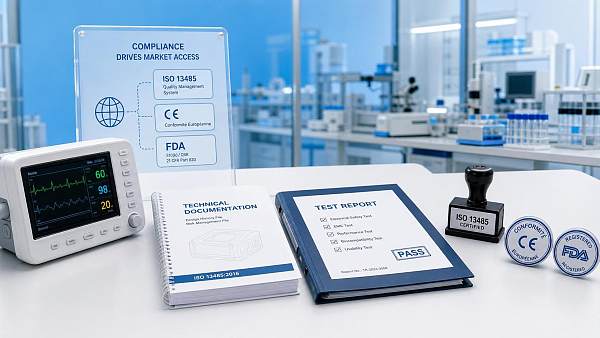
Depending on product type and market, relevant frameworks may include FDA requirements, CE marking obligations, ISO standards, IEC safety criteria, and national metrology expectations.
These frameworks help establish baseline evidence for safety, performance, quality systems, and risk management. They are critical in screening out unacceptable products during early assessment.
However, two compliant devices may perform very differently in workflow efficiency, result consistency, serviceability, software integrity, and integration with local quality management systems.
That is why compliance should be treated as the entry point. Final selection should still depend on use-case fit, operational resilience, and total evidence of dependable diagnostic performance.
How Much Precision Is Too Much?
In many buying discussions, teams assume more precision always creates more value. In reality, excessive precision can become economically inefficient or operationally unnecessary.
If a device offers tighter tolerance than the clinical decision pathway can meaningfully use, the added cost may not improve outcomes. It may instead increase service burden, consumable expense, or user complexity.
For example, a hospital may not need elite research-grade analytical sensitivity for a routine screening workflow if turnaround speed and throughput are more decisive to patient management.
Over-specification can also create hidden procurement distortion. Buyers may prioritize headline precision while overlooking interoperability, training needs, preventive maintenance, or supply chain reliability.
The goal is not maximum possible precision. The goal is optimum precision: enough to reduce material clinical and operational risk without paying for unused capability.
Total Cost of Accuracy: Looking Beyond Purchase Price
Technical evaluators should treat accuracy as a lifecycle cost issue, not only a product specification. A lower-cost device with unstable performance may create expensive downstream problems.
These problems can include repeat testing, quality investigations, delayed diagnosis, clinician distrust, inventory waste, compliance failures, and reputational damage after adverse events.
On the other hand, an extremely high-specification system may require more calibration materials, premium consumables, specialized staff training, and more frequent preventive service visits.
A sound evaluation compares total ownership cost against the value of improved confidence, reduced error rates, workflow reliability, and lower probability of clinical escalation caused by false results.
In this context, Medical diagnostic equipment high precision should be assessed as a business and risk-management variable as much as a technical feature.
A Practical Evaluation Framework for Procurement and Qualification
First, define the clinical use scenario clearly. Specify the patient group, decision threshold, expected throughput, care setting, and consequence of false positives or false negatives.
Second, set measurable acceptance criteria. These may include allowable bias, repeatability limits, uptime, calibration interval, environmental tolerance, and interoperability with existing information systems.
Third, compare manufacturer claims with independent evidence. Published studies, site references, external quality assessment data, and pilot deployment feedback are especially valuable.
Fourth, test the equipment under representative conditions whenever possible. Real users, real samples, realistic workloads, and near-routine environmental conditions often expose meaningful differences.
Fifth, evaluate service infrastructure. Spare parts access, software update control, response times, field engineer availability, and training support all influence whether target accuracy can be maintained.
Questions Technical Evaluators Should Ask Vendors
Ask what reference standards support the accuracy claim and whether traceability documentation is available. This quickly reveals the maturity and defensibility of the performance framework.
Ask how performance changes across temperature ranges, sample matrices, and operator experience levels. Robust vendors should provide clear data rather than broad assurances.
Ask about drift detection, calibration alerts, internal controls, and failure reporting. Good systems make it easier to identify degraded performance before it affects patient care.
Ask for evidence from sites comparable to your own environment. Performance in tertiary hospitals, mobile clinics, or decentralized labs can differ significantly even with the same platform.
Ask which factors most commonly cause inaccurate results in the field. Vendors that answer candidly are often better partners for long-term quality assurance than those offering only idealized claims.
Conclusion: The Right Accuracy Level Is the One That Protects Decisions Reliably
So, how accurate should medical diagnostic equipment be? It should be accurate enough that expected measurement error does not materially compromise the clinical decisions it is meant to support.
For technical evaluators, that means judging precision in context: clinical risk, operating conditions, calibration strategy, compliance requirements, service support, and total lifecycle economics.
The most effective assessments do not chase the highest specification by default. They identify the precision threshold that is clinically sufficient, operationally stable, auditable, and financially rational.
When approached this way, Medical diagnostic equipment high precision becomes more than a procurement slogan. It becomes a measurable standard for safer care, better performance, and smarter investment.
Recommended News
 Sep 10, 2026Do Health Monitoring Devices Need Local Approval Before Import?Do health monitoring devices need local regulatory approval before import? Explore classifications, market access, labels, software, and compliance steps for safer global launches.
 Sep 07, 2026How Often Should Medical Information Systems Be Updated for Compliance?How often should medical information systems be updated for compliance? Explore risk-based update schedules, security patches, access reviews, testing, and audit-ready documentation.
 Sep 01, 2026Is Digital Health Data Interoperable Across Hospital Platforms?Is digital health data interoperable across different hospital platforms? Explore standards, security, workflows, and practical steps for safer connected care.
 Aug 31, 2026How to verify a diagnostic medical equipment manufacturer's quality systemDiagnostic medical equipment manufacturer quality system verification: uncover essential checks for ISO 13485, traceability, CAPA, risk management, and supplier control.
![]() Aug 14, 2026China temporarily bans the export of helium, putting global medical and semiconductor supply chains under pressureChina’s temporary helium export ban is straining global medical imaging and chip supply chains. See how MRI, semiconductor, and logistics teams can adapt fast.
Aug 14, 2026China temporarily bans the export of helium, putting global medical and semiconductor supply chains under pressureChina’s temporary helium export ban is straining global medical imaging and chip supply chains. See how MRI, semiconductor, and logistics teams can adapt fast. Aug 10, 2026FDA Sets eSTAR Filing Rule for China IVD ExportsFDA Sets eSTAR Filing Rule for China IVD Exports: learn how the new FDA eSTAR requirement affects Chinese IVD manufacturers, compliance documents, and U.S. shipment access.
 Aug 09, 2026Patient Monitoring Equipment Research: Which Metrics Matter Most Before You Buy?Patient monitoring equipment research starts with the right metrics. Learn how to compare accuracy, alarms, connectivity, and lifecycle cost before you buy.
 Jul 28, 2026Healthcare Equipment Research in Europe: Key Market Shifts and Buyer SignalsHealthcare equipment research Europe reveals how regulation, procurement, workflow pressure, and service expectations are reshaping buyer decisions across key healthcare markets.
 Jul 11, 2026Compact Medical Technology Solutions for Small Clinics: What to Compare Before BuyingCompact medical technology solutions for small clinics: compare space fit, throughput, connectivity, maintenance, and long-term cost before you buy. Make a smarter, lower-risk equipment decision.
 Jul 10, 2026Medical Technology Solutions Price Guide: What Drives Cost and How to BudgetMedical technology solutions price guide covering key cost drivers, hidden fees, and smart budgeting methods to compare vendors, control total ownership costs, and approve with confidence.
 Jul 09, 2026Medical Supply Chain Risks: How to Prevent Delays in Regulated Device SourcingMedical supply chain risks can cause costly sourcing delays in regulated devices. Learn practical ways to prevent disruption, improve compliance, and keep global procurement moving.
 Jul 08, 2026Medical Device Specification Analysis: Which Performance Parameters Matter Most in Evaluation?Product specification analysis medical devices starts with the parameters that truly affect safety, accuracy, software readiness, and long-term reliability—learn what to prioritize before you evaluate.
 Jul 06, 2026Medical Regulatory for Devices: Which Certifications Matter Before Market Entry?Medical regulatory for devices starts before launch. Learn which certifications—ISO 13485, CE marking, FDA pathways, and risk standards—matter most for faster, safer market entry.
 Jul 03, 2026Category Comparison Under FDA Requirements: How to Evaluate Product Class DifferencesCategory comparison FDA requirements explained: learn how to assess product class differences, avoid costly pathway mistakes, and make faster, smarter regulatory decisions.
 Jul 02, 2026How to Evaluate a Medical Technology Supplier for Quality, Lead Time, and ComplianceMedical technology supplier evaluation made simple: learn how to compare quality systems, lead time reliability, and compliance readiness to reduce risk and choose with confidence.
 Jul 02, 2026How Diagnostic Medical Equipment Supports Better Care Coordination Across Clinical TeamsDiagnostic medical equipment for care coordination helps clinical teams share data faster, reduce delays, and improve outcomes. See how connected diagnostics strengthen workflow efficiency.
 Jun 28, 2026Healthcare Equipment for Patient Monitoring: How to Choose by Care Setting and Data NeedsHealthcare equipment for patient monitoring: learn how to choose the right solution by care setting, data needs, integration, and lifecycle value for safer, smarter deployment.
 Jun 26, 2026Medical Devices Category Introduction: How Products Are Grouped and Why It MattersMedical devices category introduction: learn how products are grouped, why classifications differ by market, and how smarter category insight improves compliance, sourcing, and global market entry.
 Jun 26, 2026Medical Technology Solutions for Healthcare Facilities: What to Evaluate Before BuyingMedical technology solutions for healthcare facilities: learn what to evaluate before buying, from clinical fit and integration to compliance, vendor support, and total cost.
 Jun 25, 2026Surgical Instruments Materials Compared: Stainless Steel, Titanium, and MoreSurgical instruments materials compared: explore stainless steel, titanium, tungsten carbide, and coatings to improve durability, safety, sterilization performance, and smarter sourcing decisions.
 Jun 25, 2026Diagnostic Medical Equipment for Preventive Care: What Clinics Should PrioritizeDiagnostic medical equipment for preventive care: discover what clinics should prioritize to improve early detection, streamline workflows, control costs, and support long-term growth.
 Jun 23, 2026Hospital Furniture Standards: What to Check for Safety, Hygiene, and Ward UseHospital furniture standards explained: learn what to check for safety, hygiene, load capacity, ward fit, and supplier proof before buying for reliable long-term performance.
 Jun 22, 2026How to Choose Blood Pressure Monitors for Home Use: Cuff Size, Accuracy, and MemoryBlood pressure monitors for home use vary in cuff size, accuracy, and memory. Learn how to compare features, avoid common mistakes, and choose a reliable monitor with confidence.
 Jun 20, 2026Wearable Medical Devices: Key Sensors, Data Accuracy, and Regulatory FactorsWearable medical devices explained: explore key sensors, real-world data accuracy, and regulatory factors to compare solutions, reduce risk, and make smarter healthcare decisions.