


Search News
Global Industrial Intelligence Hub (GIIH)Industry Portal
Global Industrial Intelligence Hub (GIIH)Status
Standard Access
Upgrade to PremiumNewsHow to assess an aesthetics devices OEM manufacturer
Time
Click Count
Choosing the right Aesthetics devices OEM manufacturer is not mainly about finding the lowest quote. For procurement teams, the real task is to identify a supplier that can consistently meet product, regulatory, delivery, and commercialization requirements.
A weak OEM partner can create hidden costs through quality failures, documentation gaps, delayed launches, and unstable after-sales support. A strong partner, by contrast, improves speed to market, lowers sourcing risk, and supports long-term portfolio growth.
This guide explains how procurement professionals should assess an aesthetics devices OEM manufacturer, what evidence to request, which risks to test early, and how to compare suppliers beyond price alone.
Understand the real procurement objective before comparing suppliers
Before sending RFQs, define what success looks like for your organization. In aesthetics devices sourcing, the best manufacturer is not always the biggest factory or the cheapest exporter. It is the one that fits your regulatory pathway, product strategy, and service expectations.
Start by clarifying whether you need a standard private-label device, a semi-custom platform, or a fully customized OEM or ODM solution. Each path changes lead time, validation scope, tooling needs, documentation requirements, and commercial risk.
Procurement should also align with quality, regulatory, product, and sales teams early. Many sourcing failures happen because buyers compare unit prices first, while internal stakeholders later reject the supplier due to missing certifications, weak engineering support, or poor usability.
A practical assessment begins with four questions: Can this manufacturer legally and reliably produce the device? Can they support our target markets? Can they scale with us? And can they respond when problems arise after launch?
Check whether the manufacturer has relevant product and technical experience
The first screening step is category fit. An aesthetics devices OEM manufacturer may claim broad capabilities, but procurement should confirm direct experience in the exact device segment you plan to source, such as laser, IPL, radiofrequency, HIFU, body contouring, or skin analysis systems.
Relevant experience matters because product risk profiles differ sharply across technologies. Energy-based devices involve safety controls, calibration methods, software logic, handpiece durability, and thermal management requirements that general electronics manufacturers may not manage well.
Ask for a list of existing product platforms, years of production history, and examples of markets already served. A supplier with proven shipment history in professional aesthetics usually offers better process maturity than one entering the segment for the first time.
It is also helpful to ask how much of the core technology is developed in-house. If critical modules are fully outsourced, the OEM may have limited control over troubleshooting, version changes, or long-term spare parts support.
Evaluate certifications, quality systems, and regulatory readiness
For procurement teams, quality and regulatory readiness are often stronger indicators than sales presentations. A credible aesthetics devices OEM manufacturer should provide clear evidence of its quality management system, manufacturing controls, and technical documentation discipline.
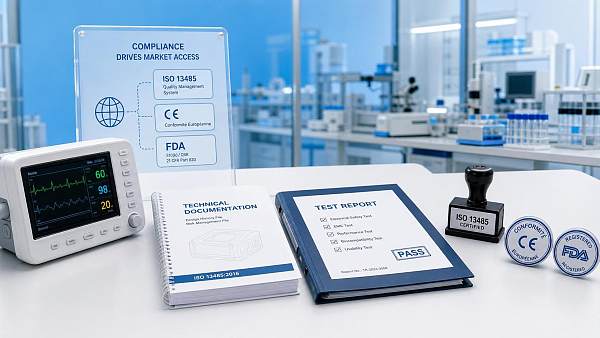
At a minimum, verify whether the supplier holds relevant certifications such as ISO 13485 where applicable, ISO 9001, and other market-specific compliance credentials. The right standard depends on product classification and the countries where the device will be sold.
Do not stop at certificate copies. Confirm scope, issuing body, expiration date, and whether the certified activities actually cover the product category you intend to purchase. Some suppliers hold certificates that look impressive but do not include the required manufacturing scope.
Ask to review documentation practices for design history, device master records, incoming inspection, process validation, final testing, traceability, nonconformance handling, and complaint feedback. Procurement does not need to audit everything, but it should confirm that systems exist and are actively used.
If your target markets include the EU, United States, Middle East, or other regulated regions, ask how the manufacturer supports registration files, test reports, labeling compliance, and post-market updates. The ability to support documentation quickly can directly affect launch timing.
Assess manufacturing capability, not just factory size
Factory scale alone does not prove manufacturing strength. Procurement should focus on whether the OEM can repeatedly produce your device to the required specification, with stable output, controlled variation, and reliable lead times.
Request details on production lines, critical process controls, calibration routines, burn-in testing, aging tests, and end-of-line inspection. For aesthetics equipment, consistency in energy output, cooling performance, software stability, and handpiece lifespan is more important than showroom appearance.
It is useful to understand which components are made internally and which are sourced externally. In-house control over key assemblies can improve responsiveness and quality. Heavy dependence on outside vendors may increase lead-time risk and make root-cause analysis slower.
Ask about monthly capacity, peak surge capacity, minimum order quantity, and line changeover flexibility. A good OEM partner should be able to explain how it manages both pilot runs and scaled production without compromising quality or creating bottlenecks.
If possible, conduct a factory audit or virtual audit with a structured checklist. Look for process flow clarity, material segregation, ESD controls where relevant, cleanliness, training records, and visual management of quality data. These practical signals often reveal more than brochures do.
Review R&D depth and customization capability carefully
Many buyers searching for an aesthetics devices OEM manufacturer need more than assembly service. They need a partner that can adapt interfaces, energy settings, housings, accessories, software language packs, branding, and user workflows for different markets or channels.
That is why R&D capability deserves close review. Ask how many engineers support hardware, software, industrial design, testing, and regulatory documentation. Also ask whether the company can modify existing platforms efficiently or whether every change creates major delays and extra costs.
Procurement should clarify what “customization” actually means. Some suppliers only offer logo changes and cosmetic housing updates. Others can redesign handpieces, update firmware, modify treatment protocols, and support integration with your accessory ecosystem.
Request case examples of past custom projects, including timeline, validation steps, and commercial outcome. A manufacturer with real OEM experience should explain how change requests are reviewed, documented, tested, approved, and transferred into mass production.
Also assess intellectual property boundaries. You should know who owns the design modifications, what restrictions apply to molds or software, and whether the supplier can sell similar configurations to competing brands. These issues affect long-term brand defensibility.
Examine product quality through evidence, samples, and failure data
Samples are necessary, but procurement should avoid judging quality only by first impressions. A device can look polished at sample stage yet perform poorly after repeated use, shipping stress, or field servicing. Evidence-based evaluation is more reliable.
Ask for product test reports covering performance consistency, lifespan, safety, environmental stress, and packaging protection. For energy-based systems, data on output stability, cooling efficiency, and handpiece cycle life are especially important.
Request information about historical defect rates, common failure modes, warranty claim patterns, and corrective actions. A transparent manufacturer that can discuss problems and improvements is usually safer than one that claims zero issues without data.
Procurement can also arrange structured sample testing with internal technical teams or external labs. Evaluate not only device performance but also UI clarity, assembly quality, consumable fit, software reliability, and ease of service. These factors shape end-user satisfaction and total cost.
Pay close attention to consumables and accessories. In many aesthetics products, recurring problems arise not from the main console but from handpieces, cables, connectors, filters, cartridges, or cooling parts. Weak accessory quality can quickly damage your brand reputation.
Look closely at supply chain resilience and component risk
In recent years, procurement has learned that supplier assessment must include upstream supply stability. A technically capable aesthetics devices OEM manufacturer can still become a risky partner if it relies on fragile component sources or single-country bottlenecks.
Ask which critical parts are sole-sourced, what safety stock is maintained, and how the manufacturer manages shortages of chips, optical parts, power modules, cooling systems, or specialized plastics. This is particularly important for devices using complex electronic or optical assemblies.
Request visibility into supplier qualification methods and substitution controls. If the OEM changes a key component, how is impact assessed? Are there validation procedures, customer notifications, and revision records? Uncontrolled substitutions can create major quality and compliance problems.
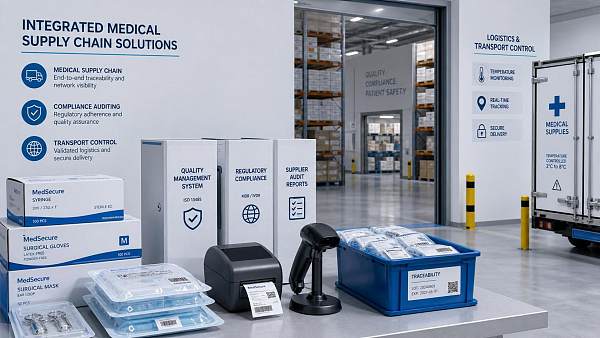
It is also worth reviewing logistics readiness, including packaging standards, export experience, freight coordination, and regional warehousing support if needed. Procurement value is not limited to factory output; it includes how smoothly products reach your distribution network.
Measure service support, communication quality, and problem resolution speed
One of the most underestimated criteria in OEM selection is service responsiveness. In aesthetics devices, post-sale problems can affect clinics, distributors, training teams, and end-user trust. Procurement should test how the manufacturer behaves before issues happen.
Evaluate communication speed during the quotation and sample phase. Are questions answered clearly? Does the team provide technical detail, or only general claims? Are timelines realistic? Early-stage communication often predicts future execution quality.
Ask about spare parts availability, technical manuals, service training, firmware update support, warranty terms, and repair turnaround time. If you operate in multiple regions, determine whether the supplier can support localized documentation and troubleshooting.
Escalation paths also matter. Procurement should know who handles urgent quality issues, field failures, or shipment delays. A dependable OEM partner usually has defined owners across sales, engineering, quality, and operations rather than leaving all problems with one account manager.
Compare total cost of ownership, not only unit price
Price matters, but the cheapest quotation can become the most expensive supply decision. Procurement should compare the total cost of ownership across shortlisted manufacturers rather than using unit cost as the primary decision driver.
Total cost includes tooling, certification support, validation expense, packaging, shipping, spare parts, warranty exposure, engineering changes, training, service burden, and the cost of delays. A higher-priced OEM may create lower lifetime cost if it reduces failures and speeds market entry.
It is also important to analyze commercial terms such as deposit structure, payment milestones, Incoterms, forecast commitments, and annual price review mechanisms. Strong cost control depends on contract clarity as much as on quoted ex-factory price.
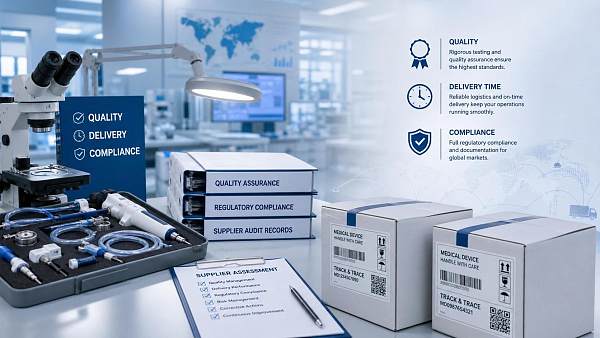
When comparing bids, create a weighted scorecard. Typical categories include compliance, product fit, quality system maturity, customization support, lead time, supply risk, service capability, and cost. This helps procurement defend decisions objectively across internal stakeholders.
Use a structured audit and supplier selection process
The most effective way to assess an aesthetics devices OEM manufacturer is through a staged evaluation process. This reduces decision bias and helps procurement identify red flags before committing to tooling, registration, or large purchase volumes.
A practical process often includes longlist screening, NDA signing, document review, capability questionnaire, sample evaluation, audit, pilot order, and final commercial negotiation. Each stage should have pass-fail criteria and cross-functional input.
During supplier review, ask direct questions. What products have you manufactured in this category for the last three years? Which certifications apply to this device? What are your top three quality issues and how were they resolved? Which components are supply constrained?
Pilot orders are particularly valuable because they reveal how the OEM performs under real conditions. Procurement can test packaging accuracy, lead-time reliability, documentation completeness, and issue handling before scaling to larger commitments.
Finally, convert the evaluation into a supplier management plan. Even after selection, track KPIs such as on-time delivery, incoming defect rate, field failure rate, response speed, and change-control compliance. Good sourcing decisions require ongoing verification.
Common red flags procurement teams should not ignore
Several warning signs often indicate elevated risk. Be cautious if a manufacturer avoids sharing quality records, provides inconsistent answers across teams, refuses audits, or cannot explain the origin of core components. These are basic transparency failures.
Other red flags include unusually short promised lead times without process evidence, frequent product specification changes, vague ownership of molds or software, and quotations that are dramatically below market level. Such offers often hide quality or service compromises.
Watch for overreliance on sales language. If the supplier emphasizes branding, exhibition presence, or catalog breadth but struggles to provide technical files, validation data, or clear process controls, procurement should investigate further before moving ahead.
Conclusion: choose the partner that reduces risk and supports growth
To assess an Aesthetics devices OEM manufacturer properly, procurement professionals should look beyond price and evaluate the supplier’s technical fit, quality systems, regulatory readiness, manufacturing control, customization strength, supply stability, and service discipline.
The best OEM partner is one that helps you launch compliant, reliable products with fewer disruptions and stronger long-term economics. In a category where product performance and brand trust are tightly linked, disciplined supplier assessment is a strategic advantage.
If your team uses a structured scorecard, validates claims with evidence, and tests execution through audits and pilot orders, you will be far more likely to select a manufacturer that supports both immediate sourcing goals and future business expansion.
Recommended News
 Sep 10, 2026Do Health Monitoring Devices Need Local Approval Before Import?Do health monitoring devices need local regulatory approval before import? Explore classifications, market access, labels, software, and compliance steps for safer global launches.
 Sep 07, 2026How Often Should Medical Information Systems Be Updated for Compliance?How often should medical information systems be updated for compliance? Explore risk-based update schedules, security patches, access reviews, testing, and audit-ready documentation.
 Sep 01, 2026Is Digital Health Data Interoperable Across Hospital Platforms?Is digital health data interoperable across different hospital platforms? Explore standards, security, workflows, and practical steps for safer connected care.
 Aug 31, 2026How to verify a diagnostic medical equipment manufacturer's quality systemDiagnostic medical equipment manufacturer quality system verification: uncover essential checks for ISO 13485, traceability, CAPA, risk management, and supplier control.
![]() Aug 14, 2026China temporarily bans the export of helium, putting global medical and semiconductor supply chains under pressureChina’s temporary helium export ban is straining global medical imaging and chip supply chains. See how MRI, semiconductor, and logistics teams can adapt fast.
Aug 14, 2026China temporarily bans the export of helium, putting global medical and semiconductor supply chains under pressureChina’s temporary helium export ban is straining global medical imaging and chip supply chains. See how MRI, semiconductor, and logistics teams can adapt fast. Aug 10, 2026FDA Sets eSTAR Filing Rule for China IVD ExportsFDA Sets eSTAR Filing Rule for China IVD Exports: learn how the new FDA eSTAR requirement affects Chinese IVD manufacturers, compliance documents, and U.S. shipment access.
 Aug 09, 2026Patient Monitoring Equipment Research: Which Metrics Matter Most Before You Buy?Patient monitoring equipment research starts with the right metrics. Learn how to compare accuracy, alarms, connectivity, and lifecycle cost before you buy.
 Jul 28, 2026Healthcare Equipment Research in Europe: Key Market Shifts and Buyer SignalsHealthcare equipment research Europe reveals how regulation, procurement, workflow pressure, and service expectations are reshaping buyer decisions across key healthcare markets.
 Jul 11, 2026Compact Medical Technology Solutions for Small Clinics: What to Compare Before BuyingCompact medical technology solutions for small clinics: compare space fit, throughput, connectivity, maintenance, and long-term cost before you buy. Make a smarter, lower-risk equipment decision.
 Jul 10, 2026Medical Technology Solutions Price Guide: What Drives Cost and How to BudgetMedical technology solutions price guide covering key cost drivers, hidden fees, and smart budgeting methods to compare vendors, control total ownership costs, and approve with confidence.
 Jul 09, 2026Medical Supply Chain Risks: How to Prevent Delays in Regulated Device SourcingMedical supply chain risks can cause costly sourcing delays in regulated devices. Learn practical ways to prevent disruption, improve compliance, and keep global procurement moving.
 Jul 08, 2026Medical Device Specification Analysis: Which Performance Parameters Matter Most in Evaluation?Product specification analysis medical devices starts with the parameters that truly affect safety, accuracy, software readiness, and long-term reliability—learn what to prioritize before you evaluate.
 Jul 06, 2026Medical Regulatory for Devices: Which Certifications Matter Before Market Entry?Medical regulatory for devices starts before launch. Learn which certifications—ISO 13485, CE marking, FDA pathways, and risk standards—matter most for faster, safer market entry.
 Jul 03, 2026Category Comparison Under FDA Requirements: How to Evaluate Product Class DifferencesCategory comparison FDA requirements explained: learn how to assess product class differences, avoid costly pathway mistakes, and make faster, smarter regulatory decisions.
 Jul 02, 2026How to Evaluate a Medical Technology Supplier for Quality, Lead Time, and ComplianceMedical technology supplier evaluation made simple: learn how to compare quality systems, lead time reliability, and compliance readiness to reduce risk and choose with confidence.
 Jul 02, 2026How Diagnostic Medical Equipment Supports Better Care Coordination Across Clinical TeamsDiagnostic medical equipment for care coordination helps clinical teams share data faster, reduce delays, and improve outcomes. See how connected diagnostics strengthen workflow efficiency.
 Jun 28, 2026Healthcare Equipment for Patient Monitoring: How to Choose by Care Setting and Data NeedsHealthcare equipment for patient monitoring: learn how to choose the right solution by care setting, data needs, integration, and lifecycle value for safer, smarter deployment.
 Jun 26, 2026Medical Devices Category Introduction: How Products Are Grouped and Why It MattersMedical devices category introduction: learn how products are grouped, why classifications differ by market, and how smarter category insight improves compliance, sourcing, and global market entry.
 Jun 26, 2026Medical Technology Solutions for Healthcare Facilities: What to Evaluate Before BuyingMedical technology solutions for healthcare facilities: learn what to evaluate before buying, from clinical fit and integration to compliance, vendor support, and total cost.
 Jun 25, 2026Surgical Instruments Materials Compared: Stainless Steel, Titanium, and MoreSurgical instruments materials compared: explore stainless steel, titanium, tungsten carbide, and coatings to improve durability, safety, sterilization performance, and smarter sourcing decisions.
 Jun 25, 2026Diagnostic Medical Equipment for Preventive Care: What Clinics Should PrioritizeDiagnostic medical equipment for preventive care: discover what clinics should prioritize to improve early detection, streamline workflows, control costs, and support long-term growth.
 Jun 23, 2026Hospital Furniture Standards: What to Check for Safety, Hygiene, and Ward UseHospital furniture standards explained: learn what to check for safety, hygiene, load capacity, ward fit, and supplier proof before buying for reliable long-term performance.
 Jun 22, 2026How to Choose Blood Pressure Monitors for Home Use: Cuff Size, Accuracy, and MemoryBlood pressure monitors for home use vary in cuff size, accuracy, and memory. Learn how to compare features, avoid common mistakes, and choose a reliable monitor with confidence.
 Jun 20, 2026Wearable Medical Devices: Key Sensors, Data Accuracy, and Regulatory FactorsWearable medical devices explained: explore key sensors, real-world data accuracy, and regulatory factors to compare solutions, reduce risk, and make smarter healthcare decisions.