


Search News
Global Industrial Intelligence Hub (GIIH)Industry Portal
Global Industrial Intelligence Hub (GIIH)Status
Standard Access
Upgrade to PremiumNewsHow clinics choose medical diagnostic equipment wisely
Time
Click Count
Choosing Medical diagnostic equipment for clinics is no longer just about price or brand. It shapes diagnostic confidence, daily efficiency, regulatory readiness, and long-term service quality.
A wise decision starts with understanding clinical scenarios. Equipment that fits patient volume, test complexity, staffing, and growth plans will deliver stronger value than a mismatched premium system.
This guide explains how clinics can evaluate Medical diagnostic equipment for clinics through real usage settings, practical differences, and actionable buying criteria.
Why clinic scenarios should guide equipment selection
Not every clinic needs the same diagnostic platform. A family practice, urgent care site, women’s health center, and specialty clinic all face different patient pathways and testing priorities.
That is why Medical diagnostic equipment for clinics should be chosen by use case first. Clinical reality must come before catalog features.
Scenario-based evaluation reduces overspending, avoids underpowered systems, and improves adoption. It also supports better planning for training, maintenance, consumables, and digital integration.
From an industry intelligence perspective, this approach reflects a broader shift. Healthcare purchasing now favors lifecycle value, data interoperability, and service resilience over one-time acquisition cost.
Scenario 1: Primary care clinics need speed, simplicity, and broad utility
Primary care settings usually manage high visit diversity. They benefit from equipment that supports fast triage, routine monitoring, and common disease detection without adding workflow complexity.
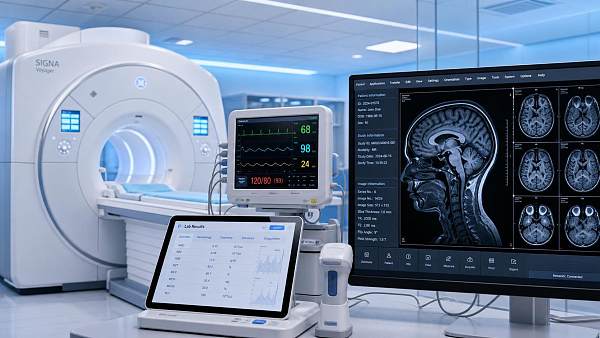
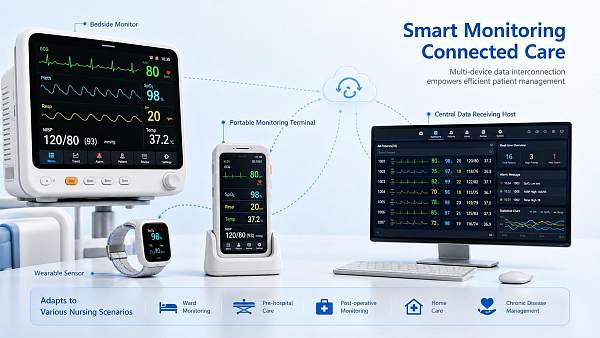
In this scenario, Medical diagnostic equipment for clinics often includes vital sign monitors, ECG systems, point-of-care analyzers, portable ultrasound, and basic lab testing devices.
Core judgment points
- Can staff operate the device with minimal training?
- Does it deliver rapid results during busy consultation hours?
- Can it handle routine cases without excessive maintenance downtime?
- Does it integrate with the clinic’s EMR or reporting workflow?
For this environment, ease of use often matters more than advanced features. An intuitive interface can improve compliance, reduce errors, and shorten the path from assessment to treatment.
Scenario 2: Urgent care clinics need fast diagnostics under pressure
Urgent care settings face time-sensitive decisions. Equipment must support quick differentiation between minor issues and conditions requiring escalation or referral.
Here, Medical diagnostic equipment for clinics should prioritize speed, reliability, and continuous performance across extended operating hours.
Typical equipment priorities
- Digital X-ray or referral-ready imaging connectivity
- Rapid blood and infection testing platforms
- Portable ultrasound for abdominal or soft tissue assessment
- ECG and cardiopulmonary monitoring devices
The key judgment is throughput. If the system performs well in demos but slows during peak usage, it may weaken care quality and patient satisfaction.
Scenario 3: Specialty clinics need precision and tailored functionality
Specialty settings require narrower but deeper capability. Dermatology, cardiology, women’s health, ophthalmology, and endocrinology each depend on equipment aligned with specific diagnostic pathways.
In these cases, Medical diagnostic equipment for clinics should be judged by image quality, measurement accuracy, reporting depth, and specialty workflow fit.
Core questions for specialty use
- Does the system support the required clinical protocols?
- Are measurement tools validated for specialist interpretation?
- Can the device export high-quality reports for referrals or follow-up?
- Will upgrades remain relevant as service lines expand?
A specialty clinic may accept a higher upfront cost if the equipment improves case confidence, service differentiation, and patient retention.
How needs differ across clinic scenarios
This comparison shows why there is no universal best option. The right Medical diagnostic equipment for clinics depends on clinical intensity, operator skill, and expected service evolution.
What to evaluate before making the final purchase
After defining the scenario, the next step is structured evaluation. This helps compare suppliers beyond brochures and headline pricing.
1. Diagnostic performance and consistency
Check sensitivity, specificity, calibration routines, image clarity, and repeatability. Reliable results are the foundation of every equipment decision.
2. Workflow compatibility
The best device on paper can still fail operationally. Review room size, patient flow, turnaround time, cleaning routines, and staff interaction steps.
3. Total cost of ownership
Do not assess only purchase price. Include consumables, software licenses, preventive maintenance, repairs, training, warranty scope, and expected replacement cycles.
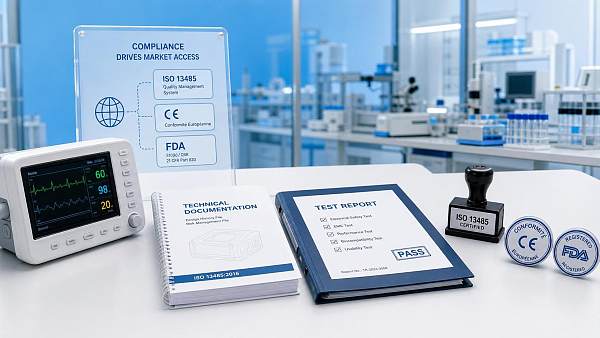
4. Compliance and data security
Medical diagnostic equipment for clinics must meet applicable regulatory and quality standards. Data export, patient privacy protection, and audit readiness also matter.
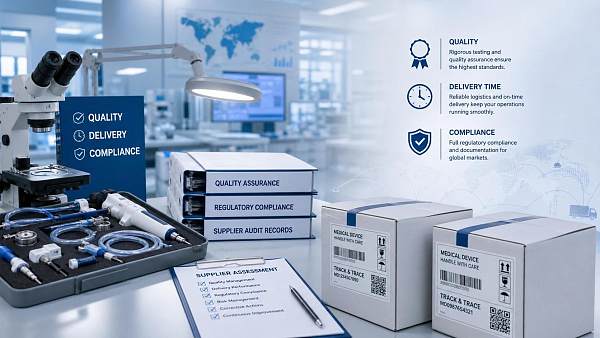
5. Supplier reliability and service network
A strong vendor should offer local service response, spare parts availability, software updates, and transparent technical documentation. Service weakness can erase initial savings.
Practical recommendations for better scenario fit
- Map the top ten diagnostic tasks performed each week.
- Estimate patient volume for current and future demand.
- List mandatory integration needs with records and reporting systems.
- Request live demonstrations using realistic clinic cases.
- Compare vendor support terms, not just device specifications.
- Pilot high-impact devices before full standardization.
These steps make Medical diagnostic equipment for clinics selection more evidence-based. They also reduce the risk of buying technology that looks advanced but performs poorly in daily care.
Common misjudgments that weaken equipment decisions
A frequent mistake is treating all clinic environments as similar. This leads to underused features, missing capabilities, or costly workflow disruption.
Another common issue is underestimating service and consumables. Low entry pricing may hide expensive cartridges, proprietary accessories, or slow repair support.
Some decisions also focus too heavily on brand reputation. A famous name does not guarantee the best Medical diagnostic equipment for clinics in every scenario.
Finally, many buyers overlook scalability. A system that meets today’s needs but blocks future modules, connectivity, or testing upgrades can become a limiting asset.
A smarter next step for clinic equipment planning
The wisest path is to turn equipment selection into a structured scenario review. Start with clinical use, compare operational realities, and verify lifecycle value before signing.
For organizations tracking healthcare technology trends, GIIH highlights the same principle across industrial sectors: smart decisions come from combining market intelligence with application-level judgment.
When evaluating Medical diagnostic equipment for clinics, build a checklist covering use case, accuracy, workflow, compliance, supplier support, and expansion potential.
That process leads to better diagnostics, stronger efficiency, and more sustainable investment outcomes. In a changing healthcare landscape, wise equipment choices become a strategic advantage.
Recommended News
 Sep 10, 2026Do Health Monitoring Devices Need Local Approval Before Import?Do health monitoring devices need local regulatory approval before import? Explore classifications, market access, labels, software, and compliance steps for safer global launches.
 Sep 07, 2026How Often Should Medical Information Systems Be Updated for Compliance?How often should medical information systems be updated for compliance? Explore risk-based update schedules, security patches, access reviews, testing, and audit-ready documentation.
 Sep 01, 2026Is Digital Health Data Interoperable Across Hospital Platforms?Is digital health data interoperable across different hospital platforms? Explore standards, security, workflows, and practical steps for safer connected care.
 Aug 31, 2026How to verify a diagnostic medical equipment manufacturer's quality systemDiagnostic medical equipment manufacturer quality system verification: uncover essential checks for ISO 13485, traceability, CAPA, risk management, and supplier control.
![]() Aug 14, 2026China temporarily bans the export of helium, putting global medical and semiconductor supply chains under pressureChina’s temporary helium export ban is straining global medical imaging and chip supply chains. See how MRI, semiconductor, and logistics teams can adapt fast.
Aug 14, 2026China temporarily bans the export of helium, putting global medical and semiconductor supply chains under pressureChina’s temporary helium export ban is straining global medical imaging and chip supply chains. See how MRI, semiconductor, and logistics teams can adapt fast. Aug 10, 2026FDA Sets eSTAR Filing Rule for China IVD ExportsFDA Sets eSTAR Filing Rule for China IVD Exports: learn how the new FDA eSTAR requirement affects Chinese IVD manufacturers, compliance documents, and U.S. shipment access.
 Aug 09, 2026Patient Monitoring Equipment Research: Which Metrics Matter Most Before You Buy?Patient monitoring equipment research starts with the right metrics. Learn how to compare accuracy, alarms, connectivity, and lifecycle cost before you buy.
 Jul 28, 2026Healthcare Equipment Research in Europe: Key Market Shifts and Buyer SignalsHealthcare equipment research Europe reveals how regulation, procurement, workflow pressure, and service expectations are reshaping buyer decisions across key healthcare markets.
 Jul 11, 2026Compact Medical Technology Solutions for Small Clinics: What to Compare Before BuyingCompact medical technology solutions for small clinics: compare space fit, throughput, connectivity, maintenance, and long-term cost before you buy. Make a smarter, lower-risk equipment decision.
 Jul 10, 2026Medical Technology Solutions Price Guide: What Drives Cost and How to BudgetMedical technology solutions price guide covering key cost drivers, hidden fees, and smart budgeting methods to compare vendors, control total ownership costs, and approve with confidence.
 Jul 09, 2026Medical Supply Chain Risks: How to Prevent Delays in Regulated Device SourcingMedical supply chain risks can cause costly sourcing delays in regulated devices. Learn practical ways to prevent disruption, improve compliance, and keep global procurement moving.
 Jul 08, 2026Medical Device Specification Analysis: Which Performance Parameters Matter Most in Evaluation?Product specification analysis medical devices starts with the parameters that truly affect safety, accuracy, software readiness, and long-term reliability—learn what to prioritize before you evaluate.
 Jul 06, 2026Medical Regulatory for Devices: Which Certifications Matter Before Market Entry?Medical regulatory for devices starts before launch. Learn which certifications—ISO 13485, CE marking, FDA pathways, and risk standards—matter most for faster, safer market entry.
 Jul 03, 2026Category Comparison Under FDA Requirements: How to Evaluate Product Class DifferencesCategory comparison FDA requirements explained: learn how to assess product class differences, avoid costly pathway mistakes, and make faster, smarter regulatory decisions.
 Jul 02, 2026How to Evaluate a Medical Technology Supplier for Quality, Lead Time, and ComplianceMedical technology supplier evaluation made simple: learn how to compare quality systems, lead time reliability, and compliance readiness to reduce risk and choose with confidence.
 Jul 02, 2026How Diagnostic Medical Equipment Supports Better Care Coordination Across Clinical TeamsDiagnostic medical equipment for care coordination helps clinical teams share data faster, reduce delays, and improve outcomes. See how connected diagnostics strengthen workflow efficiency.
 Jun 28, 2026Healthcare Equipment for Patient Monitoring: How to Choose by Care Setting and Data NeedsHealthcare equipment for patient monitoring: learn how to choose the right solution by care setting, data needs, integration, and lifecycle value for safer, smarter deployment.
 Jun 26, 2026Medical Devices Category Introduction: How Products Are Grouped and Why It MattersMedical devices category introduction: learn how products are grouped, why classifications differ by market, and how smarter category insight improves compliance, sourcing, and global market entry.
 Jun 26, 2026Medical Technology Solutions for Healthcare Facilities: What to Evaluate Before BuyingMedical technology solutions for healthcare facilities: learn what to evaluate before buying, from clinical fit and integration to compliance, vendor support, and total cost.
 Jun 25, 2026Surgical Instruments Materials Compared: Stainless Steel, Titanium, and MoreSurgical instruments materials compared: explore stainless steel, titanium, tungsten carbide, and coatings to improve durability, safety, sterilization performance, and smarter sourcing decisions.
 Jun 25, 2026Diagnostic Medical Equipment for Preventive Care: What Clinics Should PrioritizeDiagnostic medical equipment for preventive care: discover what clinics should prioritize to improve early detection, streamline workflows, control costs, and support long-term growth.
 Jun 23, 2026Hospital Furniture Standards: What to Check for Safety, Hygiene, and Ward UseHospital furniture standards explained: learn what to check for safety, hygiene, load capacity, ward fit, and supplier proof before buying for reliable long-term performance.
 Jun 22, 2026How to Choose Blood Pressure Monitors for Home Use: Cuff Size, Accuracy, and MemoryBlood pressure monitors for home use vary in cuff size, accuracy, and memory. Learn how to compare features, avoid common mistakes, and choose a reliable monitor with confidence.
 Jun 20, 2026Wearable Medical Devices: Key Sensors, Data Accuracy, and Regulatory FactorsWearable medical devices explained: explore key sensors, real-world data accuracy, and regulatory factors to compare solutions, reduce risk, and make smarter healthcare decisions.