


Search News
Global Industrial Intelligence Hub (GIIH)Industry Portal
Global Industrial Intelligence Hub (GIIH)Status
Standard Access
Upgrade to PremiumNewsIs wearable technology for healthcare monitoring accurate enough?
Time
Click Count
As healthcare becomes increasingly data-driven, wearable technology for healthcare monitoring is attracting growing attention from researchers, providers, and consumers alike. But how accurate are these devices in real-world use? This article examines the reliability, limitations, and practical value of modern wearables, helping information seekers understand whether convenience and innovation truly translate into dependable health insights.
For information researchers, procurement teams, digital health planners, and innovation analysts, the question is not whether wearable devices are useful, but whether their outputs are accurate enough for screening, trend detection, workflow support, or regulated care pathways. In B2B and cross-sector decision-making, even a 2% to 5% measurement gap can affect product selection, data integration priorities, and downstream risk management.
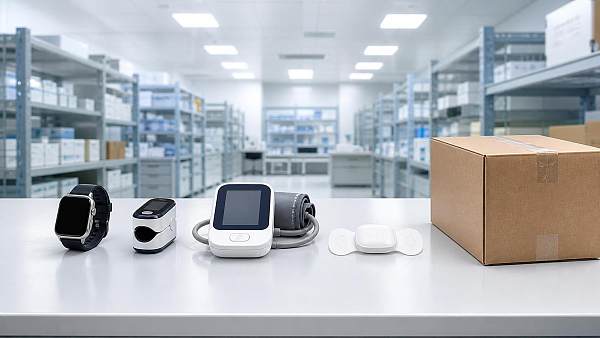
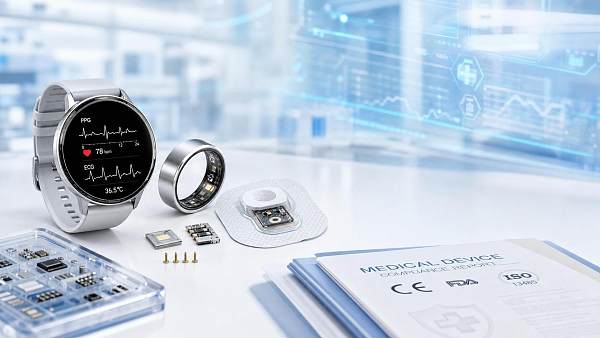
Wearable technology for healthcare monitoring now spans consumer smartwatches, medical-grade patches, remote patient monitoring tools, and connected biosensors. These systems collect heart rate, blood oxygen, sleep data, activity metrics, skin temperature, and sometimes single-lead ECG signals. Yet accuracy depends on at least 4 variables: sensor type, body placement, user behavior, and the context in which data is interpreted.
What wearable healthcare monitoring actually measures
Before judging accuracy, it helps to define what modern wearables are designed to do. Most devices do not directly diagnose disease. Instead, they estimate physiological signals, track patterns over 24-hour to 7-day periods, and flag deviations that may justify further clinical review.
In industrial intelligence terms, wearable technology for healthcare monitoring should be viewed as a layered data tool. Some metrics are relatively mature, with lower error ranges under stable conditions. Others remain highly sensitive to motion, skin tone variation, poor fit, irregular rhythms, or environmental interference.
Core signal categories
- Heart rate: commonly measured through optical photoplethysmography, often reliable at rest within a narrow range.
- Blood oxygen saturation: useful for trends, but more variable during movement or low perfusion states.
- Sleep tracking: often estimates duration and stages, but stage classification is less precise than clinical polysomnography.
- ECG rhythm review: some wearables can detect possible atrial fibrillation, but they do not replace 12-lead clinical ECG systems.
- Activity and energy expenditure: step counts are generally stronger than calorie estimates, which may vary significantly by algorithm.
Why this distinction matters for decision-makers
A buyer evaluating remote care tools should not ask whether a wearable is simply “accurate” or “inaccurate.” The better question is: accurate for which metric, under which conditions, over what monitoring interval, and for what operational purpose? A device suitable for wellness engagement may not be suitable for post-discharge monitoring within a 48-hour escalation protocol.
The table below compares common monitoring functions by their typical use strengths and known limitations. This helps information seekers separate high-confidence use cases from areas where caution is still necessary.
The key takeaway is that wearable technology for healthcare monitoring performs best when used for continuous observation, relative change detection, and early alert support. It performs less reliably when decision-makers expect single-point precision equal to hospital-grade equipment across every scenario.
How accurate are wearables in real-world conditions?
In controlled environments, many wearables show acceptable performance for selected metrics. In real-world conditions, accuracy becomes more variable. A user walking briskly, wearing a loose strap, sweating, or having cold extremities can all influence signal quality within minutes. That is why field performance can differ materially from lab validation results.
For practical evaluation, analysts should separate 3 environments: resting use, routine daily use, and high-motion or clinically unstable use. A device that appears highly accurate at rest may show larger error bands during exercise or during episodes of arrhythmia, tremor, or poor circulation.
Typical accuracy patterns by scenario
Heart rate monitoring is often the strongest category. Under resting conditions, many devices stay within a few beats per minute of reference systems. During interval training or arm-intensive movement, however, deviations can rise noticeably, especially if the optical sensor struggles to maintain stable skin contact.
Blood oxygen measurements can be directionally helpful, especially over repeated nighttime readings. But clinicians and procurement teams should be careful about interpreting isolated low readings. A 1% to 3% difference may be tolerable for trend review, while larger swings under motion may limit clinical actionability without confirmation from a dedicated pulse oximeter.
Sleep monitoring provides useful longitudinal insight over 14 to 30 nights. Yet sleep stages such as REM or deep sleep are algorithmic classifications, not direct clinical measurements. This makes wearables more suitable for behavioral coaching and population engagement than for standalone sleep disorder diagnosis.
The operational difference between consumer-grade and medical-grade systems
Not all wearables belong in the same category. Consumer devices typically prioritize convenience, battery life, and user experience. Medical-grade wearables usually emphasize validated signal capture, stricter calibration, clearer intended-use statements, and better integration into clinical review workflows. The cost difference may be significant, but so is the risk profile.
For procurement and digital health planning, the following comparison highlights where accuracy expectations should differ between device classes and deployment goals.
This distinction matters because wearable technology for healthcare monitoring is increasingly purchased across sectors, from insurers and employers to hospitals and research programs. Accuracy should therefore be judged against the operational stakes, not just the device marketing claims.
What affects measurement reliability the most
When stakeholders ask why two devices produce different readings, the answer usually lies in signal quality, algorithm design, and use conditions. Even strong hardware can deliver unstable outputs if the signal entering the model is weak. In practice, 5 factors account for much of the observed variation.
Five reliability drivers
- Sensor placement: wrist, finger, chest, and upper arm do not behave the same way.
- Motion artifact: repetitive movement can distort optical readings within seconds.
- Fit and wear adherence: a strap that is too loose or worn only 8 hours instead of 20 hours reduces data continuity.
- Physiological diversity: circulation, skin characteristics, and irregular rhythms affect signal capture.
- Algorithm update cycle: software revisions can improve or change outputs over time, which matters in longitudinal studies.
Battery life and data continuity are also accuracy issues
A device that needs charging every 18 to 24 hours may be technically precise during use but operationally weak if it creates repeated data gaps. For remote monitoring programs, continuity often matters as much as point accuracy. Missing 6 hours of overnight data can erase the value of a strong SpO2 sensor in sleep-related monitoring.
This is why industrial buyers increasingly review not only sensor specifications, but also adherence design, recharge intervals, skin tolerance over 3 to 7 days, and the frequency of false alerts. In many deployments, workflow burden becomes the hidden cost of inaccurate or incomplete monitoring.
Where wearables are accurate enough to create real value
The most productive use of wearable technology for healthcare monitoring is not universal replacement of traditional instruments. It is targeted use in scenarios where continuous data provides more value than occasional spot checks. In these settings, moderate measurement variance may still be acceptable if the trend signal is actionable.
High-value deployment scenarios
- Post-discharge observation during the first 7 to 14 days after a procedure or acute event.
- Chronic disease engagement where adherence and trend visibility matter more than minute-by-minute precision.
- Workforce wellness or employer health programs focused on activity, sleep regularity, and recovery patterns.
- Clinical research that benefits from continuous passive data between scheduled site visits.
- Elderly care support where alerts can prompt a caregiver follow-up rather than automatic diagnosis.
Scenarios that require more caution
Wearables should be used more carefully in high-acuity decision environments, including emergency triage, medication dosing based on unconfirmed single readings, or complex cardiovascular cases requiring multi-channel diagnostics. In these contexts, a false negative or false reassurance can carry more operational risk than the convenience benefit justifies.
For B2B buyers, the practical threshold is simple: if a data point can directly trigger intervention, reimbursement, or liability exposure, validation standards should be higher than those used for wellness engagement or behavioral support.
How to evaluate wearables for procurement, research, or program design
Organizations comparing wearable platforms should build an evaluation framework that balances technical performance with deployment realism. Accuracy alone is not enough. A device with strong benchmark results may still fail in field adoption if the user experience is poor or if data integration takes 8 to 12 weeks longer than planned.
A practical 6-point assessment checklist
- Define the intended use: screening, trend monitoring, care support, or clinical decision support.
- Match the metric to the risk level: heart rate trend review is not the same as oxygen desaturation escalation.
- Review validation details: compare resting, ambulatory, and special-population performance if available.
- Assess data workflow: API access, dashboard logic, alert frequency, and review burden.
- Test adherence risk: comfort over 72 hours, charging frequency, and user drop-off rates.
- Plan a confirmation pathway: identify when wearable readings must be checked by a reference device or clinician.
Questions information seekers should ask vendors
A rigorous buying process should ask which metrics have been comparatively tested, under what conditions, and with what user population. It should also ask how often algorithms are updated, how alerts are tuned, and what percentage of readings may be excluded because of poor signal quality. These questions often reveal more than headline feature lists.
For organizations operating across global markets, it is also important to review interoperability, localization, data governance expectations, and the time needed to move from pilot to scaled deployment. In many programs, the implementation timeline ranges from 4 to 12 weeks, depending on integration depth and compliance review.
The strategic outlook for wearable healthcare monitoring
The market direction is clear: wearables will become more embedded in preventive care, remote patient monitoring, and digital health analytics. Accuracy will likely improve through multi-sensor fusion, better motion filtering, and more condition-specific algorithms. However, the core challenge will remain interpretation, not just signal capture.
Over the next 3 to 5 years, the most successful platforms will likely be those that combine acceptable sensor performance with workflow intelligence. That includes threshold customization, clinician review logic, user adherence design, and cleaner handoff between consumer engagement and medical escalation. In other words, value will come from system design, not hardware alone.
What decision-makers should remember
Wearable technology for healthcare monitoring is accurate enough for many trend-based, engagement-driven, and selected remote monitoring applications. It is not uniformly accurate enough to replace diagnostic-grade tools in every condition. The right standard is fitness for purpose, supported by validation, workflow design, and a clear escalation model.
For information researchers and industry planners, this means evaluating wearables as part of a broader care and data ecosystem. The strongest decisions come from comparing device class, measurement purpose, user context, and operational risk side by side rather than relying on broad claims about innovation alone.
If your organization is assessing wearable technology for healthcare monitoring across healthcare, research, smart living, or cross-border industrial intelligence scenarios, a structured evaluation approach can reduce deployment risk and improve decision quality. To explore tailored market insights, technology comparisons, or implementation considerations, contact GIIH to get a customized solution and learn more about data-driven healthcare monitoring strategies.
Recommended News
 Sep 10, 2026Do Health Monitoring Devices Need Local Approval Before Import?Do health monitoring devices need local regulatory approval before import? Explore classifications, market access, labels, software, and compliance steps for safer global launches.
 Sep 07, 2026How Often Should Medical Information Systems Be Updated for Compliance?How often should medical information systems be updated for compliance? Explore risk-based update schedules, security patches, access reviews, testing, and audit-ready documentation.
 Sep 01, 2026Is Digital Health Data Interoperable Across Hospital Platforms?Is digital health data interoperable across different hospital platforms? Explore standards, security, workflows, and practical steps for safer connected care.
 Aug 31, 2026How to verify a diagnostic medical equipment manufacturer's quality systemDiagnostic medical equipment manufacturer quality system verification: uncover essential checks for ISO 13485, traceability, CAPA, risk management, and supplier control.
![]() Aug 14, 2026China temporarily bans the export of helium, putting global medical and semiconductor supply chains under pressureChina’s temporary helium export ban is straining global medical imaging and chip supply chains. See how MRI, semiconductor, and logistics teams can adapt fast.
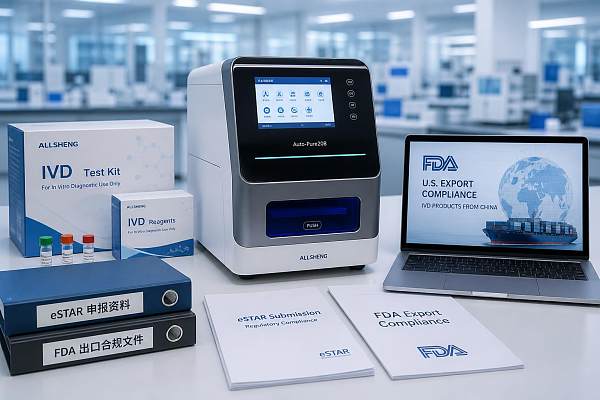
Aug 14, 2026China temporarily bans the export of helium, putting global medical and semiconductor supply chains under pressureChina’s temporary helium export ban is straining global medical imaging and chip supply chains. See how MRI, semiconductor, and logistics teams can adapt fast. Aug 10, 2026FDA Sets eSTAR Filing Rule for China IVD ExportsFDA Sets eSTAR Filing Rule for China IVD Exports: learn how the new FDA eSTAR requirement affects Chinese IVD manufacturers, compliance documents, and U.S. shipment access.
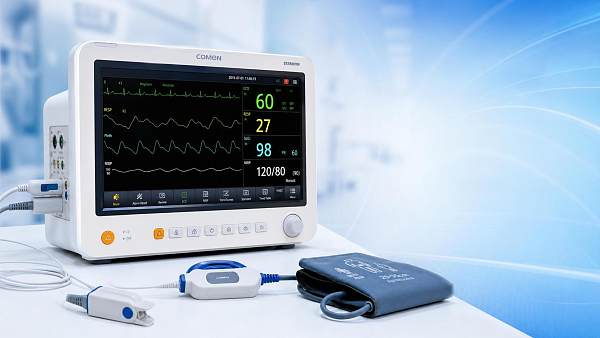
 Aug 09, 2026Patient Monitoring Equipment Research: Which Metrics Matter Most Before You Buy?Patient monitoring equipment research starts with the right metrics. Learn how to compare accuracy, alarms, connectivity, and lifecycle cost before you buy.
 Jul 28, 2026Healthcare Equipment Research in Europe: Key Market Shifts and Buyer SignalsHealthcare equipment research Europe reveals how regulation, procurement, workflow pressure, and service expectations are reshaping buyer decisions across key healthcare markets.
 Jul 11, 2026Compact Medical Technology Solutions for Small Clinics: What to Compare Before BuyingCompact medical technology solutions for small clinics: compare space fit, throughput, connectivity, maintenance, and long-term cost before you buy. Make a smarter, lower-risk equipment decision.
 Jul 10, 2026Medical Technology Solutions Price Guide: What Drives Cost and How to BudgetMedical technology solutions price guide covering key cost drivers, hidden fees, and smart budgeting methods to compare vendors, control total ownership costs, and approve with confidence.
 Jul 09, 2026Medical Supply Chain Risks: How to Prevent Delays in Regulated Device SourcingMedical supply chain risks can cause costly sourcing delays in regulated devices. Learn practical ways to prevent disruption, improve compliance, and keep global procurement moving.
 Jul 08, 2026Medical Device Specification Analysis: Which Performance Parameters Matter Most in Evaluation?Product specification analysis medical devices starts with the parameters that truly affect safety, accuracy, software readiness, and long-term reliability—learn what to prioritize before you evaluate.
 Jul 06, 2026Medical Regulatory for Devices: Which Certifications Matter Before Market Entry?Medical regulatory for devices starts before launch. Learn which certifications—ISO 13485, CE marking, FDA pathways, and risk standards—matter most for faster, safer market entry.
 Jul 03, 2026Category Comparison Under FDA Requirements: How to Evaluate Product Class DifferencesCategory comparison FDA requirements explained: learn how to assess product class differences, avoid costly pathway mistakes, and make faster, smarter regulatory decisions.
 Jul 02, 2026How to Evaluate a Medical Technology Supplier for Quality, Lead Time, and ComplianceMedical technology supplier evaluation made simple: learn how to compare quality systems, lead time reliability, and compliance readiness to reduce risk and choose with confidence.
 Jul 02, 2026How Diagnostic Medical Equipment Supports Better Care Coordination Across Clinical TeamsDiagnostic medical equipment for care coordination helps clinical teams share data faster, reduce delays, and improve outcomes. See how connected diagnostics strengthen workflow efficiency.
 Jun 28, 2026Healthcare Equipment for Patient Monitoring: How to Choose by Care Setting and Data NeedsHealthcare equipment for patient monitoring: learn how to choose the right solution by care setting, data needs, integration, and lifecycle value for safer, smarter deployment.
 Jun 26, 2026Medical Devices Category Introduction: How Products Are Grouped and Why It MattersMedical devices category introduction: learn how products are grouped, why classifications differ by market, and how smarter category insight improves compliance, sourcing, and global market entry.
 Jun 26, 2026Medical Technology Solutions for Healthcare Facilities: What to Evaluate Before BuyingMedical technology solutions for healthcare facilities: learn what to evaluate before buying, from clinical fit and integration to compliance, vendor support, and total cost.
 Jun 25, 2026Surgical Instruments Materials Compared: Stainless Steel, Titanium, and MoreSurgical instruments materials compared: explore stainless steel, titanium, tungsten carbide, and coatings to improve durability, safety, sterilization performance, and smarter sourcing decisions.
 Jun 25, 2026Diagnostic Medical Equipment for Preventive Care: What Clinics Should PrioritizeDiagnostic medical equipment for preventive care: discover what clinics should prioritize to improve early detection, streamline workflows, control costs, and support long-term growth.
 Jun 23, 2026Hospital Furniture Standards: What to Check for Safety, Hygiene, and Ward UseHospital furniture standards explained: learn what to check for safety, hygiene, load capacity, ward fit, and supplier proof before buying for reliable long-term performance.
 Jun 22, 2026How to Choose Blood Pressure Monitors for Home Use: Cuff Size, Accuracy, and MemoryBlood pressure monitors for home use vary in cuff size, accuracy, and memory. Learn how to compare features, avoid common mistakes, and choose a reliable monitor with confidence.
 Jun 20, 2026Wearable Medical Devices: Key Sensors, Data Accuracy, and Regulatory FactorsWearable medical devices explained: explore key sensors, real-world data accuracy, and regulatory factors to compare solutions, reduce risk, and make smarter healthcare decisions.