


Search News
Global Industrial Intelligence Hub (GIIH)Industry Portal
Global Industrial Intelligence Hub (GIIH)Status
Standard Access
Upgrade to PremiumNewsWhat OEM electronics need for safer medical devices
Time
Click Count
As safety expectations tighten across healthcare markets, OEM consumer electronics for medical devices are moving under sharper scrutiny from quality and safety teams. From component reliability to traceability and compliance, every design and sourcing decision can affect patient outcomes. This article explores what OEM electronics providers must deliver to help medical devices become safer, more dependable, and market-ready.
For quality and safety managers, the central question is not whether consumer-derived electronics can support medical products. The real question is whether the OEM can control risk at a medical-grade level.
That distinction matters. Many electronics suppliers can offer attractive pricing, fast prototyping, and mature manufacturing capacity. Far fewer can prove stable processes, documented controls, and long-term support that stand up to audits.
When evaluating OEM consumer electronics for medical devices, buyers are usually searching for a practical framework. They want to know what requirements separate a useful supplier from a risky one.
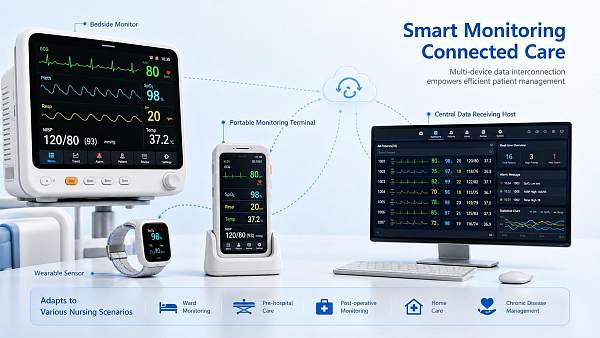
This is especially relevant in connected monitors, wearable devices, portable diagnostics, home-use treatment systems, and other products that increasingly borrow architectures from mainstream electronics markets.
In these categories, safety is not created by one feature. It emerges from design discipline, supplier quality systems, verification evidence, traceability, and post-market responsiveness working together from the beginning.
What quality and safety teams really need from OEM electronics partners
Quality professionals rarely need broad promises. They need proof that an OEM understands how medical-device risk differs from ordinary consumer product risk.
In consumer electronics, inconvenience, returns, or brand damage may be the primary concern. In medical devices, a board failure, unstable sensor reading, overheating battery, or software fault can affect diagnosis or treatment.
That means the best OEM electronics partners do more than assemble hardware. They help reduce failure opportunities before production starts and maintain control when designs scale globally.
For most buyers, the core expectations fall into six areas: design-for-safety capability, robust component selection, controlled manufacturing, full traceability, regulatory awareness, and disciplined change management.
If an OEM is weak in any one of these areas, the apparent cost advantage can disappear quickly through revalidation work, field issues, shipment delays, or corrective action burdens.
Safer medical devices start with risk-aware design, not low-cost sourcing
Many device problems begin long before final assembly. They start when components are chosen mainly for availability, price, or consumer-market popularity without considering clinical use conditions.
OEM consumer electronics for medical devices must be designed around intended use, patient environment, cleaning exposure, expected lifespan, and foreseeable misuse. These inputs change the acceptable design choices significantly.
A quality-focused OEM should be able to show how risk analysis informs architecture decisions. That includes thermal design, power stability, electromagnetic compatibility, sensor integrity, enclosure protection, and alarm reliability.
For example, a component that performs well in a lifestyle wearable may fail medical expectations if it drifts too much under temperature variation or cannot maintain stable performance across the device lifecycle.
Safety teams should expect evidence that the OEM can support design reviews linked to hazard reduction, not just engineering performance. The conversation should include failure modes, detection methods, and mitigation logic.
Suppliers that understand medical development will also consider serviceability and replacement implications. If one low-cost part creates field maintenance complexity, the total safety and quality burden rises.
Component reliability and lifecycle control are non-negotiable
One of the biggest risks in adapting consumer electronics capability for medical devices is component volatility. Consumer markets move fast, but medical products often need long support windows and controlled revisions.
Quality managers should examine whether the OEM has a formal process for approved vendor lists, incoming inspection criteria, counterfeit prevention, and end-of-life monitoring.
A safer OEM partner tracks component lifecycle status early and proposes alternates before shortages become emergencies. That reduces rushed substitutions that can trigger new testing, documentation updates, and regulatory concerns.
Reliability is not just about whether a part works today. It is about whether the part will continue performing consistently across lots, over time, and after environmental stress.
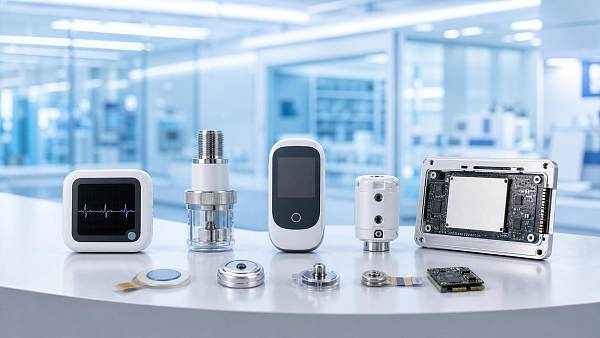
Ask how the OEM qualifies batteries, connectors, displays, wireless modules, and sensors. These parts often create hidden risk because they are sensitive to handling, firmware interaction, or supplier inconsistency.
Strong providers also segment components by criticality. They do not treat all parts the same. Parts affecting measurement accuracy, power delivery, patient contact, or alarms should have tighter controls and stronger evidence.
Manufacturing discipline matters as much as design quality
Even a sound design can become unsafe if production control is weak. For quality and safety teams, manufacturing maturity is often the clearest predictor of field reliability.
OEMs serving medical applications should demonstrate controlled assembly instructions, validated production steps where needed, calibration discipline, test coverage, and documented operator training.
Process consistency is especially important when products involve fine-pitch electronics, battery integration, wireless communication modules, or sensors that need stable alignment and handling.
In practice, buyers should look for in-process inspection points, functional testing strategy, ESD control, rework rules, and nonconformance handling procedures. These are not administrative details. They directly influence product safety.
A useful sign of maturity is whether the OEM can explain which defects are screened at which stage and what escape mechanisms are still possible. Vague answers usually indicate weak process understanding.
Factories that support safer medical devices also maintain cleaner production records, better lot segregation, and stronger CAPA discipline. That makes later investigations faster and more credible.
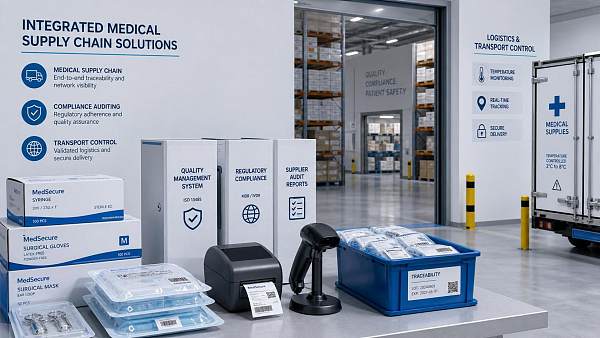
Traceability is essential for audits, recalls, and root-cause analysis
For medical products, traceability is not a luxury feature. It is a practical safety requirement that supports containment, investigation, and accountability.
OEM consumer electronics for medical devices should allow traceability from finished product back to key components, production lots, test results, firmware versions, and critical operators or stations where relevant.
This level of visibility becomes vital when complaints appear in the field. Without it, quality teams may be forced into broad recalls because they cannot isolate the affected population accurately.
Good traceability also improves internal learning. If a certain sensor lot, solder paste batch, or firmware revision correlates with failures, the pattern can be identified sooner and corrective action can be narrower.
Safety managers should ask to see how records are stored, linked, and retrieved. A traceability system that exists only on paper but cannot support fast analysis is not enough.
The strongest OEMs combine serial-level or lot-level tracking with disciplined document control. This creates a usable evidence trail for audits, customer reviews, and incident investigations.
Regulatory awareness should be built into the OEM relationship
Not every electronics manufacturer needs to be the legal medical-device manufacturer. But any OEM contributing to a medical product should understand the compliance implications of its work.
That includes awareness of design controls, risk documentation expectations, material restrictions, EMC considerations, usability impacts, labeling dependencies, and software or firmware change consequences.
Quality teams should be cautious if an OEM says compliance is entirely the customer’s problem. Final regulatory responsibility may sit elsewhere, but supplier actions can still create noncompliance risk.
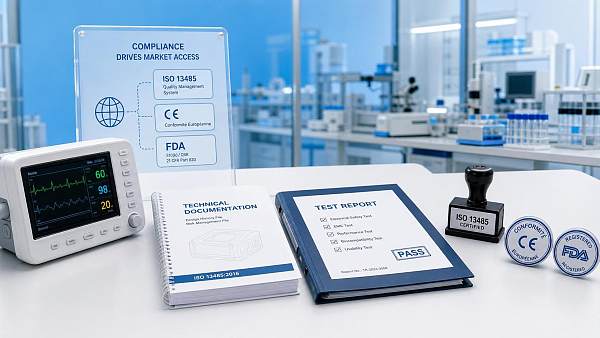
A capable partner knows how to provide the records customers need, such as material declarations, test reports, process information, revision history, and support for technical file inputs.
This does not mean every OEM must act like a notified body or regulatory consultant. It means they should understand that undocumented changes, unsupported substitutions, or weak validation practices can derail approvals.
For global manufacturers, this becomes even more important when devices move across the US, EU, and other regulated markets with different documentation and surveillance expectations.
Change control is where many promising suppliers fail
Some OEMs perform well during sampling but become risky after production ramps. The reason is often poor change control rather than poor engineering.
Medical-device buyers need clear agreements on what changes require notification, approval, requalification, or updated documentation. This includes component substitutions, process changes, tooling updates, firmware revisions, and site transfers.
In fast-moving electronics supply chains, unannounced changes can happen easily unless strict controls exist. A substitute component that seems equivalent on paper may alter signal behavior, thermal profile, or long-term durability.
Quality managers should verify whether the OEM has formal engineering change procedures, customer communication timelines, and risk review triggers tied to proposed changes.
It is also wise to ask for examples of past change notifications and how they were assessed. Real records reveal far more than policy statements.
Suppliers that are strong in change management help customers stay compliant, reduce retesting surprises, and preserve confidence in released designs over the full product lifecycle.
How to evaluate an OEM consumer electronics supplier for medical use
For safety-focused teams, supplier qualification should go beyond price, speed, and sample appearance. A structured evaluation approach usually leads to better long-term results.
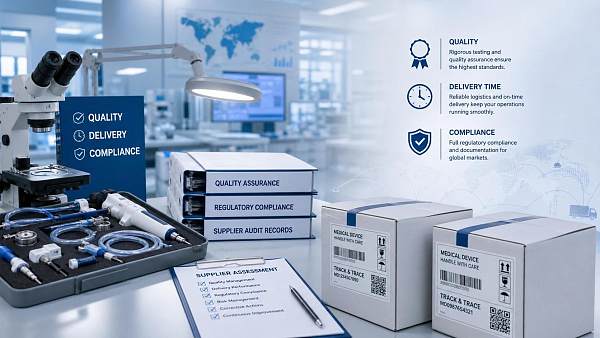
Start with the supplier’s quality management maturity. Review certifications, but do not stop there. Ask how procedures actually work on the factory floor and how exceptions are handled.
Next, examine engineering depth. Can the OEM discuss risk controls, reliability tradeoffs, and validation support in language that matches medical-device development realities?
Then review supply chain resilience. Look at approved sources, obsolescence planning, shortage response, and counterfeit controls. Medical programs are especially vulnerable to unstable electronic component markets.
After that, assess traceability and data access. If a complaint occurs, how quickly can the OEM retrieve records and support root-cause analysis? Slow retrieval often signals weak system integration.
Finally, test the supplier’s transparency. Good partners discuss limits early, escalate concerns quickly, and document decisions clearly. Hidden uncertainty is a major safety risk.
Common warning signs that increase medical device risk
Several red flags appear repeatedly when electronics suppliers are not ready for medical applications, even if they are strong in consumer or industrial business.
One warning sign is excessive dependence on single-source components without mitigation planning. Another is limited visibility into sub-suppliers for critical parts.
Frequent undocumented changes are another serious concern. If the OEM cannot clearly explain what changed, when it changed, and which lots were affected, containment becomes difficult.
Weak failure analysis capability is also a problem. When returned products are judged only by superficial inspection, recurring defects may continue undetected.
Other concerns include incomplete test records, unclear calibration status, poor ESD discipline, inconsistent work instructions, and vague responsibility boundaries between customer and supplier.
Any one issue may be manageable. But when several appear together, quality and safety managers should assume the total risk is higher than initial pricing suggests.
The business value of choosing the right OEM partner
For management teams, safer electronics sourcing is not only about compliance. It also affects launch reliability, warranty cost, complaint rates, audit readiness, and brand trust.
A disciplined OEM can reduce hidden costs by preventing late redesigns, minimizing field failures, shortening investigations, and supporting smoother regulatory submissions.
This is especially important in healthcare markets where product interruptions can impact care continuity, distributor confidence, and long-term account relationships.
In contrast, a weak supplier often looks economical only during early quoting. The true cost appears later in deviations, CAPAs, engineering rework, delayed releases, and damaged customer confidence.
That is why quality and safety teams should have a strong voice in supplier selection. Their evaluation criteria often reveal lifecycle risks that procurement metrics alone cannot capture.
Conclusion: safer medical devices require OEMs that can prove control
The safest approach to OEM consumer electronics for medical devices is not to reject consumer-electronics capability altogether. It is to apply medical-grade expectations to every critical design and manufacturing decision.
For quality and safety professionals, the best OEM partner is one that can demonstrate disciplined risk management, component control, process consistency, traceability, and responsible change governance.
When those capabilities are present, electronics OEMs can support faster innovation without sacrificing safety. When they are missing, even attractive products can become expensive quality liabilities.
In practical terms, safer medical devices depend on suppliers that do not just promise performance. They provide evidence, control variation, and respond in ways that protect both patients and manufacturers.
That is the standard worth using when evaluating any OEM relationship in modern medical electronics.
Recommended News
 Sep 10, 2026Do Health Monitoring Devices Need Local Approval Before Import?Do health monitoring devices need local regulatory approval before import? Explore classifications, market access, labels, software, and compliance steps for safer global launches.
 Sep 07, 2026How Often Should Medical Information Systems Be Updated for Compliance?How often should medical information systems be updated for compliance? Explore risk-based update schedules, security patches, access reviews, testing, and audit-ready documentation.
 Sep 01, 2026Is Digital Health Data Interoperable Across Hospital Platforms?Is digital health data interoperable across different hospital platforms? Explore standards, security, workflows, and practical steps for safer connected care.
 Aug 31, 2026How to verify a diagnostic medical equipment manufacturer's quality systemDiagnostic medical equipment manufacturer quality system verification: uncover essential checks for ISO 13485, traceability, CAPA, risk management, and supplier control.
![]() Aug 14, 2026China temporarily bans the export of helium, putting global medical and semiconductor supply chains under pressureChina’s temporary helium export ban is straining global medical imaging and chip supply chains. See how MRI, semiconductor, and logistics teams can adapt fast.
Aug 14, 2026China temporarily bans the export of helium, putting global medical and semiconductor supply chains under pressureChina’s temporary helium export ban is straining global medical imaging and chip supply chains. See how MRI, semiconductor, and logistics teams can adapt fast. Aug 10, 2026FDA Sets eSTAR Filing Rule for China IVD ExportsFDA Sets eSTAR Filing Rule for China IVD Exports: learn how the new FDA eSTAR requirement affects Chinese IVD manufacturers, compliance documents, and U.S. shipment access.
 Aug 09, 2026Patient Monitoring Equipment Research: Which Metrics Matter Most Before You Buy?Patient monitoring equipment research starts with the right metrics. Learn how to compare accuracy, alarms, connectivity, and lifecycle cost before you buy.
 Jul 28, 2026Healthcare Equipment Research in Europe: Key Market Shifts and Buyer SignalsHealthcare equipment research Europe reveals how regulation, procurement, workflow pressure, and service expectations are reshaping buyer decisions across key healthcare markets.
 Jul 11, 2026Compact Medical Technology Solutions for Small Clinics: What to Compare Before BuyingCompact medical technology solutions for small clinics: compare space fit, throughput, connectivity, maintenance, and long-term cost before you buy. Make a smarter, lower-risk equipment decision.
 Jul 10, 2026Medical Technology Solutions Price Guide: What Drives Cost and How to BudgetMedical technology solutions price guide covering key cost drivers, hidden fees, and smart budgeting methods to compare vendors, control total ownership costs, and approve with confidence.
 Jul 09, 2026Medical Supply Chain Risks: How to Prevent Delays in Regulated Device SourcingMedical supply chain risks can cause costly sourcing delays in regulated devices. Learn practical ways to prevent disruption, improve compliance, and keep global procurement moving.
 Jul 08, 2026Medical Device Specification Analysis: Which Performance Parameters Matter Most in Evaluation?Product specification analysis medical devices starts with the parameters that truly affect safety, accuracy, software readiness, and long-term reliability—learn what to prioritize before you evaluate.
 Jul 06, 2026Medical Regulatory for Devices: Which Certifications Matter Before Market Entry?Medical regulatory for devices starts before launch. Learn which certifications—ISO 13485, CE marking, FDA pathways, and risk standards—matter most for faster, safer market entry.
 Jul 03, 2026Category Comparison Under FDA Requirements: How to Evaluate Product Class DifferencesCategory comparison FDA requirements explained: learn how to assess product class differences, avoid costly pathway mistakes, and make faster, smarter regulatory decisions.
 Jul 02, 2026How to Evaluate a Medical Technology Supplier for Quality, Lead Time, and ComplianceMedical technology supplier evaluation made simple: learn how to compare quality systems, lead time reliability, and compliance readiness to reduce risk and choose with confidence.
 Jul 02, 2026How Diagnostic Medical Equipment Supports Better Care Coordination Across Clinical TeamsDiagnostic medical equipment for care coordination helps clinical teams share data faster, reduce delays, and improve outcomes. See how connected diagnostics strengthen workflow efficiency.
 Jun 28, 2026Healthcare Equipment for Patient Monitoring: How to Choose by Care Setting and Data NeedsHealthcare equipment for patient monitoring: learn how to choose the right solution by care setting, data needs, integration, and lifecycle value for safer, smarter deployment.
 Jun 26, 2026Medical Devices Category Introduction: How Products Are Grouped and Why It MattersMedical devices category introduction: learn how products are grouped, why classifications differ by market, and how smarter category insight improves compliance, sourcing, and global market entry.
 Jun 26, 2026Medical Technology Solutions for Healthcare Facilities: What to Evaluate Before BuyingMedical technology solutions for healthcare facilities: learn what to evaluate before buying, from clinical fit and integration to compliance, vendor support, and total cost.
 Jun 25, 2026Surgical Instruments Materials Compared: Stainless Steel, Titanium, and MoreSurgical instruments materials compared: explore stainless steel, titanium, tungsten carbide, and coatings to improve durability, safety, sterilization performance, and smarter sourcing decisions.
 Jun 25, 2026Diagnostic Medical Equipment for Preventive Care: What Clinics Should PrioritizeDiagnostic medical equipment for preventive care: discover what clinics should prioritize to improve early detection, streamline workflows, control costs, and support long-term growth.
 Jun 23, 2026Hospital Furniture Standards: What to Check for Safety, Hygiene, and Ward UseHospital furniture standards explained: learn what to check for safety, hygiene, load capacity, ward fit, and supplier proof before buying for reliable long-term performance.
 Jun 22, 2026How to Choose Blood Pressure Monitors for Home Use: Cuff Size, Accuracy, and MemoryBlood pressure monitors for home use vary in cuff size, accuracy, and memory. Learn how to compare features, avoid common mistakes, and choose a reliable monitor with confidence.
 Jun 20, 2026Wearable Medical Devices: Key Sensors, Data Accuracy, and Regulatory FactorsWearable medical devices explained: explore key sensors, real-world data accuracy, and regulatory factors to compare solutions, reduce risk, and make smarter healthcare decisions.