


Search News
Global Industrial Intelligence Hub (GIIH)Industry Portal
Global Industrial Intelligence Hub (GIIH)Status
Standard Access
Upgrade to PremiumNewsWhy some medical devices fail routine calibration checks
Time
Click Count
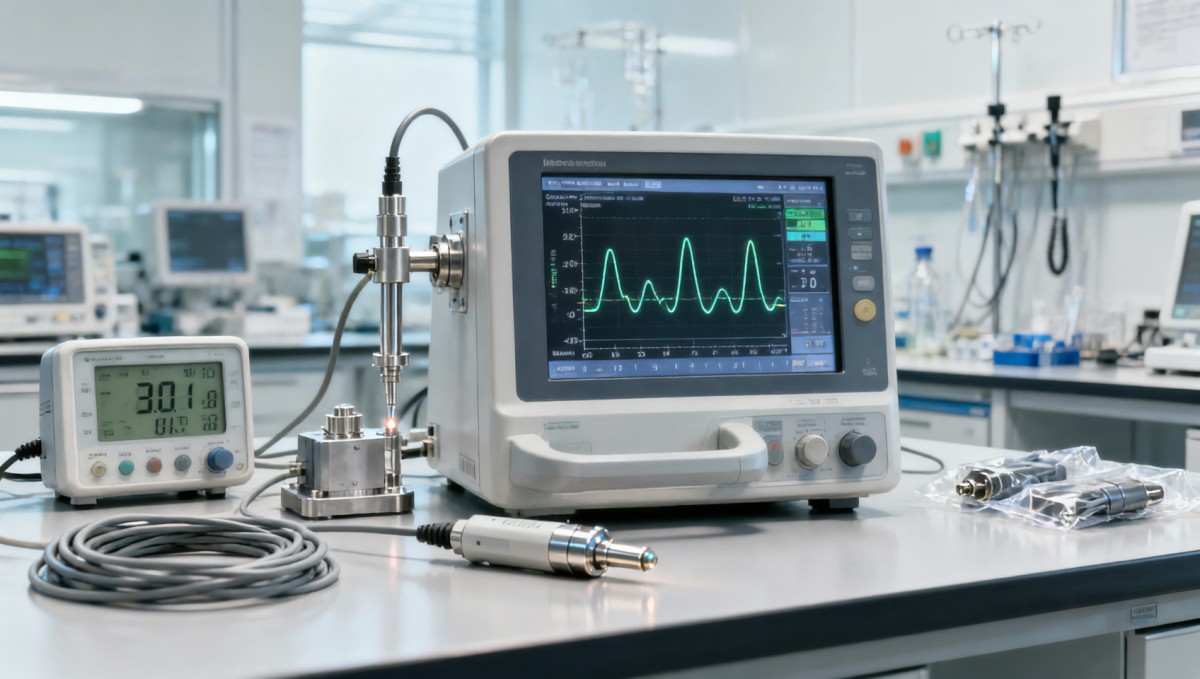
Routine calibration failures in medical devices often trace back to overlooked handling errors, environmental drift, software issues, or aging components. For users and operators, understanding why a medical device misses tolerance checks is essential for safety, compliance, and uptime. This article explains the most common causes, practical warning signs, and how lessons from precision sectors such as EV motor, EV battery, EV accessories, and EV components can sharpen maintenance discipline.
In daily operation, a failed calibration check is rarely just a technical nuisance. It can delay patient service, trigger rework, increase service costs, and expose the organization to audit findings. For operators on the floor, the key question is practical: what changed between the last acceptable calibration and today’s failure?
The answer usually sits at the intersection of people, environment, process, and equipment condition. Devices that appear stable can drift outside tolerance by small increments such as ±1% to ±3%, and those shifts matter when the device is used for dose delivery, monitoring, or laboratory measurement. A disciplined response starts with identifying the most likely failure mode instead of treating every failed check as random.
The Most Common Reasons Medical Devices Fail Routine Calibration Checks

Medical device calibration failures typically come from a short list of recurring causes. The first is handling error. When a device is moved without proper stabilization time, dropped during transport, connected with the wrong accessory, or powered up incorrectly, the resulting measurement shift can be enough to exceed the allowed tolerance band.
The second common cause is environmental drift. Many devices are calibrated under controlled conditions such as 20°C to 25°C and 40% to 60% relative humidity. If the device is checked in a room outside that window, especially after storage or transport, the readings may fail even when the internal measurement chain is still basically functional.
Software and firmware changes are another frequent trigger. A configuration update, sensor offset reset, version mismatch, or incomplete parameter migration can alter how the device interprets input values. In modern systems, routine calibration is no longer only about hardware. A device can fail because its digital baseline no longer matches the approved reference setup.
Aging components also play a major role. Sensors, power supplies, seals, connectors, batteries, and internal analog boards degrade over time. Even if a device still turns on and appears to work, long-term wear can increase noise, slow response time, or distort output. In facilities with 2-shift or 3-shift use patterns, component drift often appears earlier than operators expect.
Contamination is easy to underestimate. Dust, fluid ingress, residue on probes, oxidized contacts, and poorly cleaned interfaces can all influence signal quality. In some devices, a thin residue layer on a sensing surface can create enough bias to trigger repeated calibration failures over 2 to 4 inspection cycles before the root cause is recognized.
Failure causes at a glance
The table below helps operators separate the visible symptom from the probable cause. This matters because replacing parts too early can waste budget, while ignoring a drift signal can increase downtime and compliance risk.
A useful takeaway is that calibration failure is often cumulative, not sudden. Small inconsistencies can build over 30, 60, or 90 days. Operators who log environmental conditions, warm-up duration, and accessory changes can usually narrow root causes much faster than teams relying only on the final pass/fail result.
What operators should verify first
- Confirm the correct reference standard, accessory, and test setup were used for that exact device model.
- Verify warm-up and stabilization time, which may range from 10 to 45 minutes depending on device type.
- Check whether the equipment was transported, cleaned, reconfigured, or updated within the previous 7 days.
- Review room temperature, humidity, and power quality at the moment of the failed check.
How User Handling and Daily Routines Push Devices Out of Tolerance
Operators influence calibration outcomes more than many teams realize. Repeated shortcuts in startup, cleaning, storage, cable management, or accessory replacement can gradually destabilize the device. The issue is not usually one major mistake. It is the accumulation of small deviations from the approved operating routine.
For example, skipping the recommended stabilization period may seem harmless when workloads are heavy. But if a device needs 20 minutes to thermally stabilize and is checked after only 5 minutes, the measurement baseline can shift enough to fail a narrow tolerance band. This is especially relevant in precision monitoring and laboratory equipment.
Improper cleaning is another major issue. Using aggressive chemicals, over-wetting a connector, or leaving residue on a measurement surface can introduce drift that appears later during routine calibration. In practice, devices that undergo frequent daily cleaning need clearly documented chemical compatibility and drying times, not just general hygiene instructions.
Accessory substitution also creates problems. A cable, probe, adapter, or battery pack that physically fits may still carry a different electrical profile or response curve. If operators interchange accessories without traceability, the calibration failure may be blamed on the main device when the real cause is at the interface level.
High-risk routine errors
The checklist below reflects common operator-side risks seen across precision industries. The same discipline used in EV motor and EV battery production lines applies well to medical environments, where repeatability depends on tight control of each step.
- Using the device immediately after relocation from a cold or warm storage area without a 15 to 30 minute acclimation period.
- Connecting third-party accessories that are mechanically compatible but not validated for calibration-critical use.
- Skipping pre-use visual inspection of ports, probes, seals, and cable strain points.
- Failing to record minor impacts, fluid exposure, or unplanned software resets.
- Performing cleaning without confirming concentration, contact time, and full drying before restart.
A strong operating culture reduces failure rates because it improves repeatability. In many facilities, a simple 5-step pre-check completed in less than 2 minutes can prevent avoidable calibration misses. That is often more cost-effective than increasing service frequency without fixing frontline process variation.
Why cross-industry precision habits matter
Precision automotive sectors offer a useful comparison. In EV components manufacturing, teams routinely control torque, connector integrity, contamination, and environmental conditions because even small variation can affect downstream performance. Medical device users can adopt the same mindset: every handling step is part of the measurement chain.
That does not mean treating every device like a factory instrument, but it does mean standardizing routine behavior. A device that fails calibration once may need repair. A device that fails three cycles in 6 months often points to a process discipline issue that training and logging can address.
Environmental, Electrical, and Software Factors Operators Should Not Ignore
Not all calibration failures originate inside the device. External conditions can introduce bias or instability even when the device itself is still serviceable. Temperature swing, humidity changes, airborne contamination, electromagnetic interference, and supply fluctuation can all affect measurement quality.
Temperature is one of the most obvious but most overlooked variables. A difference of 5°C to 10°C from the recommended calibration condition can shift sensor behavior, analog response, or mechanical dimensions enough to impact precision. Devices with sensitive transducers, optical paths, or fluid systems are particularly vulnerable.
Electrical stability matters as well. Shared circuits, poor grounding, unstable backup power, and frequent plug switching can create intermittent errors that only appear during test mode. When a device passes calibration in one room and fails in another, the power environment should be investigated before the device is condemned.
Software-related failure is rising as devices become more connected and configurable. Changes in firmware revision, user access levels, calibration coefficients, date-time synchronization, and network-linked settings can change how results are processed. In some cases, a calibration failure is actually a configuration control problem rather than component degradation.
Typical external factors and their impact
The following table summarizes the external variables operators should document whenever a medical device misses a routine calibration check. Capturing these details can shorten troubleshooting from several days to a few hours.
The main conclusion is simple: calibration should never be assessed in isolation from the operating environment. A device, test standard, room condition, and software state form one system. If one part changes, the calibration result can change too.
A practical logging standard
- Record ambient temperature and humidity for every failed check.
- Track software version, last update date, and user who applied the change.
- Log relocation events, battery replacement, cleaning events, and service interventions for at least 12 months.
- Separate environmental failures from device failures to improve maintenance planning.
How to Troubleshoot a Failed Calibration Check Without Losing Uptime
When a routine calibration check fails, the worst response is an unstructured one. Operators need a repeatable decision path that protects safety and reduces unnecessary downtime. The first step is to isolate the device from clinical or production use if the failed parameter affects critical performance. The second is to verify whether the failure is reproducible.
A practical troubleshooting sequence usually takes 4 stages. Stage 1 covers setup verification: correct accessory, approved procedure, environmental condition, and stabilization time. Stage 2 covers visual and physical inspection: connectors, housings, sensors, contamination, and signs of impact. Stage 3 checks software and configuration. Stage 4 determines whether escalation to service is necessary.
This staged approach matters because many failures can be resolved before full service dispatch. For example, a configuration reset, accessory replacement, or proper warm-up may restore the device to within tolerance. On the other hand, repeated failure after two controlled retests usually indicates component degradation or a deeper internal fault.
For organizations managing multiple devices, it is useful to classify failures into operator-correctable, environment-correctable, and service-required categories. That simple classification helps maintenance teams prioritize resources and can reduce repeat troubleshooting time by 20% to 30% over several service cycles.
Recommended response workflow
The workflow below is designed for real operating teams that need traceability and fast decisions. It also aligns well with B2B maintenance planning, where documentation quality directly affects service efficiency and audit readiness.
- Quarantine the device if the failed parameter affects safety, dosage, or core monitoring accuracy.
- Repeat the check under controlled conditions using the approved accessory set and documented warm-up time.
- Inspect recent changes within the last 30 days, including software updates, transport, cleaning, and battery replacement.
- Review trend history: compare the last 3 to 5 calibration records for drift direction rather than only pass/fail status.
- Escalate with a complete fault log so service teams can arrive with the right parts and test tools.
What not to do after a failure
Avoid immediate blind adjustment unless the approved procedure specifically authorizes it. Recalibrating a device without confirming environmental and configuration conditions can hide the underlying problem and create a shorter interval to the next failure. That is similar to precision EV component lines, where adjusting end values without resolving fixture or sensor variation only shifts the defect downstream.
It is also risky to return a device to routine use after a marginal pass if the failure was intermittent. Intermittent issues are often the earliest sign of connector wear, unstable power modules, or sensor aging. Tracking recurrence within 14 to 30 days provides a more reliable basis for service decisions.
Preventive Maintenance Practices That Reduce Repeat Calibration Failures
The best way to manage routine calibration failure is to prevent the conditions that make failure likely. Preventive maintenance for medical devices should combine schedule-based tasks with condition-based observation. That means not only servicing at fixed intervals such as every 6 or 12 months, but also acting on early drift signals, operator logs, and environmental exceptions.
Training is central. Users and operators should know more than the button sequence. They should understand how temperature, accessory pairing, connector care, software control, and cleaning chemistry affect calibration stability. Even a 30-minute refresher repeated every quarter can significantly improve consistency for high-use devices.
Documentation quality also has direct operational value. A calibration record that captures only date and pass/fail status is not enough. Better records include test condition, reference used, software version, room environment, maintenance actions, and any unusual observation. This creates trend visibility and helps predict service demand before a hard failure occurs.
Organizations can also borrow preventive methods from advanced manufacturing sectors. In EV battery and EV motor production, teams rely on standardized handling, traceable component changes, and tightly controlled process windows. Applying the same habits to medical device operation reduces variability and supports uptime without over-maintaining stable equipment.
Preventive controls worth standardizing
The table below outlines a practical preventive framework that operators, supervisors, and maintenance coordinators can implement. These controls are especially useful in multi-device environments where small discipline gaps can scale into repeated service events.
The strongest preventive programs are not the most complicated ones. They are the ones that operators can follow every day. A short checklist, clean records, controlled environment, and disciplined accessory management often deliver more value than reactive service alone.
FAQ for users and operators
How often should routine calibration checks be reviewed for trend analysis?
A good practice is to review the last 3 to 5 calibration events for each device, not just the most recent result. If drift direction is visible across 2 consecutive cycles, it is worth investigating before the next scheduled interval.
Can a device fail calibration even if it appears to work normally?
Yes. Many devices continue operating while gradually moving outside tolerance. Normal startup, display behavior, or basic function does not guarantee measurement accuracy. That is why routine calibration checks remain essential.
When should an operator stop troubleshooting and escalate?
Escalate when the failure repeats after 2 controlled retests, when the affected parameter is safety-critical, or when there is evidence of impact, fluid ingress, electrical instability, or configuration uncertainty that cannot be resolved locally.
What is the most overlooked preventive action?
Consistent logging. A simple record of environment, accessories, cleaning, updates, and unusual events often reveals patterns that routine pass/fail documentation misses.
Routine calibration failures in medical devices usually point to a manageable mix of handling variation, environmental drift, software control issues, and component aging. For users and operators, the practical goal is not just to pass the next check, but to build a repeatable operating routine that protects safety, uptime, and compliance.
At GIIH, we focus on the operational intelligence behind performance-critical equipment across medical technology and other precision sectors. If your team needs a clearer maintenance framework, a calibration risk review, or cross-industry insights to improve equipment discipline, now is the right time to act.
Contact us to discuss your device maintenance challenges, request a tailored operational checklist, or explore more industrial intelligence solutions that support better decisions on the ground.
Recommended News
 Sep 10, 2026Do Health Monitoring Devices Need Local Approval Before Import?Do health monitoring devices need local regulatory approval before import? Explore classifications, market access, labels, software, and compliance steps for safer global launches.
 Sep 07, 2026How Often Should Medical Information Systems Be Updated for Compliance?How often should medical information systems be updated for compliance? Explore risk-based update schedules, security patches, access reviews, testing, and audit-ready documentation.
 Sep 01, 2026Is Digital Health Data Interoperable Across Hospital Platforms?Is digital health data interoperable across different hospital platforms? Explore standards, security, workflows, and practical steps for safer connected care.
 Aug 31, 2026How to verify a diagnostic medical equipment manufacturer's quality systemDiagnostic medical equipment manufacturer quality system verification: uncover essential checks for ISO 13485, traceability, CAPA, risk management, and supplier control.
![]() Aug 14, 2026China temporarily bans the export of helium, putting global medical and semiconductor supply chains under pressureChina’s temporary helium export ban is straining global medical imaging and chip supply chains. See how MRI, semiconductor, and logistics teams can adapt fast.
Aug 14, 2026China temporarily bans the export of helium, putting global medical and semiconductor supply chains under pressureChina’s temporary helium export ban is straining global medical imaging and chip supply chains. See how MRI, semiconductor, and logistics teams can adapt fast. Aug 10, 2026FDA Sets eSTAR Filing Rule for China IVD ExportsFDA Sets eSTAR Filing Rule for China IVD Exports: learn how the new FDA eSTAR requirement affects Chinese IVD manufacturers, compliance documents, and U.S. shipment access.
 Aug 09, 2026Patient Monitoring Equipment Research: Which Metrics Matter Most Before You Buy?Patient monitoring equipment research starts with the right metrics. Learn how to compare accuracy, alarms, connectivity, and lifecycle cost before you buy.
 Jul 28, 2026Healthcare Equipment Research in Europe: Key Market Shifts and Buyer SignalsHealthcare equipment research Europe reveals how regulation, procurement, workflow pressure, and service expectations are reshaping buyer decisions across key healthcare markets.
 Jul 11, 2026Compact Medical Technology Solutions for Small Clinics: What to Compare Before BuyingCompact medical technology solutions for small clinics: compare space fit, throughput, connectivity, maintenance, and long-term cost before you buy. Make a smarter, lower-risk equipment decision.
 Jul 10, 2026Medical Technology Solutions Price Guide: What Drives Cost and How to BudgetMedical technology solutions price guide covering key cost drivers, hidden fees, and smart budgeting methods to compare vendors, control total ownership costs, and approve with confidence.
 Jul 09, 2026Medical Supply Chain Risks: How to Prevent Delays in Regulated Device SourcingMedical supply chain risks can cause costly sourcing delays in regulated devices. Learn practical ways to prevent disruption, improve compliance, and keep global procurement moving.
 Jul 08, 2026Medical Device Specification Analysis: Which Performance Parameters Matter Most in Evaluation?Product specification analysis medical devices starts with the parameters that truly affect safety, accuracy, software readiness, and long-term reliability—learn what to prioritize before you evaluate.
 Jul 06, 2026Medical Regulatory for Devices: Which Certifications Matter Before Market Entry?Medical regulatory for devices starts before launch. Learn which certifications—ISO 13485, CE marking, FDA pathways, and risk standards—matter most for faster, safer market entry.
 Jul 03, 2026Category Comparison Under FDA Requirements: How to Evaluate Product Class DifferencesCategory comparison FDA requirements explained: learn how to assess product class differences, avoid costly pathway mistakes, and make faster, smarter regulatory decisions.
 Jul 02, 2026How to Evaluate a Medical Technology Supplier for Quality, Lead Time, and ComplianceMedical technology supplier evaluation made simple: learn how to compare quality systems, lead time reliability, and compliance readiness to reduce risk and choose with confidence.
 Jul 02, 2026How Diagnostic Medical Equipment Supports Better Care Coordination Across Clinical TeamsDiagnostic medical equipment for care coordination helps clinical teams share data faster, reduce delays, and improve outcomes. See how connected diagnostics strengthen workflow efficiency.
 Jun 28, 2026Healthcare Equipment for Patient Monitoring: How to Choose by Care Setting and Data NeedsHealthcare equipment for patient monitoring: learn how to choose the right solution by care setting, data needs, integration, and lifecycle value for safer, smarter deployment.
 Jun 26, 2026Medical Devices Category Introduction: How Products Are Grouped and Why It MattersMedical devices category introduction: learn how products are grouped, why classifications differ by market, and how smarter category insight improves compliance, sourcing, and global market entry.
 Jun 26, 2026Medical Technology Solutions for Healthcare Facilities: What to Evaluate Before BuyingMedical technology solutions for healthcare facilities: learn what to evaluate before buying, from clinical fit and integration to compliance, vendor support, and total cost.
 Jun 25, 2026Surgical Instruments Materials Compared: Stainless Steel, Titanium, and MoreSurgical instruments materials compared: explore stainless steel, titanium, tungsten carbide, and coatings to improve durability, safety, sterilization performance, and smarter sourcing decisions.
 Jun 25, 2026Diagnostic Medical Equipment for Preventive Care: What Clinics Should PrioritizeDiagnostic medical equipment for preventive care: discover what clinics should prioritize to improve early detection, streamline workflows, control costs, and support long-term growth.
 Jun 23, 2026Hospital Furniture Standards: What to Check for Safety, Hygiene, and Ward UseHospital furniture standards explained: learn what to check for safety, hygiene, load capacity, ward fit, and supplier proof before buying for reliable long-term performance.
 Jun 22, 2026How to Choose Blood Pressure Monitors for Home Use: Cuff Size, Accuracy, and MemoryBlood pressure monitors for home use vary in cuff size, accuracy, and memory. Learn how to compare features, avoid common mistakes, and choose a reliable monitor with confidence.
 Jun 20, 2026Wearable Medical Devices: Key Sensors, Data Accuracy, and Regulatory FactorsWearable medical devices explained: explore key sensors, real-world data accuracy, and regulatory factors to compare solutions, reduce risk, and make smarter healthcare decisions.