


Search News
Global Industrial Intelligence Hub (GIIH)Industry Portal
Global Industrial Intelligence Hub (GIIH)Status
Standard Access
Upgrade to PremiumNewsWhich Auto System Parts Fail Most Often in Tropical Climates?
Time
Click Count
Which Auto System Parts Fail Most Often in Tropical Climates?
Tropical heat, humidity, heavy rainfall, and salt-laden air can accelerate vehicle wear far beyond normal operating conditions. So, what auto systems parts have the highest failure rate in tropical climates?
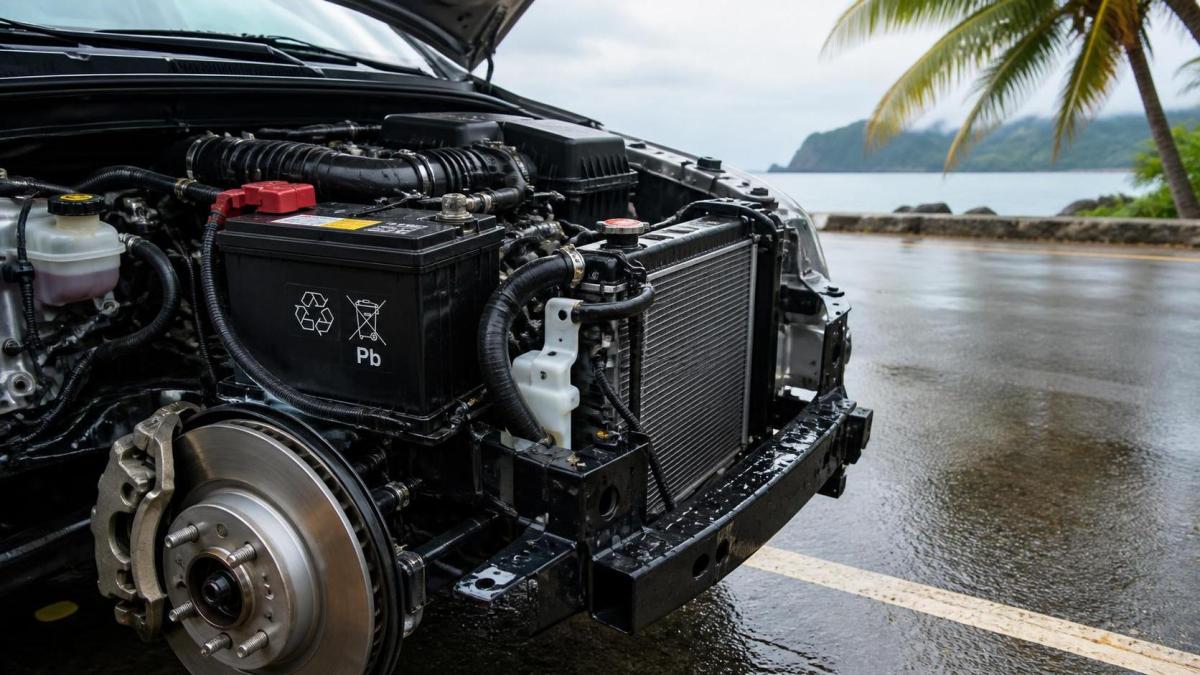
The short answer is batteries, cooling-system components, brake parts, electrical connectors, rubber seals, suspension bushings, and air-conditioning systems. Their failure patterns are strongly shaped by heat, moisture, corrosion, contamination, and stop-start driving.
For fleet managers, parts distributors, workshop operators, and vehicle owners, the main issue is not merely identifying failed components. It is predicting which systems need earlier inspection, better specifications, and more reliable replacement sourcing.
Tropical markets create an unusually demanding combination of environmental stresses. High ambient temperatures increase thermal load, while humidity and repeated rainfall expose metal, rubber, wiring, and fluids to accelerated deterioration.
Coastal regions add another risk factor: airborne salt. Even vehicles that never drive directly on beaches may experience faster corrosion of connectors, terminals, fasteners, brake lines, underbody components, and electronic housings.
Maintenance planning therefore needs to be climate-specific. A service interval that works well in a dry, temperate region can be too long for vehicles operating daily in equatorial cities, islands, monsoon regions, or coastal logistics corridors.
The most useful approach is to rank parts by operational impact. Components that cause roadside breakdowns, safety risks, cargo delays, or expensive secondary damage should receive priority over low-cost cosmetic replacements.
This guide explains what auto systems parts have the highest failure rate in tropical climates, why they fail, how to inspect them, and how businesses can make more resilient aftermarket purchasing decisions.
Why Tropical Conditions Change Vehicle Failure Rates

Tropical climate damage is cumulative rather than dramatic. A vehicle may appear normal during daily use, yet heat, moisture, vibration, and corrosion can gradually weaken several systems at the same time.
High temperatures are particularly damaging because they speed up chemical reactions. Battery electrolyte loss, coolant degradation, rubber hardening, oil oxidation, and electrical resistance can all develop faster under sustained heat exposure.
Humidity creates an equally important threat. Moist air can enter connectors, fuse boxes, lamps, sensors, and control modules through tiny gaps, especially after seals harden or housings crack.
Heavy rainfall creates alternating wet and dry cycles. This pattern encourages corrosion because water remains trapped around brake assemblies, underbody fasteners, wheel hubs, wiring clips, and suspension mounting points.
Urban traffic intensifies the problem. Vehicles sitting in congested conditions receive less airflow through radiators and condensers, while engines, transmissions, and air-conditioning systems operate at higher temperatures for longer periods.
For commercial fleets, road conditions may compound climate exposure. Flooded streets, unpaved access roads, construction debris, and potholes can damage wheel bearings, suspension components, seals, and electrical harnesses.
The key procurement implication is clear: price alone is a weak selection criterion. Tropical operating conditions often justify components with stronger seals, corrosion-resistant coatings, higher temperature ratings, and proven warranty support.
Battery Systems Often Have the Highest Breakdown Impact
Automotive batteries are among the most frequent causes of unexpected vehicle non-starts in tropical climates. Extreme heat can shorten battery life even when drivers assume cold weather is the primary battery threat.
Heat accelerates internal chemical reactions and increases electrolyte evaporation. Over time, this can reduce reserve capacity, weaken plate structure, and make the battery less able to recover after repeated engine starts.
In many tropical markets, battery failure appears suddenly because the vehicle may start normally until capacity falls below the threshold required by modern electronic systems. This is especially disruptive for delivery fleets.
Corroded battery terminals are another common issue. Humid air, acid vapor, and contaminated engine bays can create resistance at the terminal connection, causing slow cranking, charging faults, or intermittent electrical problems.
Vehicles with extensive accessory loads face greater exposure. Refrigerated logistics vehicles, ride-hailing cars, telematics-equipped fleets, emergency vehicles, and vans with auxiliary lighting place greater demands on charging systems.
Fleet operators should track battery replacement age, cranking performance, terminal condition, charging voltage, and parasitic draw. Replacing batteries based on measured degradation is more economical than responding to roadside failures.
Distributors should prioritize batteries designed for high-temperature service, with reliable date coding, suitable reserve capacity, secure venting, and clear warranty processes. Long shelf storage in hot warehouses can reduce value before sale.
A practical rule is to inspect batteries more frequently after their first year in severe tropical service. The correct interval depends on vehicle duty cycle, charging behavior, and under-hood temperature exposure.
Cooling-System Parts Fail Fast When Heat Margins Are Narrow
Cooling systems are the next major risk area because tropical ambient temperatures leave less reserve capacity for the engine. Any small weakness can turn routine traffic congestion into an overheating event.
Radiator hoses, hose clamps, thermostat housings, expansion tanks, radiator caps, water pumps, and cooling fans deserve close attention. These components experience constant heat cycles, pressure changes, vibration, and fluid contact.
Rubber hoses may soften, swell, crack, or become brittle, depending on material quality and coolant compatibility. Weak hoses can fail without warning, resulting in rapid coolant loss and possible engine damage.
Plastic expansion tanks and thermostat housings can become brittle after prolonged exposure to heat. Small cracks may initially cause only minor coolant loss, but they can progress into serious overheating problems.
Radiator caps are inexpensive but operationally important. A cap that cannot maintain correct pressure lowers the coolant boiling point, increasing the likelihood of overheating during high-load operation or slow urban traffic.
Cooling fans and fan relays also have high failure consequences. If a fan fails while the vehicle is idling, the temperature gauge may climb quickly even though the radiator and coolant level appear acceptable.
Water pumps can develop seal leaks or bearing wear. In humid, dusty, and high-temperature environments, early signs such as coolant traces, noise, or temperature variation should trigger inspection before catastrophic failure.
For fleet maintenance teams, coolant condition should be evaluated rather than topped up indefinitely. Incorrect fluid mixtures, mineral-heavy water, and neglected replacement intervals contribute to corrosion, deposits, and reduced heat transfer.
Buyers should verify temperature ratings, material composition, pressure specifications, vehicle fitment, and supplier traceability. Cooling-system failures can create the highest secondary repair costs because they can damage cylinder heads and engines.
Brake Components Face Corrosion, Water Exposure, and Safety Risks
Brake systems require special attention in tropical regions because rainwater, humidity, road contamination, and corrosion can affect both mechanical performance and service life. Safety consequences make this category non-negotiable.
Brake discs and drums often develop surface corrosion during frequent wet conditions or extended parking. Light corrosion may clear during normal braking, but repeated exposure can contribute to uneven wear and vibration.
Caliper slide pins are particularly vulnerable when protective boots tear or lubricant degrades. Corrosion can cause a caliper to bind, leading to uneven pad wear, brake drag, reduced fuel economy, and overheating.
Flexible brake hoses can deteriorate externally in harsh heat and moisture. Internal hose damage is harder to identify, but it may restrict fluid return and create a condition where brakes remain partially applied.
Brake fluid absorbs moisture over time. In humid climates, this increases the importance of scheduled fluid replacement because water contamination lowers boiling resistance and can promote corrosion inside hydraulic components.
Wheel cylinders, master cylinders, ABS sensors, and sensor wiring also deserve inspection after flooding events. Dirty water can damage seals or electrical connections, producing warning lights and reduced electronic braking functionality.
Fleet managers should measure pad thickness and disc condition before the legal minimum is reached. A preventive replacement schedule reduces brake-related downtime and makes workshop labor planning more predictable.
Aftermarket buyers should avoid treating brake parts as interchangeable commodities. Consistent friction material, corrosion protection, correct dimensions, and dependable fitment information have direct implications for safety and liability.
Electrical Connectors and Sensors Fail Quietly but Disrupt Operations
Modern vehicles depend on electronic systems for ignition, fuel delivery, charging, braking, emissions control, lighting, safety features, and fleet connectivity. Tropical humidity makes electrical reliability a critical maintenance concern.
Electrical connectors can corrode when moisture enters through damaged seals, loose terminals, or cracked housings. The resulting resistance may cause intermittent faults that are difficult to reproduce during a workshop inspection.
Commonly affected areas include battery cables, alternator plugs, ignition coils, fuse boxes, wheel-speed sensor connectors, engine-control harnesses, lamp sockets, trailer connections, and ground points near the chassis.
Flood exposure creates a separate category of risk. Even shallow water can enter low-mounted connectors, wheel sensors, starter circuits, or body-control wiring, especially when vehicles drive through standing water repeatedly.
Alternators are vulnerable because they operate close to engine heat and can be exposed to water splashes. Corroded connections, worn bearings, and damaged regulators can lead to undercharging or battery warning lights.
Ignition coils and spark plug boots may suffer insulation breakdown in high heat and humidity. Symptoms include misfires, poor acceleration, reduced fuel economy, difficult starting, and engine warning lights after rain.
Diagnostic discipline matters. Technicians should inspect connector condition, voltage drop, ground integrity, charging output, and stored fault codes before replacing expensive modules based on a single intermittent symptom.
For sourcing teams, sealed connectors, weather-resistant housings, quality terminal plating, and validated sensor specifications should be evaluated alongside unit price. A low-cost sensor that fails early creates disproportionate service costs.
Rubber Seals, Wipers, and Suspension Bushings Degrade Earlier
Rubber and elastomer components are highly sensitive to prolonged heat, ozone, UV exposure, fluid contamination, and repeated wet-dry cycles. Their failure is often gradual, but the operational effects can become widespread.
Door seals, window channels, trunk seals, and windshield seals may harden or crack. Once water enters the cabin or cargo area, corrosion, mold, electrical faults, and customer complaints may quickly follow.
Windshield wiper blades commonly wear faster in tropical conditions. Intense sunlight hardens the blade edge, while frequent storms require more wiping cycles and expose the windshield to abrasive dirt.
Worn wipers are not a minor convenience issue during monsoon driving. Reduced visibility increases collision risk, particularly for commercial vehicles operating at night, in dense traffic, or on unfamiliar regional routes.
Engine mounts, control-arm bushings, stabilizer links, and suspension boots can also deteriorate. Water and road grit entering damaged boots accelerate wear in joints, while heat can alter rubber flexibility.
Drivers may notice suspension failure through clunks, vibration, uneven tire wear, unstable steering, or reduced ride comfort. Fleet supervisors should connect these symptoms to inspection triggers rather than waiting for total failure.
Component specification matters greatly. Better-quality rubber compounds, properly fitted boots, and UV-resistant wiper materials often cost more initially but can reduce repeat replacement and labor expense.
Air-Conditioning Systems Are Essential, Not Optional
In tropical climates, air-conditioning is a core operating system rather than a comfort feature. Loss of cooling affects driver concentration, passenger satisfaction, cargo conditions, and the practical usability of commercial vehicles.
Compressors operate under sustained demand in hot climates, especially in vehicles that idle frequently. Refrigerant leaks, clutch issues, belt wear, contaminated lubricant, and condenser damage can reduce cooling performance.
Cabin air filters clog more quickly where rainfall, humidity, dust, pollen, and urban pollution are common. Restricted airflow can make a healthy air-conditioning system appear weak while increasing blower-motor strain.
Evaporator drains must remain clear. A blocked drain can cause water leakage into the cabin, unpleasant odors, microbial growth, and possible damage to electronic components installed beneath dashboards or carpets.
Condenser fins can become blocked or corroded, reducing heat rejection. This problem is common in coastal areas and congested cities where debris, salt, insects, and oily road grime accumulate at the vehicle front.
Service teams should distinguish between refrigerant loss, airflow restriction, electrical control faults, and compressor problems. Recharging refrigerant without locating the underlying issue can create repeat failures and unnecessary expense.
For distributors, air-conditioning parts require accurate application data and careful storage. Compressors, seals, receiver-driers, condensers, and pressure sensors should be supplied with clear installation and contamination-control guidance.
How Fleets and Buyers Should Prioritize Maintenance Spending
The best tropical-climate maintenance strategy is not to replace every part early. It is to prioritize systems according to failure likelihood, safety impact, downtime cost, replacement lead time, and secondary damage risk.
Battery, cooling, brake, and critical electrical components should generally receive the highest priority because their failure can immobilize a vehicle or create immediate safety concerns. Air-conditioning follows closely in tropical commercial use.
Fleet managers should build inspection schedules around vehicle duty cycles. Delivery vans, taxis, buses, construction vehicles, and coastal-service fleets may require different inspection frequencies despite using similar vehicle platforms.
A simple asset record should include mileage, operating territory, battery age, cooling repairs, brake wear trends, flood exposure, electrical fault history, and recurring parts consumption. This improves forecasting and supplier negotiations.
Parts distributors can use this data to create climate-specific product ranges. High-turnover stock should include durable batteries, cooling hoses, brake kits, connectors, wipers, seals, filters, and corrosion-protected fasteners.
Quality evaluation should include installation fit, material durability, warranty claim rates, packaging protection, traceability, and supplier responsiveness. The lowest purchase price can become costly when labor and vehicle downtime are included.
Businesses operating across regions should also avoid applying one inventory policy everywhere. Coastal tropical markets may need more corrosion-resistant products, while inland urban markets may consume more cooling and battery-related replacements.
Conclusion: Build a Tropical-Climate Parts Strategy
What auto systems parts have the highest failure rate in tropical climates? Batteries, cooling components, brake hardware, electrical connectors, rubber parts, suspension wear items, and air-conditioning systems consistently require closer attention.
The common causes are predictable: extreme heat, moisture, salt exposure, rainfall, flooding, road contamination, and intensive urban driving. Recognizing these forces helps businesses shift from reactive repair toward preventive control.
For fleet operators, the goal is fewer breakdowns, safer vehicles, and lower total maintenance cost. For distributors, the opportunity is to supply climate-appropriate parts backed by accurate technical information and reliable availability.
The strongest decisions combine local operating data with sound engineering judgment. Monitor repeat failures, inspect high-risk systems early, source parts for severe service, and treat tropical conditions as a central planning factor.
Recommended News
 Oct 05, 2026How to plan connected home devices for villas with weak Wi-Fi coverageConnected home devices for villas need reliable planning beyond Wi-Fi. Discover practical strategies for wired backbones, resilient controls, vendor coordination, and future-ready coverage.
 Sep 02, 2026Which Auto System Parts Fail Most Often in Tropical Climates?What auto systems parts have the highest failure rate in tropical climates? Discover the batteries, cooling, brake, electrical, and A/C parts that need proactive maintenance.
 Aug 18, 2026How to verify whether home control systems testing standards meet safety requirementsHome control systems testing standards: learn how to verify real safety compliance, spot hidden certification gaps, and make smarter release decisions for smart home products.
 Aug 03, 2026Z-Wave Home Control Systems: What to Compare Before You BuyZ-Wave home control systems compared the smart way: learn how to evaluate compatibility, security, mesh stability, automation, and true long-term value before you buy.
 Jul 15, 2026How to Choose a Home Automation Supplier for Multi-Room and Retrofit ProjectsHome automation supplier selection made simple: learn how to compare integration, retrofit readiness, software openness, support, and total cost for scalable multi-room projects.
 Jul 15, 2026Global Home Control Systems Explained: Types, Protocols, and Best-Fit Use CasesGlobal home control systems explained clearly: compare types, protocols like Matter, Zigbee, and Wi-Fi, plus best-fit use cases to choose smarter, safer home automation.
 Jul 14, 2026Connected Home Technology Supplier Comparison: What to Check Before You ShortlistConnected home technology supplier comparison: learn what to check before shortlisting vendors, from interoperability and security to supply resilience and long-term service fit.
 Jul 13, 2026How Energy Efficient Building Automation Cuts HVAC and Lighting Costs in Commercial BuildingsEnergy efficient building automation helps commercial buildings cut HVAC and lighting costs, reduce energy waste, and improve comfort with smarter controls, analytics, and faster ROI.
 Jul 12, 2026Building Automation Data Logging: Which Metrics Matter for Energy Performance?Building automation data logging reveals which metrics truly drive energy performance. Discover key signals, common mistakes, and practical insights to cut waste and optimize operations.
 Jul 04, 2026How to Choose Portable Solar Generators for Home Backup, Camping, or Mobile WorkPortable solar generators buying guide: learn how to choose the right capacity, output, battery type, and charging speed for home backup, camping, or mobile work.
 Jul 02, 2026Building Automation Zigbee vs Wi-Fi: Which Is Better for Stable Device Networks?Building automation Zigbee vs Wi-Fi: discover which delivers more stable, low-maintenance device networks for smart buildings, and choose the right fit for scale, power use, and reliability.
 Jul 01, 2026Prefabricated House Buying Guide: Materials, Cost Drivers, and Build TimePrefabricated house buying guide covering materials, key cost drivers, build time, and supplier risks. Learn how to compare quotes smarter and choose the right solution with confidence.
 Jun 30, 2026Home Control Systems Price Breakdown: Hardware, Installation, and Upgrade CostsHome control systems price explained: compare hardware, installation, subscriptions, and upgrade costs to budget smarter and avoid hidden fees before you buy.
 Jun 27, 2026How to Choose a Smart Living Management System for Multi-Room Energy and Device ControlSmart living management system selection starts with interoperability, room-level energy visibility, and scalability. Learn how to compare vendors, avoid costly mistakes, and choose a platform that improves control and efficiency.
 Jun 26, 2026Smart Living Certification Requirements: Key Standards, Tests, and Compliance StepsSmart living certification requirements explained: key standards, safety and EMC tests, regional marks, and practical compliance steps to speed approval and reduce launch risk.
 Jun 25, 2026Smart Home Gateway vs Hub: What’s the Difference and Which One Do You Need?Smart home gateway vs hub explained: learn the key differences, protocol support, automation benefits, and how to choose the right smart home gateway for a scalable, future-ready home.
 Jun 24, 2026How to Compare Smart Living Systems in the UAE for Villas, Apartments, and Gated HomesSmart living systems UAE guide: compare villa, apartment, and gated home solutions by security, integration, scalability, and long-term value to choose smarter with confidence.
 Jun 23, 2026Smart Home Basics: Which Devices Actually Improve Daily Convenience and Energy Control?Smart home essentials that truly improve daily convenience and energy control: discover which devices deliver real value, cut waste, and fit your routines before you buy.
 Jun 21, 2026Sustainable Home Decor for Eco-Conscious Consumers: Which Materials Are Better for Daily Use?Sustainable home decor for eco-conscious consumers starts with smarter materials. Compare wood, bamboo, metal, textiles, glass, and cork for healthier, durable daily living.
 Jun 14, 2026Prefab Glamping Cost Breakdown: What to Compare Before Choosing a Modular SitePrefab glamping cost breakdown explained: compare hidden site, logistics, compliance, and maintenance costs before choosing a modular site that protects ROI.
 Jun 11, 2026Smart Hotel Systems Explained: What to Automate First for Guest Experience and Energy SavingsSmart hotel systems explained: learn what to automate first—HVAC, lighting, digital check-in, and energy monitoring—to elevate guest experience, cut energy waste, and improve hotel margins.
![]() May 23, 2026Why sustainable home decor is more than a design trendSustainable home decor for eco-conscious consumers goes beyond style trends, offering healthier materials, lasting value, and smarter choices for beautiful, responsible living.
May 23, 2026Why sustainable home decor is more than a design trendSustainable home decor for eco-conscious consumers goes beyond style trends, offering healthier materials, lasting value, and smarter choices for beautiful, responsible living.![]() May 23, 2026Can ergonomic workspace design be installed quickly and wellErgonomic workspace design quick installation is possible without sacrificing quality. Learn how modular planning, compliance, and smart execution create faster, safer, high-performance workspaces.
May 23, 2026Can ergonomic workspace design be installed quickly and wellErgonomic workspace design quick installation is possible without sacrificing quality. Learn how modular planning, compliance, and smart execution create faster, safer, high-performance workspaces.![]() May 23, 2026What makes office furniture work better in coworking spacesModern office furniture for coworking spaces improves flexibility, comfort, and productivity. Discover how smarter furniture choices boost user experience and space value.
May 23, 2026What makes office furniture work better in coworking spacesModern office furniture for coworking spaces improves flexibility, comfort, and productivity. Discover how smarter furniture choices boost user experience and space value.