


Search News
Global Industrial Intelligence Hub (GIIH)Industry Portal
Global Industrial Intelligence Hub (GIIH)Status
Standard Access
Upgrade to PremiumNewsWhat makes office furniture work better in coworking spaces
Time
Click Count
Modern office furniture for coworking spaces does more than fill a room—it shapes focus, comfort, collaboration, and daily efficiency for every user and operator. In flexible work environments, the right furniture supports changing team sizes, diverse tasks, and smarter space planning. This article explores what makes office furniture perform better in coworking spaces and how thoughtful choices can improve both user experience and operational value.
What does better-performing office furniture mean in coworking spaces?
In coworking environments, furniture performance is measured by use, not appearance alone. A stylish desk fails if it limits movement, comfort, or quick reconfiguration.
Modern office furniture for coworking spaces should support multiple work modes. These include solo focus, team meetings, video calls, hot-desking, and informal collaboration.
Good performance also means durability under heavy traffic. Coworking spaces experience more daily wear than conventional offices, so materials and joints matter.
Another factor is operational flexibility. Furniture should help managers adjust layouts without major downtime, extra labor, or costly replacement cycles.
From a broader industry perspective, adaptable interiors mirror larger shifts in work, logistics, and asset efficiency. GIIH often highlights how physical infrastructure influences productivity outcomes.
Key signs that furniture is working well
- Users can switch tasks without friction.
- Teams can reconfigure rooms quickly.
- Seating remains comfortable for long sessions.
- Storage and cable management reduce visual clutter.
- Maintenance needs stay predictable and low.
Why is flexibility the most important feature of modern office furniture for coworking spaces?
Coworking spaces rarely serve one fixed group. Occupancy changes by hour, day, and season, so flexible furniture protects usability across different demand patterns.
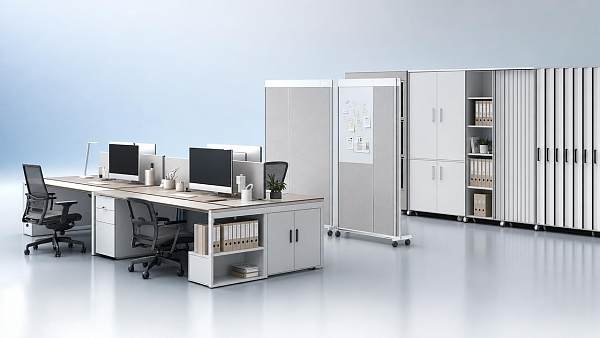
Tables on casters, modular sofas, folding partitions, and stackable chairs allow quick transitions. A lounge can become an event corner within minutes.
Modern office furniture for coworking spaces should reduce the cost of change. When layouts adapt easily, operators can test new service formats faster.
Flexibility also improves space utilization. Instead of assigning one area to one purpose, the same square footage supports meetings, workshops, individual work, and networking.
Which flexible furniture types create the most value?
- Height-adjustable desks for shared ergonomic use.
- Modular benching systems for changing team sizes.
- Mobile acoustic screens for privacy control.
- Nesting or foldable tables for event conversion.
- Soft seating modules for informal collaboration zones.
The goal is not maximum movement for everything. It is selective adaptability where layout changes are frequent and commercially useful.
How do comfort and ergonomics affect productivity in shared work environments?
Comfort has direct operational value. Poor chairs, weak back support, or wrong desk heights create fatigue, shorter stays, and lower satisfaction.
Modern office furniture for coworking spaces must accommodate diverse body types and work habits. Shared environments cannot rely on one fixed seating profile.
Ergonomic chairs with adjustable height, lumbar support, and armrests remain essential. Sit-stand desks further improve comfort for longer working sessions.
Acoustic comfort matters too. Furniture with sound-absorbing finishes, high-back booths, and fabric panels can reduce distraction in open plans.
Lighting integration is another overlooked factor. Desks and booths designed for task lighting improve focus, especially in mixed-use zones.
What ergonomic mistakes are common?
- Choosing chairs based only on style.
- Using fixed-height tables everywhere.
- Ignoring acoustic privacy in open layouts.
- Underestimating the need for foot space and reach zones.
How should office furniture support collaboration without hurting focus?
The best coworking interiors balance interaction and concentration. Too much openness causes noise. Too much enclosure reduces energy and spontaneous exchange.
Modern office furniture for coworking spaces should create clear behavioral zones. Users should instantly understand where to talk, meet, call, or work quietly.
Collaborative settings often benefit from round tables, writable surfaces, banquettes, and booth seating. These encourage eye contact and shared problem-solving.
Focus areas need different furniture logic. High-backed chairs, privacy screens, compact desks, and single-user pods help reduce interruption.
Zoning works best when furniture, lighting, and traffic paths reinforce each other. Physical layout should guide behavior without excessive signage.
A simple collaboration-focus planning model
What should be considered when choosing materials, durability, and maintenance?
Coworking furniture faces repeated movement, shared use, and frequent cleaning. That makes material selection a long-term financial decision, not a decorative one.
Modern office furniture for coworking spaces should use surfaces that resist scratches, stains, and edge damage. Laminate, powder-coated metal, and durable upholstery often perform well.
Replaceable parts are equally important. Swappable casters, seat pads, and panel components extend useful life and reduce total ownership cost.
Easy cleaning supports both hygiene and brand perception. Shared workplaces benefit from fabrics and finishes that tolerate routine disinfecting without rapid aging.
Sustainability is now part of practical evaluation. Recycled materials, low-emission finishes, and longer life cycles align with wider environmental and commercial priorities.
How can durability be checked before buying?
- Review warranty scope and exclusions.
- Inspect joints, welds, hinges, and edge protection.
- Ask about replacement parts availability.
- Compare cleaning requirements for each finish.
How can buyers avoid common mistakes with modern office furniture for coworking spaces?
A common mistake is buying all furniture at once without testing actual usage patterns. Real behavior often differs from initial planning assumptions.
Another issue is prioritizing trend-driven aesthetics over operational fit. Attractive furniture that photographs well may fail under daily pressure.
Some spaces overspend on statement pieces while underinvesting in chairs, acoustics, and power access. Users notice function first, then style.
Technology integration is also critical. Modern office furniture for coworking spaces should support charging, cable routing, and device-heavy workflows.
Finally, do not ignore future scaling. Standardized furniture systems make expansion, replacement, and layout consistency much easier.
Quick FAQ and decision table
What is the best next step when planning better coworking furniture?
Start with observation, not catalog browsing. Track how people work, where noise appears, which areas stay empty, and what furniture is overused.
Then build a priority list around flexibility, ergonomics, durability, and technology support. This creates a stronger basis for furniture selection.
Modern office furniture for coworking spaces works better when every piece supports a clear operational purpose. Better planning leads to better occupancy, retention, and daily experience.
For organizations tracking workplace trends across sectors, GIIH emphasizes one consistent principle: environments perform best when design decisions align with real workflows and future change.
Review your current layout, test a pilot zone, compare user feedback, and upgrade in phases. That practical approach delivers stronger value than a full redesign based on assumptions.
Recommended News
 Sep 02, 2026Which Auto System Parts Fail Most Often in Tropical Climates?What auto systems parts have the highest failure rate in tropical climates? Discover the batteries, cooling, brake, electrical, and A/C parts that need proactive maintenance.
 Aug 18, 2026How to verify whether home control systems testing standards meet safety requirementsHome control systems testing standards: learn how to verify real safety compliance, spot hidden certification gaps, and make smarter release decisions for smart home products.
 Aug 03, 2026Z-Wave Home Control Systems: What to Compare Before You BuyZ-Wave home control systems compared the smart way: learn how to evaluate compatibility, security, mesh stability, automation, and true long-term value before you buy.
 Jul 15, 2026How to Choose a Home Automation Supplier for Multi-Room and Retrofit ProjectsHome automation supplier selection made simple: learn how to compare integration, retrofit readiness, software openness, support, and total cost for scalable multi-room projects.
 Jul 15, 2026Global Home Control Systems Explained: Types, Protocols, and Best-Fit Use CasesGlobal home control systems explained clearly: compare types, protocols like Matter, Zigbee, and Wi-Fi, plus best-fit use cases to choose smarter, safer home automation.
 Jul 14, 2026Connected Home Technology Supplier Comparison: What to Check Before You ShortlistConnected home technology supplier comparison: learn what to check before shortlisting vendors, from interoperability and security to supply resilience and long-term service fit.
 Jul 13, 2026How Energy Efficient Building Automation Cuts HVAC and Lighting Costs in Commercial BuildingsEnergy efficient building automation helps commercial buildings cut HVAC and lighting costs, reduce energy waste, and improve comfort with smarter controls, analytics, and faster ROI.
 Jul 12, 2026Building Automation Data Logging: Which Metrics Matter for Energy Performance?Building automation data logging reveals which metrics truly drive energy performance. Discover key signals, common mistakes, and practical insights to cut waste and optimize operations.
 Jul 04, 2026How to Choose Portable Solar Generators for Home Backup, Camping, or Mobile WorkPortable solar generators buying guide: learn how to choose the right capacity, output, battery type, and charging speed for home backup, camping, or mobile work.
 Jul 02, 2026Building Automation Zigbee vs Wi-Fi: Which Is Better for Stable Device Networks?Building automation Zigbee vs Wi-Fi: discover which delivers more stable, low-maintenance device networks for smart buildings, and choose the right fit for scale, power use, and reliability.
 Jul 01, 2026Prefabricated House Buying Guide: Materials, Cost Drivers, and Build TimePrefabricated house buying guide covering materials, key cost drivers, build time, and supplier risks. Learn how to compare quotes smarter and choose the right solution with confidence.
 Jun 30, 2026Home Control Systems Price Breakdown: Hardware, Installation, and Upgrade CostsHome control systems price explained: compare hardware, installation, subscriptions, and upgrade costs to budget smarter and avoid hidden fees before you buy.
 Jun 27, 2026How to Choose a Smart Living Management System for Multi-Room Energy and Device ControlSmart living management system selection starts with interoperability, room-level energy visibility, and scalability. Learn how to compare vendors, avoid costly mistakes, and choose a platform that improves control and efficiency.
 Jun 26, 2026Smart Living Certification Requirements: Key Standards, Tests, and Compliance StepsSmart living certification requirements explained: key standards, safety and EMC tests, regional marks, and practical compliance steps to speed approval and reduce launch risk.
 Jun 25, 2026Smart Home Gateway vs Hub: What’s the Difference and Which One Do You Need?Smart home gateway vs hub explained: learn the key differences, protocol support, automation benefits, and how to choose the right smart home gateway for a scalable, future-ready home.
 Jun 24, 2026How to Compare Smart Living Systems in the UAE for Villas, Apartments, and Gated HomesSmart living systems UAE guide: compare villa, apartment, and gated home solutions by security, integration, scalability, and long-term value to choose smarter with confidence.
 Jun 23, 2026Smart Home Basics: Which Devices Actually Improve Daily Convenience and Energy Control?Smart home essentials that truly improve daily convenience and energy control: discover which devices deliver real value, cut waste, and fit your routines before you buy.
 Jun 21, 2026Sustainable Home Decor for Eco-Conscious Consumers: Which Materials Are Better for Daily Use?Sustainable home decor for eco-conscious consumers starts with smarter materials. Compare wood, bamboo, metal, textiles, glass, and cork for healthier, durable daily living.
 Jun 14, 2026Prefab Glamping Cost Breakdown: What to Compare Before Choosing a Modular SitePrefab glamping cost breakdown explained: compare hidden site, logistics, compliance, and maintenance costs before choosing a modular site that protects ROI.
 Jun 11, 2026Smart Hotel Systems Explained: What to Automate First for Guest Experience and Energy SavingsSmart hotel systems explained: learn what to automate first—HVAC, lighting, digital check-in, and energy monitoring—to elevate guest experience, cut energy waste, and improve hotel margins.
![]() May 23, 2026Why sustainable home decor is more than a design trendSustainable home decor for eco-conscious consumers goes beyond style trends, offering healthier materials, lasting value, and smarter choices for beautiful, responsible living.
May 23, 2026Why sustainable home decor is more than a design trendSustainable home decor for eco-conscious consumers goes beyond style trends, offering healthier materials, lasting value, and smarter choices for beautiful, responsible living.![]() May 23, 2026Can ergonomic workspace design be installed quickly and wellErgonomic workspace design quick installation is possible without sacrificing quality. Learn how modular planning, compliance, and smart execution create faster, safer, high-performance workspaces.
May 23, 2026Can ergonomic workspace design be installed quickly and wellErgonomic workspace design quick installation is possible without sacrificing quality. Learn how modular planning, compliance, and smart execution create faster, safer, high-performance workspaces.![]() May 23, 2026What makes office furniture work better in coworking spacesModern office furniture for coworking spaces improves flexibility, comfort, and productivity. Discover how smarter furniture choices boost user experience and space value.
May 23, 2026What makes office furniture work better in coworking spacesModern office furniture for coworking spaces improves flexibility, comfort, and productivity. Discover how smarter furniture choices boost user experience and space value. May 22, 2026When do modular office systems save more space and cost?Modern office furniture modular systems save space and cut long-term costs in hybrid, growing, and relocation-prone offices. Learn when they deliver the best ROI.