


Search News
Global Industrial Intelligence Hub (GIIH)Industry Portal
Global Industrial Intelligence Hub (GIIH)Status
Standard Access
Upgrade to PremiumNewsDistribution centers are shifting closer to demand in 2026
Time
Click Count
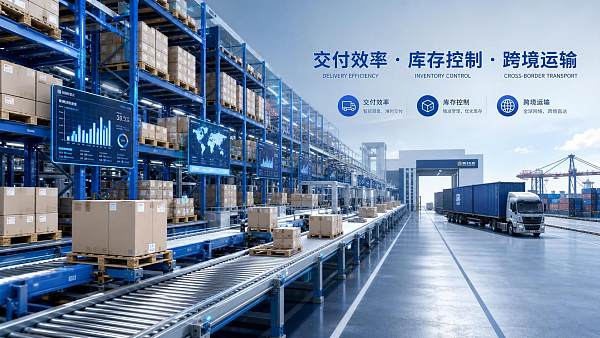
In 2026, distribution centers are moving closer to demand hubs to strengthen inventory control, improve logistics management, and support faster ecommerce delivery. This shift matters not only for retail, but also for car spare parts and auto parts supply chains, where reliable delivery, fast shipping, and smarter inventory management are becoming critical competitive advantages. Understanding these logistics solutions helps researchers and operators track how supply networks are being redesigned for speed, resilience, and cost efficiency.
Why are distribution centers moving closer to demand in 2026?

The relocation of distribution centers toward major demand clusters is not a short-term warehouse trend. It reflects a deeper redesign of supply chain networks around delivery speed, buffer inventory, and regional flexibility. In practical terms, companies are reducing the distance between stored goods and end users to cut lead times from 3–7 days to 1–3 days in many domestic and near-market routes.
For information researchers, the main question is no longer whether decentralization is happening, but where it creates measurable value. For operators, the issue is more immediate: how to maintain stock accuracy, picking efficiency, and transport coordination when inventory is split across 2–5 smaller facilities instead of one large national hub.
The shift is especially visible in ecommerce logistics, aftermarket service, and auto parts distribution. A delayed shipment of a consumer item may harm customer satisfaction, but a delayed car spare parts order can immobilize a repair job, extend workshop downtime, and disrupt service schedules. This is why proximity, inventory visibility, and route responsiveness now matter as much as storage capacity.
At GIIH, this change is best understood as a multi-layer market signal. It combines freight volatility, urban fulfillment pressure, regional trade restructuring, and digital inventory management. Rather than viewing warehouse placement as a fixed asset question, buyers and planners increasingly evaluate it as a strategic service capability tied to fulfillment resilience.
What is driving the change?
- Shorter delivery expectations: many B2B and B2C buyers now expect same-day, next-day, or 24–48 hour dispatch windows in major markets.
- Higher disruption risk: port delays, lane congestion, and cross-border uncertainty make a single-node network more fragile.
- Inventory segmentation: firms want faster-moving SKUs positioned near demand while slower SKUs remain in central storage.
- Last-mile pressure: transport costs often rise sharply in the final delivery segment, especially within dense urban and suburban zones.
Why this matters beyond retail
The move closer to demand is not limited to fashion, groceries, or general merchandise. It also affects industrial consumables, medical replenishment, maintenance components, and automotive aftermarket parts. In these sectors, service levels are often measured not only in days, but in hours, appointment windows, and fill-rate reliability across hundreds or thousands of SKUs.
GIIH’s cross-sector intelligence model is useful here because demand-proximate warehousing creates different implications by industry. Health and medical shipments may prioritize temperature control and compliance. Smart living systems may need flexible returns handling. Auto parts distribution often depends on exact SKU matching, batch integrity, and region-specific replenishment rules.
Which supply chain models work best for ecommerce and auto parts logistics?
The best distribution model in 2026 depends on order density, SKU diversity, service promise, and replenishment rhythm. A central warehouse can still work for low-urgency or low-frequency orders, but it becomes less efficient when demand is fragmented across multiple metro areas and when delivery commitments fall below 48 hours. This is why regional distribution and micro-fulfillment are gaining ground.
For operators, the practical challenge is balancing stock duplication against service improvement. Splitting inventory across 3 regions may improve order speed, yet also raise safety stock requirements. The right model therefore depends on whether the business is optimizing for lowest inventory carrying cost, highest order fill rate, or strongest resilience during transport interruptions.
In auto parts supply chains, the answer is often hybrid. Fast-moving parts such as filters, brake components, sensors, and common wear items are positioned close to demand centers. Slow-moving or model-specific items stay in central storage and move on scheduled replenishment cycles, often every 24 hours, 48 hours, or 72 hours depending on route density.
The table below compares four common distribution center models used in ecommerce delivery and car spare parts logistics. It helps researchers and operational teams evaluate where each structure fits best.
The comparison shows that the strongest model is rarely universal. Regional distribution often delivers the best compromise, but only if the company can maintain inventory accuracy, replenishment discipline, and routing control. That is why location strategy and digital execution must be planned together, not separately.
How to judge model fit in practice
Three practical decision filters
- Order urgency: if more than one-third of orders require delivery within 24–48 hours, regional or hybrid networks usually outperform a single-center model.
- SKU velocity: if the top 10% of SKUs generate most demand, those items are strong candidates for demand-proximate storage.
- Geographic concentration: if demand is concentrated in 2–4 metro clusters, smaller regional distribution centers often reduce both transit risk and service inconsistency.
Researchers should also examine whether the network is built for expansion. A warehouse model that works at current volume may fail when channel mix changes or cross-border inventory grows. GIIH typically advises decision-makers to assess scalability over a 12–24 month horizon rather than only the next quarter.
What should buyers and operators evaluate before redesigning a distribution network?
A common mistake in distribution center planning is to focus only on rent, labor, or transport quotes. In reality, network redesign affects inventory policy, service level commitments, returns handling, carrier management, and system integration. For B2B buyers and operational users, the better approach is a structured evaluation across at least 5 dimensions before selecting a logistics solution.
This matters even more when the network supports auto parts, aftermarket components, or mixed ecommerce orders. A location that looks cost-effective on paper may become problematic if it cannot support cut-off times, part-number accuracy, reverse logistics, or emergency replenishment windows. Procurement teams therefore need both commercial and operational criteria.
The following table can be used as a practical procurement and evaluation guide when reviewing distribution centers, third-party logistics providers, or network redesign proposals in 2026.
This framework helps reduce procurement bias. A low-cost warehouse with weak system integration can increase errors, while a premium site with poor route access can miss service targets. The most useful question is not “Which option is cheapest?” but “Which option supports the required service level at acceptable total operating cost?”
A 4-step evaluation process
- Map demand by region, order type, and SKU velocity over the last 6–12 months.
- Separate fast-moving, service-critical, and long-tail inventory into distinct stocking rules.
- Test service scenarios for 24-hour, 48-hour, and 72-hour delivery commitments.
- Review implementation lead time, integration effort, and contingency planning before signing contracts.
Risk points often overlooked
Operators frequently underestimate replenishment discipline. A regional distribution center only improves service if transfer orders, restock thresholds, and cycle counts are tightly managed. In fragmented networks, poor replenishment logic can create stock imbalance within 1–2 weeks, even when total inventory seems sufficient at network level.
Another overlooked issue is returns and reverse flow. Ecommerce delivery and auto parts logistics both generate return streams, but for different reasons. Consumer returns may involve preference and damage, while parts returns may involve misfit, duplicate order, or workshop diagnosis error. The warehouse design must support these flows without damaging outbound performance.
How does proximity improve logistics performance without creating new cost problems?
Moving distribution centers closer to demand can improve speed, but the benefit depends on execution quality. If the network adds storage points without clear inventory rules, costs can rise faster than service levels. The aim in 2026 is not simply more warehouses. It is smarter placement of the right stock, at the right depth, for the right service window.
For most organizations, the performance gain comes from three areas. First, transport distance is reduced on fast-moving orders. Second, regional safety stock can protect against lane disruption. Third, local dispatch windows become easier to maintain, especially during demand spikes, promotional cycles, or service-critical repair periods.
However, buyers must compare these gains against duplicated inventory, labor overhead, lease exposure, and systems complexity. This is where network design becomes a cost-and-service optimization problem rather than a basic warehousing decision. GIIH’s logistics intelligence approach is useful because it connects market movement, route risk, and category-specific handling needs into one decision framework.
In automotive aftermarket operations, the strongest cost-performance model often combines central inventory depth with regional service inventory. The central site carries long-tail parts, while regional nodes hold the top demand lines needed within 24–48 hours. This structure can reduce emergency transport dependence and improve workshop service continuity.
Where the measurable gains usually appear
- Shorter average lead time for high-frequency SKUs, especially in metro and near-metro regions.
- Higher order fill reliability when disruptions affect one route or one transport hub.
- Lower premium freight use because urgent items are already closer to the service point.
- Better inventory visibility by demand cluster when supported by WMS and transfer logic.
Where cost pressure can increase
The main cost risks are inventory duplication, uneven labor productivity, and poor slotting. A small regional site that stores too many slow-moving items may tie up working capital without improving service. Similarly, underutilized urban nodes can carry high occupancy cost if volume forecasts were based on optimistic rather than proven order density.
This is why phased implementation is usually safer than full relocation. Many firms start with 1 pilot region, 1 selected SKU family, and a 90-day performance review. That approach gives clearer evidence on order cycle time, stock transfer frequency, and customer service impact before wider network rollout.
What common mistakes should researchers and operators avoid?
The first mistake is treating distribution center proximity as a universal solution. Not every product needs local stock. Low-turn, oversized, seasonal, or highly specialized items may still perform better from a central distribution center. The correct strategy depends on demand shape, service obligation, and replenishment cost, not on a simple assumption that closer is always better.
The second mistake is ignoring data quality. A regional network depends on clean SKU mapping, location-level demand analysis, and inventory classification. If item master data, pack ratios, or order history are inconsistent, the network may shift stock to the wrong region and create service failures that are difficult to diagnose quickly.
The third mistake is underestimating implementation time. Even a modest redesign may require 2–8 weeks for system interfaces, location coding, barcode logic, carrier onboarding, and operating procedure alignment. If cross-border flows or regulated categories are involved, lead times can be longer because labeling, documentation, and routing controls need extra validation.
The fourth mistake is measuring only transport savings. A closer node can improve service, but performance should also be tracked through order accuracy, fill rate, transfer frequency, return cycle time, and stock aging. Without these indicators, the business may gain speed while quietly increasing hidden operating cost.
FAQ for 2026 distribution center planning
How do I know if a regional distribution center is necessary?
Start with customer promise and order geography. If a meaningful share of orders must arrive within 24–48 hours, and those orders are concentrated in 2–4 major demand zones, a regional distribution center often becomes justified. It is especially relevant when service-critical parts or high-repeat ecommerce items drive customer retention.
Is this model suitable for car spare parts and auto parts businesses?
Yes, but usually in hybrid form. Fast-moving replacement parts benefit from local availability, while niche or model-specific items can remain centralized. The goal is to match stocking depth to demand predictability and workshop urgency, not to move the full catalog to every location.
What should be checked before selecting a new logistics solution?
Review at least 5 areas: service radius, inventory visibility, cut-off times, systems integration, and compliance handling. If the provider cannot explain replenishment rules, returns processing, and exception management in operational terms, the solution may be incomplete even if the location looks attractive.
How long does implementation usually take?
For a straightforward regional warehousing setup with basic systems integration, a common planning range is 2–8 weeks. More complex projects involving multi-site inventory logic, ERP connections, or cross-border fulfillment can take longer. A pilot stage is often the safest way to validate performance before expansion.
Why work with GIIH when evaluating distribution centers and logistics strategy?
Distribution center decisions now sit at the intersection of trade intelligence, logistics execution, and industry-specific demand behavior. GIIH supports this decision process by turning fragmented market information into structured operational insight. That is particularly valuable for research teams, sourcing managers, and frontline operators who need more than generic warehousing commentary.
Our advantage lies in connecting multiple industrial perspectives. Through logistics strategists, automotive engineering insight, and cross-border trade analysis, GIIH helps clients interpret how warehouse location, inventory policy, and delivery design affect real supply chain performance. This is relevant not only for ecommerce delivery, but also for parts distribution, replenishment planning, and service network redesign.
If you are assessing whether distribution centers should move closer to demand in 2026, we can help you narrow the decision with practical, research-based inputs. These include regional demand mapping, model comparison, inventory segmentation logic, implementation checkpoints, and risk review across 3 key horizons: immediate execution, 6–12 month scaling, and longer-term supply chain resilience.
You can contact GIIH to discuss specific topics such as distribution center model selection, service radius planning, delivery cycle expectations, auto parts fulfillment design, inventory control priorities, systems integration scope, compliance considerations, and phased rollout options. If you need support on parameter confirmation, solution comparison, delivery timing, customized planning, or quotation communication, our team can help structure the evaluation around your actual operating goals.
- health
- aftermarket service
- smart living
- cross-border trade
- order fulfillment
- warehousing
- inventory management
- distribution centers
- fast shipping
- reliable delivery
- logistics solutions
- supply chain
- logistics management
- inventory control
- procurement
- auto parts
- car spare parts
- aftermarket
- replacement parts
Recommended News
 Oct 10, 2026How to reduce supplier risk in industrial sourcing for automotive industryIndustrial sourcing for automotive industry: reduce supplier risk with proven methods for capability checks, sub-tier visibility, continuity planning, and change control.
 Oct 07, 2026EU Customs Code Takes Effect Nov. 1, Making Platforms Responsible ImportersEU Customs Code reform takes effect November 1, 2026, making non-EU e-commerce platforms responsible importers. Learn how VAT, compliance, and customs rules may affect EU-bound sellers.
 Sep 24, 2026When does supply chain management software pay for itself?Supply chain management software pays for itself by reducing avoidable inventory, freight, stockout, and planning costs. Learn how to build a credible ROI case.
 Sep 20, 2026How supplier compliance monitoring reduces disruption riskSupplier compliance monitoring helps teams spot risks early, prevent costly disruptions, strengthen supplier resilience, and protect operational continuity.
 Sep 16, 2026What makes a procurement research platform reliable for supplier sourcing?A procurement research platform for sourcing helps teams identify credible suppliers, assess risk, verify evidence, and build defensible shortlists for smarter decisions.
 Sep 07, 2026How to compare cross border logistics services for reliable deliveryCompare cross border logistics services with confidence. Learn how to assess customs, tracking, costs, final-mile coverage, and exception handling for reliable delivery.
 Sep 05, 2026How to Compare an Order Fulfillment Pricing Model by Total CostOrder fulfillment pricing model guide: compare total costs across storage, shipping, returns, fees, and service levels to select the right fulfillment partner.
 Sep 07, 2026Sourcing Semi-Trailer Spare Parts Without Compromising Brake Drum QualitySemi trailer spare parts sourcing guide: choose reliable brake drums with verified fitment, traceability, and quality control to protect safety, uptime, and costs.
 Aug 28, 2026France Lowers Foreign Investment Review Threshold to 10% for Non-EU BuyersFrance lowers its foreign investment review threshold to 10% for non-EU buyers, reshaping strategic deals, compliance planning, and cross-border investment.
 Aug 25, 2026Vietnam Cuts Anti-Dumping Duty on Chinese H-Beam Steel to 6.78%Vietnam cuts anti-dumping duty on Chinese H-beam steel to 6.78%, reshaping import costs and sourcing decisions in Southeast Asia. See what buyers and traders should do next.
 Aug 21, 2026France Lowers Foreign Investment Review Threshold to 10% for Non-EU BuyersFrance lowers its foreign investment review threshold to 10% for non-EU buyers, reshaping deals in strategic sectors. See what this means for investors, timelines, and cross-border transaction risk.
 Aug 20, 2026BRICS Reaches Consensus on Green Minerals Supply Chains and Wider Local-Currency TradeBRICS green minerals supply chains and wider local-currency trade could reshape industrial exports, settlement, and compliance. See what Chinese exporters should watch next.
 Aug 19, 2026RCEP Steel Conference in Nanning Highlights Green Low-Carbon Technology CooperationRCEP Steel Conference in Nanning highlights green low-carbon technology cooperation, tariff rules, and compliance trends shaping steel exports, supply chains, and new regional business opportunities.
 Aug 18, 2026Second Strait of Hormuz Closure Raises Supply Chain Risks as Oil and Freight Costs ClimbSecond Strait of Hormuz closure raises supply chain risks as oil and freight costs climb. Explore impacts on shipping, pricing, and key export sectors now.
 Aug 16, 2026EU Battery Passport Becomes Mandatory for Exported Storage Products on August 18EU Battery Passport becomes mandatory on August 18, 2026 for exported storage products above 2kWh. Learn what Chinese exporters, integrators, and OEMs must do to stay compliant.
 Aug 15, 2026China Widens Cross-Border Cash Pool Access for Multinationals on Sept. 14China widens cross-border cash pooling for multinationals on Sept. 14, boosting treasury efficiency, liquidity, and payment coordination for China-linked businesses.
 Aug 13, 2026EU Ends Low-Value Parcel Duty ExemptionEU ends the low-value parcel duty exemption, reshaping China-to-EU e-commerce costs, customs compliance, and delivery models for exporters and logistics teams.
 Aug 12, 2026Jiangsu Tightens Overseas Patent Rules for ExportersJiangsu Tightens Overseas Patent Rules for Exporters: learn how new patent search, design-around, and local filing demands may reshape market access in the US, Europe, and Southeast Asia.
 Aug 11, 2026EU CBAM Expansion Adds Hydrogen Products, Pre-Filing Starts Oct 2026EU CBAM expansion adds hydrogen products and starts pre-filing in Oct 2026. Learn how Chinese exporters can prepare carbon data, electricity records, and compliance workflows now.
 Jul 15, 2026Global Shipping Logistics Customs Clearance: Common Delays and How to Prevent ThemGlobal shipping logistics customs clearance made simple: learn the most common delay triggers, reduce document and HS code errors, and keep cross-border shipments moving faster.
 Jul 13, 2026Cloud Project Specification Planning: How to Prevent Scope Gaps Before Procurement StartsCloud project specification planning helps teams define scope, compliance, integrations, and cost drivers before procurement begins—reducing risk, avoiding change requests, and improving vendor fit.
 Jul 12, 2026Logistics Management Analytics: Which KPIs Improve Delivery and Inventory Control?Logistics management analytics helps identify the KPIs that truly improve delivery speed, inventory accuracy, and service reliability across complex supply chains.
 Jul 11, 2026Ecommerce Logistics Sourcing Guide: How to Compare Lead Time, MOQ, and Shipping CostsEcommerce logistics sourcing guide for buyers comparing lead time, MOQ, and shipping costs. Learn how to reduce landed cost risk, improve supplier selection, and make smarter sourcing decisions.
 Jul 10, 2026Supply Chain Bottleneck Analysis for Exporters: Where Delays Happen and How to RespondSupply chain bottleneck analysis for exporters reveals where delays start—from suppliers and documentation to ports and delivery—and shows practical ways to respond faster, cut risk, and protect margins.