


Search News
Global Industrial Intelligence Hub (GIIH)Industry Portal
Global Industrial Intelligence Hub (GIIH)Status
Standard Access
Upgrade to PremiumNewsHow to Improve Global Shipping Logistics Operations During Port Delays
Time
Click Count
How to Improve Global Shipping Logistics Operations During Port Delays
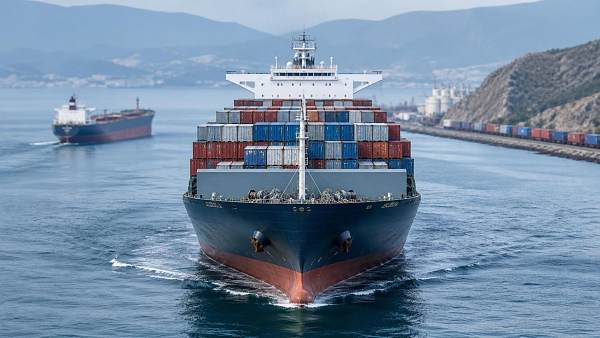
Port delays can derail schedules faster than most teams expect.
They stretch lead times, raise demurrage, and create blind spots across procurement, production, and delivery.
That is why improving global shipping logistics operations matters long before a vessel reaches a congested terminal.
For companies managing complex projects, port congestion is not just a transport issue.
It affects installation windows, labor planning, working capital, and customer commitments.
The practical answer is to redesign how decisions are made before delays become expensive.
The strongest global shipping logistics operations rely on visibility, routing flexibility, and disciplined coordination across partners.
Understand Where Port Delays Actually Hurt Operations
Many teams treat port delays as isolated arrival problems.
In reality, the damage usually starts earlier and spreads wider.
A delayed berth can trigger missed drayage slots, customs rescheduling, warehouse overflow, and production idle time.
This chain reaction makes global shipping logistics operations harder to control.
Start by mapping the operational impact in four areas:
- Schedule risk: delayed handoffs disrupt downstream milestones.
- Cost risk: storage, detention, and premium freight grow quickly.
- Inventory risk: shortages and overstocks appear at the same time.
- Customer risk: unreliable delivery weakens confidence and renewal potential.
Once these risks are visible, global shipping logistics operations can be improved with targeted controls rather than broad reactionary changes.
Build Early Warning Visibility Across the Shipment Journey
The first upgrade is better visibility.
Without early signals, teams only react after delay costs have already landed.
Strong global shipping logistics operations track shipment health from booking through final delivery.
That includes vessel schedule changes, transshipment dwell time, terminal congestion, customs status, and inland transport availability.
In practical terms, teams need one operating view that combines data from carriers, forwarders, terminals, and internal planning systems.
The point is not more dashboards.
The point is faster decisions.
Focus on a short list of alert triggers:
- Vessel ETA changes beyond a defined threshold.
- Missed transshipment connection risk.
- Port dwell time above historical average.
- Container release delays due to documentation gaps.
- Drayage or rail capacity shortages near destination.
When alerts are tied to clear owners, global shipping logistics operations become easier to stabilize.
Use Routing Flexibility Instead of Single-Port Dependence
A common weakness is overreliance on one gateway.
That may seem efficient in stable periods, but it creates exposure during congestion.
Resilient global shipping logistics operations use routing options by design.
This can mean alternate ports, split bookings, multimodal handoffs, or pre-approved diversion rules.
The goal is not to reroute every shipment.
It is to know when switching routes protects the wider project schedule.
A useful decision framework includes:
This kind of structured routing logic strengthens global shipping logistics operations without forcing constant exceptions.
Improve Carrier, Forwarder, and Supplier Coordination
Port delays expose weak coordination faster than almost anything else.
One late update from a supplier can block booking changes.
One missing customs document can keep a released container sitting for days.
To improve global shipping logistics operations, create communication rules before disruption begins.
That means defined escalation paths, response times, and data ownership across every partner.
A simple playbook often works better than a complicated governance deck.
- Confirm booking cutoffs and rollover risk weekly.
- Align shipping documents before cargo reaches port.
- Review cargo priority codes with suppliers and brokers.
- Establish who approves rerouting, mode shifts, and premium spend.
- Run short exception meetings for delayed high-value shipments.
Better coordination reduces waiting time between decisions, which is often the hidden cost inside global shipping logistics operations.
Protect Project Timelines With Inventory and Buffer Design
Not every delay should be solved on the water.
Sometimes the smarter move is building schedule resilience on land.
Efficient global shipping logistics operations connect transport planning with inventory strategy.
Critical materials, long-lead components, and installation-dependent parts should not all follow the same replenishment logic.
Segment cargo by operational impact.
Then assign different buffer rules for each category.
For example, project-critical items may need safety stock near the installation site.
Standard consumables may only need broader reorder windows.
This approach lowers the pressure on global shipping logistics operations during severe congestion because fewer shipments become emergency freight cases.
Measure the Right Performance Signals During Congestion
Traditional KPIs often miss what matters during disruption.
A shipment marked as delivered may still have damaged the project timeline.
To improve global shipping logistics operations, performance tracking must shift from static cost reporting to decision-quality reporting.
Useful metrics include:
- On-time delivery against actual project need date.
- Average days of delay by port and carrier.
- Exception response time from alert to action.
- Premium freight spend avoided through earlier intervention.
- Detention and demurrage cost per shipment lane.
- Forecast accuracy for ETA and cargo availability.
These measures show whether global shipping logistics operations are becoming more resilient or simply more expensive.
Turn Port Delay Response Into a Repeatable Operating Model
The biggest improvement usually comes from consistency.
When every delay is handled from scratch, teams lose time and miss options.
Mature global shipping logistics operations use standard response tiers.
For example, minor congestion may only require monitoring.
Moderate disruption may trigger alternate bookings.
Severe congestion may justify mode conversion, destination diversion, or temporary buffer stock release.
This is where industrial intelligence becomes especially valuable.
Teams that track trade patterns, carrier behavior, and port bottlenecks can act earlier and with more confidence.
That is the broader lesson behind better global shipping logistics operations.
Reliable execution depends on intelligence, not just transportation capacity.
As supply chains stay volatile, companies that combine visibility, partner discipline, and routing flexibility will manage port delays with less disruption.
The next practical step is simple: review one critical shipping lane, identify its delay triggers, and build a response playbook that can scale across your global shipping logistics operations.
Recommended News
 Sep 24, 2026When does supply chain management software pay for itself?Supply chain management software pays for itself by reducing avoidable inventory, freight, stockout, and planning costs. Learn how to build a credible ROI case.
 Sep 20, 2026How supplier compliance monitoring reduces disruption riskSupplier compliance monitoring helps teams spot risks early, prevent costly disruptions, strengthen supplier resilience, and protect operational continuity.
 Sep 16, 2026What makes a procurement research platform reliable for supplier sourcing?A procurement research platform for sourcing helps teams identify credible suppliers, assess risk, verify evidence, and build defensible shortlists for smarter decisions.
 Sep 07, 2026How to compare cross border logistics services for reliable deliveryCompare cross border logistics services with confidence. Learn how to assess customs, tracking, costs, final-mile coverage, and exception handling for reliable delivery.
 Sep 05, 2026How to Compare an Order Fulfillment Pricing Model by Total CostOrder fulfillment pricing model guide: compare total costs across storage, shipping, returns, fees, and service levels to select the right fulfillment partner.
 Sep 07, 2026Sourcing Semi-Trailer Spare Parts Without Compromising Brake Drum QualitySemi trailer spare parts sourcing guide: choose reliable brake drums with verified fitment, traceability, and quality control to protect safety, uptime, and costs.
 Aug 28, 2026France Lowers Foreign Investment Review Threshold to 10% for Non-EU BuyersFrance lowers its foreign investment review threshold to 10% for non-EU buyers, reshaping strategic deals, compliance planning, and cross-border investment.
 Aug 25, 2026Vietnam Cuts Anti-Dumping Duty on Chinese H-Beam Steel to 6.78%Vietnam cuts anti-dumping duty on Chinese H-beam steel to 6.78%, reshaping import costs and sourcing decisions in Southeast Asia. See what buyers and traders should do next.
 Aug 21, 2026France Lowers Foreign Investment Review Threshold to 10% for Non-EU BuyersFrance lowers its foreign investment review threshold to 10% for non-EU buyers, reshaping deals in strategic sectors. See what this means for investors, timelines, and cross-border transaction risk.
 Aug 20, 2026BRICS Reaches Consensus on Green Minerals Supply Chains and Wider Local-Currency TradeBRICS green minerals supply chains and wider local-currency trade could reshape industrial exports, settlement, and compliance. See what Chinese exporters should watch next.
 Aug 19, 2026RCEP Steel Conference in Nanning Highlights Green Low-Carbon Technology CooperationRCEP Steel Conference in Nanning highlights green low-carbon technology cooperation, tariff rules, and compliance trends shaping steel exports, supply chains, and new regional business opportunities.
 Aug 18, 2026Second Strait of Hormuz Closure Raises Supply Chain Risks as Oil and Freight Costs ClimbSecond Strait of Hormuz closure raises supply chain risks as oil and freight costs climb. Explore impacts on shipping, pricing, and key export sectors now.
 Aug 16, 2026EU Battery Passport Becomes Mandatory for Exported Storage Products on August 18EU Battery Passport becomes mandatory on August 18, 2026 for exported storage products above 2kWh. Learn what Chinese exporters, integrators, and OEMs must do to stay compliant.
 Aug 15, 2026China Widens Cross-Border Cash Pool Access for Multinationals on Sept. 14China widens cross-border cash pooling for multinationals on Sept. 14, boosting treasury efficiency, liquidity, and payment coordination for China-linked businesses.
 Aug 13, 2026EU Ends Low-Value Parcel Duty ExemptionEU ends the low-value parcel duty exemption, reshaping China-to-EU e-commerce costs, customs compliance, and delivery models for exporters and logistics teams.
 Aug 12, 2026Jiangsu Tightens Overseas Patent Rules for ExportersJiangsu Tightens Overseas Patent Rules for Exporters: learn how new patent search, design-around, and local filing demands may reshape market access in the US, Europe, and Southeast Asia.
 Aug 11, 2026EU CBAM Expansion Adds Hydrogen Products, Pre-Filing Starts Oct 2026EU CBAM expansion adds hydrogen products and starts pre-filing in Oct 2026. Learn how Chinese exporters can prepare carbon data, electricity records, and compliance workflows now.
 Jul 15, 2026Global Shipping Logistics Customs Clearance: Common Delays and How to Prevent ThemGlobal shipping logistics customs clearance made simple: learn the most common delay triggers, reduce document and HS code errors, and keep cross-border shipments moving faster.
 Jul 13, 2026Cloud Project Specification Planning: How to Prevent Scope Gaps Before Procurement StartsCloud project specification planning helps teams define scope, compliance, integrations, and cost drivers before procurement begins—reducing risk, avoiding change requests, and improving vendor fit.
 Jul 12, 2026Logistics Management Analytics: Which KPIs Improve Delivery and Inventory Control?Logistics management analytics helps identify the KPIs that truly improve delivery speed, inventory accuracy, and service reliability across complex supply chains.
 Jul 11, 2026Ecommerce Logistics Sourcing Guide: How to Compare Lead Time, MOQ, and Shipping CostsEcommerce logistics sourcing guide for buyers comparing lead time, MOQ, and shipping costs. Learn how to reduce landed cost risk, improve supplier selection, and make smarter sourcing decisions.
 Jul 10, 2026Supply Chain Bottleneck Analysis for Exporters: Where Delays Happen and How to RespondSupply chain bottleneck analysis for exporters reveals where delays start—from suppliers and documentation to ports and delivery—and shows practical ways to respond faster, cut risk, and protect margins.
 Jul 09, 2026Supply Chain Intelligence Europe: Which Data Signals Matter for Sourcing Decisions?Supply chain intelligence Europe: discover the key data signals shaping smarter sourcing decisions, from supplier risk and lead times to compliance, costs, and logistics performance.
![]() Jul 07, 2026Supply Chain Intelligence and ISO Standards: How to Align Data, Traceability, and ComplianceSupply chain intelligence ISO standards explained: learn how to align data, traceability, and compliance to reduce risk, speed audits, and build resilient operations.
Jul 07, 2026Supply Chain Intelligence and ISO Standards: How to Align Data, Traceability, and ComplianceSupply chain intelligence ISO standards explained: learn how to align data, traceability, and compliance to reduce risk, speed audits, and build resilient operations.