


Search News
Global Industrial Intelligence Hub (GIIH)Industry Portal
Global Industrial Intelligence Hub (GIIH)Status
Standard Access
Upgrade to PremiumNewsLogistics management gets harder with split sourcing
Time
Click Count
As split sourcing reshapes global trade, logistics management is becoming a strategic challenge for buyers of auto parts, industrial parts, and electric vehicle parts. From procurement and inventory control to supply chain resilience, companies sourcing precision parts, custom components, EV battery, EV motor, and aftermarket products must balance cost, quality, and delivery speed in an increasingly fragmented market.
For most sourcing teams, the key question is no longer whether split sourcing reduces risk. It often does. The real question is whether the logistics system behind it is strong enough to handle the added complexity without eroding margins, extending lead times, or creating hidden operational risks. For procurement managers, distributors, and commercial evaluators, split sourcing can improve supply continuity and bargaining power, but it also increases coordination costs across suppliers, routes, compliance processes, and inventory nodes. In practice, logistics management gets harder with split sourcing because every additional supplier creates new variables in transport planning, quality consistency, customs handling, scheduling, and replenishment.
Why split sourcing makes logistics management harder in real operations
Split sourcing means buying the same category of parts, components, or assemblies from multiple suppliers instead of relying on one source. On paper, this looks like a smart resilience strategy. In reality, it often turns a manageable logistics flow into a more fragmented supply network.
The difficulty comes from the multiplication of operational touchpoints. Instead of one supplier lead time, one packaging standard, one shipment rhythm, and one communication line, buyers must manage several. This affects:
- Shipment consolidation and container utilization
- Different manufacturing lead times across suppliers
- Multiple origin points and transport modes
- Variable export documentation accuracy
- Packaging inconsistency that impacts warehouse handling
- Uneven production quality that affects inbound inspections
- Different incoterms and responsibility boundaries
For sectors such as auto parts, industrial parts, and EV components, these differences are not minor. If one EV motor supplier ships on time but another EV battery component source slips by a week, the entire assembly or fulfillment plan may be disrupted. Logistics becomes harder not because freight itself is more difficult, but because synchronization becomes much more fragile.
What procurement and evaluation teams care about most
Target readers such as information researchers, purchasing teams, business evaluators, and distributors usually do not need a theoretical explanation of supply chain diversification. They need to know whether split sourcing will help or hurt business performance.
Their top concerns usually include:
- Will total landed cost actually go down? Lower unit prices may be offset by smaller shipment sizes, more frequent deliveries, and higher coordination costs.
- Will delivery performance improve or worsen? Multiple suppliers can reduce dependency risk, but may increase schedule uncertainty.
- Can quality remain consistent across vendors? Mixed sourcing often creates variation in tolerances, materials, and packaging.
- How much more inventory is needed? Split sourcing often requires additional safety stock to buffer timing differences.
- What happens during disruptions? If customs delays, port congestion, or production interruptions affect one supplier, can the others respond fast enough?
- Is internal coordination capacity strong enough? More suppliers require stronger planning, communication, and data visibility.
In other words, these readers are not simply evaluating supplier count. They are evaluating whether the organization can absorb complexity while preserving service levels and profitability.
Where split sourcing creates hidden logistics costs
One of the biggest mistakes in sourcing strategy is focusing too heavily on purchase price and underestimating logistics friction. Split sourcing often introduces costs that do not appear in initial supplier comparisons.
Common hidden costs include:
- Higher freight cost per unit: Smaller shipment volumes from each supplier reduce economies of scale.
- More warehouse labor: Inbound teams must receive, inspect, label, and store goods from more origins.
- Administrative overhead: More bookings, invoices, customs declarations, and tracking updates increase transaction workload.
- Buffer inventory: To protect service levels, buyers may hold extra stock when replenishment timing becomes less predictable.
- Expediting cost: If one supplier falls behind, urgent air freight or premium delivery may be used to prevent line stoppages.
- Returns and rework: Inconsistent product specifications across suppliers may create downstream fitment or assembly issues.
This is especially relevant in precision automotive parts and custom industrial components. Slight differences in production method, labeling, or packaging can create avoidable handling delays or mismatches in downstream operations. A split sourcing model that looks efficient at the sourcing stage may become expensive once logistics execution is measured end to end.
How split sourcing affects inventory control and supply chain resilience
Many companies adopt split sourcing to improve supply chain resilience, but resilience is only achieved when inventory strategy and logistics planning are redesigned accordingly. Simply adding suppliers without adjusting inventory parameters often increases instability instead of reducing it.
Inventory control becomes harder because replenishment signals are no longer tied to one predictable source. Different suppliers may have different minimum order quantities, transit times, production cycles, and fill rates. This creates planning complications such as:
- Different reorder points by supplier
- More complex safety stock calculations
- Allocation decisions during demand spikes
- Uneven stock aging across item variants
- Difficulty matching inbound arrivals with demand windows
For distributors and aftermarket businesses, this can directly affect customer service. If stock is available in total, but not in the right specification or from the right supplier batch, fulfillment delays still occur. Resilience is not just about having multiple suppliers. It is about having a coordinated inventory and logistics model that turns supplier diversity into actual continuity.
How to judge whether split sourcing is worth the added complexity
Not every product category should be split sourced. Buyers should assess whether the risk reduction benefit is greater than the logistics burden. A practical evaluation framework should include the following questions:
- How critical is the component? High-impact items may justify sourcing redundancy.
- How standardized is the product? Standard components are easier to source from multiple vendors than highly customized parts.
- How volatile is demand? Fast-changing demand makes multi-supplier coordination more difficult.
- How similar are supplier capabilities? Large differences in quality, lead time, and responsiveness create planning risk.
- Can shipments be consolidated efficiently? If not, logistics cost may rise sharply.
- Does the company have visibility tools and process discipline? Split sourcing requires stronger data management than single sourcing.
In many cases, split sourcing works best for high-volume, medium-standardization categories where demand is stable enough to support planned allocation. It is less effective when products are highly customized, order frequency is irregular, or supplier performance differs too widely.
Practical ways to reduce logistics complexity in a split sourcing model
If a business decides to adopt split sourcing, the goal should not be to eliminate complexity entirely. That is unrealistic. The goal should be to control and structure complexity so that the benefits outweigh the management burden.
Several practical actions can help:
- Standardize inbound requirements: Use clear packaging, labeling, pallet, and documentation standards across all suppliers.
- Segment suppliers by role: Assign primary, secondary, or surge-capacity roles instead of giving all suppliers the same allocation logic.
- Use landed cost, not purchase price, for decision-making: Evaluate freight, handling, inventory, and risk costs together.
- Build milestone visibility: Track production completion, dispatch, customs release, and warehouse arrival by supplier.
- Align allocation with lead time reality: Do not allocate volumes evenly if supplier transit and production cycles differ significantly.
- Create disruption playbooks: Predefine responses for delays, quality issues, and port interruptions.
- Review SKU-level strategy: Some items may need split sourcing, while others should remain single sourced for efficiency.
For EV parts and industrial component sourcing, supplier development should also include logistics capability assessment, not just manufacturing capability. A supplier that offers competitive pricing but cannot maintain export discipline or shipping reliability may weaken the whole network.
What this means for distributors, buyers, and commercial decision-makers
For distributors, agents, and procurement-led organizations, split sourcing should be treated as a business model decision rather than a simple purchasing tactic. It changes how inventory is positioned, how supplier relationships are managed, how customers are served, and how risk is absorbed across the chain.
Commercially, the most successful companies are not necessarily those with the most suppliers. They are the ones that know when supplier diversification creates resilience and when it merely creates noise. In fragmented global markets, better sourcing decisions come from connecting procurement logic with logistics execution, not treating them as separate functions.
This is particularly important in sectors where reliability, traceability, and speed matter at the same time. Auto parts, custom industrial components, and electric vehicle parts are all categories where split sourcing can offer strategic flexibility, but only if supported by rigorous planning, data visibility, and realistic cost analysis.
Conclusion
Logistics management gets harder with split sourcing because more suppliers mean more coordination points, more variability, and more chances for delay, inconsistency, and hidden cost. Yet that does not mean split sourcing is the wrong strategy. It means the strategy only works when companies evaluate it beyond purchase price and build the operational discipline needed to support it.
For information researchers, purchasers, business evaluators, and channel partners, the right conclusion is clear: split sourcing can strengthen supply chain resilience, but only when supported by robust logistics planning, standardized execution, and SKU-level decision-making. The real competitive advantage lies not in sourcing from more suppliers, but in managing supplier complexity better than the market does.
Recommended News
 Sep 24, 2026When does supply chain management software pay for itself?Supply chain management software pays for itself by reducing avoidable inventory, freight, stockout, and planning costs. Learn how to build a credible ROI case.
 Sep 20, 2026How supplier compliance monitoring reduces disruption riskSupplier compliance monitoring helps teams spot risks early, prevent costly disruptions, strengthen supplier resilience, and protect operational continuity.
 Sep 16, 2026What makes a procurement research platform reliable for supplier sourcing?A procurement research platform for sourcing helps teams identify credible suppliers, assess risk, verify evidence, and build defensible shortlists for smarter decisions.
 Sep 07, 2026How to compare cross border logistics services for reliable deliveryCompare cross border logistics services with confidence. Learn how to assess customs, tracking, costs, final-mile coverage, and exception handling for reliable delivery.
 Sep 05, 2026How to Compare an Order Fulfillment Pricing Model by Total CostOrder fulfillment pricing model guide: compare total costs across storage, shipping, returns, fees, and service levels to select the right fulfillment partner.
 Sep 07, 2026Sourcing Semi-Trailer Spare Parts Without Compromising Brake Drum QualitySemi trailer spare parts sourcing guide: choose reliable brake drums with verified fitment, traceability, and quality control to protect safety, uptime, and costs.
 Aug 28, 2026France Lowers Foreign Investment Review Threshold to 10% for Non-EU BuyersFrance lowers its foreign investment review threshold to 10% for non-EU buyers, reshaping strategic deals, compliance planning, and cross-border investment.
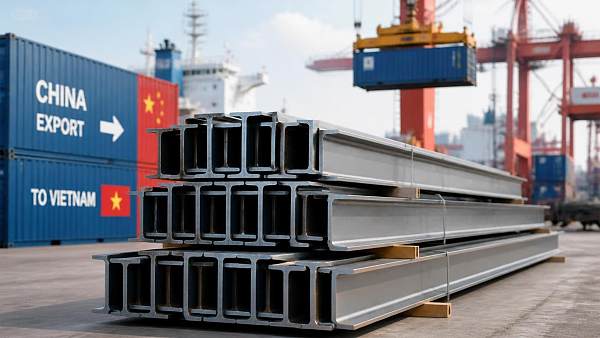
 Aug 25, 2026Vietnam Cuts Anti-Dumping Duty on Chinese H-Beam Steel to 6.78%Vietnam cuts anti-dumping duty on Chinese H-beam steel to 6.78%, reshaping import costs and sourcing decisions in Southeast Asia. See what buyers and traders should do next.
 Aug 21, 2026France Lowers Foreign Investment Review Threshold to 10% for Non-EU BuyersFrance lowers its foreign investment review threshold to 10% for non-EU buyers, reshaping deals in strategic sectors. See what this means for investors, timelines, and cross-border transaction risk.
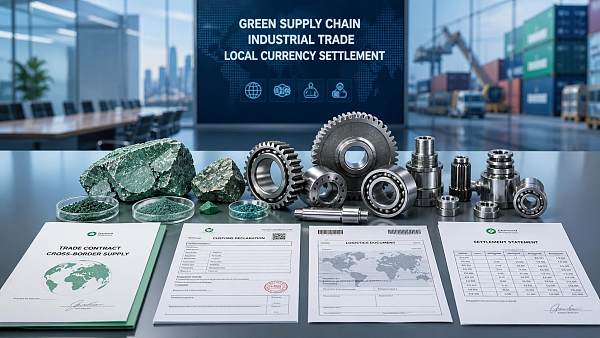
 Aug 20, 2026BRICS Reaches Consensus on Green Minerals Supply Chains and Wider Local-Currency TradeBRICS green minerals supply chains and wider local-currency trade could reshape industrial exports, settlement, and compliance. See what Chinese exporters should watch next.
 Aug 19, 2026RCEP Steel Conference in Nanning Highlights Green Low-Carbon Technology CooperationRCEP Steel Conference in Nanning highlights green low-carbon technology cooperation, tariff rules, and compliance trends shaping steel exports, supply chains, and new regional business opportunities.
 Aug 18, 2026Second Strait of Hormuz Closure Raises Supply Chain Risks as Oil and Freight Costs ClimbSecond Strait of Hormuz closure raises supply chain risks as oil and freight costs climb. Explore impacts on shipping, pricing, and key export sectors now.
 Aug 16, 2026EU Battery Passport Becomes Mandatory for Exported Storage Products on August 18EU Battery Passport becomes mandatory on August 18, 2026 for exported storage products above 2kWh. Learn what Chinese exporters, integrators, and OEMs must do to stay compliant.
 Aug 15, 2026China Widens Cross-Border Cash Pool Access for Multinationals on Sept. 14China widens cross-border cash pooling for multinationals on Sept. 14, boosting treasury efficiency, liquidity, and payment coordination for China-linked businesses.
 Aug 13, 2026EU Ends Low-Value Parcel Duty ExemptionEU ends the low-value parcel duty exemption, reshaping China-to-EU e-commerce costs, customs compliance, and delivery models for exporters and logistics teams.
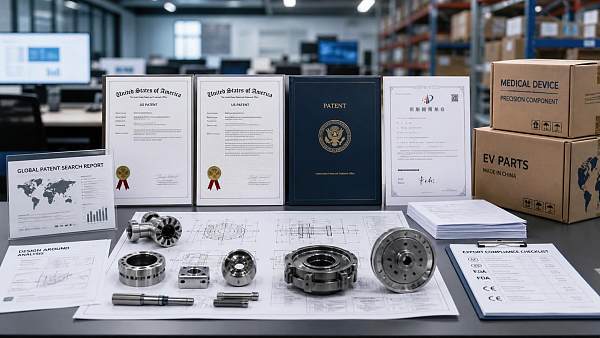
 Aug 12, 2026Jiangsu Tightens Overseas Patent Rules for ExportersJiangsu Tightens Overseas Patent Rules for Exporters: learn how new patent search, design-around, and local filing demands may reshape market access in the US, Europe, and Southeast Asia.
 Aug 11, 2026EU CBAM Expansion Adds Hydrogen Products, Pre-Filing Starts Oct 2026EU CBAM expansion adds hydrogen products and starts pre-filing in Oct 2026. Learn how Chinese exporters can prepare carbon data, electricity records, and compliance workflows now.
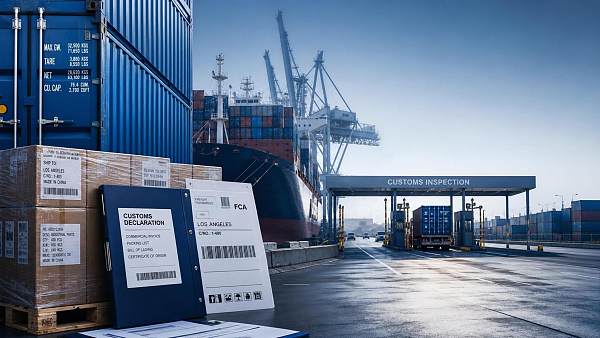
 Jul 15, 2026Global Shipping Logistics Customs Clearance: Common Delays and How to Prevent ThemGlobal shipping logistics customs clearance made simple: learn the most common delay triggers, reduce document and HS code errors, and keep cross-border shipments moving faster.
 Jul 13, 2026Cloud Project Specification Planning: How to Prevent Scope Gaps Before Procurement StartsCloud project specification planning helps teams define scope, compliance, integrations, and cost drivers before procurement begins—reducing risk, avoiding change requests, and improving vendor fit.
 Jul 12, 2026Logistics Management Analytics: Which KPIs Improve Delivery and Inventory Control?Logistics management analytics helps identify the KPIs that truly improve delivery speed, inventory accuracy, and service reliability across complex supply chains.
 Jul 11, 2026Ecommerce Logistics Sourcing Guide: How to Compare Lead Time, MOQ, and Shipping CostsEcommerce logistics sourcing guide for buyers comparing lead time, MOQ, and shipping costs. Learn how to reduce landed cost risk, improve supplier selection, and make smarter sourcing decisions.
 Jul 10, 2026Supply Chain Bottleneck Analysis for Exporters: Where Delays Happen and How to RespondSupply chain bottleneck analysis for exporters reveals where delays start—from suppliers and documentation to ports and delivery—and shows practical ways to respond faster, cut risk, and protect margins.
 Jul 09, 2026Supply Chain Intelligence Europe: Which Data Signals Matter for Sourcing Decisions?Supply chain intelligence Europe: discover the key data signals shaping smarter sourcing decisions, from supplier risk and lead times to compliance, costs, and logistics performance.
![]() Jul 07, 2026Supply Chain Intelligence and ISO Standards: How to Align Data, Traceability, and ComplianceSupply chain intelligence ISO standards explained: learn how to align data, traceability, and compliance to reduce risk, speed audits, and build resilient operations.
Jul 07, 2026Supply Chain Intelligence and ISO Standards: How to Align Data, Traceability, and ComplianceSupply chain intelligence ISO standards explained: learn how to align data, traceability, and compliance to reduce risk, speed audits, and build resilient operations.