


Search News
Global Industrial Intelligence Hub (GIIH)Industry Portal
Global Industrial Intelligence Hub (GIIH)Status
Standard Access
Upgrade to PremiumNewsTrade analytics can reveal hidden supply chain risks early
Time
Click Count
In a volatile global market, hidden disruptions often appear before inventory shortages, missed shipments, or cost spikes become obvious.
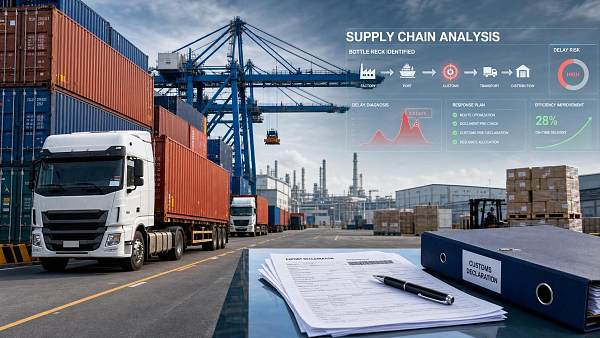
That is why trade analytics for supply chain optimization has become a practical early-warning system for global operations.
By tracking customs data, shipment frequency, sourcing concentration, route changes, and policy signals, companies can detect weak points earlier.
For GIIH, this approach aligns with a broader mission: transforming fragmented trade signals into decision-ready industrial intelligence.
Why risk visibility changes across operating scenarios
Supply chain risk does not look the same in every business environment.
A stable sourcing lane may hide supplier stress, while a fast-growing market may hide capacity bottlenecks and compliance gaps.
Trade analytics for supply chain optimization is valuable because it adapts to different scenarios instead of relying on one static dashboard.
The real advantage comes from context.
A drop in export volume may suggest demand weakness in one sector, but production disruption in another.
A sudden rise in rerouted shipments may indicate resilience planning, or it may signal escalating geopolitical exposure.
This is where industrial intelligence platforms create value.
They connect logistics signals, trade flows, technology trends, and regional policy changes into one usable picture.
Scenario 1: When supplier concentration hides early fragility
Many supply chains look diversified on paper but remain exposed in reality.
Several vendors may exist, yet most volume may still come from one region, one exporter, or one sub-tier cluster.
Trade analytics for supply chain optimization reveals this hidden concentration through shipment history and cross-border sourcing patterns.
Key warning signs include declining export consistency, fewer active ports, repeated delays from one customs corridor, and abrupt changes in product declarations.
These signals often emerge before financial stress becomes visible through public announcements.
In sectors like medical devices, electronics, automotive parts, and industrial materials, this visibility can prevent sudden production interruptions.
Core judgment points in this scenario
- How much volume depends on one geography or trade lane
- Whether shipment frequency is stable or becoming irregular
- Whether alternative exporters are active or only nominal
- Whether upstream material imports are also tightening
Scenario 2: When regional trade shifts distort demand and supply signals
Not every supply chain problem starts with a supplier.
Sometimes the disruption begins with changing regional demand, tariff adjustments, sanctions, port congestion, or new trade agreements.
In these moments, trade analytics for supply chain optimization helps separate temporary noise from structural change.
A sudden increase in import volumes into one country may look like growth.
However, it may actually reflect stockpiling before regulation changes or rerouting from disrupted nearby markets.
Likewise, declining exports do not always mean weaker demand.
They may point to customs friction, transportation constraints, or a strategic shift toward domestic fulfillment.
This scenario matters for cross-border e-commerce, industrial equipment, sustainability technologies, and high-regulation goods.
Core judgment points in this scenario
- Whether volume shifts are broad-based or route-specific
- Whether tariff or policy changes align with trade movement timing
- Whether neighboring markets show substitution patterns
- Whether lead times are changing faster than order demand
Scenario 3: When logistics stability masks deeper operational risk
A shipment arriving on time does not always mean the supply chain is healthy.
Rising freight costs, excessive transshipment, shrinking carrier diversity, and customs anomalies may indicate growing fragility.
Trade analytics for supply chain optimization exposes these patterns before service levels collapse.
This is especially important in sectors with strict service expectations or regulated handling conditions.
Healthcare products, temperature-sensitive goods, automotive components, and consumer electronics all depend on route reliability.
An operation may still meet current delivery targets while losing flexibility for the next disruption.
Core judgment points in this scenario
- Whether lead-time stability relies on costly workarounds
- Whether carriers and ports are becoming less diversified
- Whether customs clearance patterns are becoming inconsistent
- Whether routing changes increase exposure to regional shocks
How scenario needs differ in practice
Scenario-fit recommendations for stronger decisions
Trade analytics for supply chain optimization works best when linked to specific business questions.
Rather than collecting more data, focus on the decisions that need faster and better evidence.
- Use shipment trend baselines to identify abnormal supplier behavior early.
- Compare trade flow changes with policy calendars and macro events.
- Track route and port concentration, not just supplier names.
- Overlay customs, logistics, and sourcing data for a fuller risk picture.
- Create tiered alerts for volume drops, rerouting spikes, and lane instability.
- Review regional substitution opportunities before a disruption escalates.
This method supports both daily execution and longer-term strategic planning.
It also helps unify trade, sourcing, logistics, and market intelligence into one operational language.
Common misjudgments that delay risk response
Several recurring mistakes reduce the value of trade analytics for supply chain optimization.
- Treating late-stage delivery failure as the first risk signal
- Assuming multiple suppliers mean true diversification
- Reading volume changes without policy or route context
- Ignoring sub-tier import dependency and raw material exposure
- Measuring performance only through cost and on-time delivery
The most costly blind spot is often hidden in data already available but not connected across functions.
That is why intelligence integration matters as much as data collection.
A practical next step for building early-warning capability
Start with one high-impact category, one region, or one vulnerable trade lane.
Define the signals that matter most, such as shipment decline, sourcing overlap, customs irregularity, or route dependency.
Then create a monthly or weekly review rhythm tied to clear escalation actions.
Trade analytics for supply chain optimization becomes more powerful when paired with expert interpretation.
This is where GIIH provides value through cross-sector intelligence, trade insight, and scenario-based analysis.
By combining market signals with industrial context, hidden risks become visible earlier, decisions become faster, and supply chains become more resilient.
In uncertain markets, early visibility is no longer optional. It is a strategic advantage.
Recommended News
 Sep 24, 2026When does supply chain management software pay for itself?Supply chain management software pays for itself by reducing avoidable inventory, freight, stockout, and planning costs. Learn how to build a credible ROI case.
 Sep 20, 2026How supplier compliance monitoring reduces disruption riskSupplier compliance monitoring helps teams spot risks early, prevent costly disruptions, strengthen supplier resilience, and protect operational continuity.
 Sep 16, 2026What makes a procurement research platform reliable for supplier sourcing?A procurement research platform for sourcing helps teams identify credible suppliers, assess risk, verify evidence, and build defensible shortlists for smarter decisions.
 Sep 07, 2026How to compare cross border logistics services for reliable deliveryCompare cross border logistics services with confidence. Learn how to assess customs, tracking, costs, final-mile coverage, and exception handling for reliable delivery.
 Sep 05, 2026How to Compare an Order Fulfillment Pricing Model by Total CostOrder fulfillment pricing model guide: compare total costs across storage, shipping, returns, fees, and service levels to select the right fulfillment partner.
 Sep 07, 2026Sourcing Semi-Trailer Spare Parts Without Compromising Brake Drum QualitySemi trailer spare parts sourcing guide: choose reliable brake drums with verified fitment, traceability, and quality control to protect safety, uptime, and costs.
 Aug 28, 2026France Lowers Foreign Investment Review Threshold to 10% for Non-EU BuyersFrance lowers its foreign investment review threshold to 10% for non-EU buyers, reshaping strategic deals, compliance planning, and cross-border investment.
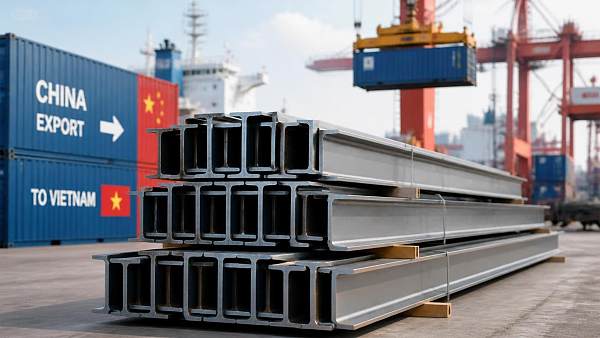
 Aug 25, 2026Vietnam Cuts Anti-Dumping Duty on Chinese H-Beam Steel to 6.78%Vietnam cuts anti-dumping duty on Chinese H-beam steel to 6.78%, reshaping import costs and sourcing decisions in Southeast Asia. See what buyers and traders should do next.
 Aug 21, 2026France Lowers Foreign Investment Review Threshold to 10% for Non-EU BuyersFrance lowers its foreign investment review threshold to 10% for non-EU buyers, reshaping deals in strategic sectors. See what this means for investors, timelines, and cross-border transaction risk.
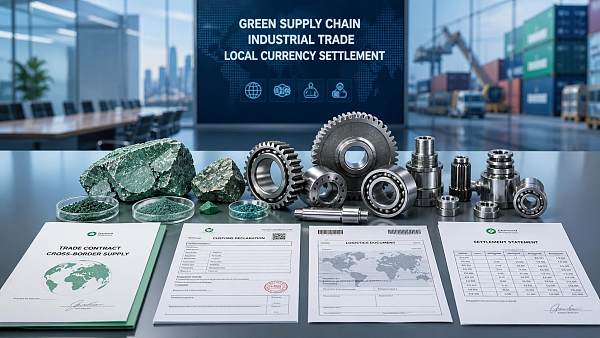
 Aug 20, 2026BRICS Reaches Consensus on Green Minerals Supply Chains and Wider Local-Currency TradeBRICS green minerals supply chains and wider local-currency trade could reshape industrial exports, settlement, and compliance. See what Chinese exporters should watch next.
 Aug 19, 2026RCEP Steel Conference in Nanning Highlights Green Low-Carbon Technology CooperationRCEP Steel Conference in Nanning highlights green low-carbon technology cooperation, tariff rules, and compliance trends shaping steel exports, supply chains, and new regional business opportunities.
 Aug 18, 2026Second Strait of Hormuz Closure Raises Supply Chain Risks as Oil and Freight Costs ClimbSecond Strait of Hormuz closure raises supply chain risks as oil and freight costs climb. Explore impacts on shipping, pricing, and key export sectors now.
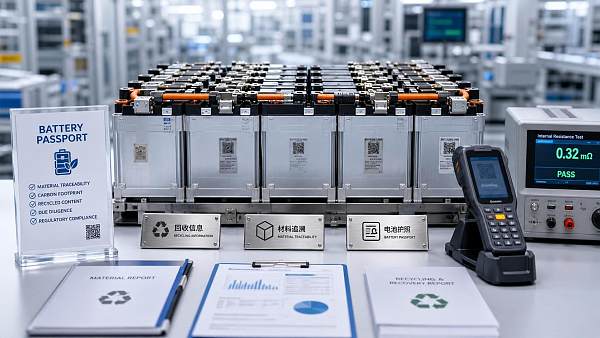
 Aug 16, 2026EU Battery Passport Becomes Mandatory for Exported Storage Products on August 18EU Battery Passport becomes mandatory on August 18, 2026 for exported storage products above 2kWh. Learn what Chinese exporters, integrators, and OEMs must do to stay compliant.
 Aug 15, 2026China Widens Cross-Border Cash Pool Access for Multinationals on Sept. 14China widens cross-border cash pooling for multinationals on Sept. 14, boosting treasury efficiency, liquidity, and payment coordination for China-linked businesses.
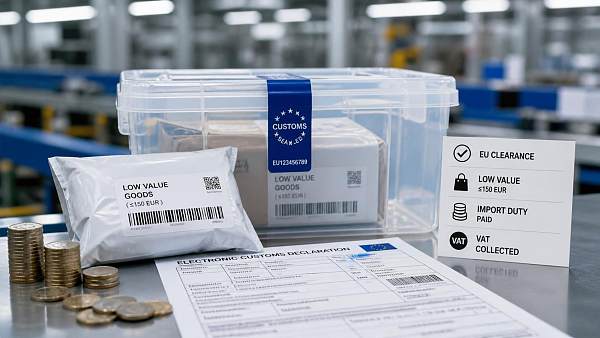
 Aug 13, 2026EU Ends Low-Value Parcel Duty ExemptionEU ends the low-value parcel duty exemption, reshaping China-to-EU e-commerce costs, customs compliance, and delivery models for exporters and logistics teams.
 Aug 12, 2026Jiangsu Tightens Overseas Patent Rules for ExportersJiangsu Tightens Overseas Patent Rules for Exporters: learn how new patent search, design-around, and local filing demands may reshape market access in the US, Europe, and Southeast Asia.
 Aug 11, 2026EU CBAM Expansion Adds Hydrogen Products, Pre-Filing Starts Oct 2026EU CBAM expansion adds hydrogen products and starts pre-filing in Oct 2026. Learn how Chinese exporters can prepare carbon data, electricity records, and compliance workflows now.
 Jul 15, 2026Global Shipping Logistics Customs Clearance: Common Delays and How to Prevent ThemGlobal shipping logistics customs clearance made simple: learn the most common delay triggers, reduce document and HS code errors, and keep cross-border shipments moving faster.
 Jul 13, 2026Cloud Project Specification Planning: How to Prevent Scope Gaps Before Procurement StartsCloud project specification planning helps teams define scope, compliance, integrations, and cost drivers before procurement begins—reducing risk, avoiding change requests, and improving vendor fit.
 Jul 12, 2026Logistics Management Analytics: Which KPIs Improve Delivery and Inventory Control?Logistics management analytics helps identify the KPIs that truly improve delivery speed, inventory accuracy, and service reliability across complex supply chains.
 Jul 11, 2026Ecommerce Logistics Sourcing Guide: How to Compare Lead Time, MOQ, and Shipping CostsEcommerce logistics sourcing guide for buyers comparing lead time, MOQ, and shipping costs. Learn how to reduce landed cost risk, improve supplier selection, and make smarter sourcing decisions.
 Jul 10, 2026Supply Chain Bottleneck Analysis for Exporters: Where Delays Happen and How to RespondSupply chain bottleneck analysis for exporters reveals where delays start—from suppliers and documentation to ports and delivery—and shows practical ways to respond faster, cut risk, and protect margins.
 Jul 09, 2026Supply Chain Intelligence Europe: Which Data Signals Matter for Sourcing Decisions?Supply chain intelligence Europe: discover the key data signals shaping smarter sourcing decisions, from supplier risk and lead times to compliance, costs, and logistics performance.
![]() Jul 07, 2026Supply Chain Intelligence and ISO Standards: How to Align Data, Traceability, and ComplianceSupply chain intelligence ISO standards explained: learn how to align data, traceability, and compliance to reduce risk, speed audits, and build resilient operations.
Jul 07, 2026Supply Chain Intelligence and ISO Standards: How to Align Data, Traceability, and ComplianceSupply chain intelligence ISO standards explained: learn how to align data, traceability, and compliance to reduce risk, speed audits, and build resilient operations.