


Search News
Global Industrial Intelligence Hub (GIIH)Industry Portal
Global Industrial Intelligence Hub (GIIH)Status
Standard Access
Upgrade to PremiumNewsWhere supply chain synergy breaks down in multi-site operations
Time
Click Count
In multi-site operations, supply chain synergy often breaks down where information silos, technical barriers, and weak cross-border exchange disrupt coordination. This article explores how smarter data processing, stronger resource libraries, and an intelligence matrix supported by global branches can improve professional transparency and sharpen every industry forecast for decision-makers and frontline operators alike.
For information researchers, procurement teams, planners, plant managers, and frontline operators, the challenge is rarely a single delayed shipment or an isolated inventory mismatch. The real issue is that one disruption at Site A can quietly trigger quality, compliance, or replenishment problems across 3, 5, or even 20 locations before anyone sees the full pattern.
In a global operating model, multi-site supply chain management depends on shared data definitions, aligned response rules, and consistent visibility across warehouses, plants, suppliers, and transport nodes. When those foundations are weak, synergy turns into friction, and local optimization starts undermining enterprise performance.
Why multi-site supply chain synergy fails more often than leaders expect

Supply chain synergy sounds straightforward: standardize planning, connect sites, and share information. In practice, breakdown happens because each site often develops its own operating logic over 12–36 months. One plant may prioritize production uptime, another cost per unit, and a third export lead time. The result is misaligned decisions that look rational locally but create instability across the network.
A common weakness is fragmented data. In many organizations, procurement, production, quality, logistics, and after-sales teams still rely on 4–7 disconnected systems. Part numbers, supplier names, unit measures, and safety stock settings are not always synchronized. A planner may see 2 weeks of available material, while a warehouse team sees only 6 days because records were updated at different times.
Cross-border operations add another layer of complexity. Different sites may operate under different customs processes, labeling rules, packaging standards, and transport assumptions. A transfer order that is routine between 2 domestic facilities can become a 7–15 day issue when export declarations, tariff codes, or local inspections are involved.
Another root cause is decision latency. In fast-moving sectors such as medical technology, automotive components, smart devices, or e-commerce logistics, a 24-hour delay in issue escalation can be enough to miss a production slot or vessel booking. In multi-site networks, information often moves slower than materials, which is the opposite of what resilience requires.
Typical failure patterns across distributed operations
- Demand is consolidated monthly, but production constraints change weekly, creating planning gaps of 5–10 business days.
- Supplier performance is tracked by site, not by enterprise, so recurring failures remain hidden until they affect multiple facilities.
- Engineering change notices are released centrally, but operator work instructions are updated locally, creating version mismatches.
- Inventory buffers are set without considering inter-site transfer time, causing false confidence in network-wide stock availability.
These patterns matter because they directly affect service levels, working capital, and operational trust. Once teams stop trusting shared numbers, they start creating their own spreadsheets, local buffers, and unofficial workflows. That behavior can increase total inventory by 10%–25% while still failing to prevent shortages.
The operational signals that reveal a hidden coordination problem
Supply chain leaders usually notice breakdown after a visible event such as a stockout, late delivery, or transport premium. However, the earlier signals appear in process behavior. If one site regularly expedites materials more than 2 times per month, while another accumulates slow-moving stock older than 90 days, the issue is not local discipline alone. It is a network design and visibility problem.
Researchers and operators should track coordination indicators that sit between planning and execution. Examples include transfer-order confirmation time, data refresh frequency, engineering revision alignment, forecast exception response, and cross-site supplier issue closure time. These indicators often reveal breakdown 1–3 weeks before customer service deteriorates.
The table below shows practical signs of weak supply chain synergy in multi-site environments and the likely operational impact on B2B organizations handling industrial products, regulated goods, or high-mix inventory.
The key conclusion is that coordination problems usually surface as timing gaps, data inconsistencies, and exception overload. By the time customer complaints appear, the underlying issue has often been building for at least 1 planning cycle. That is why leading organizations monitor process signals, not only outcome metrics.
What operators and analysts should review first
Execution-level checks
- Whether inventory data is refreshed every 2–4 hours or only once per day.
- Whether transfer lead times include customs, relabeling, and quality release.
- Whether the same supplier is rated consistently across all operating sites.
This review should not be limited to corporate dashboards. Frontline data quality, site-specific workarounds, and local approval rules often explain more than board-level KPIs. In many cases, the real bottleneck is not capacity but the absence of a shared decision framework.
How information architecture and industrial intelligence restore visibility
Once synergy breaks down, organizations often react by adding more meetings, more reports, or more urgent messaging. That rarely solves the problem. What restores control is a stronger information architecture: consistent data definitions, structured resource libraries, and a practical intelligence layer that turns scattered signals into usable decisions.
For multi-site operations, resource libraries should cover at least 5 content blocks: supplier profiles, material specifications, regulatory requirements, transport constraints, and regional market-entry or trade guidance. When these assets are centrally maintained but locally accessible, teams no longer waste 3–6 hours per week searching for the latest version of the same document.
Smarter data processing also matters. Instead of relying only on historical reports, organizations need near-real-time exception management. This may include automated alerts for inventory below reorder thresholds, shipment milestone failures beyond 12 hours, or quality incidents repeated across 2 or more sites in a 30-day period.
This is where a platform model such as GIIH is especially valuable. An intelligence hub with global branches, cross-sector analysts, and sector-specific matrices can improve professional transparency by connecting technical, trade, and operational signals. Decision-makers get broader pattern recognition, while operators get clearer action priorities.
Core capabilities of an effective intelligence-led model
The following comparison outlines how traditional fragmented management differs from a coordinated intelligence-supported approach in complex supply chain environments.
Last:NoneRecommended News
 Sep 24, 2026When does supply chain management software pay for itself?Supply chain management software pays for itself by reducing avoidable inventory, freight, stockout, and planning costs. Learn how to build a credible ROI case.
 Sep 20, 2026How supplier compliance monitoring reduces disruption riskSupplier compliance monitoring helps teams spot risks early, prevent costly disruptions, strengthen supplier resilience, and protect operational continuity.
 Sep 16, 2026What makes a procurement research platform reliable for supplier sourcing?A procurement research platform for sourcing helps teams identify credible suppliers, assess risk, verify evidence, and build defensible shortlists for smarter decisions.
 Sep 07, 2026How to compare cross border logistics services for reliable deliveryCompare cross border logistics services with confidence. Learn how to assess customs, tracking, costs, final-mile coverage, and exception handling for reliable delivery.
 Sep 05, 2026How to Compare an Order Fulfillment Pricing Model by Total CostOrder fulfillment pricing model guide: compare total costs across storage, shipping, returns, fees, and service levels to select the right fulfillment partner.
 Sep 07, 2026Sourcing Semi-Trailer Spare Parts Without Compromising Brake Drum QualitySemi trailer spare parts sourcing guide: choose reliable brake drums with verified fitment, traceability, and quality control to protect safety, uptime, and costs.
 Aug 28, 2026France Lowers Foreign Investment Review Threshold to 10% for Non-EU BuyersFrance lowers its foreign investment review threshold to 10% for non-EU buyers, reshaping strategic deals, compliance planning, and cross-border investment.
 Aug 25, 2026Vietnam Cuts Anti-Dumping Duty on Chinese H-Beam Steel to 6.78%Vietnam cuts anti-dumping duty on Chinese H-beam steel to 6.78%, reshaping import costs and sourcing decisions in Southeast Asia. See what buyers and traders should do next.
 Aug 21, 2026France Lowers Foreign Investment Review Threshold to 10% for Non-EU BuyersFrance lowers its foreign investment review threshold to 10% for non-EU buyers, reshaping deals in strategic sectors. See what this means for investors, timelines, and cross-border transaction risk.
 Aug 20, 2026BRICS Reaches Consensus on Green Minerals Supply Chains and Wider Local-Currency TradeBRICS green minerals supply chains and wider local-currency trade could reshape industrial exports, settlement, and compliance. See what Chinese exporters should watch next.
 Aug 19, 2026RCEP Steel Conference in Nanning Highlights Green Low-Carbon Technology CooperationRCEP Steel Conference in Nanning highlights green low-carbon technology cooperation, tariff rules, and compliance trends shaping steel exports, supply chains, and new regional business opportunities.
 Aug 18, 2026Second Strait of Hormuz Closure Raises Supply Chain Risks as Oil and Freight Costs ClimbSecond Strait of Hormuz closure raises supply chain risks as oil and freight costs climb. Explore impacts on shipping, pricing, and key export sectors now.
 Aug 16, 2026EU Battery Passport Becomes Mandatory for Exported Storage Products on August 18EU Battery Passport becomes mandatory on August 18, 2026 for exported storage products above 2kWh. Learn what Chinese exporters, integrators, and OEMs must do to stay compliant.
 Aug 15, 2026China Widens Cross-Border Cash Pool Access for Multinationals on Sept. 14China widens cross-border cash pooling for multinationals on Sept. 14, boosting treasury efficiency, liquidity, and payment coordination for China-linked businesses.
 Aug 13, 2026EU Ends Low-Value Parcel Duty ExemptionEU ends the low-value parcel duty exemption, reshaping China-to-EU e-commerce costs, customs compliance, and delivery models for exporters and logistics teams.
 Aug 12, 2026Jiangsu Tightens Overseas Patent Rules for ExportersJiangsu Tightens Overseas Patent Rules for Exporters: learn how new patent search, design-around, and local filing demands may reshape market access in the US, Europe, and Southeast Asia.
 Aug 11, 2026EU CBAM Expansion Adds Hydrogen Products, Pre-Filing Starts Oct 2026EU CBAM expansion adds hydrogen products and starts pre-filing in Oct 2026. Learn how Chinese exporters can prepare carbon data, electricity records, and compliance workflows now.
 Jul 15, 2026Global Shipping Logistics Customs Clearance: Common Delays and How to Prevent ThemGlobal shipping logistics customs clearance made simple: learn the most common delay triggers, reduce document and HS code errors, and keep cross-border shipments moving faster.
 Jul 13, 2026Cloud Project Specification Planning: How to Prevent Scope Gaps Before Procurement StartsCloud project specification planning helps teams define scope, compliance, integrations, and cost drivers before procurement begins—reducing risk, avoiding change requests, and improving vendor fit.
 Jul 12, 2026Logistics Management Analytics: Which KPIs Improve Delivery and Inventory Control?Logistics management analytics helps identify the KPIs that truly improve delivery speed, inventory accuracy, and service reliability across complex supply chains.
 Jul 11, 2026Ecommerce Logistics Sourcing Guide: How to Compare Lead Time, MOQ, and Shipping CostsEcommerce logistics sourcing guide for buyers comparing lead time, MOQ, and shipping costs. Learn how to reduce landed cost risk, improve supplier selection, and make smarter sourcing decisions.
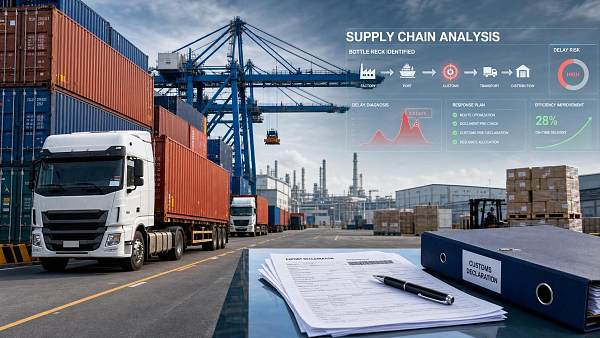
 Jul 10, 2026Supply Chain Bottleneck Analysis for Exporters: Where Delays Happen and How to RespondSupply chain bottleneck analysis for exporters reveals where delays start—from suppliers and documentation to ports and delivery—and shows practical ways to respond faster, cut risk, and protect margins.
 Jul 09, 2026Supply Chain Intelligence Europe: Which Data Signals Matter for Sourcing Decisions?Supply chain intelligence Europe: discover the key data signals shaping smarter sourcing decisions, from supplier risk and lead times to compliance, costs, and logistics performance.
![]() Jul 07, 2026Supply Chain Intelligence and ISO Standards: How to Align Data, Traceability, and ComplianceSupply chain intelligence ISO standards explained: learn how to align data, traceability, and compliance to reduce risk, speed audits, and build resilient operations.
Jul 07, 2026Supply Chain Intelligence and ISO Standards: How to Align Data, Traceability, and ComplianceSupply chain intelligence ISO standards explained: learn how to align data, traceability, and compliance to reduce risk, speed audits, and build resilient operations.