


Search News
Global Industrial Intelligence Hub (GIIH)Industry Portal
Global Industrial Intelligence Hub (GIIH)Status
Standard Access
Upgrade to PremiumNewsWhy machinery price lists rarely show the full cost
Time
Click Count
An Industrial & Manufacturing machinery price list may look like a final answer, yet it is usually only a starting point. The visible figure rarely captures the full investment needed for installation, compliance, transport, customization, training, service, and operating continuity.
In cross-border and multi-site projects, the gap becomes even wider. A low headline number can turn into a high total cost once local rules, lead times, utility upgrades, and downtime exposure are included in the evaluation.
For decision quality, the real task is not comparing sticker prices. It is understanding which cost layers apply in each operating scenario and how those layers affect payback, risk, and long-term asset value.
Why the same machinery price list means different things in different scenarios
An Industrial & Manufacturing machinery price list is shaped by assumptions. Those assumptions may include standard voltage, default tooling, basic packaging, and factory-gate delivery rather than on-site commissioning.
That is why identical list prices can produce very different budgets. The true cost depends on whether the equipment enters a greenfield site, replaces an aging line, supports regulated production, or serves a fast-scaling export operation.
From GIIH’s industrial intelligence perspective, the useful question is scenario fit. Cost visibility improves when every quote is tested against logistics complexity, technical integration, uptime expectations, and regional compliance requirements.
Scenario 1: New facility launches often face hidden infrastructure costs
A new site may rely heavily on an Industrial & Manufacturing machinery price list during early budgeting. However, launch environments often require the largest non-listed spending before production even begins.
Typical additions include foundation work, electrical upgrades, compressed air systems, dust collection, cooling, software interfaces, and operator certification. These items can materially exceed the visible equipment quote.
Core judgment points
- Does the list price include installation supervision or only ex-works shipment?
- Are utility specifications matched to local power, water, air, and safety systems?
- Is civil work needed for machine weight, vibration, or workflow layout?
- Will ramp-up scrap and trial production affect the actual startup budget?
Scenario 2: Replacement projects hide integration and downtime exposure
When replacing existing equipment, an Industrial & Manufacturing machinery price list may seem easier to apply. In practice, replacement projects carry hidden transition costs that are often underestimated.
The main risk is not only the machine price. It is the cost of stopping an existing line, adapting interfaces, retraining staff, and stabilizing quality during the switchover period.
Core judgment points
- Can the new machine connect to existing conveyors, robots, ERP, or MES systems?
- How many production hours will be lost during removal, setup, and validation?
- Are spare parts interchangeable with the current maintenance inventory?
- Will output quality fluctuate before the line reaches stable yield?
Scenario 3: Regulated or export-focused operations face compliance premiums
In regulated sectors or export supply chains, a basic Industrial & Manufacturing machinery price list rarely reflects documentation and certification burdens. Those requirements can reshape both cost and supplier selection.
Examples include CE conformity, UL components, traceability software, validation documents, safety guarding, audit trails, and language-specific manuals. None of these are optional once market access depends on them.
Core judgment points
- Does the quote include the certifications required in the destination market?
- Are validation, FAT, SAT, and documentation support priced separately?
- Will regulatory changes create future retrofit costs?
- Is traceability capability native or dependent on paid customization?
Scenario 4: Fast-scaling operations pay more for speed, resilience, and service
A fast-growth environment may accept a higher figure on an Industrial & Manufacturing machinery price list if it reduces delay risk. Speed itself becomes a cost driver when lost market opportunity is expensive.
Expedited production slots, premium shipping, local spare stock, remote diagnostics, and guaranteed response times all add cost. Yet these items may protect revenue better than a lower upfront quote.
Core judgment points
- Is delivery speed more valuable than negotiating the lowest purchase price?
- Can service delays create order backlogs or contractual penalties?
- Does local technical support reduce downtime enough to justify the premium?
- Are consumables and critical parts available regionally?
How scenario differences change the real cost behind a machinery price list
Practical ways to evaluate an Industrial & Manufacturing machinery price list
A stronger review process turns a machinery quote into an investment case. The goal is to move from equipment price checking to lifecycle cost modeling.
- Separate ex-works price, delivered price, installed price, and operational price.
- Request a scope matrix showing included items, excluded items, and optional items.
- Estimate downtime cost per hour before comparing suppliers.
- Map every compliance requirement to a quote line or written commitment.
- Model maintenance, consumables, and spare parts over three to five years.
- Test sensitivity for shipping delays, utility mismatch, and capacity shortfall.
Common misreadings that make machinery price lists look cheaper than reality
The most common mistake is assuming every supplier defines scope the same way. One Industrial & Manufacturing machinery price list may include commissioning, while another excludes even basic setup support.
Another misreading is ignoring site readiness. If electrical capacity, ventilation, or handling equipment are missing, the machine price becomes irrelevant because the asset cannot perform as quoted.
A third mistake is valuing low purchase price over service continuity. Cheap equipment without parts availability or technical response can create a higher cost through repeated interruptions.
There is also a documentation trap. If manuals, software licenses, recipe backups, and validation records are extra, the real implementation cost emerges late, when switching suppliers is difficult.
A better next step: build a full-cost decision sheet before approval
Before relying on any Industrial & Manufacturing machinery price list, create a scenario-based decision sheet. Include purchase price, logistics, installation, utilities, compliance, training, spare parts, downtime, and service coverage.
This approach makes supplier comparison more defensible and more aligned with operational reality. It also supports clearer ROI narratives for capital approval, especially when options look similar on headline price alone.
GIIH tracks how industrial projects succeed or fail at these hidden layers. In most cases, the better decision is not the cheapest quote, but the option with the clearest full-cost structure and the strongest scenario fit.
When the next machinery quotation arrives, treat the list price as the visible edge of a larger financial picture. Real value appears only after the complete cost landscape is made transparent.
Recommended News
 Sep 24, 2026When does supply chain management software pay for itself?Supply chain management software pays for itself by reducing avoidable inventory, freight, stockout, and planning costs. Learn how to build a credible ROI case.
 Sep 20, 2026How supplier compliance monitoring reduces disruption riskSupplier compliance monitoring helps teams spot risks early, prevent costly disruptions, strengthen supplier resilience, and protect operational continuity.
 Sep 16, 2026What makes a procurement research platform reliable for supplier sourcing?A procurement research platform for sourcing helps teams identify credible suppliers, assess risk, verify evidence, and build defensible shortlists for smarter decisions.
 Sep 07, 2026How to compare cross border logistics services for reliable deliveryCompare cross border logistics services with confidence. Learn how to assess customs, tracking, costs, final-mile coverage, and exception handling for reliable delivery.
 Sep 05, 2026How to Compare an Order Fulfillment Pricing Model by Total CostOrder fulfillment pricing model guide: compare total costs across storage, shipping, returns, fees, and service levels to select the right fulfillment partner.
 Sep 07, 2026Sourcing Semi-Trailer Spare Parts Without Compromising Brake Drum QualitySemi trailer spare parts sourcing guide: choose reliable brake drums with verified fitment, traceability, and quality control to protect safety, uptime, and costs.
 Aug 28, 2026France Lowers Foreign Investment Review Threshold to 10% for Non-EU BuyersFrance lowers its foreign investment review threshold to 10% for non-EU buyers, reshaping strategic deals, compliance planning, and cross-border investment.
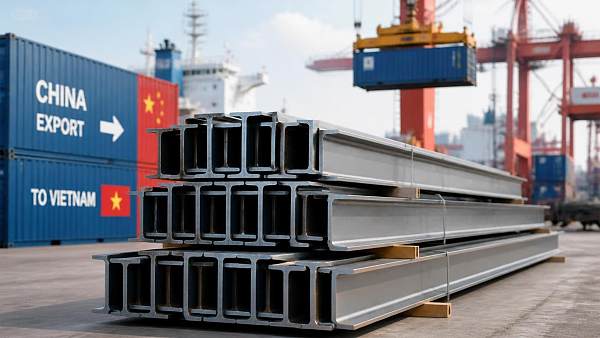
 Aug 25, 2026Vietnam Cuts Anti-Dumping Duty on Chinese H-Beam Steel to 6.78%Vietnam cuts anti-dumping duty on Chinese H-beam steel to 6.78%, reshaping import costs and sourcing decisions in Southeast Asia. See what buyers and traders should do next.
 Aug 21, 2026France Lowers Foreign Investment Review Threshold to 10% for Non-EU BuyersFrance lowers its foreign investment review threshold to 10% for non-EU buyers, reshaping deals in strategic sectors. See what this means for investors, timelines, and cross-border transaction risk.
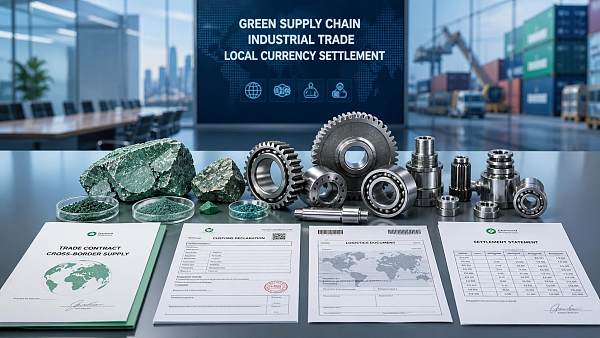
 Aug 20, 2026BRICS Reaches Consensus on Green Minerals Supply Chains and Wider Local-Currency TradeBRICS green minerals supply chains and wider local-currency trade could reshape industrial exports, settlement, and compliance. See what Chinese exporters should watch next.
 Aug 19, 2026RCEP Steel Conference in Nanning Highlights Green Low-Carbon Technology CooperationRCEP Steel Conference in Nanning highlights green low-carbon technology cooperation, tariff rules, and compliance trends shaping steel exports, supply chains, and new regional business opportunities.
 Aug 18, 2026Second Strait of Hormuz Closure Raises Supply Chain Risks as Oil and Freight Costs ClimbSecond Strait of Hormuz closure raises supply chain risks as oil and freight costs climb. Explore impacts on shipping, pricing, and key export sectors now.
 Aug 16, 2026EU Battery Passport Becomes Mandatory for Exported Storage Products on August 18EU Battery Passport becomes mandatory on August 18, 2026 for exported storage products above 2kWh. Learn what Chinese exporters, integrators, and OEMs must do to stay compliant.
 Aug 15, 2026China Widens Cross-Border Cash Pool Access for Multinationals on Sept. 14China widens cross-border cash pooling for multinationals on Sept. 14, boosting treasury efficiency, liquidity, and payment coordination for China-linked businesses.
 Aug 13, 2026EU Ends Low-Value Parcel Duty ExemptionEU ends the low-value parcel duty exemption, reshaping China-to-EU e-commerce costs, customs compliance, and delivery models for exporters and logistics teams.
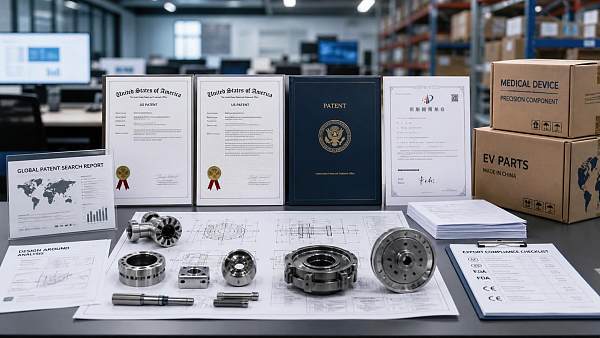
 Aug 12, 2026Jiangsu Tightens Overseas Patent Rules for ExportersJiangsu Tightens Overseas Patent Rules for Exporters: learn how new patent search, design-around, and local filing demands may reshape market access in the US, Europe, and Southeast Asia.
 Aug 11, 2026EU CBAM Expansion Adds Hydrogen Products, Pre-Filing Starts Oct 2026EU CBAM expansion adds hydrogen products and starts pre-filing in Oct 2026. Learn how Chinese exporters can prepare carbon data, electricity records, and compliance workflows now.
 Jul 15, 2026Global Shipping Logistics Customs Clearance: Common Delays and How to Prevent ThemGlobal shipping logistics customs clearance made simple: learn the most common delay triggers, reduce document and HS code errors, and keep cross-border shipments moving faster.
 Jul 13, 2026Cloud Project Specification Planning: How to Prevent Scope Gaps Before Procurement StartsCloud project specification planning helps teams define scope, compliance, integrations, and cost drivers before procurement begins—reducing risk, avoiding change requests, and improving vendor fit.
 Jul 12, 2026Logistics Management Analytics: Which KPIs Improve Delivery and Inventory Control?Logistics management analytics helps identify the KPIs that truly improve delivery speed, inventory accuracy, and service reliability across complex supply chains.
 Jul 11, 2026Ecommerce Logistics Sourcing Guide: How to Compare Lead Time, MOQ, and Shipping CostsEcommerce logistics sourcing guide for buyers comparing lead time, MOQ, and shipping costs. Learn how to reduce landed cost risk, improve supplier selection, and make smarter sourcing decisions.
 Jul 10, 2026Supply Chain Bottleneck Analysis for Exporters: Where Delays Happen and How to RespondSupply chain bottleneck analysis for exporters reveals where delays start—from suppliers and documentation to ports and delivery—and shows practical ways to respond faster, cut risk, and protect margins.
 Jul 09, 2026Supply Chain Intelligence Europe: Which Data Signals Matter for Sourcing Decisions?Supply chain intelligence Europe: discover the key data signals shaping smarter sourcing decisions, from supplier risk and lead times to compliance, costs, and logistics performance.
![]() Jul 07, 2026Supply Chain Intelligence and ISO Standards: How to Align Data, Traceability, and ComplianceSupply chain intelligence ISO standards explained: learn how to align data, traceability, and compliance to reduce risk, speed audits, and build resilient operations.
Jul 07, 2026Supply Chain Intelligence and ISO Standards: How to Align Data, Traceability, and ComplianceSupply chain intelligence ISO standards explained: learn how to align data, traceability, and compliance to reduce risk, speed audits, and build resilient operations.