


Search News
Global Industrial Intelligence Hub (GIIH)Industry Portal
Global Industrial Intelligence Hub (GIIH)Status
Standard Access
Upgrade to PremiumNewsEV motor demand is shifting toward smaller suppliers
Time
Click Count
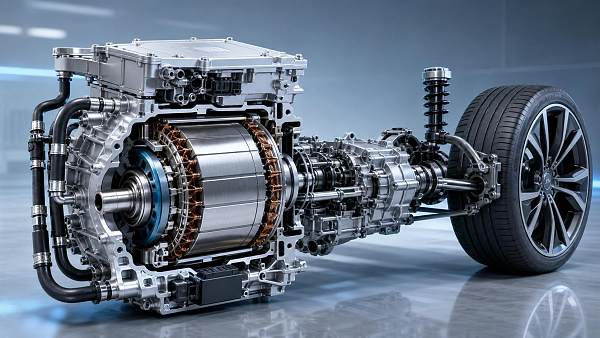
As EV motor demand shifts toward smaller suppliers, buyers across the aftermarket are rethinking procurement, inventory control, logistics management, and supply chain strategy. For sourcing teams, distributors, and market researchers, this change is reshaping access to high-quality parts, precision engineering, custom components, EV battery systems, EV accessories, and other electric vehicle parts with greater flexibility, specialization, and competitive advantage.
Why EV Motor Demand Is Moving Toward Smaller Suppliers
The shift in EV motor demand is not only about price. It is also about responsiveness, engineering fit, and supply chain resilience. In many aftermarket and replacement-part channels, buyers no longer want to depend on a short list of large-volume manufacturers with long approval cycles and rigid minimum order quantities. Instead, they are evaluating smaller suppliers that can support 2–6 week development windows, lower batch thresholds, and quicker design changes for electric vehicle parts.
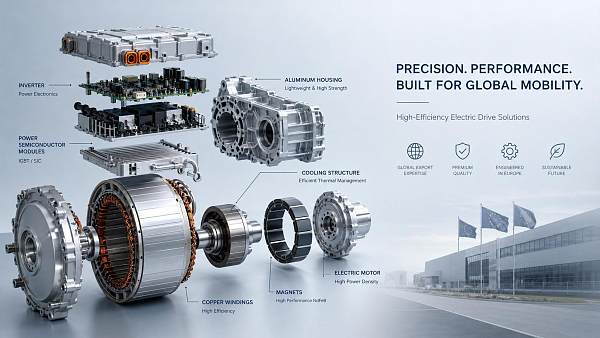
This transition is especially visible in precision automotive parts and mobility segments where vehicle platforms are diversifying. EV motors now serve not only passenger cars, but also light commercial fleets, micro-mobility devices, retrofitting projects, industrial transport units, and specialized aftermarket repairs. A supplier that can adapt shaft dimensions, housing tolerances, connector layouts, or cooling arrangements in short cycles often becomes more valuable than a high-output producer optimized only for standardized mass production.
For procurement personnel and business evaluation teams, the real issue is risk distribution. Concentrated sourcing may simplify administration, yet it can also amplify exposure to lead-time disruption, tooling bottlenecks, and production allocation changes. Smaller suppliers are gaining attention because they help buyers diversify sourcing across 2–3 qualified partners, reducing dependency while improving access to niche motor configurations, custom components, and complementary EV accessories.
From an industrial intelligence perspective, this is part of a wider restructuring of global supply chains. Demand is becoming more fragmented, application requirements more specialized, and cross-border buyers more data-driven. GIIH tracks these patterns by connecting automotive engineering insight with logistics and trade intelligence, allowing distributors and sourcing teams to evaluate not just who can produce, but who can deliver, adapt, and scale under changing market conditions.
What is driving the change in practical terms?
- More fragmented demand across small-batch and mid-batch EV motor applications, including repair, replacement, and semi-custom integration projects.
- Pressure to shorten procurement cycles from 8–12 weeks to more manageable windows where engineering review and replenishment can happen faster.
- Growing interest in specialized electric vehicle parts that require close coordination on materials, dimensions, testing, and documentation.
- The need for backup sources as freight volatility, regional policy changes, and upstream component shortages continue to affect delivery predictability.
How Buyers Should Compare Large and Smaller EV Motor Suppliers
A common misconception is that smaller suppliers compete only on lower volume. In reality, the comparison should focus on fit-for-purpose capability. For aftermarket distributors and sourcing teams, the key question is whether a supplier can meet the exact combination of mechanical compatibility, documentation quality, delivery cadence, packaging control, and after-sales coordination needed for the target market. That evaluation often reveals trade-offs that are not visible in a simple unit-price comparison.
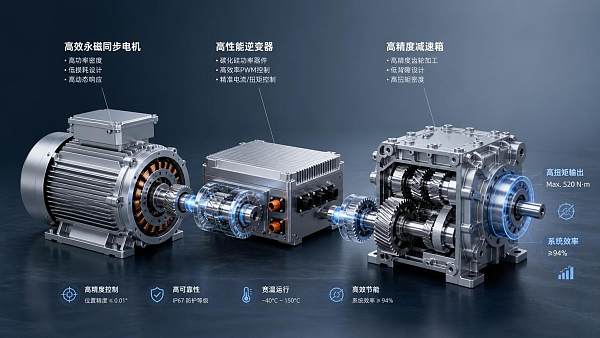
Large suppliers often perform well in long production runs, stable product definitions, and broad process standardization. Smaller suppliers may perform better when requirements evolve over 3 stages: sample verification, pilot purchase, and rolling replenishment. This matters when buyers are handling custom shafts, uncommon mounting interfaces, specific voltage classes, or bundled procurement involving EV battery systems, motor controllers, and installation-related accessories.
The table below helps procurement teams compare supplier types using practical B2B decision dimensions rather than generic assumptions. It is useful for market researchers, distributors, and business assessment personnel building a shortlist for electric vehicle parts sourcing.
The comparison shows that smaller suppliers are not automatically better, but they are increasingly relevant where flexibility creates commercial value. Buyers dealing with regional distribution, customized electric vehicle parts, or uncertain replenishment demand should compare total procurement fit over 6–12 months rather than making decisions on headline price alone.
Three decision questions procurement teams should ask
First, how stable is the target specification? If the motor is tied to a fixed OEM-like part number, a larger producer may remain the best option. If the project requires adaptation within ±0.5 mm to ±1.0 mm machining tolerance windows, connector changes, or packaging adjustments, a smaller supplier may offer stronger operational fit.
Second, how urgent is replenishment? Some aftermarket channels cannot wait through a full 8–10 week restocking cycle. Buyers serving repair networks or regional dealers often need mixed orders, faster communication, and shipment splitting. These are areas where smaller suppliers can outperform if they have disciplined production control.
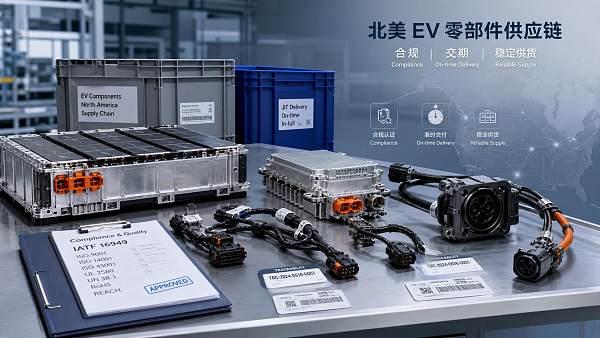
Third, what level of documentation is required? For cross-border trade, the value of a supplier depends on whether it can consistently support drawings, test records, packing lists, labeling requirements, and compliance-related files. GIIH often advises clients to score these non-price factors before negotiating volume commitments.
Procurement Guide: What to Check Before Buying EV Motors From Smaller Suppliers
Smaller suppliers can create sourcing opportunities, but they also demand a more disciplined qualification process. Buyers should not assume that responsiveness equals reliability. The right approach is to review 5 core checkpoints: technical match, process capability, lead-time realism, compliance documentation, and logistics readiness. This is particularly important when EV motors are purchased alongside EV battery systems, wiring parts, controllers, or aftermarket accessory bundles.
Technical verification should begin with application conditions rather than catalog claims. A buyer needs to confirm operating voltage, rated power range, duty cycle, speed requirements, cooling method, ingress resistance expectations, and mounting compatibility. In practical sourcing, common reviews happen within 3 layers: drawing confirmation, sample test, and packaging review. Skipping any of these steps can create hidden mismatch costs later.
Operational review is equally important. A smaller supplier may quote a 15–20 day production lead time, but the buyer should ask whether that covers raw material availability, winding schedules, shaft machining, balancing, testing, and export packing. In many cases, the real door-to-door cycle becomes 4–7 weeks once inland transport, consolidation, customs, and final-mile delivery are included.
The table below provides a practical screening framework that procurement professionals can use during supplier onboarding, RFQ comparison, or pre-distribution evaluation for electric vehicle parts.
This checklist is particularly useful for distributors and agents that must balance service quality with inventory turnover. In many cases, the winning supplier is not the one with the lowest quotation, but the one that can pass all 4 checkpoints with the fewest execution risks over repeated replenishment cycles.
A practical 4-step buying process
- Define the application clearly, including power range, interface dimensions, operating environment, expected duty cycle, and target market documentation.
- Request samples or pre-production units, then validate function, fit, noise behavior, and packaging integrity before placing rolling orders.
- Compare landed cost instead of ex-works price only, especially when freight class, export packing, and replenishment frequency affect total spend.
- Establish a replenishment plan with review points every month or every quarter, depending on demand volatility and warehouse turnover speed.
What smaller suppliers must prove before selection
They should be able to explain their inspection sequence, not just list capabilities. For example, buyers may ask how rotor balance is checked, how incoming materials are verified, how final test records are stored, and how damaged export cartons are prevented. In B2B procurement, process transparency often matters as much as product specification.
They should also show realistic capacity management. A small supplier that handles 3 product families with clear scheduling discipline may be more dependable than a larger supplier that reallocates output to priority accounts. This is why industrial intelligence platforms like GIIH focus on operational signals, supply chain bottlenecks, and specification control rather than marketing claims.
Cost, Compliance, and Hidden Risks in the EV Motor Aftermarket
When EV motor demand shifts toward smaller suppliers, pricing structures also change. Buyers may see better flexibility on tooling, mixed-model orders, or trial lots, but they may also face higher unit prices on low-volume runs. The right way to assess cost is to examine the full commercial picture: sample expense, rework risk, transit damage exposure, customs preparation, inventory holding time, and field-replacement liability. Unit price is only one line in the total procurement equation.
Compliance is another key filter. Requirements vary by market and application, but buyers commonly need product labeling consistency, traceable documentation, packaging marks, and technical files that support import review or channel approval. Even when no single dedicated certification is specified at inquiry stage, suppliers should be prepared for common documentation requests tied to electrical products, materials, safety labeling, and transport handling. Incomplete paperwork can add 5–10 business days or more to customs clearance and channel onboarding.
Smaller suppliers are often strong in engineering flexibility but uneven in export execution. That is why distributors and business evaluators should test order handling through a pilot phase rather than moving directly to annual volume commitments. A controlled pilot over 1–3 shipments can reveal packaging quality, communication speed, discrepancy management, and replenishment discipline before the commercial relationship expands.
The main hidden risks are rarely dramatic. They are usually operational: inconsistent labels, undocumented engineering changes, unstable carton sizes, mixed pallets, or delayed revision notices. These issues can erode margin for importers and dealers even if the motor itself performs acceptably.
Common risk points buyers should not ignore
- Specification drift between sample and batch order, especially in shafts, brackets, connectors, and harness details.
- Quoted lead times that exclude material preparation, testing, and booking delays, creating false planning assumptions.
- Incomplete export and compliance files, which can slow customs processing or distributor channel acceptance.
- Poor packaging design that causes damage during 20–35 day ocean transit or repeated warehouse handling.
Cost alternatives and sourcing strategies
For some buyers, a dual-source strategy works best. They maintain one larger supplier for stable, fast-moving SKUs and one smaller supplier for niche variants or urgent custom projects. This spreads risk while preserving flexibility. Other buyers choose a regional stocking model, importing every 6–8 weeks in mixed lots instead of waiting for full-container scale. The right model depends on turnover speed, SKU complexity, and market service promises.
GIIH supports this decision process by linking supplier-side technical signals with logistics and market-entry intelligence. That combination helps procurement teams judge whether an apparently low-cost option will remain cost-effective once delivery, compliance, and channel service requirements are fully considered.
FAQ: What Market Researchers, Distributors, and Buyers Usually Ask
How do I know if a smaller EV motor supplier is suitable for my market?
Start with application fit and process evidence. Review technical drawings, sample consistency, packaging method, and documentation discipline. If the supplier can support the required power band, dimensions, shipment method, and market paperwork across at least 2 consecutive test orders, it becomes easier to evaluate long-term suitability. The decision should be based on repeatability, not just initial responsiveness.
What procurement factors matter most besides price?
For electric vehicle parts, 5 factors usually matter most: technical accuracy, lead-time realism, documentation quality, packaging reliability, and post-shipment communication. Buyers who ignore these areas often face higher total cost through claims, returns, delayed launches, or distributor dissatisfaction. Price remains important, but it should be viewed alongside service continuity and field performance risk.
What is a reasonable lead-time expectation for smaller suppliers?
It depends on whether the order is for a standard item, a revised specification, or a pilot project. Sample preparation may take 2–4 weeks, while repeat batch production can range from 15–30 days before shipment booking. Door-to-door timing is usually longer once export handling and international transport are included. Buyers should ask for both production lead time and total delivery lead time in writing.
Are smaller suppliers only relevant for niche or low-volume EV applications?
Not necessarily. Many begin by serving low-to-mid volume projects, but they can become strategic partners in regional distribution if their quality systems, scheduling discipline, and engineering communication are stable. Their strongest advantage is usually not scale. It is the ability to handle specification diversity, mixed orders, and faster adaptation in changing aftermarket environments.
Why Work With GIIH for EV Motor Sourcing Insight and Supply Chain Evaluation
When EV motor demand moves toward smaller suppliers, the challenge is no longer finding names on a list. The challenge is turning fragmented market information into confident procurement decisions. GIIH helps information researchers, procurement teams, distributors, and business evaluators connect three layers that are often reviewed separately: technical suitability, supply chain execution, and regional trade practicality.
Our strength lies in industrial intelligence integration. Through expertise in precision automotive parts and mobility, combined with logistics and supply chain analysis, we help clients assess supplier fit from multiple angles. That includes part specification review, sourcing comparison logic, delivery-risk visibility, and channel-entry considerations. For B2B buyers, this means fewer blind spots during shortlisting, pilot planning, and negotiation.
If you are reviewing EV motors, electric vehicle parts, EV battery systems, custom components, or related aftermarket products, you can consult GIIH for structured support across 4 practical areas: supplier screening, parameter confirmation, lead-time and logistics evaluation, and documentation-readiness assessment. This is especially useful when you need to compare smaller suppliers against established sources without relying on incomplete market signals.
Contact GIIH when you need help with product selection, specification matching, sample planning, delivery-cycle analysis, certification-related document review, or quotation comparison. We also support buyers who need clearer visibility into alternative sourcing paths, regional distribution feasibility, and risk-mitigated supply chain strategy before placing orders or expanding dealer channels.
What you can discuss with us
- EV motor parameter confirmation, including application fit, interface dimensions, and procurement comparison points.
- Supplier selection strategy for low-volume, mid-volume, or mixed-SKU electric vehicle parts sourcing.
- Lead-time, shipping, and inventory planning for 2–3 source models or regional dealer replenishment.
- Sample support planning, documentation checks, and quotation communication for cross-border procurement.
- industrial intelligence
- supply chain bottlenecks
- global supply chain
- precision automotive
- cross-border trade
- supply chain
- logistics management
- inventory control
- procurement
- electric vehicle parts
- EV accessories
- EV battery
- EV motor
- custom components
- high-quality parts
- precision engineering
- aftermarket
Recommended News
 Sep 12, 2026What does UN 38.3 testing cover for EV battery shipments?EV battery UN 38.3 testing covers altitude, thermal, vibration, shock, short-circuit, overcharge, and discharge risks. Learn key compliance steps for safer EV battery shipments.
 Aug 24, 2026How to compare electric drive components for torque and efficiencyElectric drive components comparison starts with real load profiles. Learn how to evaluate torque, efficiency, motor-inverter-gearbox fit, and avoid costly selection mistakes.
 Jul 29, 2026400V EV Battery Components Explained: Key Parts, Functions, and System Design BasicsEV battery components 400V explained clearly: discover key parts, core functions, safety logic, thermal design, and system basics to evaluate EV battery packs with confidence.
 Jul 18, 2026Automotive Component Rating Standards Explained: How to Compare Load, Temperature, and Safety LimitsAutomotive component rating standards explained clearly: learn how to compare load, temperature, and safety limits to reduce sourcing risk, improve compliance, and choose parts with confidence.
 Jul 15, 2026EV Components North America: Sourcing Priorities, Compliance, and Lead Time FactorsEV components North America buyers now face tougher sourcing decisions. Explore compliance risks, lead time pressures, and smarter strategies to reduce disruption and improve EV supply chain performance.
 Jul 13, 2026How to Evaluate a Battery Components Exporter for Quality, Traceability, and Lead TimeBattery components exporter selection goes beyond price. Learn how to assess quality control, traceability, and lead time to reduce supply risk and choose a reliable partner.
 Jul 12, 2026High Voltage EV Batteries vs Standard Packs: Key Design and Safety DifferencesHigh voltage EV batteries vs standard packs: explore the key design, charging, efficiency, and safety differences to choose the right EV battery architecture with confidence.
![]() Jul 07, 2026EV Accessories Buying Guide: Which Add-Ons Matter for Safety, Charging, and Daily Use?EV accessories buying guide: discover which add-ons truly improve charging, safety, and daily convenience, so you can choose smarter, safer gear with confidence.
Jul 07, 2026EV Accessories Buying Guide: Which Add-Ons Matter for Safety, Charging, and Daily Use?EV accessories buying guide: discover which add-ons truly improve charging, safety, and daily convenience, so you can choose smarter, safer gear with confidence. Jun 30, 2026EV Motor Selection Guide: Torque, Efficiency, Cooling, and Cost Trade-OffsEV motor selection guide covering torque, efficiency, cooling, and cost trade-offs. Learn how to choose the right EV motor for better range, reliability, and total value.
 Jun 29, 2026Permanent Magnet EV Motor Selection: Torque, Efficiency, Cooling, and Cost Trade-OffsPermanent magnet EV motor selection explained: compare torque, efficiency, cooling, and total cost trade-offs to choose the right EV drive solution with confidence.
 Jun 27, 2026Sourcing Guide for EV Components: How to Compare Suppliers, Lead Times, and MOQSourcing guide EV components for procurement teams: compare suppliers, lead times, MOQ, quality, and total cost to reduce risk and make smarter EV sourcing decisions.
 Jun 27, 2026Electric Drive Components Price in Europe: What Drives Cost by Motor, Inverter, and VolumeElectric drive components price Europe explained: see how motor design, inverter technology, and order volume shape real costs in Europe, and compare suppliers with greater confidence.
 Jun 25, 2026How Long Life Mobility Components Reduce Maintenance in High-Use EquipmentLong life mobility components cut maintenance by matching real load, floor, and cleaning conditions. See how smarter selection improves uptime, lowers service costs, and extends equipment life.
 Jun 23, 2026Spark Plugs OEM Sourcing Guide: Key Specs, Compatibility Checks, and Supplier RisksSpark plugs OEM sourcing guide covering key specs, compatibility checks, total cost, and supplier risks—learn how to avoid fitment errors, returns, and costly quality issues.
 Jun 13, 2026Vehicle Electronics Selection Guide: Key Standards, Interfaces, and Reliability FactorsVehicle electronics selection starts with standards, interfaces, and reliability. Learn how to compare components, reduce integration risk, and choose smarter for long-term performance.
 Jun 06, 2026What Is a BMS in Battery Systems? Functions, Key Components, and Selection BasicsBMS explained: learn what a Battery Management System does, its key components, and how to choose the right BMS for safer, longer-lasting, better-integrated battery systems.
 Jun 02, 2026Solid-State Battery Breakthroughs: What to Verify Before EV AdoptionSolid-state battery breakthroughs are reshaping EV strategy—learn what to verify in energy density, cycle life, safety, cost, and supplier readiness before adoption.
 May 31, 2026Why is EV battery tech reshaping range expectations?EV battery tech is redefining real-world range through smarter chemistry, thermal control, fast charging, and software—discover what matters beyond mileage.
![]() May 19, 2026Why long-lifespan solid-state batteries matter nowSolid-state battery breakthroughs long lifespan are reshaping EVs, grid storage, and industry. Discover why longer life, safer performance, and lower total cost matter now.
May 19, 2026Why long-lifespan solid-state batteries matter nowSolid-state battery breakthroughs long lifespan are reshaping EVs, grid storage, and industry. Discover why longer life, safer performance, and lower total cost matter now.![]() May 19, 2026Is off-grid lithium storage worth the upfront cost?Lithium battery storage for off-grid applications can justify higher upfront costs through lower maintenance, better efficiency, and stronger long-term ROI. See when it pays off.
May 19, 2026Is off-grid lithium storage worth the upfront cost?Lithium battery storage for off-grid applications can justify higher upfront costs through lower maintenance, better efficiency, and stronger long-term ROI. See when it pays off.![]() May 19, 2026Are solid-state battery breakthroughs finally lifting energy density?Solid-state battery breakthroughs in high energy density are moving beyond hype. Learn what technical evaluators should verify on cycle life, safety, cost, and scalable commercialization.
May 19, 2026Are solid-state battery breakthroughs finally lifting energy density?Solid-state battery breakthroughs in high energy density are moving beyond hype. Learn what technical evaluators should verify on cycle life, safety, cost, and scalable commercialization. May 18, 2026Why portable lithium battery storage needs better designLithium battery storage portable design matters more than ever. Discover how better safety, mobility, and charging design improve backup, travel, and field power performance.
 May 17, 2026What next-gen EV charging must solve beyond faster speedNext-gen wireless charging for electric vehicles must solve efficiency, safety, interoperability, and real-world deployment fit—not just speed. Explore what makes EV charging scalable and investment-ready.
 May 17, 2026How close are solid-state batteries to real EV production?Solid-state battery breakthroughs for electric vehicles are moving beyond the lab. Discover how close they are to real EV production, what still blocks scale-up, and which milestones matter most.