


Search News
Global Industrial Intelligence Hub (GIIH)Industry Portal
Global Industrial Intelligence Hub (GIIH)Status
Standard Access
Upgrade to PremiumNewsVehicle upgrades that support electric fleet transition
Time
Click Count
As electric fleets scale worldwide, smart vehicle upgrades are becoming a strategic bridge between operational efficiency and sustainability goals. From replacement parts and car accessories tailored for EV readiness to sustainable technology that supports green energy adoption, businesses are rethinking mobility investments through the lens of environmental innovation. This article explores how eco-friendly solutions, recycling solutions, and even sustainable waste disposal practices can strengthen fleet transition decisions across global markets.
For procurement teams, distributors, business evaluators, and market researchers, the transition to electric mobility is no longer limited to purchasing new vehicles. In many cases, the more practical question is which vehicle upgrades can extend existing asset value, reduce transition risk, and improve readiness for mixed fleets over the next 12–36 months. That makes upgrade strategy a supply chain decision, a cost-control decision, and a sustainability decision at the same time.
Across logistics, service fleets, municipal transport, and regional distribution, companies are comparing retrofit-friendly components, telematics systems, charging-related accessories, thermal management parts, lightweight materials, and end-of-life recycling options. The most resilient transition plans usually combine 3 elements: operational continuity, measurable lifecycle benefit, and procurement flexibility across multiple markets.
Why vehicle upgrades matter before full fleet electrification
Electric fleet transition rarely happens in a single purchase cycle. Many operators move in phases, often starting with 10%–30% of vehicles in one business unit before scaling across national or cross-border networks. During this period, targeted vehicle upgrades help bridge capability gaps between legacy internal combustion engine vehicles, hybrid assets, and battery electric vehicles.
This phased approach matters because total cost of ownership depends on more than vehicle sticker price. Downtime, route suitability, driver adaptation, workshop capability, and spare parts availability can all affect return on investment. A fleet that upgrades electrical architecture, safety systems, load optimization, and digital monitoring before large EV orders is usually better positioned to absorb change without service disruption.
For B2B buyers, vehicle upgrades also reduce uncertainty in mixed-fleet operations. A distributor handling urban delivery vans and medium-duty service trucks may need standardized accessories, charging-compatible parking layouts, and replacement parts that simplify maintenance workflows over 24-month planning cycles. These decisions create a more stable transition path than isolated vehicle purchases with no supporting infrastructure.
Sustainability goals are another driver. Environmental innovation is not only about switching from fuel to electricity; it also includes material efficiency, battery handling procedures, parts reuse, and sustainable waste disposal. When fleets plan upgrades around lifecycle thinking, they can reduce avoidable scrap, improve component utilization, and build stronger procurement criteria for future EV tenders.
Three business pressures shaping upgrade decisions
- Operating cost pressure: fleets seek lower maintenance frequency, fewer emergency repairs, and better route efficiency within 6–18 months.
- Compliance pressure: urban low-emission zones and procurement standards increasingly require cleaner mobility options and documented sustainability practices.
- Asset utilization pressure: companies want to keep existing vehicles productive while gradually introducing EV-ready systems and replacement parts.
Typical pre-transition upgrade priorities
In practice, the first upgrade wave often focuses on electrical safety, telematics, thermal management, low-rolling-resistance tires, lightweight cargo fittings, and energy-efficient auxiliaries. These are practical changes with visible effects on uptime, energy use, and service consistency, especially for last-mile and stop-start duty cycles.
Core vehicle upgrades that support EV readiness
Not every fleet needs the same upgrade package. A city delivery operator will prioritize charging compatibility, route data, and payload efficiency, while a field-service fleet may focus on inverter support, cabin power management, and accessory integration. Still, several upgrade categories repeatedly appear in successful electric fleet transition programs.
First, electrical system upgrades are foundational. This may include higher-grade wiring protection, auxiliary battery management, DC-DC compatible accessories, and improved connectors for harsher vibration or humidity conditions. In fleets running 8–12 hours daily, these upgrades can improve reliability and reduce electrical faults during mixed-use deployment.
Second, digital visibility is critical. Telematics, battery-aware route planning tools, tire pressure monitoring, and predictive maintenance sensors help operators compare vehicle utilization across ICE and EV assets. Even before full electrification, these systems create the data baseline needed for charging schedules, driver coaching, and replacement planning.
Third, weight and drag reduction offer direct value. Lightweight shelving, cargo partitions, aerodynamic accessories, and optimized roof systems can improve driving range or fuel efficiency depending on vehicle type. For urban vans, even a 3%–8% reduction in auxiliary load or rolling resistance can make route planning more predictable.
Upgrade categories and decision value
The table below summarizes common upgrade categories that procurement teams evaluate when preparing for electric fleet transition. The focus is not on one-size-fits-all specification, but on how each upgrade affects readiness, maintenance, and sustainability outcomes.
The key takeaway is that EV readiness upgrades should be assessed by operational role, not by trend alone. Fleets gain more value when each component solves a measurable problem such as excess idle load, routing inefficiency, or short maintenance intervals.
What distributors and sourcing teams should verify
- Whether replacement parts are available across 2–3 sourcing regions to reduce supply disruption.
- Whether accessories can be standardized across both ICE and EV platforms.
- Whether service intervals, installation time, and technician training needs are clearly documented.
- Whether packaging, recovery, and disposal requirements align with internal sustainability targets.
Sustainability upgrades beyond the drivetrain
A common misconception is that fleet sustainability begins and ends with battery electric vehicles. In reality, sustainable technology also includes what surrounds the vehicle: recyclable materials, remanufacturable components, low-impact consumables, and waste handling systems. These upgrades matter because environmental performance is often judged over the full asset lifecycle rather than a single tailpipe metric.
For example, replacement parts with longer service life or higher remanufacturing value can reduce material turnover across maintenance cycles. Accessories designed for modular repair instead of full replacement help fleets lower waste volumes over 2–5 years. Sustainable waste disposal also becomes increasingly important when workshops begin handling EV-related fluids, damaged electronics, and battery-adjacent components.
This is especially relevant for multinational operators and channel partners. Different regions may apply different handling rules to packaging, e-waste, or hazardous workshop outputs. Procurement teams that include recycling solutions and disposal pathways in sourcing criteria can reduce compliance friction later, particularly when rolling out across several warehouses or service centers.
The sustainability discussion also affects brand positioning. Buyers, public tenders, and enterprise customers increasingly ask how fleets manage retired parts, packaging volume, and maintenance waste. Clear answers improve credibility, particularly in sectors where environmental innovation influences supplier selection.
Lifecycle-focused upgrade checklist
The following table helps assess upgrades through an environmental operations lens rather than purchase price alone.
A practical conclusion is that sustainability upgrades create value when they are measurable in workshop routines, replacement cycles, and disposal workflows. They should be embedded into supplier evaluation documents, not treated as separate marketing claims.
Common oversight in green fleet planning
Many fleets compare battery range and charging speed, but overlook packaging recovery, damaged-part handling, or workshop waste segregation. These details may look minor at first, yet they often shape operating consistency once fleets scale from 20 vehicles to 200.
Procurement criteria for evaluating upgrade suppliers and components
A vehicle upgrade strategy only works if sourcing standards are disciplined. In B2B environments, procurement teams need component choices that balance quality, lead time, documentation, and aftermarket service. This is particularly important when the upgrade program spans several vehicle platforms or multiple countries.
One useful approach is to score suppliers across 4 dimensions: technical fit, service support, lifecycle economics, and sustainability readiness. Technical fit includes compatibility with present vehicles and future EV deployment. Service support covers installation guidance, replacement availability, and training response time, often expected within 24–72 hours for active fleet accounts.
Lifecycle economics should examine more than unit price. A part that costs 8% more but extends service intervals from 6 months to 12 months can be more attractive in high-mileage fleets. Sustainability readiness should include packaging practices, recovery support, material transparency, and disposal guidance for end-of-life components.
Distributors and agents should also assess portfolio continuity. As electrification grows, demand may shift from conventional wear parts toward electrical accessories, thermal support products, charging-adjacent components, and software-enabled monitoring devices. A supplier that can support this portfolio transition is often a stronger long-term channel partner.
Recommended supplier evaluation matrix
The matrix below can be adapted for RFQs, internal scoring sheets, or distributor onboarding reviews.
A disciplined evaluation matrix improves not only sourcing quality but also cross-functional alignment. Finance, operations, sustainability, and engineering teams can use the same criteria to compare options and justify phased investment.
Red flags during supplier review
- Compatibility claims without installation documentation or operating limits.
- Unclear spare-part continuity for the next 12–24 months.
- No defined procedure for damaged goods, returns, or end-of-life handling.
- Marketing-heavy sustainability language without operational detail.
Implementation roadmap, risks, and FAQ for fleet decision-makers
Even strong upgrade choices can underperform if rollout is rushed. Most fleet operators benefit from a 3-stage implementation path: assessment, pilot, and scaled deployment. In the assessment stage, teams map duty cycles, vehicle age, maintenance history, and depot conditions. In the pilot stage, they test selected upgrades on a limited sample, often 5–20 vehicles. Scaled deployment follows only after technical and operational feedback is verified.
Risk management should be built into each stage. A route-efficient upgrade in one climate zone may not perform the same way in another. Workshop readiness also varies. If technicians need new diagnostic steps or disposal routines, that must be accounted for before full rollout. Implementation success depends as much on process discipline as on hardware quality.
For business evaluators, the most useful KPI set usually includes 5 items: downtime rate, maintenance interval, energy or fuel consumption trend, driver feedback, and replacement cycle performance. Measuring these indicators over 8–12 weeks often provides a realistic view of upgrade effectiveness without waiting for a full annual cycle.
In global markets, channel strategy also matters. Distributors and agents should ask whether installation know-how, spare stock, and waste handling procedures can be replicated across regional service networks. A good vehicle upgrade plan is scalable operationally, not just technically.
Suggested 5-step rollout process
- Audit 12 months of vehicle usage, repair history, and route variability.
- Select 2–4 upgrade categories with clear operational hypotheses.
- Run a pilot on representative vehicles and duty cycles.
- Review KPI results, technician feedback, and disposal implications.
- Scale through phased procurement with documented service procedures.
How do vehicle upgrades fit fleets that are not ready for full EV replacement?
They help preserve asset value while preparing operations for future EV integration. For fleets with renewal cycles longer than 24 months, upgrades can improve efficiency, standardize accessories, and create cleaner maintenance data before large capital expenditure decisions are made.
Which upgrades usually deliver the fastest practical return?
Telematics, lightweight cargo fittings, low-resistance tire strategies, and electrical reliability improvements often produce visible operational benefits first. The exact return period depends on mileage, route density, and service intensity, but fleets typically review early performance over 2–3 months.
What are the most common procurement mistakes?
Three mistakes are frequent: buying upgrades without route-specific analysis, focusing only on unit price instead of service interval and downtime impact, and ignoring recycling solutions or sustainable waste disposal at workshop level. These issues can delay the broader electric fleet transition even when the parts themselves are technically sound.
Vehicle upgrades that support electric fleet transition are most effective when they connect technical readiness, procurement discipline, and sustainability execution. Electrical protection, telematics, lightweight systems, recyclable materials, and disposal planning all play a role in reducing risk during phased electrification. For information researchers, sourcing teams, distributors, and commercial evaluators, the real opportunity lies in comparing upgrades through lifecycle value rather than isolated purchase cost.
At GIIH, industry intelligence is most valuable when it helps decision-makers turn fragmented signals into structured action. If you are assessing EV-ready replacement parts, fleet accessories, sourcing strategies, or sustainability pathways across global markets, now is the right time to build a more resilient upgrade roadmap. Contact us to explore tailored insights, request a decision-oriented framework, or learn more solutions for your fleet transition strategy.
Recommended News
 Sep 12, 2026What does UN 38.3 testing cover for EV battery shipments?EV battery UN 38.3 testing covers altitude, thermal, vibration, shock, short-circuit, overcharge, and discharge risks. Learn key compliance steps for safer EV battery shipments.
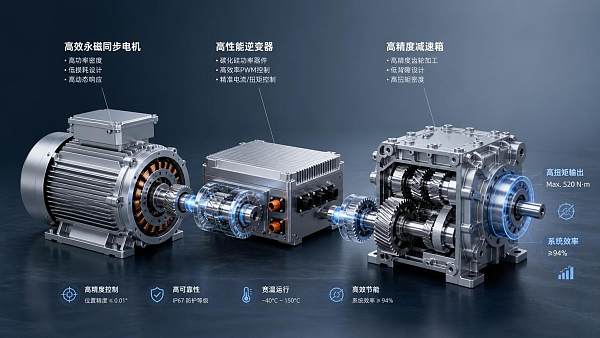
 Aug 24, 2026How to compare electric drive components for torque and efficiencyElectric drive components comparison starts with real load profiles. Learn how to evaluate torque, efficiency, motor-inverter-gearbox fit, and avoid costly selection mistakes.
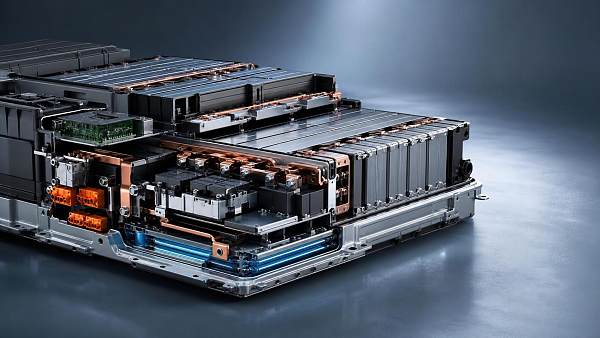
 Jul 29, 2026400V EV Battery Components Explained: Key Parts, Functions, and System Design BasicsEV battery components 400V explained clearly: discover key parts, core functions, safety logic, thermal design, and system basics to evaluate EV battery packs with confidence.
 Jul 18, 2026Automotive Component Rating Standards Explained: How to Compare Load, Temperature, and Safety LimitsAutomotive component rating standards explained clearly: learn how to compare load, temperature, and safety limits to reduce sourcing risk, improve compliance, and choose parts with confidence.
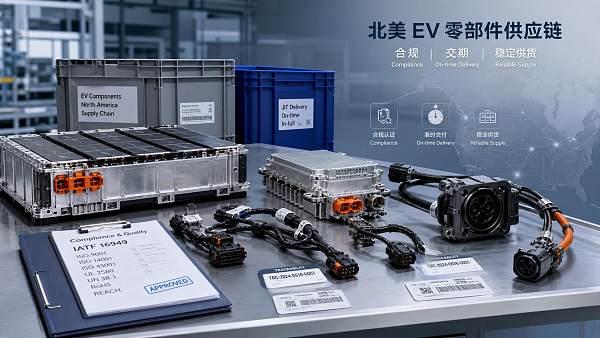
 Jul 15, 2026EV Components North America: Sourcing Priorities, Compliance, and Lead Time FactorsEV components North America buyers now face tougher sourcing decisions. Explore compliance risks, lead time pressures, and smarter strategies to reduce disruption and improve EV supply chain performance.
 Jul 13, 2026How to Evaluate a Battery Components Exporter for Quality, Traceability, and Lead TimeBattery components exporter selection goes beyond price. Learn how to assess quality control, traceability, and lead time to reduce supply risk and choose a reliable partner.
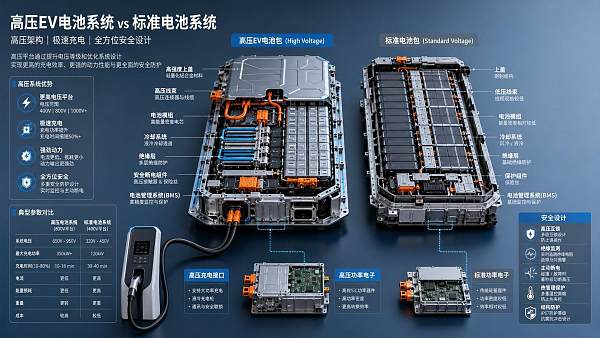
 Jul 12, 2026High Voltage EV Batteries vs Standard Packs: Key Design and Safety DifferencesHigh voltage EV batteries vs standard packs: explore the key design, charging, efficiency, and safety differences to choose the right EV battery architecture with confidence.
![]() Jul 07, 2026EV Accessories Buying Guide: Which Add-Ons Matter for Safety, Charging, and Daily Use?EV accessories buying guide: discover which add-ons truly improve charging, safety, and daily convenience, so you can choose smarter, safer gear with confidence.
Jul 07, 2026EV Accessories Buying Guide: Which Add-Ons Matter for Safety, Charging, and Daily Use?EV accessories buying guide: discover which add-ons truly improve charging, safety, and daily convenience, so you can choose smarter, safer gear with confidence. Jun 30, 2026EV Motor Selection Guide: Torque, Efficiency, Cooling, and Cost Trade-OffsEV motor selection guide covering torque, efficiency, cooling, and cost trade-offs. Learn how to choose the right EV motor for better range, reliability, and total value.
 Jun 29, 2026Permanent Magnet EV Motor Selection: Torque, Efficiency, Cooling, and Cost Trade-OffsPermanent magnet EV motor selection explained: compare torque, efficiency, cooling, and total cost trade-offs to choose the right EV drive solution with confidence.
 Jun 27, 2026Sourcing Guide for EV Components: How to Compare Suppliers, Lead Times, and MOQSourcing guide EV components for procurement teams: compare suppliers, lead times, MOQ, quality, and total cost to reduce risk and make smarter EV sourcing decisions.
 Jun 27, 2026Electric Drive Components Price in Europe: What Drives Cost by Motor, Inverter, and VolumeElectric drive components price Europe explained: see how motor design, inverter technology, and order volume shape real costs in Europe, and compare suppliers with greater confidence.
 Jun 25, 2026How Long Life Mobility Components Reduce Maintenance in High-Use EquipmentLong life mobility components cut maintenance by matching real load, floor, and cleaning conditions. See how smarter selection improves uptime, lowers service costs, and extends equipment life.
 Jun 23, 2026Spark Plugs OEM Sourcing Guide: Key Specs, Compatibility Checks, and Supplier RisksSpark plugs OEM sourcing guide covering key specs, compatibility checks, total cost, and supplier risks—learn how to avoid fitment errors, returns, and costly quality issues.
 Jun 13, 2026Vehicle Electronics Selection Guide: Key Standards, Interfaces, and Reliability FactorsVehicle electronics selection starts with standards, interfaces, and reliability. Learn how to compare components, reduce integration risk, and choose smarter for long-term performance.
 Jun 06, 2026What Is a BMS in Battery Systems? Functions, Key Components, and Selection BasicsBMS explained: learn what a Battery Management System does, its key components, and how to choose the right BMS for safer, longer-lasting, better-integrated battery systems.
 Jun 02, 2026Solid-State Battery Breakthroughs: What to Verify Before EV AdoptionSolid-state battery breakthroughs are reshaping EV strategy—learn what to verify in energy density, cycle life, safety, cost, and supplier readiness before adoption.
 May 31, 2026Why is EV battery tech reshaping range expectations?EV battery tech is redefining real-world range through smarter chemistry, thermal control, fast charging, and software—discover what matters beyond mileage.
![]() May 19, 2026Why long-lifespan solid-state batteries matter nowSolid-state battery breakthroughs long lifespan are reshaping EVs, grid storage, and industry. Discover why longer life, safer performance, and lower total cost matter now.
May 19, 2026Why long-lifespan solid-state batteries matter nowSolid-state battery breakthroughs long lifespan are reshaping EVs, grid storage, and industry. Discover why longer life, safer performance, and lower total cost matter now.![]() May 19, 2026Is off-grid lithium storage worth the upfront cost?Lithium battery storage for off-grid applications can justify higher upfront costs through lower maintenance, better efficiency, and stronger long-term ROI. See when it pays off.
May 19, 2026Is off-grid lithium storage worth the upfront cost?Lithium battery storage for off-grid applications can justify higher upfront costs through lower maintenance, better efficiency, and stronger long-term ROI. See when it pays off.![]() May 19, 2026Are solid-state battery breakthroughs finally lifting energy density?Solid-state battery breakthroughs in high energy density are moving beyond hype. Learn what technical evaluators should verify on cycle life, safety, cost, and scalable commercialization.
May 19, 2026Are solid-state battery breakthroughs finally lifting energy density?Solid-state battery breakthroughs in high energy density are moving beyond hype. Learn what technical evaluators should verify on cycle life, safety, cost, and scalable commercialization. May 18, 2026Why portable lithium battery storage needs better designLithium battery storage portable design matters more than ever. Discover how better safety, mobility, and charging design improve backup, travel, and field power performance.
 May 17, 2026What next-gen EV charging must solve beyond faster speedNext-gen wireless charging for electric vehicles must solve efficiency, safety, interoperability, and real-world deployment fit—not just speed. Explore what makes EV charging scalable and investment-ready.
 May 17, 2026How close are solid-state batteries to real EV production?Solid-state battery breakthroughs for electric vehicles are moving beyond the lab. Discover how close they are to real EV production, what still blocks scale-up, and which milestones matter most.