


Search News
Global Industrial Intelligence Hub (GIIH)Industry Portal
Global Industrial Intelligence Hub (GIIH)Status
Standard Access
Upgrade to PremiumNewsWhy EV motor suppliers are redesigning cooling systems
Time
Click Count
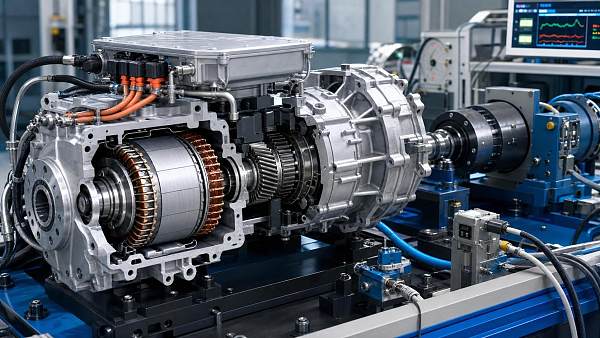
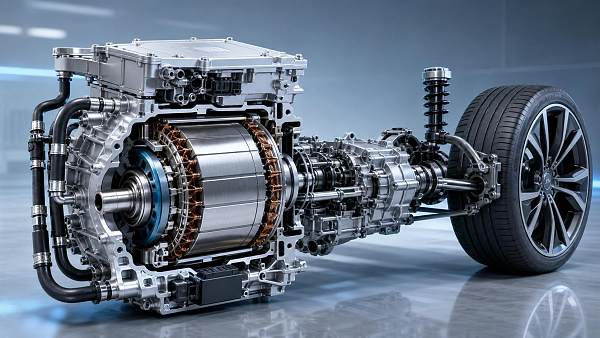
As EV motor suppliers rethink thermal performance, cooling-system redesign is becoming central to EV battery safety, EV components durability, and precision engineering efficiency. For procurement teams, distributors, and market researchers tracking electric vehicle parts, aftermarket demand, and supply chain shifts, this trend signals new opportunities in high-quality parts, custom components, logistics management, and inventory control across the automotive components ecosystem.
Why cooling system redesign is moving to the center of EV motor strategy
For years, many buyers treated EV motor cooling as a supporting subsystem rather than a strategic design variable. That assumption is changing quickly. As power density rises, packaging space shrinks, and vehicle platforms are expected to support more duty cycles, thermal control now influences motor efficiency, insulation life, magnet stability, and service intervals. In practical sourcing terms, the cooling architecture is no longer just an engineering detail; it affects supplier qualification, warranty exposure, and long-term total cost.
EV motor suppliers are redesigning cooling systems because operating conditions have become more demanding across a wider temperature range. In many vehicle programs, motors must perform from sub-zero starts to sustained high-load operation, often within ambient environments that can vary by more than 40°C across export markets. A cooling concept that worked for an earlier generation of lower-voltage platforms may no longer deliver acceptable thermal margins for newer, higher-output designs.
The shift also reflects broader supply chain pressure. OEMs and Tier suppliers want fewer variants, more modular platforms, and more predictable field reliability over 5–8 years of use. That makes thermal performance a procurement issue, not only an R&D issue. If a motor runs hotter under repeated acceleration, hill climbs, towing, or stop-and-go logistics use, downstream buyers may face higher replacement rates, more spare parts demand, and inconsistent aftermarket support.
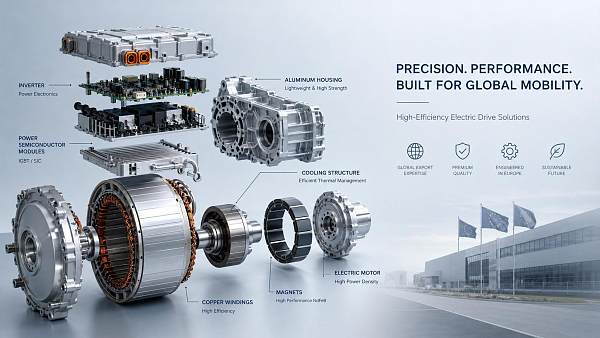
From a market intelligence perspective, cooling-system redesign is a signal of where value is moving. It links precision automotive parts, material upgrades, control software, sealing strategy, and manufacturing tolerances. For distributors and business evaluators, this means the competitive edge may come not from the motor headline rating alone, but from how well the supplier manages heat under real operating conditions.
What is driving the redesign trend?
- Higher continuous power demands are pushing motor winding temperatures closer to design limits, especially in compact vehicle architectures.
- Battery systems, power electronics, and motors are being optimized together, so thermal imbalance in one zone can affect system efficiency elsewhere.
- Fleet and commercial EV use cases require longer high-load operation windows, often 2–4 times more thermally demanding than light urban commuting.
- Procurement teams increasingly evaluate reliability, maintenance burden, and replacement cycles, not just unit price or nominal output.
Which cooling approaches are being compared in today’s EV motor market?
When buyers compare EV motor suppliers, they often encounter several cooling approaches: air cooling, jacket-based liquid cooling, direct oil cooling, and integrated thermal loops shared with adjacent systems. The right choice depends on vehicle segment, packaging constraints, maintenance philosophy, and target cost. A low-speed urban application may tolerate simpler thermal management, while performance-oriented, commercial, or long-duty vehicles often require more aggressive cooling strategies.
The most important procurement insight is that no single cooling method is universally superior. Air cooling can reduce complexity and component count, but it may struggle in high-power-density packages. Liquid jacket systems offer a balanced path for many mainstream designs, while direct oil cooling may improve hotspot control around windings and rotor components. However, these gains can come with tighter fluid compatibility requirements and stricter sealing validation.
For sourcing teams, the comparison should focus on measurable decision points: thermal stability during repeated cycles, integration with the vehicle thermal loop, maintenance risk, contamination sensitivity, and replacement logistics. In many RFQ reviews, a 3-part framework works well: continuous thermal capability, manufacturability at scale, and field-service practicality. This helps avoid the common mistake of selecting a high-spec design that becomes difficult to support in regional markets.
The table below summarizes how these options are commonly assessed in EV parts procurement and technical due diligence.
This comparison shows why redesign decisions are rarely isolated. A supplier that promises lower motor temperatures but cannot support fluid management, sealing quality, or regional parts availability may create more downstream risk than value. For distributors and agents, the best opportunity often lies in solutions that combine thermal gains with serviceable, repeatable supply chain support.
A useful 3-layer comparison model for buyers
Start with thermal performance under continuous load, not only peak output claims. Then examine integration burden: pumps, connectors, hoses, sensors, control logic, and assembly steps. Finally, assess aftermarket practicality over a 12–36 month support window. This layered review is often more useful than comparing headline motor power alone.
Questions that help narrow options
- Does the application require high continuous torque for 20–60 minutes, or only short bursts?
- Can the platform support additional cooling loop components without major redesign?
- Will regional service teams be able to diagnose leaks, flow restrictions, or pump issues quickly?
What technical details should procurement teams check before choosing an EV motor supplier?
Procurement teams often receive technically impressive proposals that are difficult to compare. A practical solution is to standardize thermal and durability review around a shortlist of comparable criteria. In EV motor cooling, at least 5 checkpoints matter: heat removal path, hotspot control, sealing reliability, fluid compatibility, and test validation method. Without these, supplier claims are hard to translate into sourcing decisions.
One key issue is continuous operating temperature rather than isolated peak values. Buyers should ask how the motor behaves over repeated duty cycles, such as 30-minute hill-climb simulation, stop-start delivery use, or sustained highway load. A design that stays stable within a narrower thermal band generally reduces insulation stress and may improve component life consistency across batches.
Another often overlooked factor is contamination control. Oil-cooled and shared-loop systems may offer strong thermal benefits, but they can also become sensitive to particle contamination, fluid aging, or seal degradation. This is especially relevant for cross-border sourcing, where maintenance conditions and fluid supply quality may vary from one distribution region to another.
Validation documentation matters as much as design intent. Buyers should look for evidence of thermal cycling, vibration interaction, leak testing, and material compatibility checks over representative intervals. Common review windows include prototype validation, pilot-run verification, and early production monitoring across the first 3 stages of launch.
The table below provides a practical screening framework that business evaluators, sourcing managers, and technical distributors can use during supplier comparison.
Using a matrix like this helps procurement teams convert engineering language into sourcing judgments. It also supports cleaner communication between R&D, purchasing, quality, and regional sales teams. For companies handling multi-market distribution, such structure reduces the risk of selecting a motor cooling solution that performs well in laboratory conditions but becomes difficult to support at scale.
Standards, validation, and documentation to review
Specific compliance requirements vary by program, but buyers should typically check how suppliers align with mainstream automotive quality and validation practices. That may include production quality systems such as IATF-oriented processes, environmental testing, ingress protection review, and fluid compatibility documentation. Even where exact certifications differ, the procurement principle stays the same: the cooling design must be validated as part of the motor system, not treated as a secondary attachment.
A 5-point checklist before approval
- Confirm the intended duty cycle and ambient temperature range for the target market.
- Request thermal test conditions, not only end results.
- Verify coolant or oil compatibility with seals, coatings, and insulation materials.
- Check whether service parts and diagnostic procedures are defined.
- Compare prototype evidence with expected volume manufacturing controls.
How do cost, lead time, and aftermarket support change when cooling systems become more complex?
Cooling-system redesign can improve EV motor performance, but it can also shift cost structure in ways that are not obvious during early quotation. More advanced cooling often introduces additional parts, tighter tolerances, more validation steps, and longer coordination between motor, inverter, and vehicle thermal teams. That is why business assessment should separate unit price from implementation cost, qualification cost, and field support cost.
Lead time is one of the biggest concerns for procurement teams. A simpler air-cooled design may move faster through sampling, while liquid or oil-based architectures may require more sealing verification, more compatibility review, and more system-level checks. In practical terms, sample preparation may fit within 2–6 weeks for straightforward configurations, but integrated or highly customized solutions can need longer review windows depending on tooling, testing, and supply chain readiness.
Aftermarket support also changes. The moment a cooling design relies on pumps, valves, sensors, channels, or specific fluid specifications, distributors need clearer spare-part strategies. This includes stocking decisions, technician training, replacement intervals, and fault isolation methods. Without that support structure, a technically superior EV motor can become commercially difficult in repair-sensitive markets.
For agents and cross-border traders, the best sourcing decision often balances 4 factors: thermal gain, supply continuity, service complexity, and replacement economics. That balance matters more than choosing the most advanced design on paper.
Where hidden costs usually appear
- Extra validation rounds for seals, hoses, and fluid compatibility can extend project timing by several review cycles.
- Regional inventory may need to include connectors, pumps, sensors, and approved service fluids rather than only motor assemblies.
- Training requirements rise when service teams must diagnose thermal loop issues within 24–72 hour response windows.
- Packaging and shipping controls may become stricter for sensitive components and fluid-related accessories.
A practical cost-versus-value judgment
If the vehicle program demands sustained output, frequent charging-related heat stress, or heavy-duty cycles, better cooling may reduce derating and protect long-term performance. If the use case is lighter and highly cost-sensitive, a simpler design may provide stronger commercial returns. The right answer comes from matching thermal complexity to actual use intensity, not from assuming that more advanced automatically means better value.
When to consider an alternative solution
Consider alternatives when the project faces tight launch timing, when regional service infrastructure is limited, or when fluid management creates regulatory or maintenance complications. In those cases, a robust jacket-cooled system with standardized interfaces may outperform a more ambitious direct-cooling concept from a total business standpoint.
What mistakes do buyers make when evaluating EV motor cooling redesign?
A common mistake is focusing on peak motor output while ignoring continuous thermal behavior. In real EV applications, heat accumulation over repeated load cycles is often more important than a short-duration performance claim. This matters for logistics fleets, light commercial vehicles, and performance-oriented passenger EVs where repeatability determines customer satisfaction and warranty cost.
Another mistake is separating motor sourcing from system sourcing. Cooling-system redesign affects hoses, pumps, control software, mounting space, sensors, and sometimes battery-adjacent thermal planning. If the purchasing team reviews only the motor assembly price, the final program may absorb avoidable integration cost later. Cross-functional review in the first 2–3 sourcing rounds usually prevents this problem.
Some buyers also underestimate aftermarket exposure. A design with excellent lab performance may still create spare-parts pressure if seals, connectors, or fluid-grade requirements are hard to source across regions. This is especially relevant for distributors serving fragmented markets, where inventory turnover and service consistency directly affect margin.
Finally, there is the documentation gap. In a fast-moving EV market, buyers may receive marketing-level statements without enough thermal test context. It is safer to ask how the system was validated, under which duty cycle, within what ambient range, and with which fluid conditions. Good procurement decisions depend on boundary conditions, not just final numbers.
FAQ for researchers, sourcing teams, and distributors
How should we compare EV motor suppliers if test methods differ?
Normalize the comparison around application-specific duty cycles, ambient temperature range, and duration. For example, compare repeated load operation over a defined 20–30 minute window rather than only isolated peak events. Also request the same set of support documents: thermal test conditions, fluid specifications, sealing approach, and service assumptions.
Are more complex cooling systems always better for EV components durability?
Not always. More complex systems can improve hotspot control and sustained performance, but they also add leak paths, service requirements, and inventory complexity. The better choice depends on use intensity, maintenance capability, and target cost over the product life cycle.
What should distributors stock when supporting advanced EV motor cooling solutions?
Beyond the motor itself, review demand for seals, connectors, approved fluids, pumps, or sensors where applicable. Build inventory planning around 3 levels: fast-moving service items, low-frequency critical parts, and diagnostic support tools. This improves response speed and reduces dead stock risk.
How long does qualification usually take?
There is no universal timeline, but buyers should expect multiple stages rather than a single test event. A practical framework includes concept review, prototype verification, pilot confirmation, and early production monitoring. Complex integrated cooling designs generally require more coordination than simpler stand-alone configurations.
How GIIH helps buyers turn thermal redesign trends into sourcing decisions
For many companies, the challenge is not finding information about EV motor cooling. The challenge is filtering fragmented information into a decision-ready view. GIIH supports this by connecting industrial intelligence, trade insight, automotive engineering interpretation, and supply chain context. That matters when procurement decisions must balance technical suitability, regional delivery, aftermarket service, and commercial risk.
Our strength lies in turning scattered market signals into structured evaluation logic. In the precision automotive parts and mobility field, that means helping clients identify which cooling-system redesign trends are truly material for sourcing, which are still emerging, and which may create hidden cost or compliance pressure across borders. This is particularly useful for market researchers, sourcing departments, distributors, and business evaluation teams that need actionable intelligence rather than isolated data points.
If you are assessing EV motor suppliers, GIIH can help clarify 6 practical areas: specification alignment, cooling architecture comparison, supplier-screening criteria, expected lead-time ranges, regional service implications, and procurement risk mapping. We can also support discussions around sample planning, custom component evaluation, inventory strategy, and the trade-offs between advanced thermal performance and field maintainability.
For teams working across multiple countries or channels, our cross-sector intelligence model is especially valuable. It connects automotive engineering detail with logistics visibility and industrial trend analysis, allowing you to move from product curiosity to commercial judgment faster and with fewer blind spots.
Why choose us
GIIH is built for decision-makers who need more than general market commentary. Our expert collaboration network, automotive engineering focus, and global industrial intelligence framework help clients evaluate thermal redesign not just as a technology story, but as a sourcing, distribution, and market-entry issue. We bring together technical interpretation, procurement relevance, and cross-border supply chain context in one view.
What you can contact us about
- Parameter confirmation for EV motor cooling options, including application fit and duty-cycle relevance.
- Supplier comparison support covering thermal architecture, serviceability, and sourcing risk.
- Lead time and delivery discussion for samples, pilot quantities, and volume planning.
- Custom solution evaluation for specific vehicle platforms, market channels, or aftermarket strategies.
- Guidance on certification context, documentation expectations, and cross-border procurement communication.
- Quote-related preparation, including requirement lists, screening dimensions, and vendor shortlisting logic.
If your team is tracking EV motor cooling-system redesign as part of a broader electric vehicle parts strategy, GIIH can help you build a clearer path from research to supplier selection. Reach out with your target application, expected volume stage, delivery timeline, and technical concerns, and we can help structure the next step with sharper industrial insight.
Recommended News
 Sep 12, 2026What does UN 38.3 testing cover for EV battery shipments?EV battery UN 38.3 testing covers altitude, thermal, vibration, shock, short-circuit, overcharge, and discharge risks. Learn key compliance steps for safer EV battery shipments.
 Aug 24, 2026How to compare electric drive components for torque and efficiencyElectric drive components comparison starts with real load profiles. Learn how to evaluate torque, efficiency, motor-inverter-gearbox fit, and avoid costly selection mistakes.
 Jul 29, 2026400V EV Battery Components Explained: Key Parts, Functions, and System Design BasicsEV battery components 400V explained clearly: discover key parts, core functions, safety logic, thermal design, and system basics to evaluate EV battery packs with confidence.
 Jul 18, 2026Automotive Component Rating Standards Explained: How to Compare Load, Temperature, and Safety LimitsAutomotive component rating standards explained clearly: learn how to compare load, temperature, and safety limits to reduce sourcing risk, improve compliance, and choose parts with confidence.
 Jul 15, 2026EV Components North America: Sourcing Priorities, Compliance, and Lead Time FactorsEV components North America buyers now face tougher sourcing decisions. Explore compliance risks, lead time pressures, and smarter strategies to reduce disruption and improve EV supply chain performance.
 Jul 13, 2026How to Evaluate a Battery Components Exporter for Quality, Traceability, and Lead TimeBattery components exporter selection goes beyond price. Learn how to assess quality control, traceability, and lead time to reduce supply risk and choose a reliable partner.
 Jul 12, 2026High Voltage EV Batteries vs Standard Packs: Key Design and Safety DifferencesHigh voltage EV batteries vs standard packs: explore the key design, charging, efficiency, and safety differences to choose the right EV battery architecture with confidence.
![]() Jul 07, 2026EV Accessories Buying Guide: Which Add-Ons Matter for Safety, Charging, and Daily Use?EV accessories buying guide: discover which add-ons truly improve charging, safety, and daily convenience, so you can choose smarter, safer gear with confidence.
Jul 07, 2026EV Accessories Buying Guide: Which Add-Ons Matter for Safety, Charging, and Daily Use?EV accessories buying guide: discover which add-ons truly improve charging, safety, and daily convenience, so you can choose smarter, safer gear with confidence. Jun 30, 2026EV Motor Selection Guide: Torque, Efficiency, Cooling, and Cost Trade-OffsEV motor selection guide covering torque, efficiency, cooling, and cost trade-offs. Learn how to choose the right EV motor for better range, reliability, and total value.
 Jun 29, 2026Permanent Magnet EV Motor Selection: Torque, Efficiency, Cooling, and Cost Trade-OffsPermanent magnet EV motor selection explained: compare torque, efficiency, cooling, and total cost trade-offs to choose the right EV drive solution with confidence.
 Jun 27, 2026Sourcing Guide for EV Components: How to Compare Suppliers, Lead Times, and MOQSourcing guide EV components for procurement teams: compare suppliers, lead times, MOQ, quality, and total cost to reduce risk and make smarter EV sourcing decisions.
 Jun 27, 2026Electric Drive Components Price in Europe: What Drives Cost by Motor, Inverter, and VolumeElectric drive components price Europe explained: see how motor design, inverter technology, and order volume shape real costs in Europe, and compare suppliers with greater confidence.
 Jun 25, 2026How Long Life Mobility Components Reduce Maintenance in High-Use EquipmentLong life mobility components cut maintenance by matching real load, floor, and cleaning conditions. See how smarter selection improves uptime, lowers service costs, and extends equipment life.
 Jun 23, 2026Spark Plugs OEM Sourcing Guide: Key Specs, Compatibility Checks, and Supplier RisksSpark plugs OEM sourcing guide covering key specs, compatibility checks, total cost, and supplier risks—learn how to avoid fitment errors, returns, and costly quality issues.
 Jun 13, 2026Vehicle Electronics Selection Guide: Key Standards, Interfaces, and Reliability FactorsVehicle electronics selection starts with standards, interfaces, and reliability. Learn how to compare components, reduce integration risk, and choose smarter for long-term performance.
 Jun 06, 2026What Is a BMS in Battery Systems? Functions, Key Components, and Selection BasicsBMS explained: learn what a Battery Management System does, its key components, and how to choose the right BMS for safer, longer-lasting, better-integrated battery systems.
 Jun 02, 2026Solid-State Battery Breakthroughs: What to Verify Before EV AdoptionSolid-state battery breakthroughs are reshaping EV strategy—learn what to verify in energy density, cycle life, safety, cost, and supplier readiness before adoption.
 May 31, 2026Why is EV battery tech reshaping range expectations?EV battery tech is redefining real-world range through smarter chemistry, thermal control, fast charging, and software—discover what matters beyond mileage.
![]() May 19, 2026Why long-lifespan solid-state batteries matter nowSolid-state battery breakthroughs long lifespan are reshaping EVs, grid storage, and industry. Discover why longer life, safer performance, and lower total cost matter now.
May 19, 2026Why long-lifespan solid-state batteries matter nowSolid-state battery breakthroughs long lifespan are reshaping EVs, grid storage, and industry. Discover why longer life, safer performance, and lower total cost matter now.![]() May 19, 2026Is off-grid lithium storage worth the upfront cost?Lithium battery storage for off-grid applications can justify higher upfront costs through lower maintenance, better efficiency, and stronger long-term ROI. See when it pays off.
May 19, 2026Is off-grid lithium storage worth the upfront cost?Lithium battery storage for off-grid applications can justify higher upfront costs through lower maintenance, better efficiency, and stronger long-term ROI. See when it pays off.![]() May 19, 2026Are solid-state battery breakthroughs finally lifting energy density?Solid-state battery breakthroughs in high energy density are moving beyond hype. Learn what technical evaluators should verify on cycle life, safety, cost, and scalable commercialization.
May 19, 2026Are solid-state battery breakthroughs finally lifting energy density?Solid-state battery breakthroughs in high energy density are moving beyond hype. Learn what technical evaluators should verify on cycle life, safety, cost, and scalable commercialization. May 18, 2026Why portable lithium battery storage needs better designLithium battery storage portable design matters more than ever. Discover how better safety, mobility, and charging design improve backup, travel, and field power performance.
 May 17, 2026What next-gen EV charging must solve beyond faster speedNext-gen wireless charging for electric vehicles must solve efficiency, safety, interoperability, and real-world deployment fit—not just speed. Explore what makes EV charging scalable and investment-ready.
 May 17, 2026How close are solid-state batteries to real EV production?Solid-state battery breakthroughs for electric vehicles are moving beyond the lab. Discover how close they are to real EV production, what still blocks scale-up, and which milestones matter most.